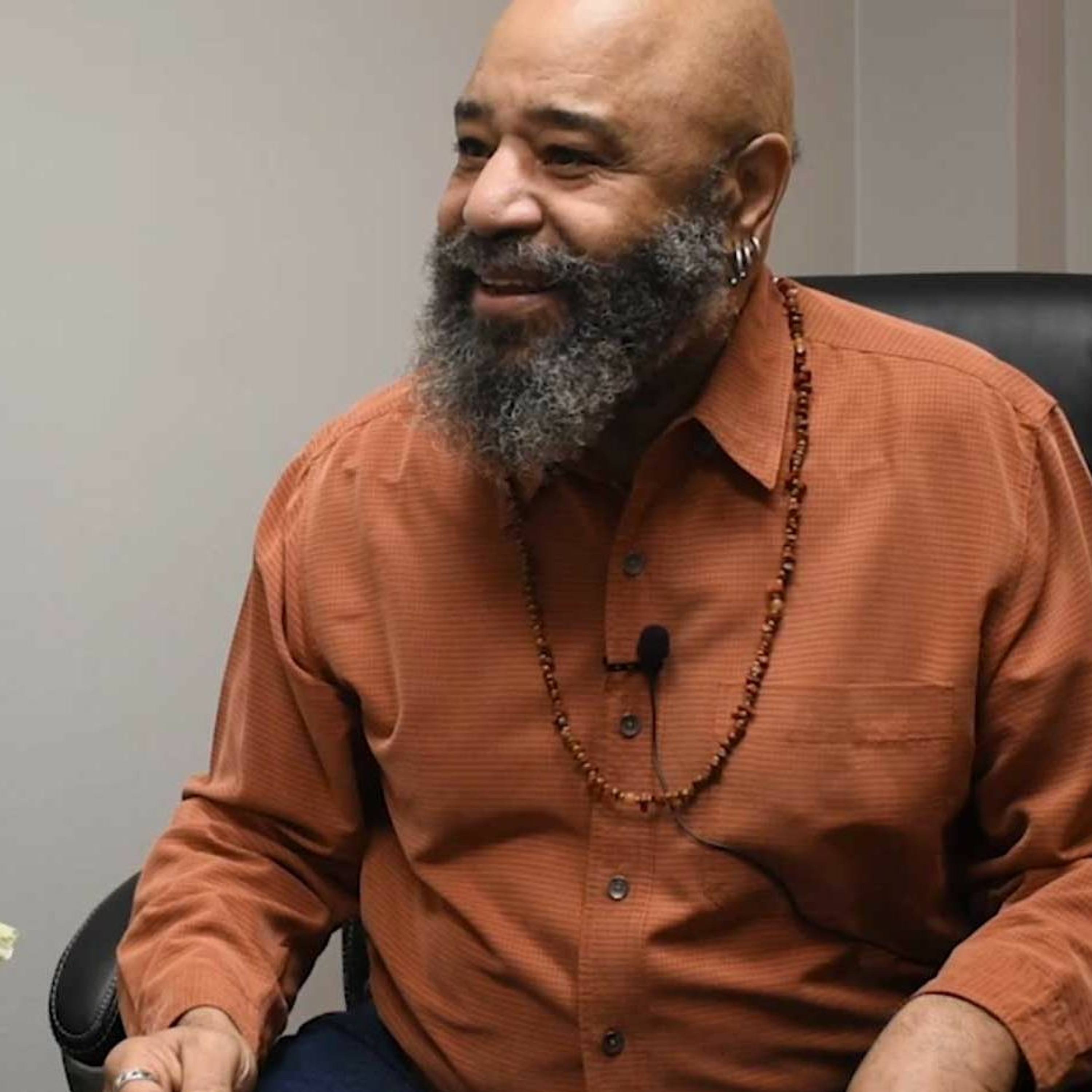
This snapshot was gathered in conjunction with the Museum on Main Street program at the Smithsonian Institution and its "Stories from Main Street" initiative. The project is intended to capture Americans' impressions and stories about their small-town and rural neighborhoods, waterways, personal memories, cultural traditions, work histories, and thoughts about American democracy. This story is from a group of narratives inspired by the Smithsonian traveling exhibition, "Voices and Votes: Democracy in America."
Ryk St. Vincent (00:00): I voted for as many times as I could in my life, registered and voted. I like the idea because it makes you feel like you've made a contribution or I put the little sticker on my window usually, sometimes it was, I think as many as three of them on there, and this is over the years and then they fade off or they get washed off or whatever, but they're on my truck door. When I go down there, I see people that I know. I commune with people. We talk and there's something to be said about people getting together to do something. It's almost like hearing a choir. If you hear a choir of 50 or 80 people sing, you know that they've worked on that song because when it's done, it's one sound broken up into all these segments that move you. It will either give you chill bumps or impress you in some way that makes it, wow, that was a wonderful experience.
(01:10): Same thing when you go see a movie. If you look at the credits of the movie, especially a big, big movie, blockbuster movie, you look at all the names, all those names, of names you can't pronounce, and I'll sit there and try to read and I'm reading, okay. I said Charles Smith, okay, because I got that one, but you see so many names. All those people got together and took 60 million or 125 million dollars and made a movie. Everybody doing their part. Choirs, the Olympics, basketball teams, things of that name.
(02:01): There's a school of fish. You ever see those fish, they have no radar. They don't use sell phones. They don't have earpieces. They don't have signals. But these little silver fish in schools of thousands, thousands swimming in one direction and then at once, not a line of ducks, at once they change direction. We have to have cell phones, we have to practice, we have to have lights and signals, we have to rehearse it. We've got to go through so much. Just try to watch a marching band get a routine together. I did little bass clarinet when I was in school, marching and those routines... Well, it's 9 o'clock, coach came, we'll do it one more time.
(03:03): These fish, thousands of them in one millisecond, they change direction, and they'll do it again in the next millisecond if they need to. That to me is more amazing than an iPhone going to the moon and anything else that you can throw at me right now. That to me is amazing because that says there is a communication above what we know. We may have had it at one time, but it's above what we know. You got to know that everybody's connected. Everybody's connected. Everybody needs something.
Asset ID: 2023.02.15.d
Find a complete transcript at www.museumonmainstreet.org