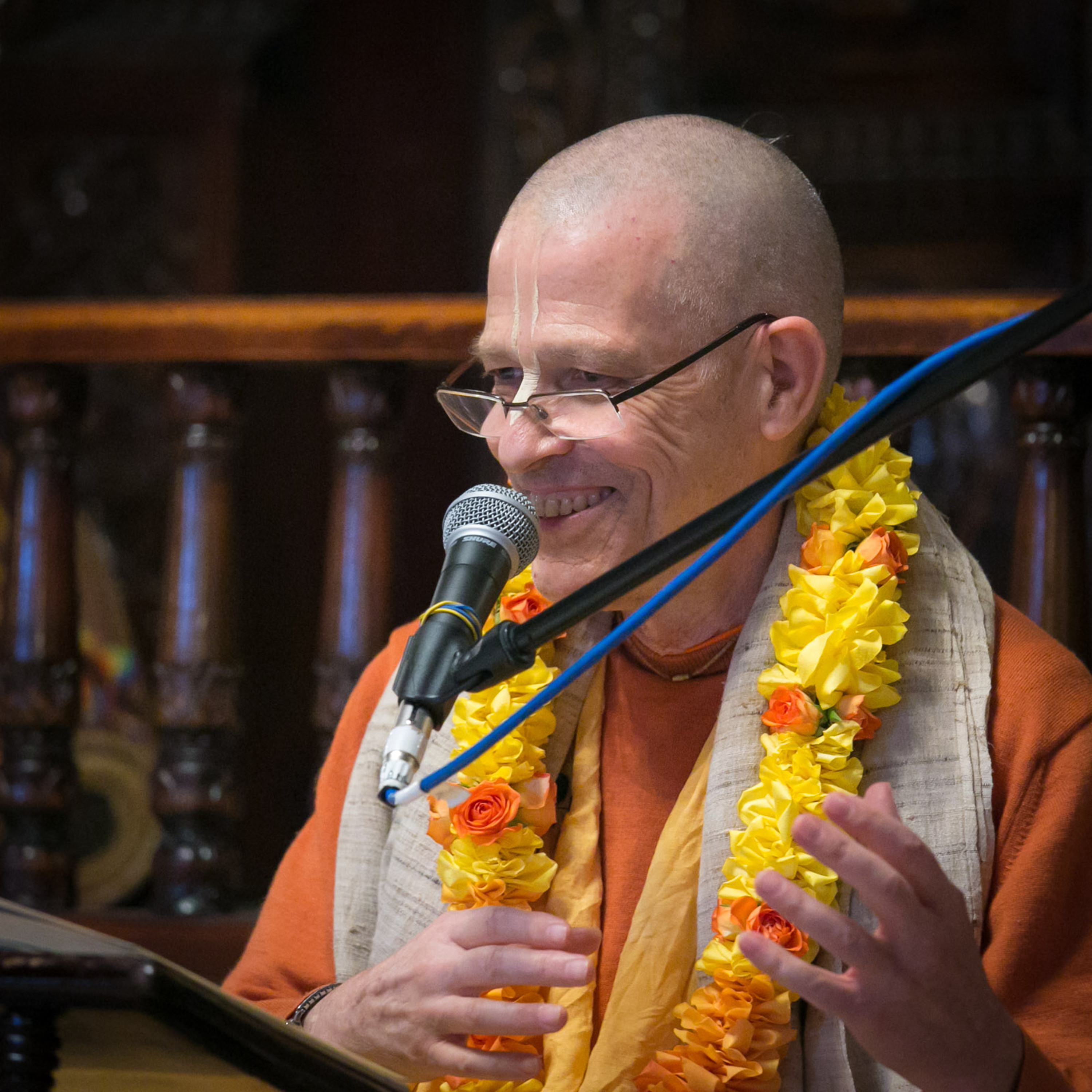
Lecture from Narasimha Caturdasi Festival in Simhachalam (German Farm). 2018-04-26
Śrmad Bhagavatam 7.5.5.
śrī-prahlāda uvāca
tat sādhu manye ’sura-varya dehināṁ
sadā samudvigna-dhiyām asad-grahāt
hitvātma-pātaṁ gṛham andha-kūpaṁ
vanaṁ gato yad dharim āśrayeta
Synonyms:
śrī-prahlādaḥ uvāca — Prahlāda Mahārāja replied; tat — that; sādhu — very good, or the best part of life; manye — I think; asura-varya — O King of the asuras; dehinām — of persons who have accepted the material body; sadā — always; samudvigna — full of anxieties; dhiyām — whose intelligence; asat-grahāt — because of accepting the temporary body or bodily relations as real (thinking “I am this body, and everything belonging to this body is mine”); hitvā — giving up; ātma-pātam — the place where spiritual culture or self-realization is stopped; gṛham — the bodily concept of life, or household life; andha-kūpam — which is nothing but a blind well (where there is no water but one nonetheless searches for water); vanam — to the forest; gataḥ — going; yat — which; harim — the Supreme Personality of Godhead; āśrayeta — may take shelter of.
Translation:
Prahlāda Mahārāja replied: O best of the asuras, King of the demons, as far as I have learned from my spiritual master, any person who has accepted a temporary body and temporary household life is certainly embarrassed by anxiety because of having fallen in a dark well where there is no water but only suffering. One should give up this position and go to the forest [vana]. More clearly, one should go to Vṛndāvana, where only Kṛṣṇa consciousness is prevalent, and should thus take shelter of the Supreme Personality of Godhead.