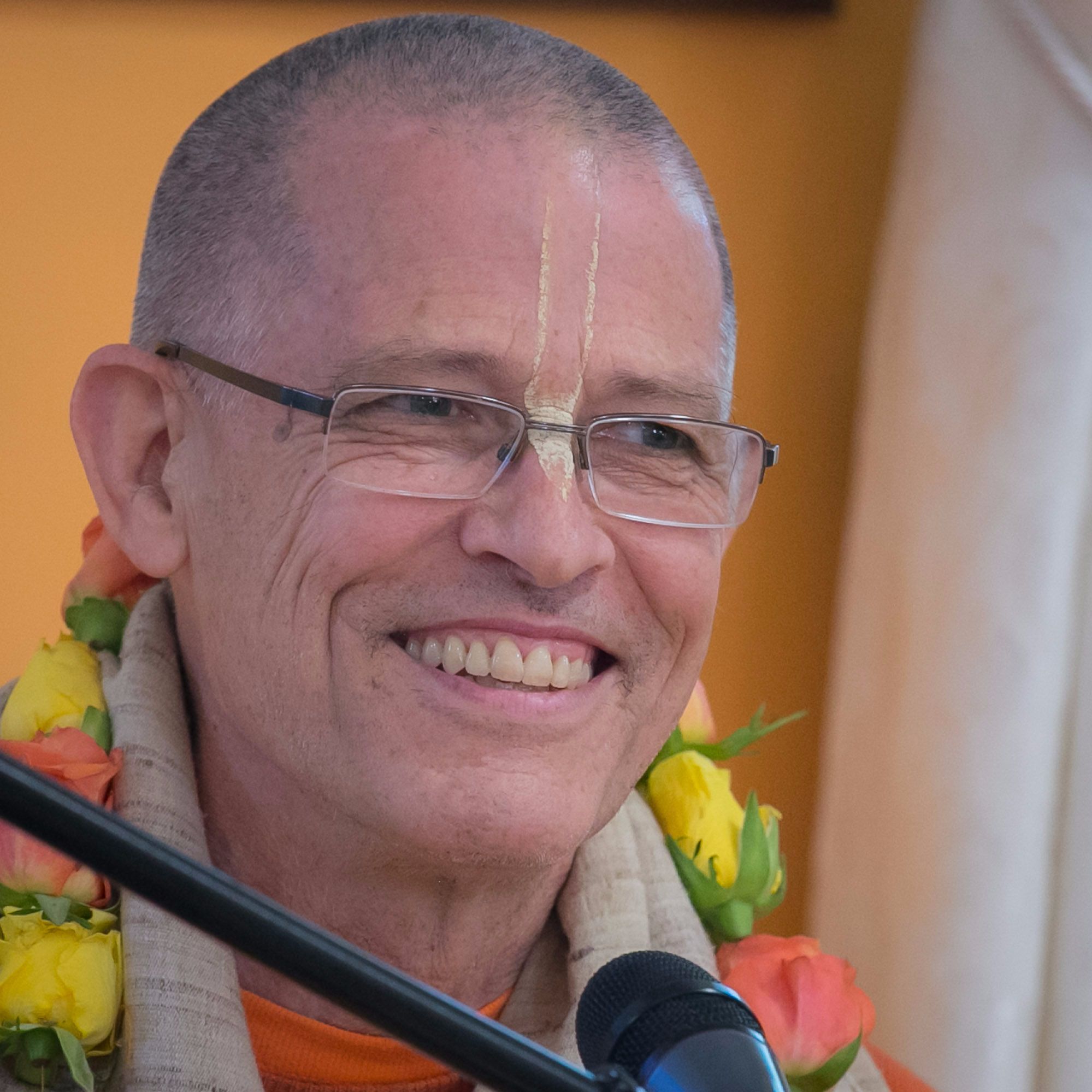
Lecture on Srimad Bhagavatam 9.6.9
ISKCON Ljubljana, Slovenja
13th July 2022
ŚB 9.6.9
jñātvā putrasya tat karma
guruṇābhihitaṁ nṛpaḥ
deśān niḥsārayām āsa
sutaṁ tyakta-vidhiṁ ruṣā
Synonyms
jñātvā — knowing; putrasya — of his son; tat — that; karma — action; guruṇā — by the spiritual master (Vasiṣṭha); abhihitam — informed; nṛpaḥ — the King (Ikṣvāku); deśāt — from the country; niḥsārayām āsa — drove away; sutam — his son; tyakta-vidhim — because he violated the regulative principles; ruṣā — out of anger.
Translation
When King Ikṣvāku, thus informed by Vasiṣṭha, understood what his son Vikukṣi had done, he was extremely angry. Thus he ordered Vikukṣi to leave the country because Vikukṣi had violated the regulative principles.
Text 6: During the months of January, February and March, oblations offered to the forefathers are called aṣṭakā-śrāddha. The śrāddha ceremony is held during the dark fortnight of the month. When Mahārāja Ikṣvāku was performing his oblations in this ceremony, he ordered his son Vikukṣi to go immediately to the forest to bring some pure flesh.
Text 7: Thereafter, Ikṣvāku’s son Vikukṣi went to the forest and killed many animals suitable for being offered as oblations. But when fatigued and hungry he became forgetful and ate a rabbit he had killed.
Text 8: Vikukṣi offered the remnants of the flesh to King Ikṣvāku, who gave it to Vasiṣṭha for purification. But Vasiṣṭha could immediately understand that part of the flesh had already been taken by Vikukṣi, and therefore he said that it was unfit to be used in the śrāddha ceremony.