Dreaming in the Void blog | Other sounds
"According to Relativity, everything was related to the way that you interacted with it, to observe it, you see, and that's also [true] according to Quantum Mechanics, right? Now, the point about Perception is that it's a dynamic process... We're constantly doing things and seeing what happens, right? Handling objects and seeing what happens... Everything must move: the eyeball must move in order to show light, to show form. It is anactive process, right? Now, suppose we say, we are looking at a circular object, a solid, and as we walk around it, it really looks like an ellipse. An artist draws it that way, with perspective... But we know that [the ellipses] are different appearances of the circle. We say really, it's a circle, which is solid, right? So, we could say the ellipses are appearance and the circle is the essence. But then, scientists came along and said that's only an appearance too, because the circle is made of a lot of atoms... It's really mostly open space [with] atoms moving there... Therefore, the atoms are the essence. But then, later on, other scientists came along and said these atoms are made of smaller objects... They're mostly empty space... Atoms too, are appearances. And then, these smaller objects were found to be made of quarks and so on... There were electrons and protons and they're made of quarks... And then they said, these are fields... You see, they're looking for a 'Theory of Everything', but it keeps on receding. So, this suggests to me that everything - even our thoughts - are fundamentally appearances... How things appear to the mind, right? And by combining many views of the object we understand the object. Like the stereoscope: two views give three dimensions... Is that clear?
WA: Yes.
DB: So, by combining many views of the circle with this object, we get the notion of the circle. By combining it with the scientific view we get another view on it, a circle which is made of atoms... But then, another view is that the atoms are constituted of smaller particles, and so on... The more views we get, that we can integrate and make coherent, the deeper our understanding of the reality is... But, I say the reality, the essence would be called the true being. That, really we never really get hold of, right? It's unlimited. Everything... every view is limited. It's like a mirror looking this way, that way, another many mirrors each one gives a view, but a limited view, right? So I said: 'theories' don't give final true knowledge. They give a way of looking at it. The very word 'theoria', in Greek, means 'theater', it has the same root... And, so, [a theory] is sort of a theater of the mind that gives insight into the thing. And, therefore, you can say that, fundamentally, Science is involved in a perceptual enterprise, not primarily gaining knowledge. Though knowledge appears, knowledge is a by-product of it, by understanding the thing... In our contact
with it, as long as it is coherent, it shows that our understanding is correct.You see we must distinguish between correct appearances and incorrect appearances... they'reillusory. Now, if an appearance is correct it is in some way related to the reality, but it'sevidently not the reality. The ellipses, if we understand their meaning, are the correct appearanceto the eye. Though it is not an ellipse, it is still correct.
WA: So, are you suggesting that this is an inherent aspect of the thinking process?
DB: Yes, that's right, of our whole perceptual process. Our thinking process should be called an extension of our perception, when done rightly... And not, primarily, the accumulation of knowledge, which we put into various records."
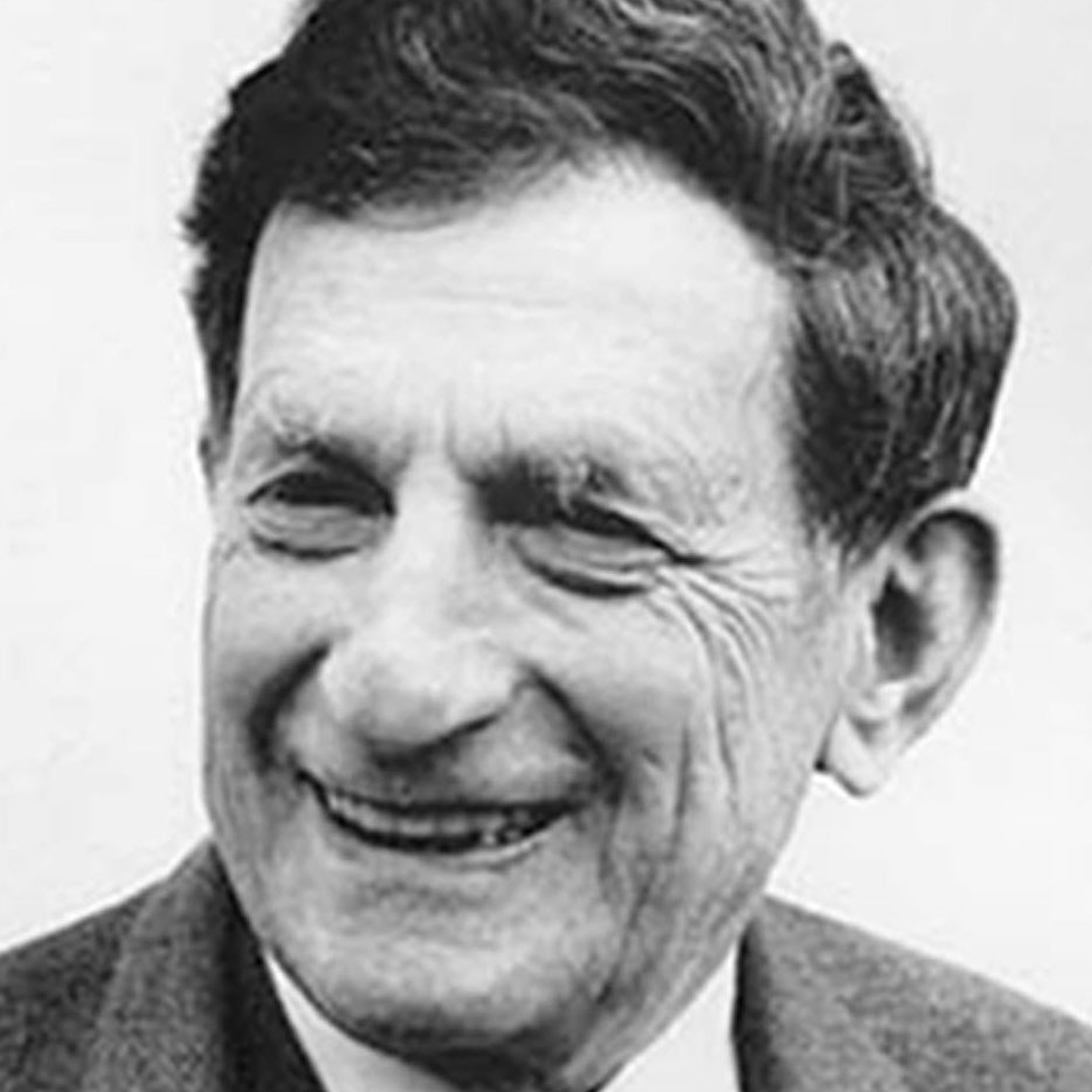
David Bohm
Source:
http://www.youtube.com/watch?v=Mst3fOl5vH0