interview with activist historian Saku Pinta for broadcast on @radiockut.
interview was inspired by this article :
The Mysteries of a Hobo’s Life: Uncovering a Forgotten Revolutionary
http://activehistory.ca/2019/01/the-mysteries-of-a-hobos-life-uncovering-a-forgotten-revolutionary/
within the article Saku writes :
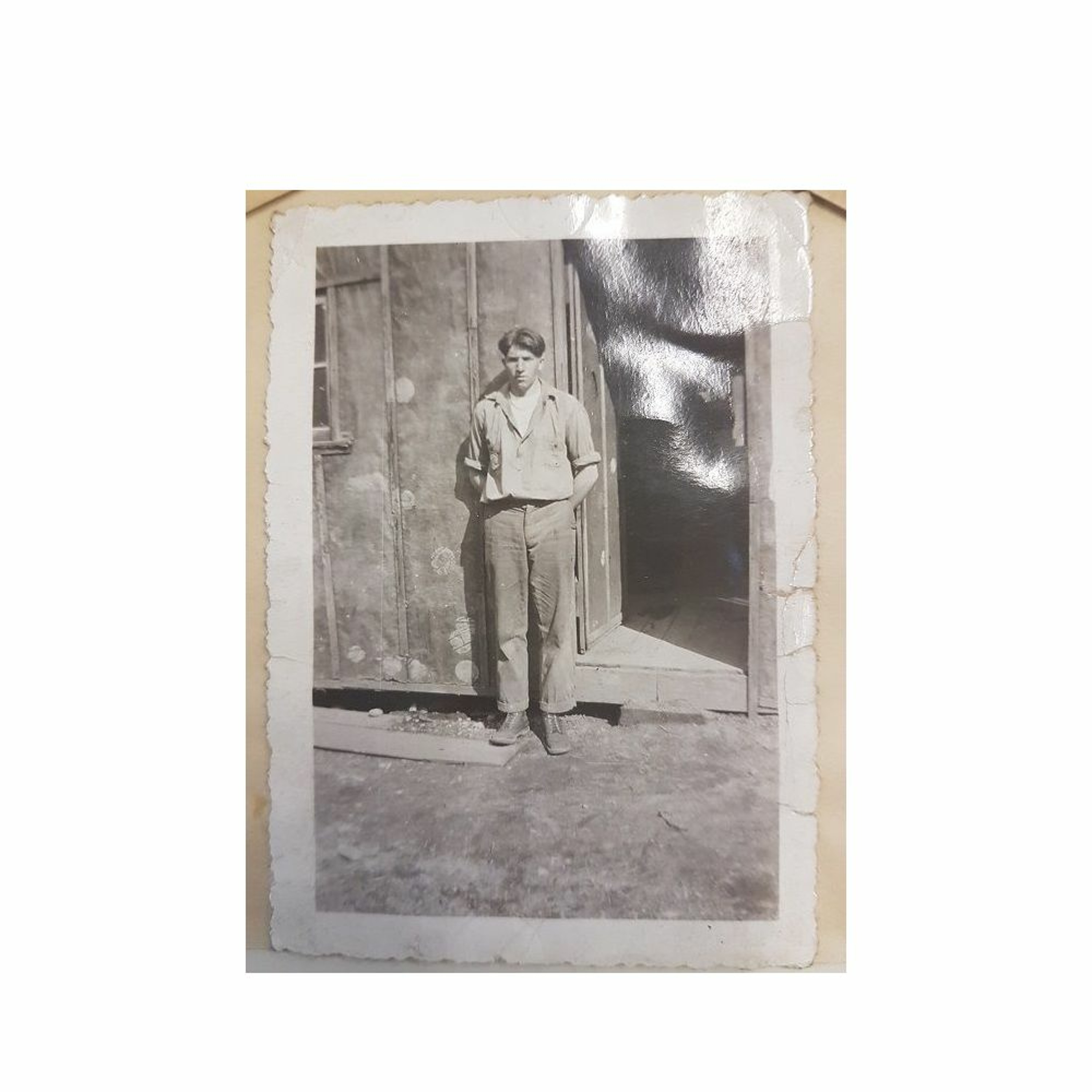
"This black and white photograph appears, at first glance, to be quite ordinary. An unidentified man poses in front of a tar paper shack, possibly at a logging camp, hands clasped behind his back. His stony gaze is contemplative, confident. Perhaps even defiant. Little else is known about this individual, aside from the near certainty that he lost his life prematurely and tragically, likely dying for his convictions.
Who was this man? While it is possible that we may never know for certain, examining this photograph reveals a story interwoven with the enduring themes of class, ethnicity, justice, and memory.
The significance of the photograph, and the first clue in the difficult task of determining the man’s identity, is revealed through his inclusion in a collage of six labour martyrs. The creator(s) of the long forgotten collage, also unknown, believed that the unknown man belonged in this collection, suggesting that he too met a similar fate as the others. Yet unlike the others, the photograph of this individual is not a mass produced, postcard-sized portrait photo. Rather, it appears to be a one-off, original photograph, possibly local in origin.
The assembled photographs tell a grim tale of violent class relations in the twentieth century. The trial and execution of three of the men featured in the collage – union artist and songwriter Joe Hill and the Italian anarchists Nicola Sacco and Bartolomeo Vanzetti – attracted worldwide attention. All three became powerful symbols of a judicial system tarnished by an anti-immigrant bias that fueled their convictions, a prejudice further intensified by their political beliefs, and expedited by their low economic status.
While lesser known, the other three men in the collage – union organizers Frank Little , Wesley Everest, and William McKay – all lost their lives brutally at the hands of anti-union vigilantes. Since their murderers were never apprehended, their deaths appeared to confirm to others like them – poor, itinerant workers who sought to improve their incomes and working conditions through collective action – that the law did not apply equally to all people."