President Donald Trump recently issued an executive order promising to halt federal funding for cities that limit cooperation with immigration agents. Some mayors from across the country vowed to remain so called “sanctuary cities” anyway.
Amidst this backdrop of threat and resistance, Oakland resident Sharmila Kanagalingam watched closely, feeling confused and conflicted, wondering what exactly was at stake.
“Being a Democrat and a liberal, I am questioning whether or not sanctuary cities are doing a public good,” Kanagalingam says. “are they really compromising immigrant communities, or has it just become a way for liberals and Democrats to be anti the government of the day?”
So she reached out to our crowdsourced collaborative reporting project Hey Area and asked us to go past the divide, and find the meaning and history behind sanctuary cities.
President Trump’s promise to strip funding
Sanctuary cities have been in the news a lot lately. President Trump’s January executive order promises to block funds for sanctuary cities. Losing all federal funding would mean a $1.2 billion dollar loss for San Francisco, around 13 percent of the city’s budget. In response, City Attorney Dennis Herrera sued the feds.
“The federal government can’t put a gun to the heads of states and localities to force them do their bidding,” Herrera says.
Herrera agrees with Trump that the federal government has failed miserably at securing the border for the last three decades. But Herrera says it’s not San Francisco’s job to fix that.
“If the federal government wants to carry out its responsibility for immigration and deportation, great,” Herrera says. “But don't ask localities to do what you have ignored for all too long.”
The sanctuary movement
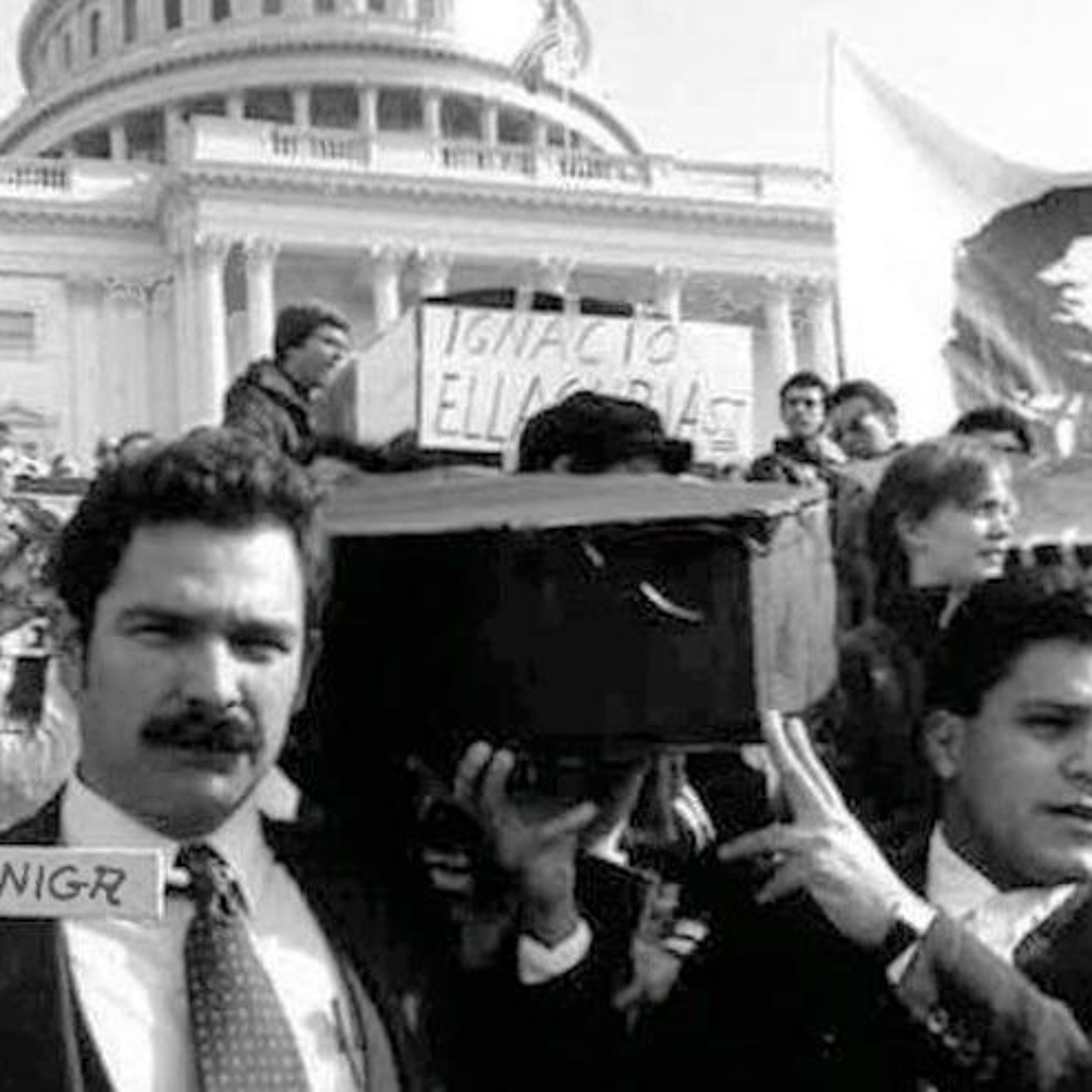
If you really want to understand the controversy of today, you might have to take a step inside an unlikely place: a church.
Back in the early 1980s, Jose Artiga lived inside the Most Holy Redeemer Catholic Church in San Francisco’s Castro District. That was after he fled El Salvador, when a death squad — a group of government backed assassins — came looking for him.
“My sister came early Saturday morning as I was leaving the house I was staying at and told me, ‘You've got to go, there is no time for questions, no time for investigations, you got to go,’” Artiga remembers.
Artiga was not alone. Nearly a fifth of El Salvador’s population fled the country’s violent civil war. But the Reagan administration didn’t want to admit that the Salvadoran government, an ally in the fight against communism, was also funding death squads. Artiga says the U.S. government wanted to keep the violence under wraps.
“More and more refugees were coming from El Salvador to the United States,” Artiga says. “As people were applying for political asylum, after a few years we realized that something like 99 percent of the applications were being denied.”
But that didn’t stop the mass exodus. So, churches in the U.S. stepped up, declaring themselves public sanctuaries. Church leaders offered to feed, shelter, and provide attorneys for the thousands fleeing violence.