The number of Internet users in China recently surpassed 400 million, according to state media. And that makes it the world's most wired country. It's also making it more difficult for the government to control all those users.
But it's trying.
Often those controls affect internet businesses like Google, which recently decided to stop censoring its search results--that had been the price of doing business in China. The company rerouted searches inside China to Hong Kong, where there is no censorship. You've probably heard about the Google move, but it was just one of hundreds of websites that were simply shut down last year because they didn't conform to Chinese censorship rules.
One of those shuttered sites was started right here in a garage in the Bay Area by three young Chinese entrepreneurs. They started an online translation community for techies that would eventually push the boundaries of freedom of expression in China and bump up against that country's authoritarian government.
Japhet Weeks has this report.
* * *
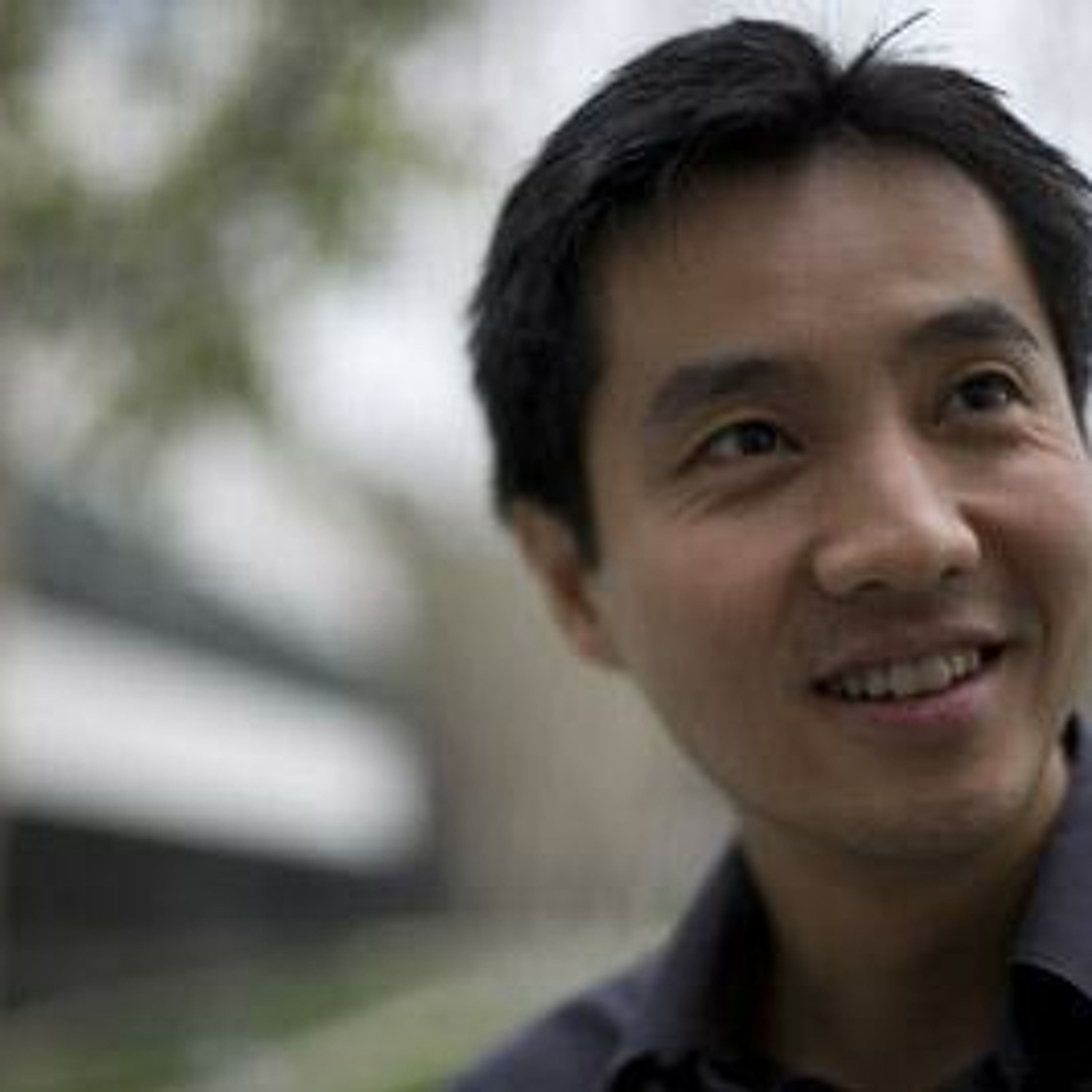
JAPHET WEEKS: Zhang Lei never thought he'd end up on the wrong side of the Chinese government. He's a 30-something techie from Beijing with an entrepreneurial bug. His first start-up tried to introduce fantasy sports into China. But it didn't work out.
So Zhang got together with two friends from China, who were living in the Silicon Valley. And they came up with an idea for a translation website, kind of like Wikipedia. Users are invited to translate and post articles from English to Chinese.
ZHANG LEI: There is a big barrier between cultures and one of the huge factors of this culture barrier is language.
Zhang's reasons for creating his translation start-up were even more personal. His father died of lymphoma a decade earlier. And Zhang continued to read about the disease online. He discovered there was information in English that didn't exist in Chinese.
ZHANG: The most striking information that I got from the English website is lymphoma is something that is treatable. So if you search for "lymphoma"--linbaliu-- in Chinese literature probably that information is not there. So I think that piece of information, that lymphoma is treatable, is curable, is just a great comfort, probably to give you the strength to fight for the disease.
Zhang's knowledge came too late for that. But it did help inspire Yeeyan, the translation website. The internet start up, now based in China, is the country's largest open-source translation community, with around 90,000 users contributing hundreds of new translations daily.
Zeng Zhen is an engineer in Santa Clara. He's also one of the first Yeeyan translators.
ZENG ZHEN: My first piece was something related with Guy Kawasaki because he had a book called The Art of the Start.
When they launched in late 2006, Zhang and his co-founders at Yeeyan assumed users like Zeng Zhen would translate pieces about technology and web start-ups.
ZHEN: I was thinking of starting something up with my friend and I was thinking maybe if I translate this piece it would help some other people in China who wanted to start their own business or start their own entrepreneurship.
Zhang says politics wasn't even on their mind yet.
ZHANG: Whether they're going to translate political related content -- or what's the consequence of that, we never thought about that at that point.
That all changed in 2009 when Yeeyan launched a joint project with The Guardian newspaper in London. Yeeyan's thousands of users would help translate British news for a massive Chinese audience. The project began with the publication of a week-long Guardian series on China called "China at the Crossroads." It was a perfect way to begin, really. And it generated lots of positive feedback from some unlikely Chinese readers.
ZHANG: Even the Chinese embassy in London wrote to our public mail box saying they are amazed about the quality and the balance of the coverage.
But other parts of the government weren't as pleased by the political shift in Yeeyan's content. Strict media censorship in China prevents criticism from penetrating the country's so-called Great Firewall.
ZHANG: After roughly six months of running this project, there was just one day, suddenly, I wasn’t able to connect to our main website and The Guardian site.
Yeeyan received a call from their internet service provider. It said Yeeyan had been shut down because of certain translated articles from British media. There was no specific mention of The Guardian project, but Zhang says it was obvious enough to the team there.
ZHANG: The hosting company said the government official told us that you have a lot of content that is related to comments on the Chinese policy so that's why we got shut down. But again that reason is not confirmed.
XIAO QIANG: Chinese government is creating essentially a two environments on the internet.
Xiao Qiang directs the China Internet Project at UC Berkeley.
XIAO: One is the internet we all know which is all the contents and servers and products outside of China. One is everything on the Chinese servers, inside its territories. And today people call it the Chinternet.
Xiao says every internet business that wants a piece of the Chinternet -- and with hundreds of millions of users, who doesn't -- has no choice but to play by China's rules. That means taking down sensitive translations, if you're Yeeyan.
XIAO: You want a growing business inside of China, then you have to operate in the Chinternet environment, which is controlled and regulated by the Chinese government.
Yeeyan was faced with the same dilemma as Google, which recently stopped censoring search results in China, but had to move to Hong Kong to do it. But unlike Google, Yeeyan decided to play by China's rules -- at least for now. Zhang says it was a tough decision, but in the end it, he says it was better to keep doing some good rather than none at all.
ZHANG: We had this discussion, shall we just launch Yeeyan outside of the Great Firewall? Yes, that would allow completeley free translation of our content and but we know that once we do that, the website will be completely blocked by the Great Firewall. But then the downside of that is we won't have any impact to Chinese audience. No one can read it.
Zhang says the shut down was a huge set back. But he remains optimistic. Though The Guardian content is no longer available to Yeeyan readers, at least the site will continue providing a space in the Chinternet where outside ideas can find a way in.
For Crosscurrents, I'm Japhet Weeks.