The fate of the U.S. economy has hinged on a lot of mortgage-related news. There’s loan modifications, refinancing and foreclosure prevention. But one topic that can often help families more than any other, has gotten little attention: short sales.
You may or may not know that a short sale is a way for homeowners to sell their property for less than what they owe, and to then walk away, debt free. Sounds too good to be true, but it’s happening at an increasing rate, as people turn to short sales to avoid foreclosure. It’s not as simple as it sounds though. In fact, the process can be so complicated and drawn out, that it can take up to a year and a half to get approved.
KALW’s Martina Castro reports that the short sale is a tug of war between homeowners, realtors, and banks – where the one with the most persistence wins.
* * *
MARTINA CASTRO: I first met Nadine Scott on her 47th birthday.
It was February 19th, 2009, and we were in East Oakland, in a sunny front yard packed with people: groups chatting, little kids running around. But we weren’t celebrating Scott’s birthday. Instead, we were at her neighbor’s house, where people had gathered to support a family fighting to keep their home.
NADINE SCOTT: My name is Nadine Scott and I came here today because not only am I a resident here on Ritchie street, I’m also a person that is an advocate of helping people stay in their homes.
We were at an event staged by activists from ACORN, encouraging homeowners here to fight foreclosure. Scott runs a shelter in the neighborhood, and is often helping those in her community who are down on their luck. This was at least the tenth foreclosure to hit Ritchie Street, and the trend showed no signs of stopping:
SCOTT: I’m at the door of foreclosure myself. I have a very high payment [for my home]; I owe more than what it is worth and it’s just a bad situation because for over a year and a half we have been working with the lenders, and every time we turn around they give us a denial letter, so it’s very frustrating, very frustrating.
Now, it’s nearly a year later.
SCOTT: So that’s the addition right there, with the master bedroom . . .
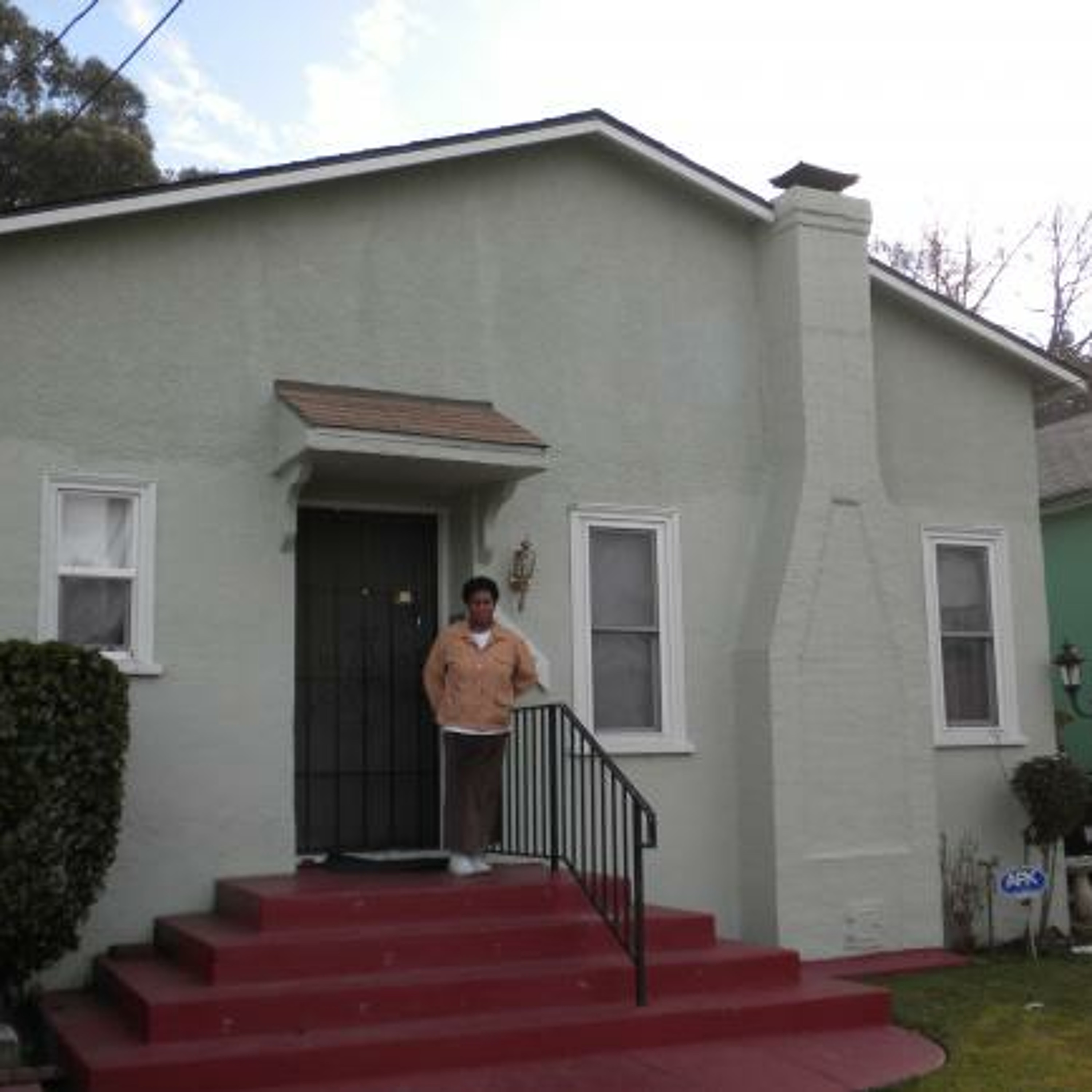
I meet Nadine Scott at her home, just a couple of blocks up from where we first met. Scott is showing me the renovations and repairs she’s made to her modest, three-bedroom house since she purchased it almost 16 years ago.
A lot has happened to the Scott family since last February. Those high payments Scott told me about? Well, they were $4,200 a month. The Scotts had to liquidate their 401Ks and savings to keep up, and they still ended up filing for bankruptcy. After trying -- and failing -- to modify her loan, Scott followed the fate of many of her neighbors, and fell into foreclosure.
SCOTT: These here are foreclosure notices. This company was sending notices saying your foreclosure date is September 17th.
CASTRO: Looks like you were getting one a month.
SCOTT: Oh no, no—they were sending 10 to 15 a month.
With a September deadline for her eviction, Scott turned to her last resort: a short sale.
GABRIELA TRUJILLO: It’s totally a gamble; you don’t know what’s going to happen.
That’s East Bay realtor Gabriela Trujillo. She specializes in short sales, and says it’s not as easy as finding a buyer willing to take your house for the right price. She says banks require homeowners to provide extensive documentation to prove why they can’t pay their mortgage, and approval can take anywhere from three to ten months.
TRUJILLO: Not only that, but it’s all about negotiations. We’ve seen [that] the bank is not willing to negotiate and let the seller sell the house; so you end up doing all this stuff and getting a buyer, and the bank may say no, so you are at the mercy of the bank, complete mercy of the bank. Usually this happens with the bigger banks -- can I say names? I’ve seen this happen a lot with Bank of America--that’s probably the hardest experience I’ve ever had.
Trujillo complains of papers routinely getting lost, not having a direct contact to a negotiator, and spending hours on hold just trying to get a hold of real person on the phone.
TRUJILLO: And you’re afraid to hang up the phone, because then you might not get through, or sometimes they pick up the phone and they hang up, or sometimes they pick up the phone and they tell you [that] you have the wrong department. It’s a massive, massive mess.
For Trujillo, there is a disconnect here. On average, banks lose 50- to 100-thousand dollars more on foreclosures than on short sales. And homeowners win too, because they can walk away debt free, and with a lower penalty on their credit score. So why do short sales take so long? Trujillo has a theory.
TRUJILLO: The reason why banks don’t care is because the government has already given them all this money, right? So the government has already given them all this money and they are able to write all these properties off as foreclosures, right? If you think about it, why would they care?
It’s an industry-wide concern. In December, the National Association of Realtors co-hosted a webinar with Bank of America’s home loans division to address these issues head on.
STACY MONCRIEFF: Okay, this is Stacy Moncrieff from Realtor Magazine; it’s about 2 o’ clock in Chicago…
The webinar host, Stacy Moncrieff, kicks off the conversation with an honest question.
MONCRIEFF: Tell us what Bank of America is doing to help facilitate these sales.
DAVID SUNLIN: Thanks for the introduction . . .
That’s David Sunlin, Vice President in charge of short sales with Bank of America.
SUNLIN: So, lets talk about why it has taken so long in the past, and how is the process structured that doesn’t lend itself to moving quickly . . .
More often than not, it doesn’t go at all. Sunlin says 60 to 70 percent of all approved short sales ultimately fail. Reasons for that failure vary depending on who you ask. Realtors like Gabriela Trujillo blame the banks for being unresponsive and difficult to work with. Sunlin says it’s because the procedure wasn’t designed to process the volume of short sales that they are seeing today.
But that’s going to change.
Bank of America and 82 other banks are required to follow new Treasury guidelines that aim to expedite short sales. The Home Affordable Foreclosure Alternatives program lays out deadlines and financial incentives for all parties involved, including $1500 for the seller’s moving costs. Pretty good. But here’s the catch:
These guidelines don’t apply to Fannie Mae or Freddie Mac loans, which account for about half of the mortgage debt in the U.S. Not everybody necessarily qualifies, and, As Jeff Lischer with the National Association of Realtors points out, the guidelines don’t do much to reduce the paperwork either:
JEFF LISCHER: 43 pages of guidelines, short sale agreement, alternative request for short sale . . .
The only difference is that the paperwork is now required before getting an offer, so when an offer on the property comes in, instead of spending ten months deliberating, lenders have ten days to respond with a yes or no. The guidelines don’t take effect until April, but David Sunlin with Bank of America says:
SUNLIN: A lot of lenders may be able to participate sooner than April.
JEFF LISCHER: That would be great.
Back on Ritchie Street, Nadine Scott chats with the handyman about a repair to the shelter. Scott’s social work in this community goes back decades.
SCOTT: We provide shelter for the homeless and food for the needy, so people said, we don’t want you to leave the neighborhood, you know!
In September, seven months into her attempt at a short sale and just days before her scheduled eviction, Scott’s prayers were answered. Not only did her lender finally accept an offer, but the buyer also agreed to let her and her family stay in their home.
SCOTT: It was just nothing short of a miracle. I mean, that just doesn’t happen everyday. Like I said, we lost different neighbors that our children used to play with, they’re gone now; several families are gone. It’s just nothing short of a miracle.
Soon, Nadine Scott will celebrate her 48th birthday with much more certainty about her future than she had at this time last year. But there are many other Bay Area residents still waiting to hear from their banks as they try to avoid foreclosure.
For their part, Banks are still reading the fine print on the new treasury guidelines. So far, like Bank of America, many have responded positively. But there's no way to know if these guidelines will actually improve the short sale process until they go into effect almost four months from now.
In East Oakland, I’m Martina Castro, for Crosscurrents.
* * *
To know more about Nadine Scott's community work in East Oakland, go to the Ariel Outreach Mission website.
Special thanks to the National Association of Realtors for permitting us to use audio from theirwebinar on short sales for this report.
The Making Home Affordable website includes information about eligibility criteria for the new US Treasury guidelines and incentives under the Home Affordable Foreclosure Alternatives Program.
Here is more information about what steps Bank of America is taking to address delays in the short sale process.
You can also check out these articles for more information about these topics:
Only 4% of Troubled Homeowners Get Help -- CNN Money, 12/10/09
Winning the Trial, Losing Your House -- Loan Modification Blog, 1/3/10