Architecture has the power to transform. A building can make us feel joy, or sadness, powerful or weak.
Nowhere is this more true than in a church, chapel, synagogue, Buddhist temple, or mosque. For centuries, religion has sparked the design of some of the world’s most beautiful buildings. But what is that process? What built elements make a space sacred?
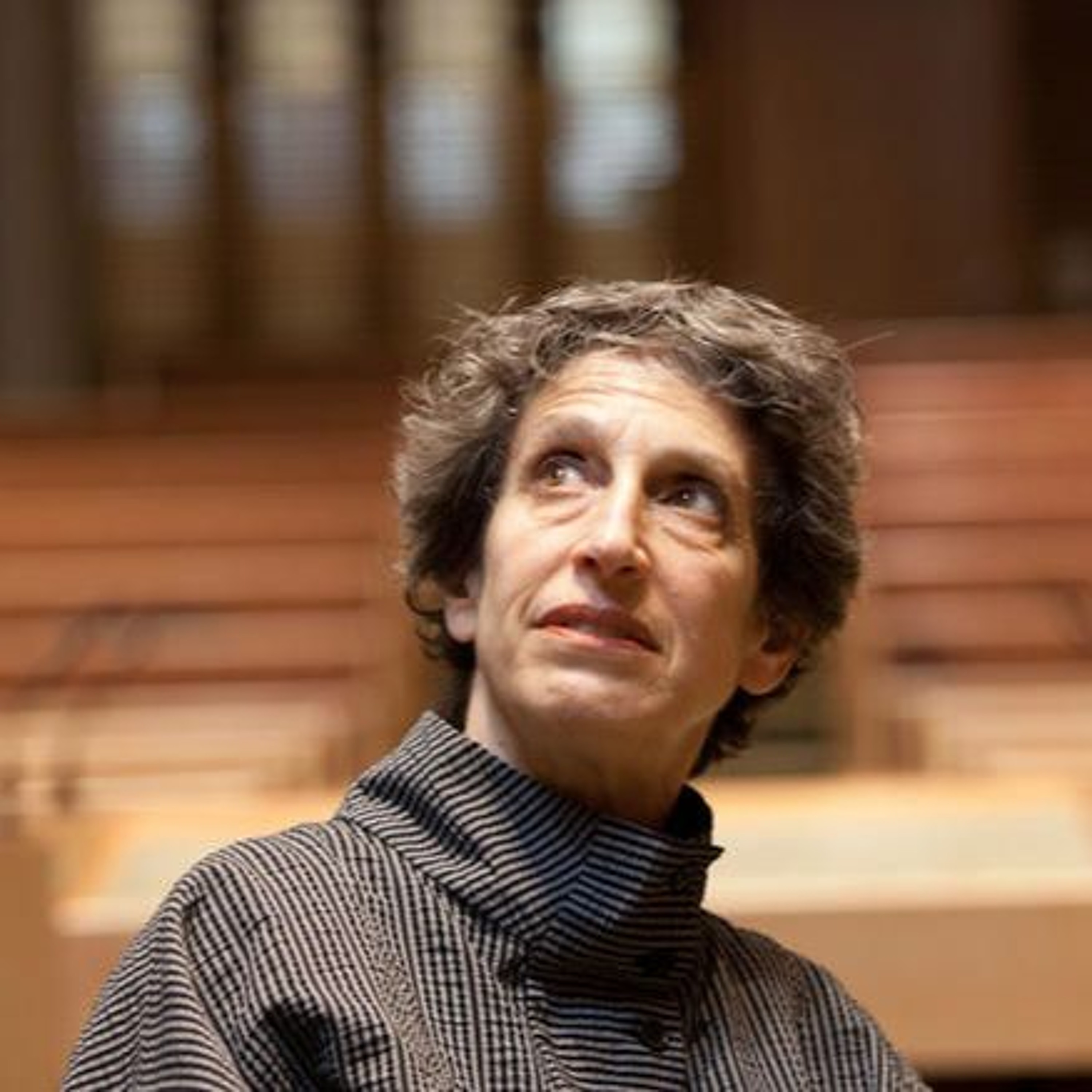
Architect Susie Coliver says experiencing the design of a sacred space begins way before you step foot inside a building.
Coliver and I are standing in the parking lot of Kol Shofar, a synagogue in Tiburon. We’re surrounded by eucalyptus trees and grassy hills. The building is nowhere in sight. There’s a twisting set of concrete stairs ahead of us. They wind around the trees, taking you forty feet up the hill.
“You leave the parking lot behind. You leave the everyday. You leave the secular behind as you climb, slowly,” Coliver tells me as we walk up the stairs.
She points out the concrete landings. They are imprinted with leaves from trees above. Each landing has a bench.
“It feels very accessible and psychologically that's important, especially for people who are not as agile,” Coliver says.
At the top, the synagogue finally comes into view. Coliver designed it four years ago. She’s Jewish, but has connected and designed buildings for communities of many faiths.
“The hope is that from the parking lot, up the curved stairs, that one is going through a process of quieting,” Coliver says as we make our way into the building, toward the sanctuary’s entry.
Along with any music, light seeps through gaps in the walls of this curved hallway.
“So not unlike being in a forest, the light is coming through slatted wood. The wood is in variable dimensions so the light is hitting every piece of wood along the curved path a little differently,” Coliver says.
Before Coliver even begins putting pen to paper, she asks a committee of community members a central question, to recall a place where they felt most connected to a spirit beyond themselves.
“It’s very rare that somebody will say a cathedral. It’s far more likely in our experience that they'll say a place in nature. A sunset on the beach, or they’ll say a mountaintop with an endless view, or they'll say a grove of trees with dappled light coming through,” she explains.
You can feel this as you emerge at the end of the entryway into an open round space. We’re in the sanctuary now. It feels like the center of a redwood grove. The curved rows of seating are colored with a burnt red fabric, matching the bark of the trees nearby. They wrap around the central bema, or pulpit.
“People frequently let out a sigh,” Coliver says.
“I think people feel a small sense of awe. You see it on faces a lot.”
If you were in the sanctuary during a service, you’d see Rabbi Chai Levy in the center and the faces of 100 others.
“When you're praying, you’re seeing the face of the other, and that divine dwells in that holy space where humans connect,” Levy says.
Levy says as soon as you put two people together, God is in the mix. It’s something the rabbi and the committee wanted in Coliver’s design.
“I see both the beauty of people having prayerful experiences, their souls reaching out in prayers. I also see the faces of people struggling with whatever they're going through in their lives.”
Not only can people see one another clearly in the round, they can also see changes taking place outside. There’s a tradition in Judaism that the day starts not at midnight or daybreak, but when you can see the first three stars in the evening.
“So we gave them skylights through which you could discern when the new day had started by virtue of being able to see the stars. That was hugely important to them,” Coliver says.
This piece is originally ran on January 21, 2015, as part of KALW's reporting project, The Spiritual Edge—stories about innovations in belief, belonging and practice. For more stories, go to http://thespiritualedge.org.