About 20% of American Muslims are converts — people who didn’t grow up with the religion and often don’t have any cultural ties.
In some faiths, there’s a clear path for prospective converts. Catholicism, for example, has an official course of rites, rituals, and classes for those entering the Church. Islam doesn’t have a formal conversion process like that. To become a Muslim, you declare your new belief with conviction in front of a Muslim witness, and that’s it.
For this reason, many converts say they need help and support — but it can be surprisingly hard to find. One place it can be found is the Muslim Community Association in Santa Clara, which has been offering post-conversion support classes for the last seven years.
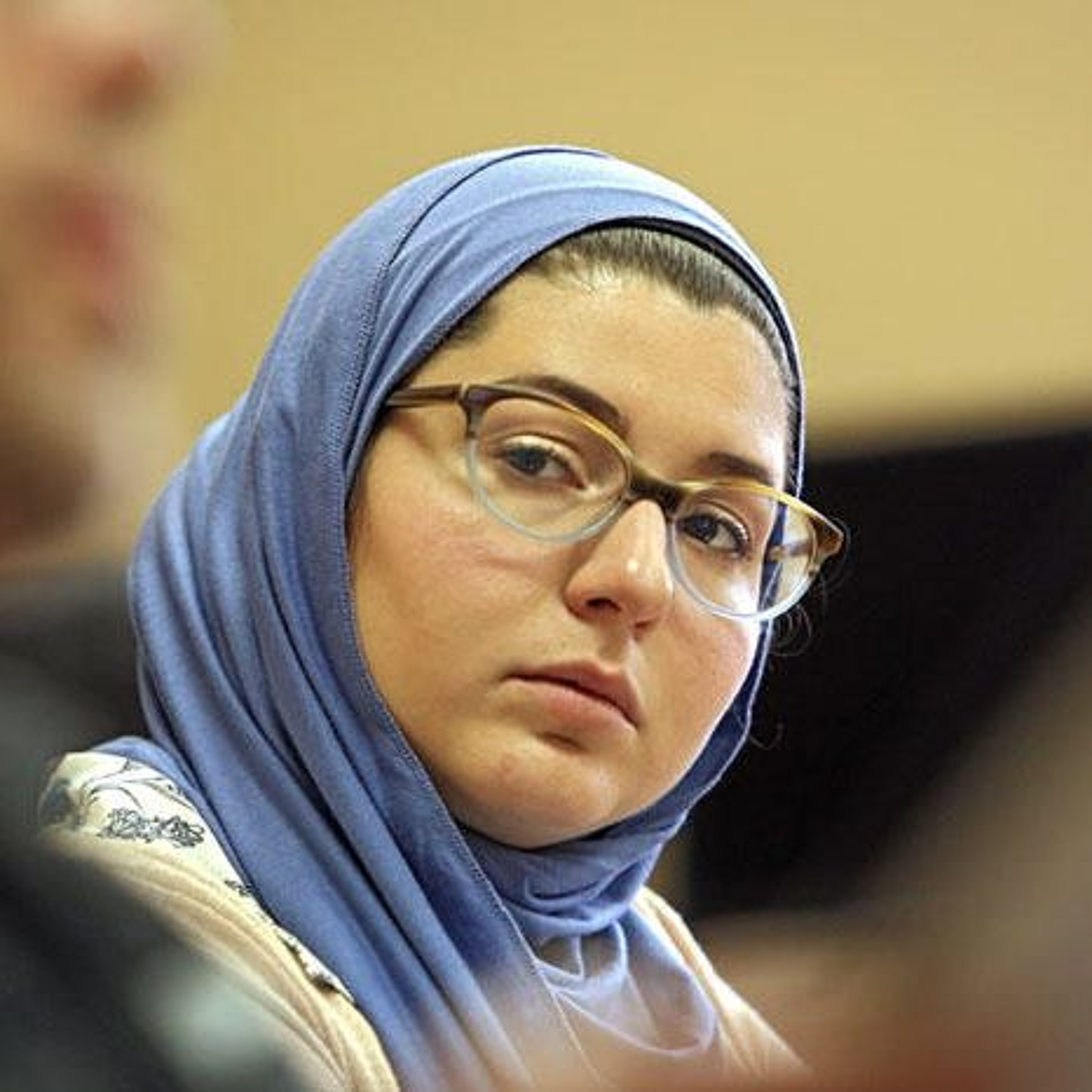
Twenty-six-year-old Nathalia Costa is in the women’s prayer hall at the mosque. She’s here for the midday Saturday prayer. Wearing a baby blue headscarf, she stands in a straight line with her hands folded above her heart, moving in unison with about 20 other women. They kneel, then prostrate, then sit, and stand back up again, all in silence. Through the corner of her eye, head bowed, Costa follows the women closely.
Costa is new to this. She’s a Brazilian American who became Muslim in December 2016. She used to be Catholic, and says her conversion to Islam came after a long search. She tried different churches throughout her life — from Catholic, Presbyterian and Baptist, to Seventh-Day Adventist Christian congregations.
“And I remember asking my mother,” she says, “‘How do I know what is the truth if every church is saying something different?’ [My mother] said, ‘You don't know, but whatever you feel in your heart to be right is the truth.’”
Costa started studying other religions like Islam and Buddhism and moved to Istanbul, Turkey, where she taught English for a year. While there, she was further immersed in Islamic culture.
“I learned more and more about it, and I found the truth in Islam. I found that there's a lot of consistency in it,” she says.
Now, Costa is learning these new rituals little by little.
She laughs, “I get jealous of people born into the religion.” She says she still doesn’t know how to pray correctly, still needs to learn all the suras, the chapters of the Quran that Muslims memorize to recite in prayers.
When the prayer’s done, the other women notice her: an unfamiliar face. She tells them she’s a new Muslim, and they crowd around her — all smiles, hugging and kissing, congratulating her. Especially excited is a Moroccan grandma named Sister Fateeha Abu Mahmoud Kratas. She hugs Costa and says, “You will be our daughter! You are very, very, very welcome!”
After Costa emerges red-faced from the big dose of warm and fuzzy welcome, she walks to another mosque building for her convert support class. It’s called “Study Islam.” She says she’s slowly learning about the religion, but there’s a lot she still doesn’t know. It feels good to be around fellow converts, learning more information and being able to openly ask questions.