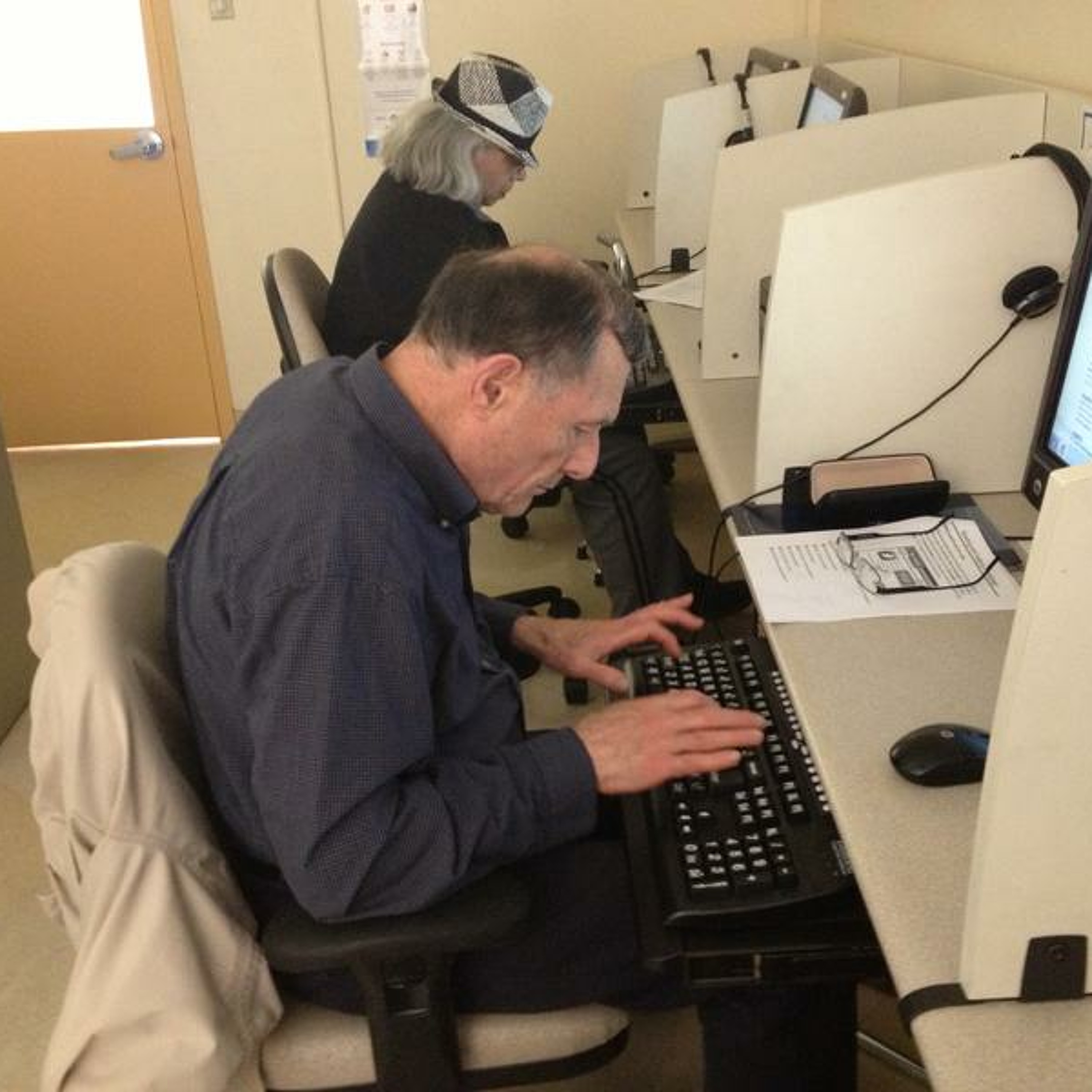
Mary Bartholomew is a senior citizen. A couple years ago, she didn’t know much about computers, or how to use the internet. And one day she found herself in a bit of a pickle.
“I was trying to find somebody that had asked me years ago for some pictures. Very special pictures,” says Bartholomew.
She had found the pictures but didn’t know where this woman lived or how to contact her. So she called a mutual friend, who happened to be Facebook friends with the woman she was looking for.
Bartholomew says, “I don't know what she did, but she did something where she sent a private note to the lady I was trying to find and said, ‘You know Mary has the pictures you want. Call her at such and such a number.’ In half an hour, the lady called me! I was so amazed!”
After meeting up with her long-lost friend and giving her the long-awaited pictures, Bartholomew decided there was something to this social media thing after all. So she enrolled herself in computer classes at the 30th Street Senior Center in San Francisco. Bartholomew says that before her first class, using a computer was a frightening prospect.
“If you're learning a new language, you're intimidated because you don't know what to talk about, and you don't know your vocabulary. With the computer, I didn't even know what to ask,” she says.
Getting seniors comfortable with using technology is the aim of SF Connected, the City initiative that administers the class at 30th Street Senior Center. The program provides free computer training throughout the city for seniors and adults with disabilities, through partnerships with community-based organizations.
Aaron Low is the program manager for SF Connected. He says the city’s services for seniors have traditionally concentrated on basic needs like transportation or nutrition, but he believes the ability to use technology is akin to nutrition for the mind.
“If you only have nutrition to your body without keeping some of the other mental abilities, the expansion of all those other things, then half of you is just kind of starving,” says Low.
He says there are real practical concerns, too, with more government services moving online. He’s heard that people won’t be able to get paper copies of reports.
“And if that’s not available on paper anymore for these folks, how are they going to get it? They have to be able to get online,” he says.
Many San Francisco seniors are low-income, and many live alone. So they’re at high risk for isolation, which can have serious health consequences. That’s why SF Connected has about 250 computers, configured in 6 languages, in more than 55 locations all around the city.