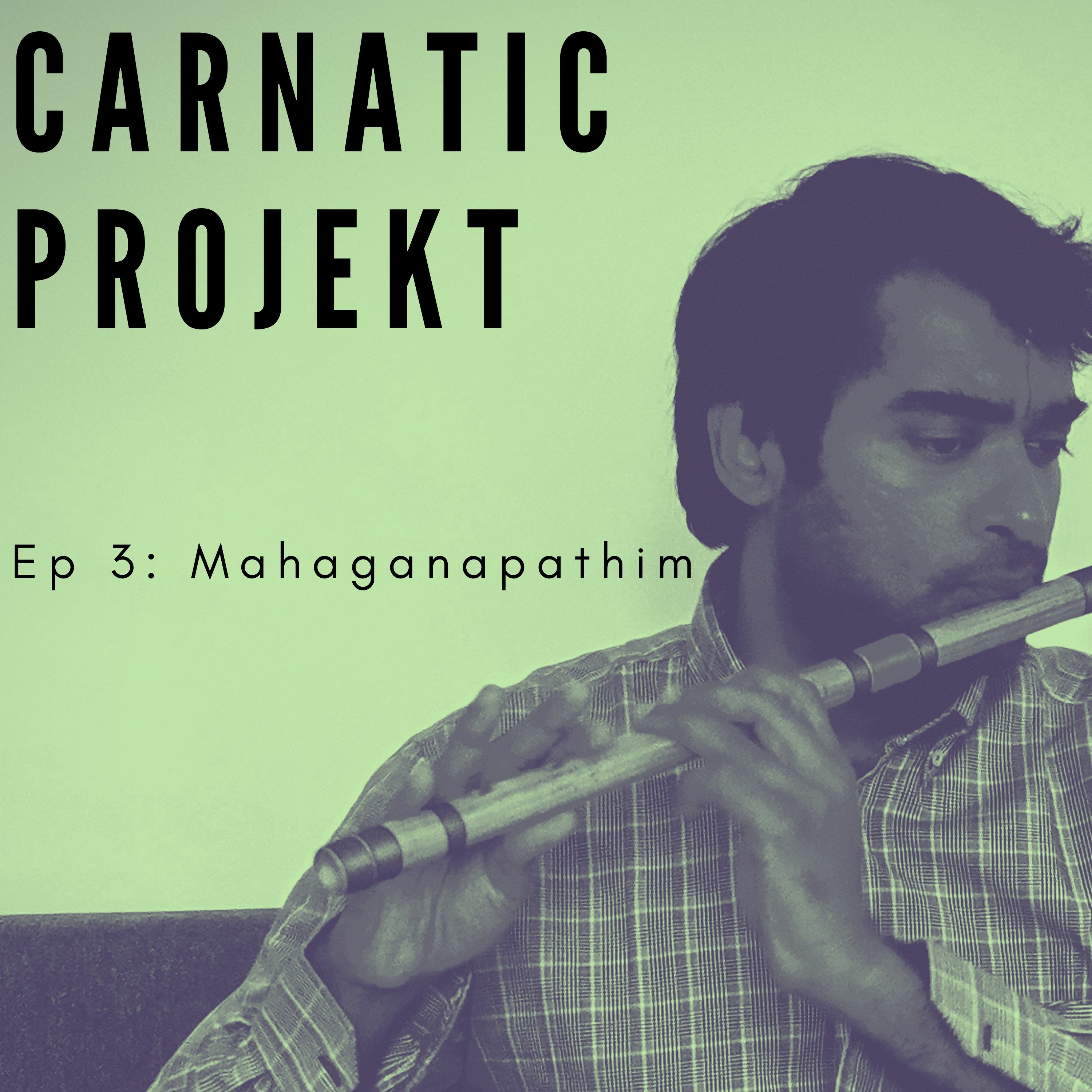
Youtube: https://www.youtube.com/watch?v=wKmp930_jQY
Download/presave:
Apple: https://music.apple.com/us/album/mahaganapathim-single/1522176335
Bandcamp: https://indianmusicfan.bandcamp.com/track/mahaganapathim
The third release in the Carnatic Projekt is Mahaganapathim, one of the most popular kritis of Mudduswami Dikshitar. One of my very favorite as well.
Details:
Song: Mahaganapathim
Ragam: Naatai
Talam: Chatusra Ekam
Mudduswami Dikshitar
Arrangement, Flute, Video: Vijay Kannan
social links: https://compiled.social/VijayKannan
------------------------------------------------------------
Releases in Carnatic Projekt:
------------------------------------------------------------
Ep 1: Alaipayuthey - https://youtu.be/z56_VOYA_MY
Ep 2: Mokshamu - https://youtu.be/yZ6H8gCpB_0
Ep 3: Mahaganapathim - https://youtu.be/wKmp930_jQY
------------------------------------------------------------
Saint Mudduswami or Muthuswamy Dikshitar is one of the trinity of carnatic music. His devotion to the Almighty, frugal mode of living, and unmatched range and skill in musical compositions (both lyrics and music) are well known. Born in Thiruvarur in 18th century, Dikshitar learnt music from his father, a celebrated musician. When iving in Madras (Chennai), he came across Western symphonies. Later, he became a disciple of Chidambaranata Yogi in Varanasi, where he became acquainted with Hindustani music too.
It is said that, after the demise of his Guru, when he moved to Tiruttani, Lord Muruga blessed him and initiated him into composing music.
Several incidences of his life are known, that portray his deep devotion to the Supreme.
As Saint Dikshitar played Veena, his songs are composed in a way suited to be played on instrument, or sung.
He was well versed in philosophy, scriptures, yoga and other sacred ancient teachings.
He has composed songs on multiple deities, including Ambal, Muruga, Ganesha, Shiva, Narayana.
These songs reveal the Saint's intimate knowledge of the names and forms of divine beings (nama rupam), their stories and the spiritual significance of these descriptions. To him, these divine beings were all personalities, with their attributes, preferences.
As he visited temples in specific places, he would compose songs exclusively in praise of the deity at that particular divine place (kshetra)
He was a realised soul who could see all deities as manifested forms of one Supreme Spirit. His songs, even as they describe beautiful, exciting tales of the deities at their kshetra; stories of various divine forms, stories of the temples, also speak of their spiritual significance. In these songs, the moral, emotional relationship of the devotee with each name and form melds with the philosophical truth, of Divine Consciousness as the fundamental reality of the universe.
The role of the Supreme Being as the Provider, Protector, and Controller of the Cosmos, His (or Her) nature as the Absolute Truth - Pure Existence (Sat), Consciousness (Chit), Bliss (Ananda) are evident in his songs.
Mahaganapathim is a short composition, with only 2 stanzas (Samashti Charanam) and describes Lord Ganesha, His preferences, His glory, as the mind dwells on Him in devotion (smaranam)