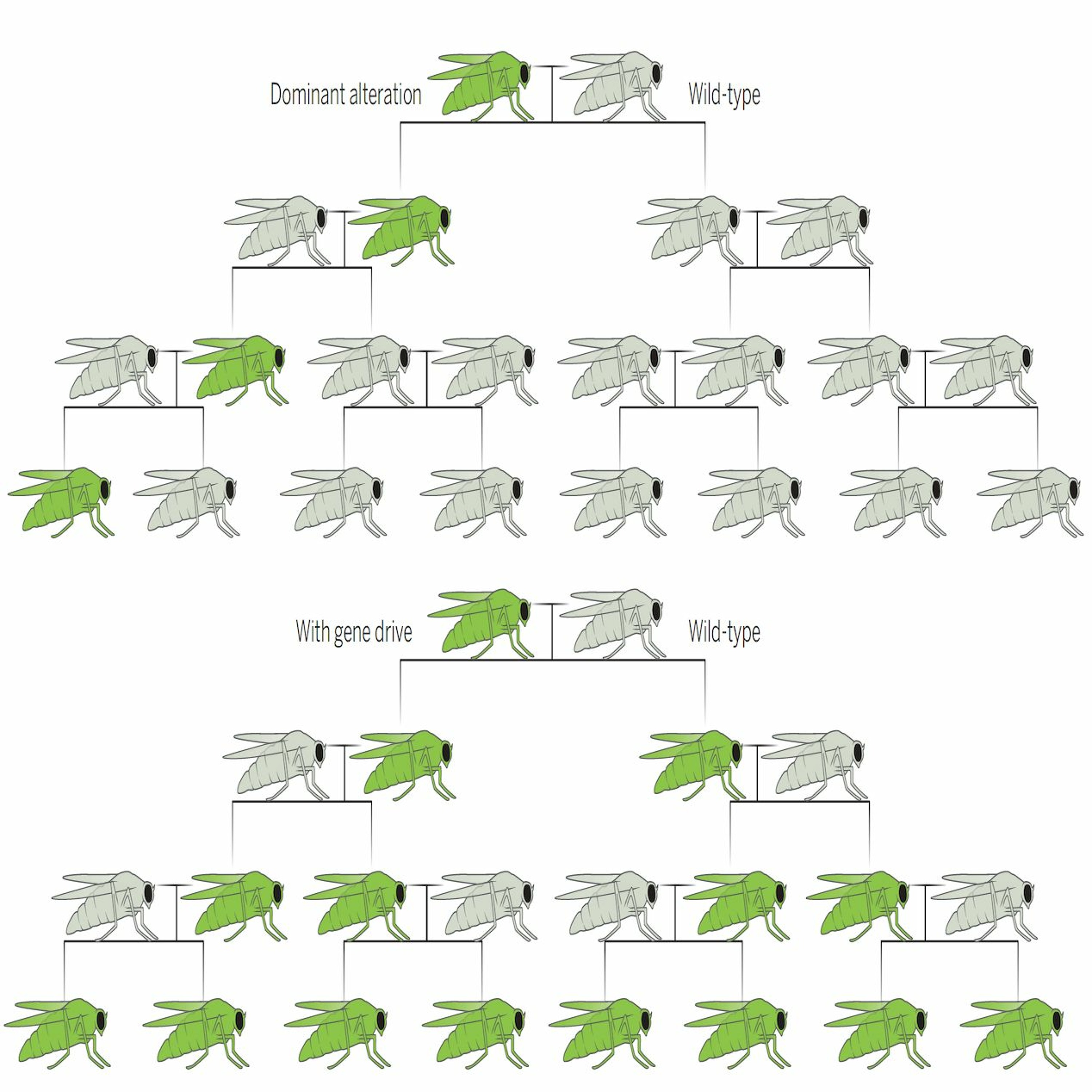
It's one thing to genetically modify an organism in the lab. It's another thing to spread those modifications in the wild, altering whole populations or even species. A new technology, the "CRISPR gene drive," promises to do just that, giving human beings unprecedented power to fine-tune the natural world and change the course of evolution. Malaria-resistant mosquitoes? Lyme-free ticks? The possibilities are endless. I talked to molecular biologist and "evolutionary sculptor" Kevin Esvelt, who first proposed the CRISPR gene drive, about its potential and its perils.