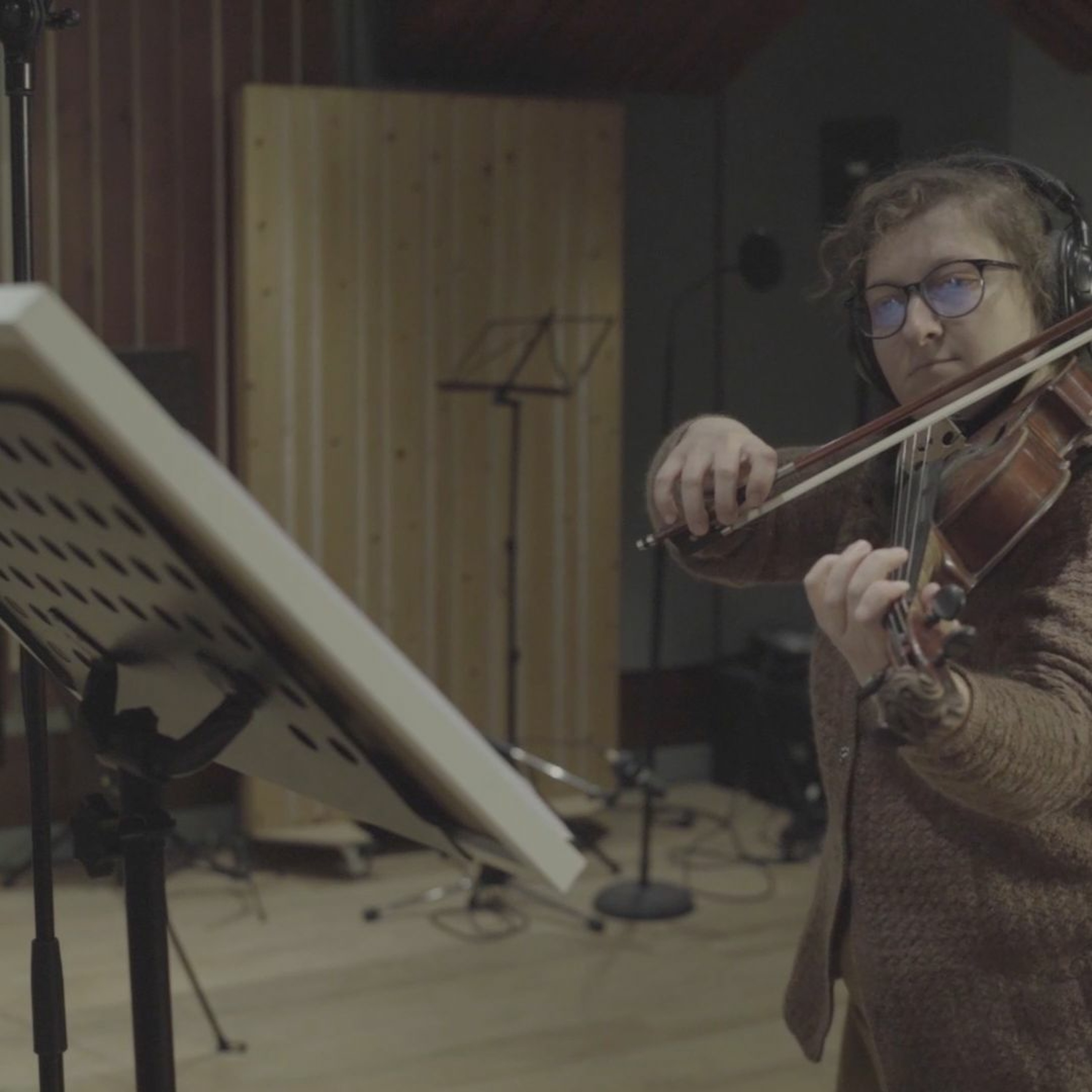
The Rainscape solo pieces have been developed for providing the musician with the necessary tools to accompany the "Rainscape 2019” kinetic sound sculpture made by Anna Godzina.
The main goal of the composition series is to explore the alliance between the audible sounds of the sculptures and the human musician’s ever-changing perception.
The composition focuses on the research of various (en)harmonic sound components, irregularities in pitch and rhythm patterns produced by the kinetic sculpture, providing musical constructs with nuances, tensions, repetitions and melodic properties transcribed into a score.
"The Rainscape" for viola score focuses on a different strategy of employing and interacting with the sculpture. The original sound recordings of the machines are provided for practice purposes. The performer is presented with a modular, non-linear score which can permit playing, listening and responding to structures heard from the machines at the same time.
The main resonant frequency of the corresponding machine is C#. In order to enhance the resonating qualities of the instrument the piece is recommended to be performed with scordatura [retuning of the instrument].
Structure
The beginning and ending modules are fixed (M1 and M24).
Modules M2 - M23 may be played in any order of choice. If needed, modules can be played more than once while other modules may be excluded even though the performer should aim at playing them all.
Modules may be:
• repeated when the musician feels that it serves the flow of the performance.
• played at random or sequentially
• played in succession or separately (when separately, transition modules can be chosen to fill in the time until the decision is made about which module to play next)
Modules have specific rhythmic, dynamic and sound profiles but on repeat, the performer may modify some of these parameters for a more spontaneous interaction with the sound of the machines.
• modifiable parameters: tempo, dynamics, sound colour (only tasto-pont-legno, half-stopped fingering of left hand)
• non-modifiable parameters: pitches*, articulations (pizz, gliss, tremolo, specific non-pitched effects)
*exceptions for pitch parameter: switching between alto/treble clef (the module may be performed entirely in one or the other)
The performer may aim at slight variations which would not interfere with the gestural profile of the module.
Transitions and spaces between modules:
Together with the machine sounds, the piece should give the impression of a continuum or dialogue between instruments. The performer may choose between different options for transitioning between modules:
• short rest (filled with the drone on C#)
• “breathing” or caesura
• immediate playing of another module
• playing of transitional modules
• playing repeatedly any structures containing 16th notes from the score, e.g., at the end of M6, the opening 16th notes are repeated until a new module is chosen and played.
Notations:
A gradual transition between one technique to the other
less finger pressure in left hand for a slightly distorted sound
left hand finger pizz.
Feather beams – tremolo to be played in accel. or rit.
Slapping sound obtained by hitting the tailpiece with the wood of the bow.
Main transition material: variations on continuous lower C# drone.
Examples of variations are suggested, but the performer may choose any other as long as the sound is continuous.