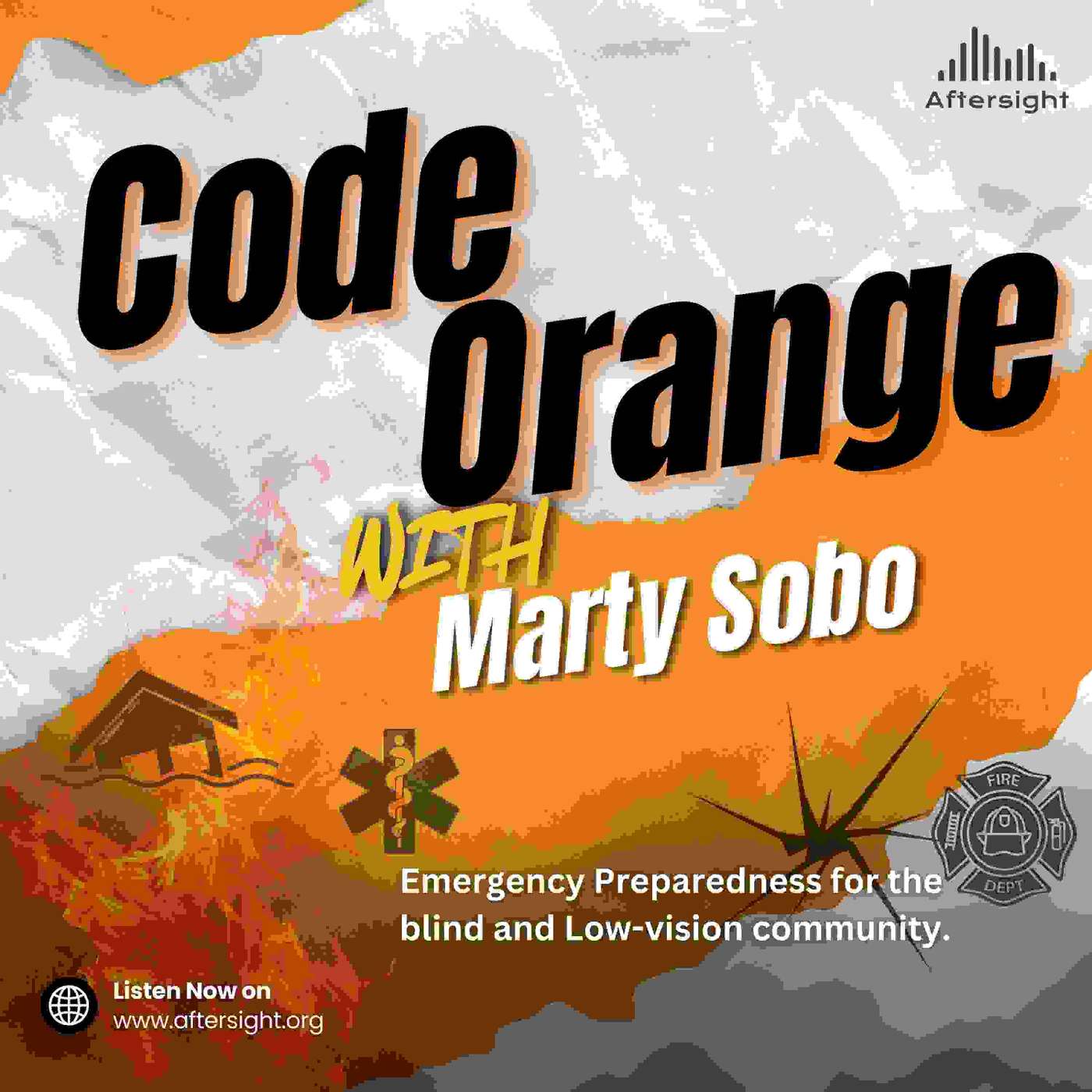
The premiere of Code Orange kicks off with host Marty Sobo and guest Penn Street diving into why this show exists: to bring emergency preparedness into focus for the blind and low-vision community. From Penn’s personal experiences with Colorado floods to Marty’s firsthand accounts of California wildfires, the two underscore how unprepared many people are when disaster strikes.
They tackle the gaps in emergency alerts, the risks of not having a plan, and the importance of neighbors and support networks. They also explore practical steps: building a go-bag with essentials like a cane, meds, backup power, clothes, food, and pet supplies; setting up ICE (In Case of Emergency) contacts; and even preparing service animals with their own “to-go” kits.
This conversation challenges the idea that people with disabilities are simply “at risk.” Instead, Penn and Marty argue that the blind community can lead the way in preparedness, often planning ahead and adapting faster than sighted peers. The episode closes with a strong call to action: preparation isn’t fear—it’s survival and leadership.
Contact Info
Guest: Penn Street — penn@aftersight.org
| The Blind Chick Podcast (available on all major platforms)
Organization: Aftersight — aftersight.org
| feedback@aftersight.org
Producer: Jonathan Price, Podcast Producer at Aftersight
Show Credits
Host: Marty Sobo
Guest: Penn Street
Producer: Jonathan Price
Chapter Markers
00:01 — Show Intro: Why Code Orange exists
02:15 — The origin story: floods, fires, and lived experience
04:45 — Gaps in preparedness and the danger of “grab anything”
07:10 — The importance of having a plan vs. improvising
09:25 — Evacuation challenges when blind and alone
11:50 — Should disabilities be marked for responders?
14:15 — Building support with trusted neighbors
16:30 — People with disabilities as leaders in disasters
19:00 — Guide dog stories from 9/11 and beyond
21:15 — What to pack: essentials for a go-bag
25:40 — Pet and service animal preparedness
28:00 — Travel and hotel emergencies
30:20 — Top three steps in an emergency
35:00 — Failures of the alert system
38:30 — Tech gaps: rural areas, Wi-Fi, and cell towers
43:00 — Homework for listeners: to-do lists and go-bags
45:30 — Final goals: education, awareness, and hope
48:00 — ICE contacts and medical ID setup
50:15 — Tech tools for safety (Apple Watch, smartphones)
52:00 — Looking ahead: topics and expert guests
54:00 — Closing thoughts and contact information