Welcome back
where we explore the wonders—and weirdness—of the cosmos. I'm your host, Summer, and today we're diving into one of the most talked-about space stories right now: 3 I ATLAS. This interstellar comet has been making headlines since its discovery last summer, and even in January 2026, it's still dropping surprises. So, what's going on with this cosmic traveler? Let's break it down.
First off, 3 I ATLAS isn't your average comet. It's the third confirmed interstellar object to swing through our solar system—meaning it started its journey from another star system entirely. Discovered in July 2025 by the ATLAS asteroid survey in Chile, its hyperbolic path screamed "visitor from afar." Unlike objects born here, it won't stick around; it's just passing through at blistering speeds.
It zipped closest to the Sun at the end of October 2025, then brushed past Earth in mid-December—no closer than about 170 million miles, so zero danger. But that's when things got really interesting.
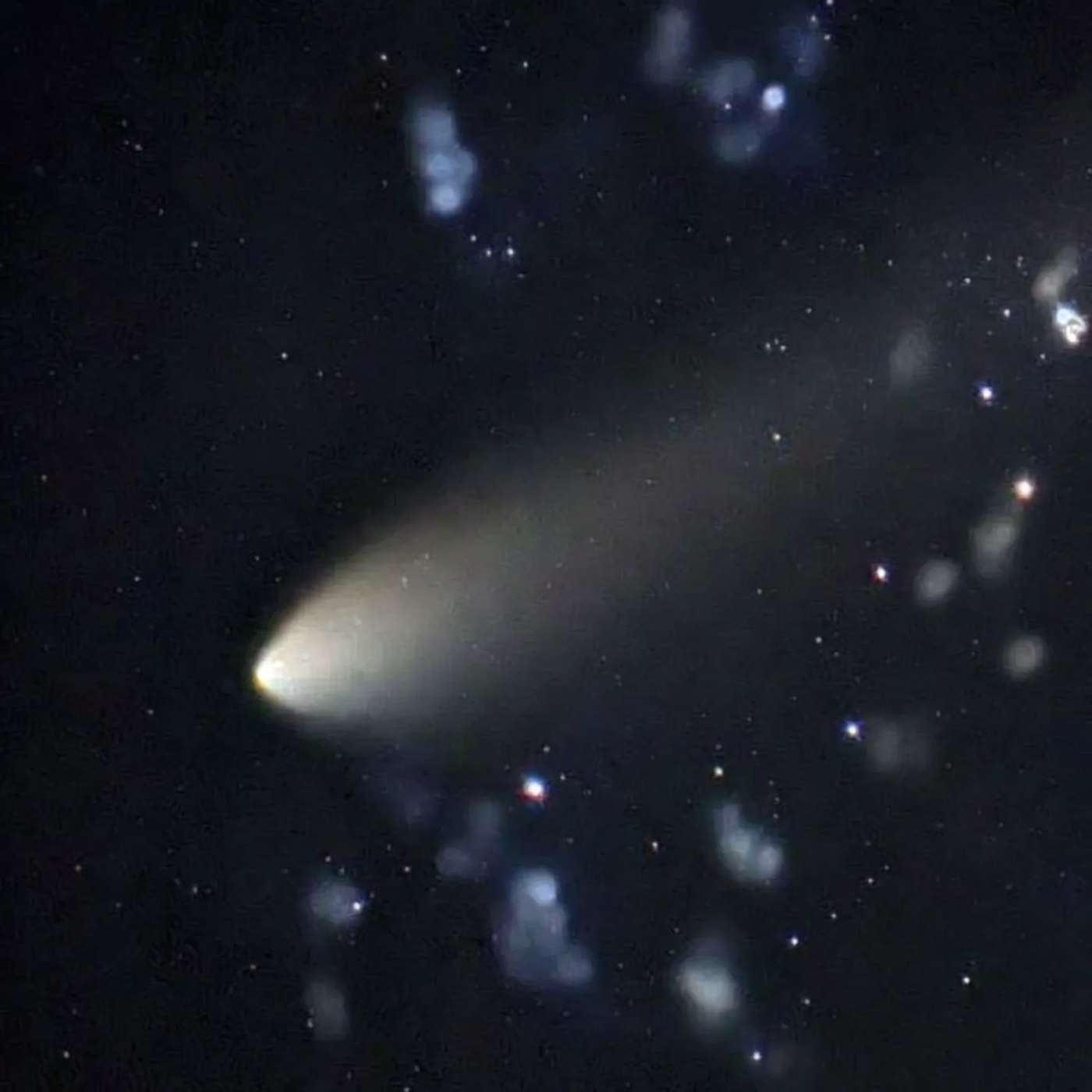
Astronomers have been watching closely with everything from Hubble and JWST to ground-based telescopes. And this thing doesn't behave like a typical solar system comet. For one, its coma—the fuzzy envelope of gas and dust—shows a bizarre anti-tail jet pointing straight toward the Sun, not away like we'd expect. There are wobbling jets suggesting the nucleus is rotating every 15 hours or so, and its outgassing is heavy on carbon dioxide with oddly low water vapor. Some analyses even highlight nickel in the gas—more like industrial alloys than natural comet ice.
Harvard's Avi Loeb has been vocal, pointing out up to 18 anomalies that don't perfectly fit the comet mold. Things like orbital alignments, jet patterns, and possible non-gravitational boosts. He's careful to say it's most likely natural, but these quirks keep the conversation alive. Could it be something more exotic? Most experts lean toward "very unusual natural comet," possibly billions of years old from a distant part of our galaxy.
Searches for alien tech—like radio signals from Breakthrough Listen—came up empty. No artificial emissions. Just a silent, icy rock doing its thing.
As of now, in January 2026, 3 I ATLAS is outbound, fading fast, and headed toward a close pass by Jupiter in March. It's too dim for backyard telescopes anymore, but there's a final public livestream coming up on January 22 during opposition—when it's perfectly opposite the Sun from us. That alignment could make its dust shine brighter in a phenomenon called the opposition surge. A great last chance to glimpse it before it vanishes into the void forever.
Why does this matter? Interstellar objects are rare windows into other star systems. Studying 3 I ATLAS helps us understand how planets and comets form elsewhere. And with next-gen telescopes coming online, we might spot more of these visitors soon.