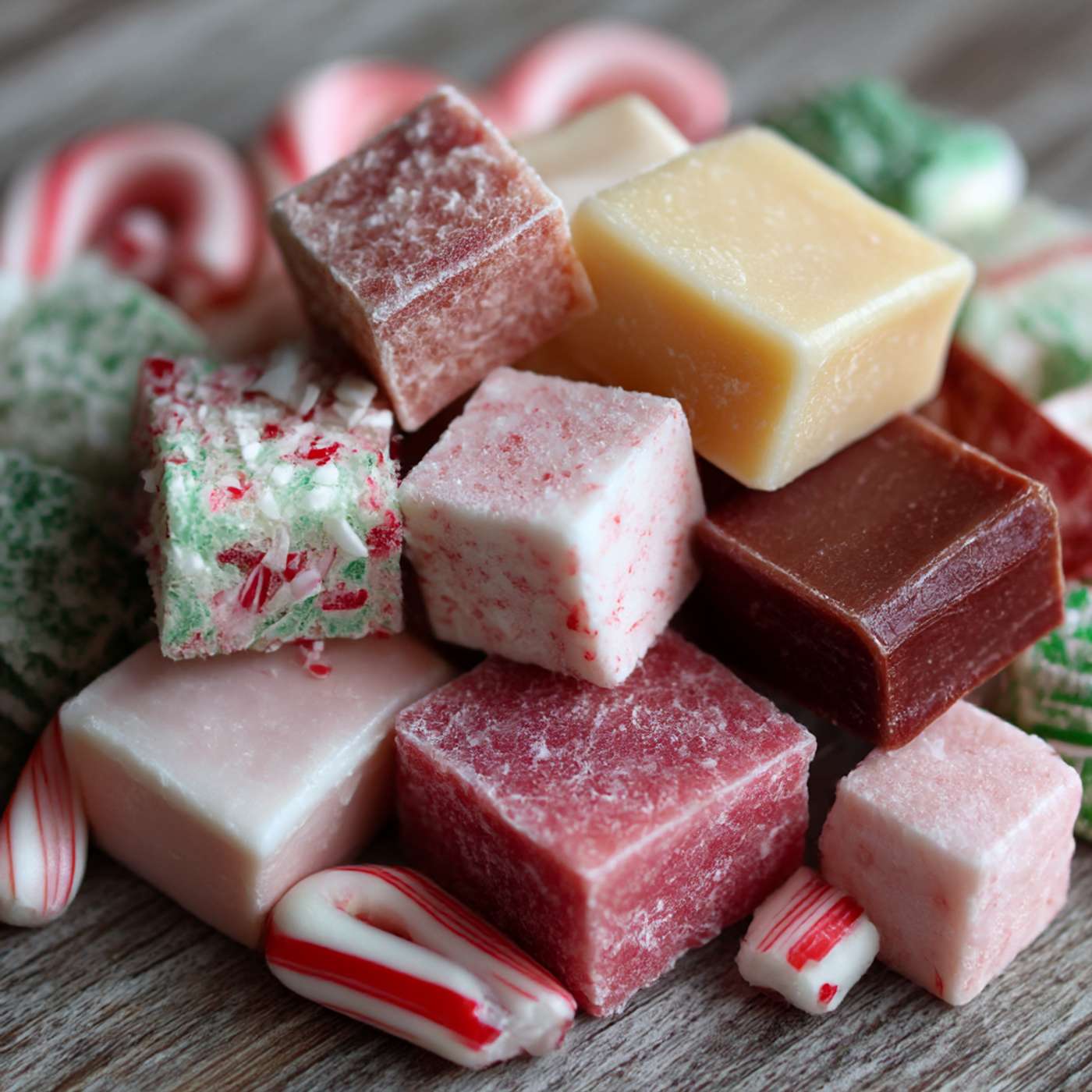
MAKING CHRISTMAS CANDY
Well, we're in the heart of the holiday season now, and if you're like me, you've probably been thinking about all those traditions that make this time of year special. The decorations, the music, the gatherings with family and friends. And of course... the candy.
Today we're diving into something that's been part of Christmas celebrations for generations—homemade Christmas candy. We're talking about those sweet traditions that get passed down through families. The recipes written on index cards in your grandmother's handwriting. The techniques that seem almost magical when you're a kid watching the adults work in the kitchen.
Whether it's fudge, peanut brittle, divinity, pralines, peppermint bark, or any of the dozens of candies that show up on holiday tables across the South and beyond—there's something special about making candy at Christmastime. It's chemistry, it's art, it's tradition, and honestly, it's a little bit of magic.
So grab yourself something warm to drink, settle in, and let's talk about the sweet science and beautiful tradition of making Christmas candy.
PART ONE: THE TRADITION AND HISTORY
Let's start with why candy-making became such a central part of Christmas traditions, particularly here in the South.
Go back a hundred years or more, and sugar wasn't something people had access to year-round the way we do now. Sugar was expensive. It was special. It was something you saved for occasions, and Christmas was the biggest occasion of the year.
Families would save up sugar rations, pool their resources, and dedicate time to making sweets that would last through the holiday season. Making candy wasn't just about having dessert—it was about celebration, abundance, showing love through the effort of creation.
In my own family, candy-making was an event. My grandmother would commandeer the kitchen for entire afternoons, and us kids would hover around watching the process like it was pure magic. Because honestly, it kind of is. You take simple ingredients—sugar, butter, cream, nuts—apply heat and technique, and suddenly you've got something completely transformed. Liquid becomes solid. Clear becomes opaque. Sweet becomes... well, even sweeter.
Different regions developed their signature candies based on what was locally available. Down South, we had pecans in abundance, so pralines became a staple—those creamy, nutty confections that melt on your tongue. We had sorghum and molasses, so candies incorporating those distinctive Southern sweeteners showed up on Christmas tables. Peanut brittle became popular because peanuts were plentiful and cheap.
Up North, maple candy made sense because maple syrup was readily available. Coastal regions incorporated ingredients like coconut. Every area put its own stamp on Christmas candy traditions based on local agriculture and cultural influences.
But beyond regional differences, there's something universal about the act of candy-making at Christmas. It requires patience. It requires attention. You can't rush good candy. You have to watch temperatures carefully, stir consistently, wait for exactly the right moment. In our modern world of instant gratification, there's something almost meditative about the slow, careful process of candy-making.
And then there's the gifting aspect. Homemade candy became the perfect Christmas gift—something that required time, skill, and care to create. When you gave someone a tin of homemade fudge or a bag of peanut brittle, you weren't just giving them sugar. You were giving them hours of your time, expertise passed down through generations, and a piece of your family's tradition.
That tradition continues today, even though we can buy candy any time we want from any store. People still make Christmas candy because it connects them to the past, to family members who are no longer with us, to a slower way of doing things that feels increasingly precious in our fast-paced world.
PART TWO: THE SCIENCE - UNDERSTANDING CANDY TEMPERATURES
Now let's talk about what's actually happening when you make candy, because understanding the science makes you a better candy-maker.
Candy-making is all about sugar chemistry. Specifically, it's about controlling how sugar molecules behave at different temperatures. When you heat sugar dissolved in water, the water gradually evaporates, and the concentration of sugar increases. As that concentration changes, the physical properties of the mixture change dramatically.
This is where candy thermometers become your best friend. Professional candy-makers and experienced home cooks know that temperature is everything. A few degrees difference can mean the difference between perfect fudge and grainy disaster, between crisp peanut brittle and chewy mess.
Let me break down the main temperature stages:
Thread Stage (230-235°F): At this temperature, sugar syrup forms thin threads when dropped from a spoon. This stage is used for making syrups and some icings.
Soft Ball Stage (235-240°F): Drop a bit of the mixture into cold water and it forms a soft, flexible ball. This is your fudge temperature, your praline temperature. The mixture is concentrated enough to hold shape when cooled, but still soft and creamy.
Firm Ball Stage (245-250°F): The ball formed in cold water is firmer but still pliable. This is where you're making caramels and some softer toffees.
Hard Ball Stage (250-265°F): Now we're getting serious. The ball formed is hard but still somewhat pliable. This is divinity territory, marshmallow territory. The sugar structure is getting rigid.
Soft Crack Stage (270-290°F): Drop the mixture in water and it separates into threads that are firm but not brittle. This is where you're making butterscotch and some toffees.
Hard Crack Stage (300-310°F): The threads formed are hard and brittle. This is peanut brittle, hard toffee, lollipops. The water is almost completely evaporated. You're working with essentially pure melted sugar at this point.
Caramelization (320-350°F): Beyond hard crack, sugar itself begins to break down and caramelize, developing those deep, complex flavors. Go too far and you've got burnt sugar. Hit it just right and you've got magic.
Now, here's why this matters practically: If you're making fudge and you accidentally take the temperature to 250°F instead of stopping at 238°F, you're not getting fudge anymore. You're getting something harder, less creamy, with a different texture entirely. Those twelve degrees matter enormously.
Humidity also plays a role. On humid days, candy-making becomes trickier because moisture in the air affects how the candy sets. Old-timers would say "Don't make candy on a rainy day," and there's actual science behind that folk wisdom.
This is also why ingredients matter. The fat content in your cream, the purity of your sugar, whether you're using corn syrup or not—all these factors affect crystallization, texture, and final results. Corn syrup, for instance, interferes with sugar crystallization, which is why it's added to many candy recipes. It keeps the texture smooth rather than grainy.
Understanding these principles means you're not just following recipes blindly—you're understanding what you're trying to achieve and how to adjust if things aren't going quite right.
PART THREE: CLASSIC RECIPES AND TECHNIQUES
Alright, let's talk about some classic Christmas candies and the techniques that make them specia...