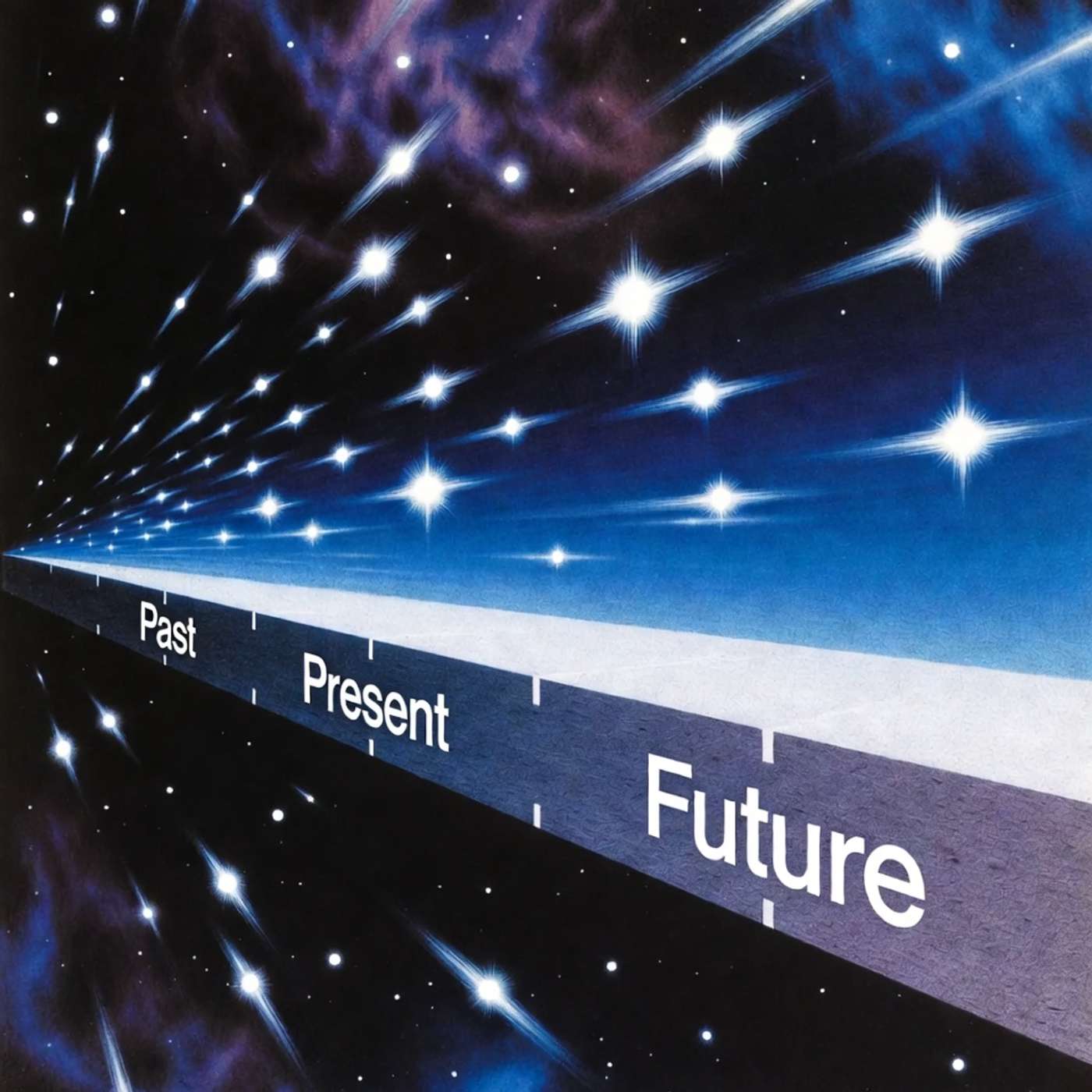
Is Time Just an Illusion? Understanding the Block Universe Theory
Welcome back to the Duke Tyner podcast, folks. I'm Summer, and today we're diving deep into one of the most mind-bending ideas in modern physics – the The Block Universe - When Time Stands Still. Now, I know what you're thinking: "Summer, you usually talk about music, Southern culture, maybe some philosophy. What are you doing talking about physics?" Well, stick with me, because this theory doesn't just change how we understand the cosmos – it fundamentally changes how we understand our own existence, our deaths, our choices, and the very nature of reality itself.
This is going to challenge everything you think you know about time. And fair warning – your brain might hurt a little by the end of this. But I promise you, it's worth it.
So grab your coffee, find a comfortable spot, and let's talk about what happens when past, present, and future all exist at once.
THE FOUNDATIONS - WHAT IS THE BLOCK UNIVERSE?]
Alright, let's start with the basics. What exactly is the Block Universe Theory?
Imagine for a moment that the entire history of the universe – from the Big Bang 13.8 billion years ago to whatever happens trillions of years in the future – all exists simultaneously as a single, unchanging four-dimensional structure. Not "will exist" or "did exist" – but EXISTS. Right now. All at once.
Think of it like a movie. When you watch a film, you experience it scene by scene, moment by moment. But the entire movie already exists on that disc or that file. The ending exists just as much as the beginning. The middle exists just as much as the credits. You experience it sequentially, but the whole thing is already there, complete and unchanging.
Now apply that to the entire universe. Your birth exists. Your childhood exists. This moment right now exists. Your death exists. Everything that will ever happen to you, to Earth, to the stars, to galaxies we'll never see – it all exists in what physicists call a four-dimensional "block" of spacetime.
In the Block Universe:
First: Past, present, and future are all equally real. The dinosaurs exist just as much as you do right now. Your great-great-grandchildren exist just as much as your grandparents do. It's all there, all at once, in the block.
Second: Time isn't flowing. It's not passing. It's not moving forward like a river carrying us along. Time is just another dimension, like length, width, and height. The whole thing is static, frozen, unchanging – like a sculpture.
Third: What we experience as the "flow of time" – that sensation of moving from past to present to future – is an illusion created by our consciousness. We're like a reader moving through a book, experiencing one page at a time, even though the entire book already exists.
Now, before you dismiss this as science fiction or philosophical mumbo-jumbo, understand this: The Block Universe Theory isn't some fringe idea. It's the dominant view among physicists and philosophers who study relativity. And it comes directly from Einstein's work.
Let me explain how we got here.
THE SCIENCE - RELATIVITY AND SPACETIME]
The Block Universe Theory has its roots in Albert Einstein's Special Theory of Relativity, published in 1905, and further developed by mathematician Hermann Minkowski.
Before Einstein, we thought of space and time as separate things. Space was the stage, time was the clock ticking in the background, and everyone agreed on what "now" meant. If I said "right now, at this very moment," we all knew what I was talking about – a universal present moment that everyone in the universe shared.
Einstein destroyed that idea.
Special Relativity showed us something shocking: There is no universal "now." The concept of "simultaneous" – two things happening at the same moment – depends on your frame of reference. Two observers moving at different speeds will fundamentally disagree about which events are happening at the same time.
Let me give you an example. Imagine you're standing on Earth, and your friend is on a spaceship traveling at near light speed. You both witness two events – let's say two supernovas exploding in different parts of the galaxy. You, standing still on Earth, might see them happen at the exact same moment. Your friend on the spaceship, moving at incredible speed, might see one happen years before the other.
Who's right? You're BOTH right. There is no absolute "now" that applies to everyone. Simultaneity is relative.
This is called the "relativity of simultaneity," and it's not a theory – it's a proven fact. We've tested it thousands of times with atomic clocks, particle accelerators, and GPS satellites. It's real.
Now here's where it gets wild: If there's no universal "now," then the idea that only the present moment exists doesn't make sense. Present for who? Present in which frame of reference?
Minkowski took Einstein's equations and showed that we should think of the universe not as three-dimensional space plus time, but as a single four-dimensional structure – spacetime. Three dimensions of space (length, width, height) and one dimension of time, all woven together into a single geometric object.
In Einstein's General Relativity, published in 1915, this idea goes even further. Spacetime becomes a fixed geometric structure determined by the distribution of mass and energy. Once you set the initial conditions and the laws of physics, the entire four-dimensional geometry is determined. The whole structure exists as a complete, unchanging block.
There's no privileged "present moment" moving through spacetime. There's no objective "now." The whole thing just... is.
THE LOAF OF BREAD ANALOGY
I know this is getting abstract, so let me give you a visual that really helps.
Imagine the universe as a giant loaf of bread. The entire loaf represents all of spacetime – every moment that has ever happened or will ever happen.
Now, take a knife and slice through that loaf. Each slice represents a moment in time from a particular observer's perspective. If you're standing still, you cut the loaf one way. If you're moving at high speed, you cut it at a slightly different angle.
Different observers – people moving at different speeds or in different directions – slice the loaf at different angles. That's the relativity of simultaneity. Your "now" slice and my "now" slice might cut through different events.
But here's the key: The whole loaf exists. The entire thing is there, complete and unchanging. Your consciousness moves through the loaf, experiencing one slice at a time, giving you the sensation of time flowing. But the flow is just your subjective experience – like reading a book page by page. The book doesn't change. The whole story already exists.
That loaf of bread? That's the Block Universe. And according to our best physics, that's what the universe is.
PHILOSOPHICAL IMPLICATIONS - DEATH, FATE, AND FREE WILL
Alright, so if the Block Universe Theory is true, what does that mean for us? For our lives, our choices, our deaths? This is where physics becomes philosophy, and where things get really personal.
ON DEATH:
In the Block Universe, you don't cease to exist when you die. Let me say that again: You don't cease to exist when you die.
Think about it. If all moments in time exist equally, then the you that exists right now – listening to this podcast – exists just a...