Summary
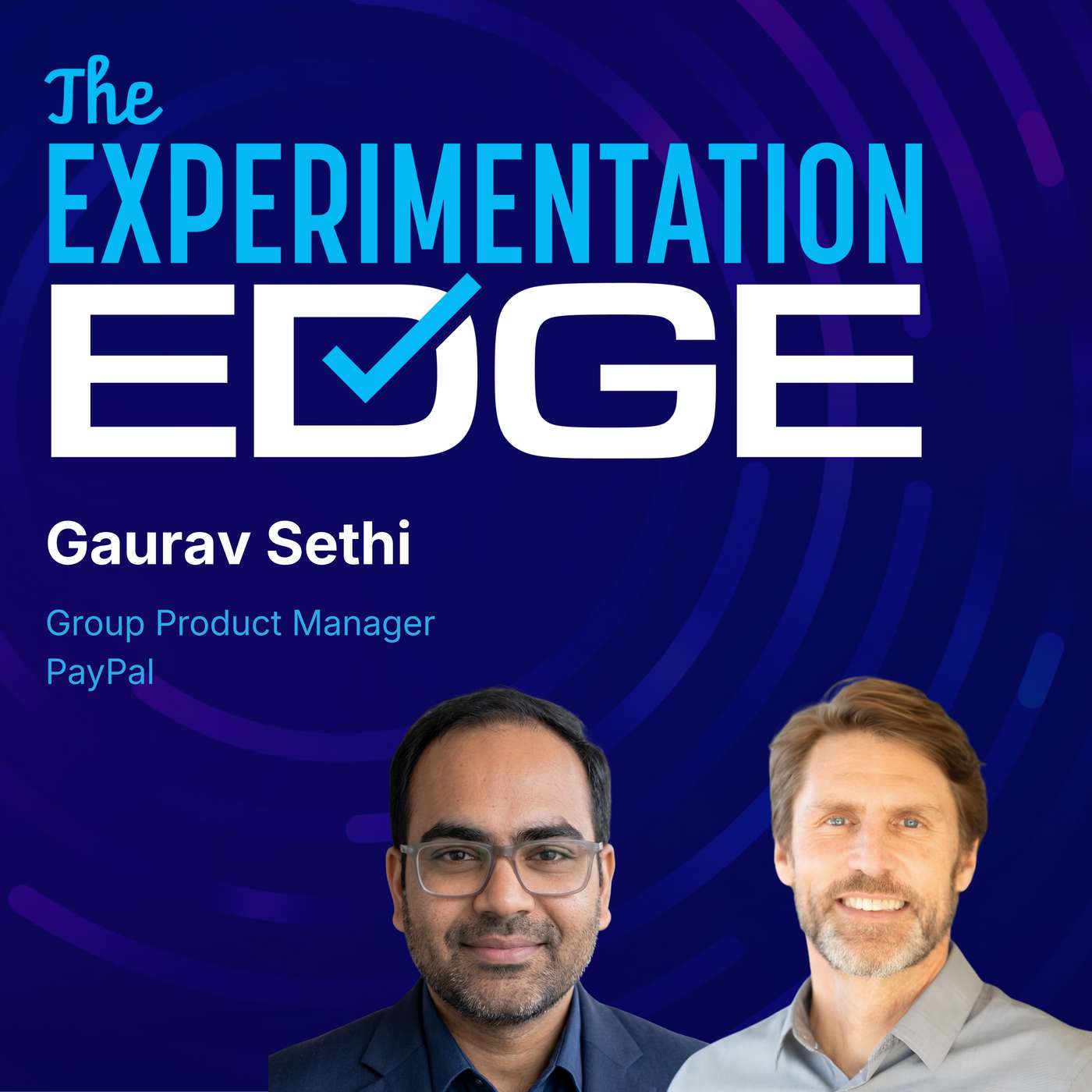
Gaurav Sethi joins Ashley Stirrup on The Experimentation Edge to explain how PayPal's experimentation program went from 700 to 800 tests a year with four week readouts to 2,587 experiments a year and roughly $180 million in measured impact. Gaurav inherited a reported win rate of 55% to 60%, four times the industry average, and traced it to experiments logging assignment data instead of exposure data, carrying 25% to 30% dilution. The conversation covers the exposure event his team introduced, the instrumentation and metric standards that cut readouts to 24 hours, a carousel test that a multi armed bandit resolved in 51 days instead of a projected 700, and why cost avoidance from losing experiments belongs in the ROI number. It closes on what changes when the thing you are testing is an AI agent rather than a button. Useful for product managers, engineers, data scientists and growth leaders building or defending an experimentation program at scale.
Chapters
00:00 Cold open
00:54 Welcome Gaurav Sethi of PayPal
01:30 Elmo, PayPal's homegrown experimentation platform
03:53 $180 million in revenue impact and cost avoidance
04:28 The win rate that was too good to be true
06:29 Instrumentation standards and the exposure event
08:56 The carousel test: 700 days down to 51
11:29 Designing experiments so every result teaches you
13:45 Building the platform is only half the job
15:07 Education, office hours and executive support
18:28 Exposure events and joining transactional data
24:14 AI for experimentation, and experimentation for AI
Takeaways
- A win rate of 55% to 60% against an industry average of 11% to 14% was a tracking problem, not a performance one: assignment data carried 25% to 30% dilution and reached significance on users who never saw the test.
- The exposure event fixed it. Fire an event as close to render as possible so the platform knows exactly when a user entered the experiment, instead of logging on page load.
- Standardized instrumentation and canonical metric definitions are what let the analysis pipeline run without human cleanup, taking experiment readouts from four weeks to 24 hours.
- A six variant carousel test projected at 700 days was resolved by a multi armed bandit in 51 days, with a winner worth almost five basis points.
- About half of PayPal's $180 million impact in 2025 was cost avoidance from features that tested badly and never shipped, which is why Gaurav argues there are no losing experiments.
Connect with the Guest
Gaurav Sethi LinkedIn: https://www.linkedin.com/in/gauravsethi22
About the guest: https://www.growthbook.io/podcast/guests/gaurav-sethi
Episode page: https://www.growthbook.io/podcast/episode/1-46
Company Website: https://www.paypal.com
Sponsor
GrowthBook is the warehouse-native platform for experimentation, feature flags, and product analytics trusted by AI-native product teams at 3,000+ companies worldwide.
Go to growthbook.io