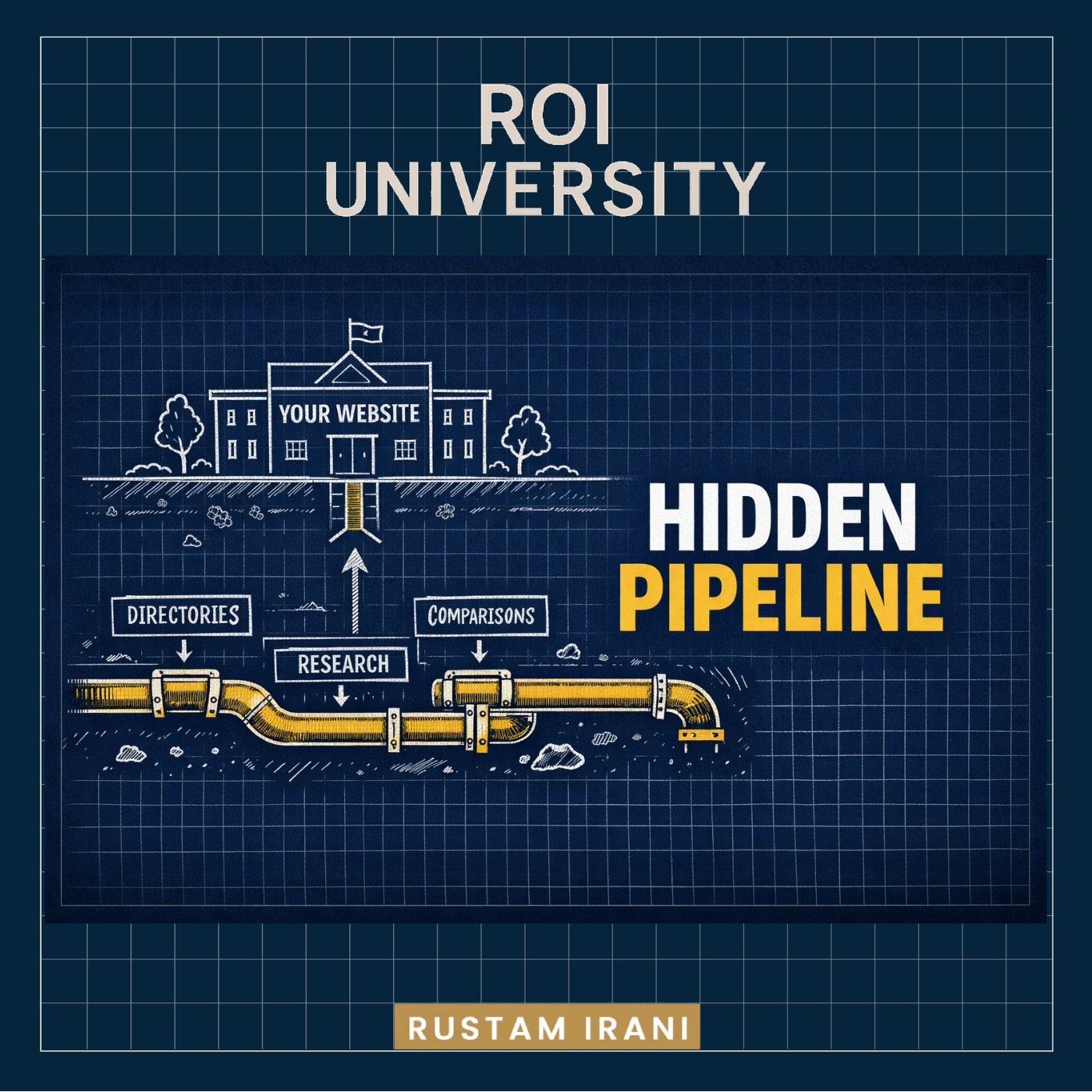
In this episode, Rustam Irani challenges the assumption that affiliate partners are low-quality, fraudulent, or ineffective for higher-ed marketing. Drawing from firsthand attribution analysis, he reveals how more than 20% of prospective students engaged with a school through affiliate or directory sites before ever landing on the institution’s website. Rustam breaks down five key factors for evaluating affiliate partnerships—lead quality, compliance, partner selection, performance tracking, and brand reputation—while reframing affiliates not as a risky expense, but as a hidden pipeline and awareness layer that can meaningfully impact enrollment outcomes.
Resources Mentioned
- LeadID (later Jornaya, then Verisk, now acquired by ActiveProspect)
Timestamps
- 00:01 – The Affiliate Myth: Why many higher-ed marketers dismiss affiliates as fraud or low-intent traffic.
- 00:38 – Attribution Discovery: The 20% insight that changed Rustam’s perspective on affiliate value.
- 01:53 – Tracking the Ecosystem: How LeadID/Jornaya enabled cross-site visibility and anonymous user tracking.
- 06:04 – Factor #1: Lead Quality & Qualification: Evaluating intent, demographics, custom questions, and lead scoring.
- 08:06 – Factor #2: Compliance & Ethical Practices: FTC guidelines, traffic sources, and the risks of co-registration.
- 10:35 – Factor #3: Partner Selection: Vetting affiliates through checklists, traffic sources, and longevity.
- 12:03 – Factor #4: Performance Tracking & ROI Models: CPC vs. CPL, cost expectations, and enrollment targets.
- 14:05 – Factor #5: Brand Reputation & Placement Transparency: Protecting brand standards while gaining exposure.
- 17:08 – Reframing the Channel: Why cutting affiliates may shrink your pipeline and assisted conversions.