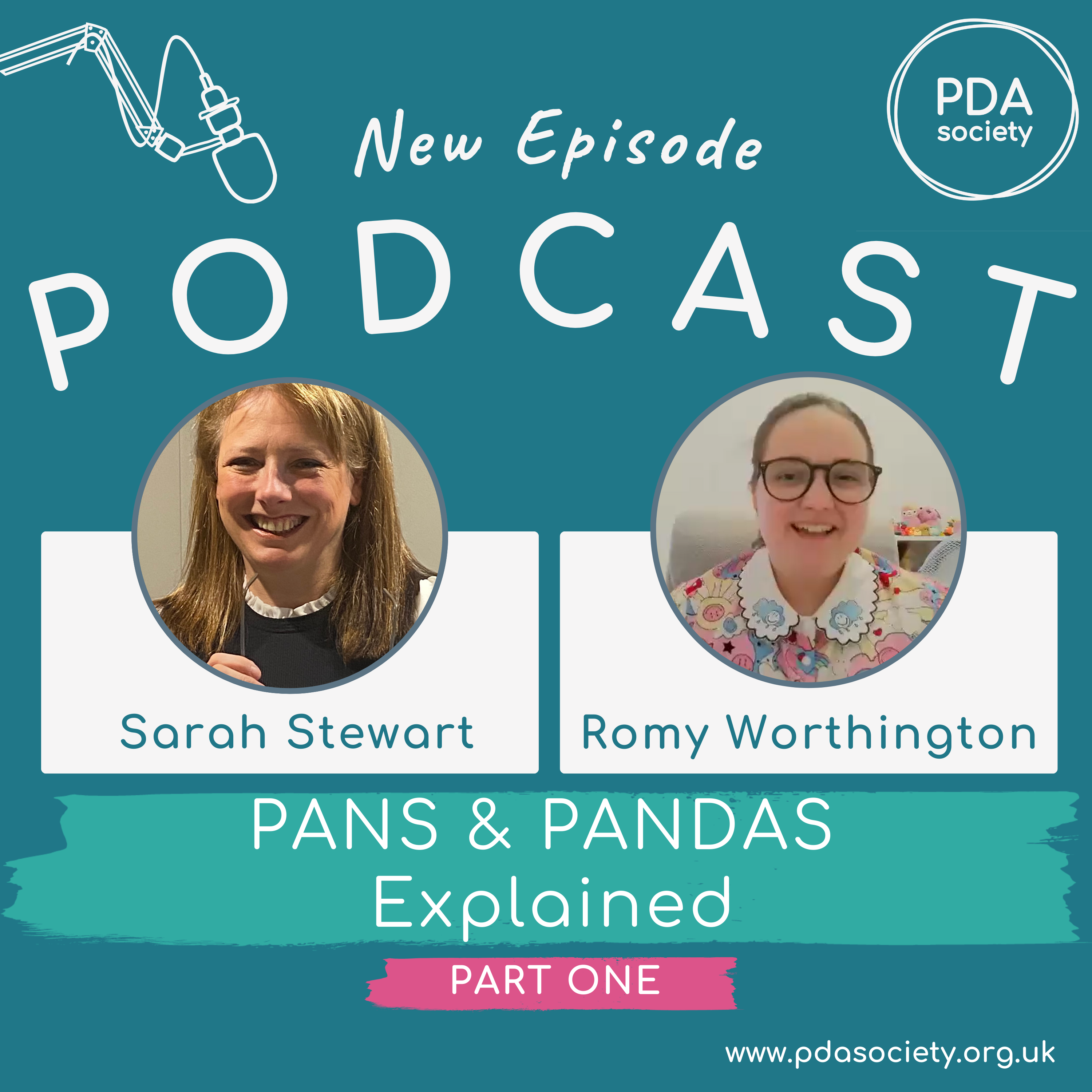
In this episode, the PDA Society begins a clear and accessible exploration of PANS and PANDAS, conditions that can cause sudden and significant changes in a child or young person’s behaviour, emotional wellbeing and functioning.
Although not linked with PDA, some of the presenting characteristics can be similar, making diagnosis and treatment difficult.
The conversation focuses on what PANS and PANDAS are, how they may present, and why they are often misunderstood or missed. Listeners are guided through common signs, including rapid onset anxiety, changes in behaviour, emotional distress and difficulties with everyday activities. The episode highlights how confusing and frightening this experience can be for families, particularly when changes appear to happen out of the blue.
Part1 lays the groundwork for understanding PANS and PANDAS, offering families and professionals a calm, compassionate starting point for recognising concerns and seeking appropriate support.
Note that PANDAS in this context refers to a medical condition (Paediatric Autoimmune Neuropsychiatric Disorders Associated with Streptococcal infections). This is entirely different from the PANDA mnemonic used in PDA Society training.
Key Themes
Deep Diver Subscriber Episode
For those who would like to go further, Part 2, an exclusive “Deep Diver” subscriber episode, is available through our Training Hub. You can access it here: https://training.pdasociety.org.uk/pda-podcasts/
Disclaimer
The views and opinions expressed by guest speakers in this podcast are their own and do not necessarily reflect those of the PDA Society. While we aim to provide balanced and inclusive discussions, individual experiences and perspectives may vary. The PDA Society is committed to using language and terminology that reflects the preferences of PDA and autistic people, but sometimes our guests may use language and terminology which differs. Appearance on our podcast is not an endorsement of an individual, and not all of our guests will align with our position on the issues discussed.
Further sources of support and information
External Links: