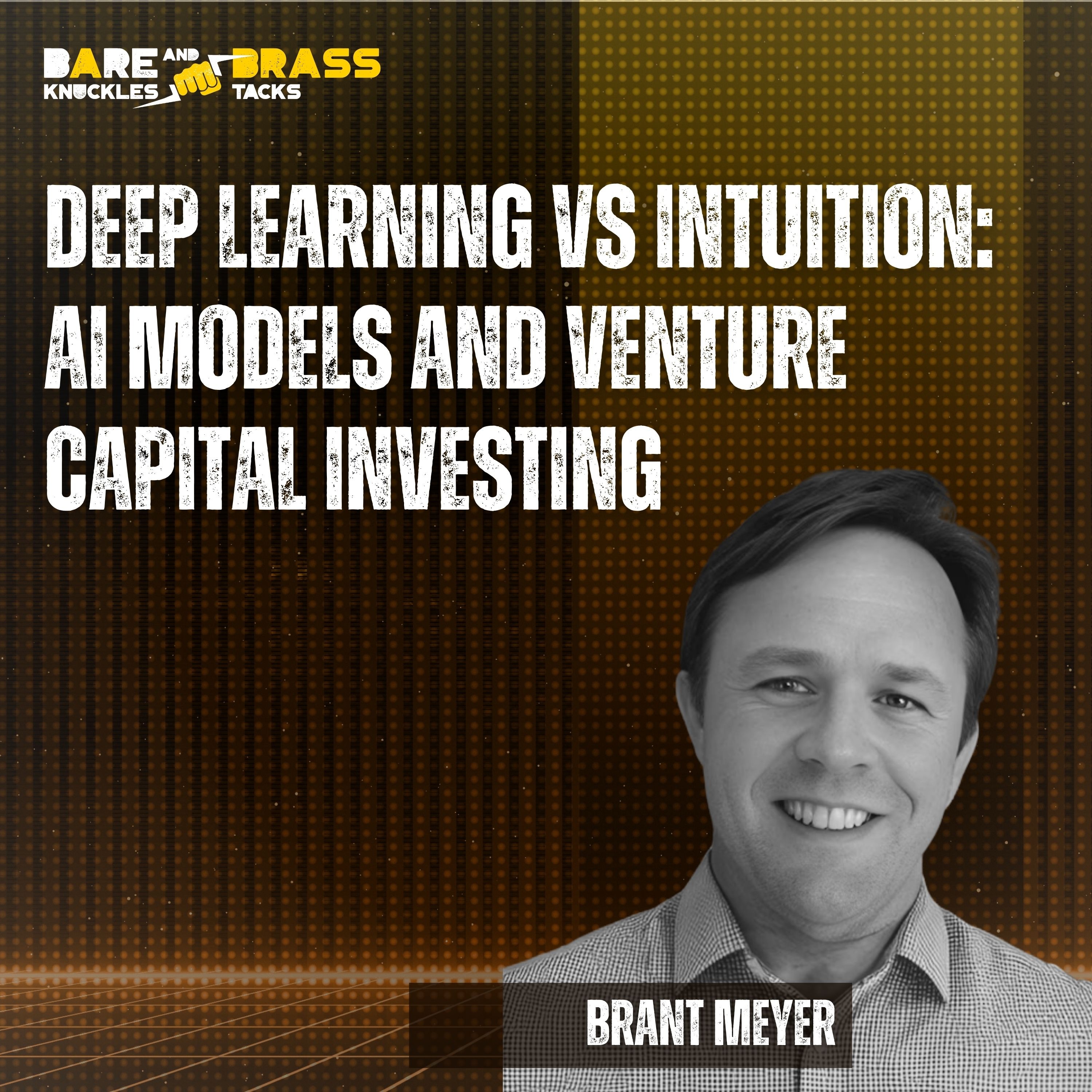
What if the best investment decision is one where no human is involved?
Brant Meyer, partner at Trac VC joins the show this week to talk about the firm’s approach, where algorithms — not partners in puffer vests — make every single call. Over 115 investments to date with zero human investment decisions. An 8.5% loss ratio, orders of magnitude less than traditional VC, would seem to suggest they’re on to something.
George K. and George A. wanted to know, if machines make the decision, what exactly is Brant’s job? But the more interesting conversation isn't about the wins. It's about what the model forces you to confront. We assume removing the human removes the bias — but Trac's algorithms are trained on data with its own biases.
Then there's the psychological dimension. Brant makes the case that most resistance to algorithmic investing is emotional rather than rational. VCs resist algorithms because the discretionary call is the whole point. The juice, as he puts it, is the feeling of knowing. Strip that away and you're threatening an identity.
Which raises the question George K. and George A. keep circling: how did venture capitalists acquire oracular status in the first place? The hit rate doesn't justify it. The pattern recognition, Brant argues, was never really theirs to claim.
And yet , no founder wants to take money from a robot. The relationship still matters. The question is just whether we've been confusing that relationship with the thing it was never actually doing.
Mentioned: