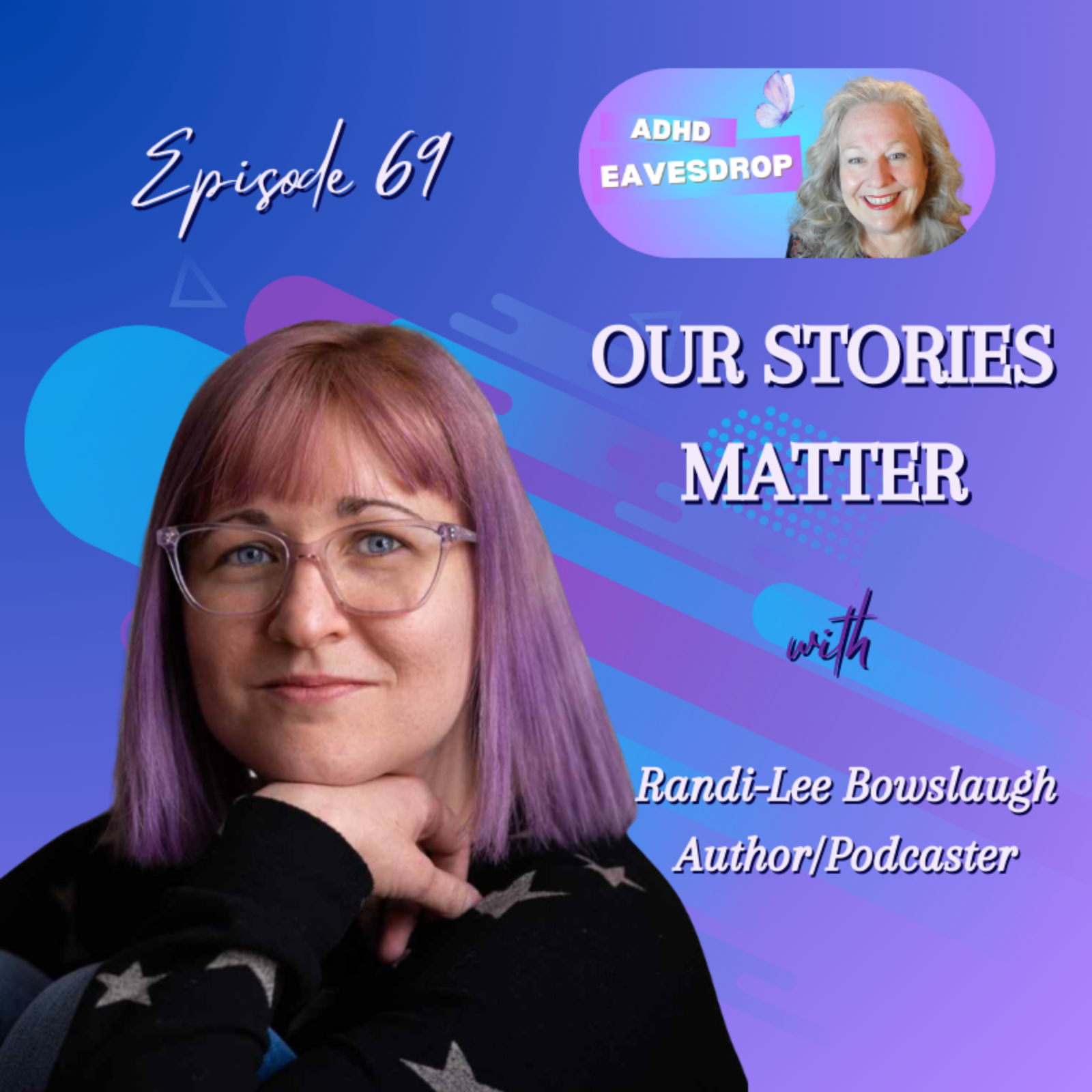
In this episode, Janine talks with Randi-lee Bowslaugh about autism, depression, parenting neurodivergent children, and the healing power of creativity and writing.
In this episode of ADHD Eavesdrop, Janine sits down with author and podcaster Randi-lee Bowslaugh to talk about neurodiversity, mental health, and the power of creative expression.
Randi-lee shares her experiences living with autism, depression, and PTSD, while also parenting a neurodivergent child and navigating life as a grandmother. Together, Janine and Randi-lee explore how writing, storytelling, and creativity can support emotional healing, identity development, and connection.
This conversation touches on self-acceptance, resilience, and the importance of finding supportive spaces where neurodivergent people can be fully themselves.
As always, this episode is a real, unscripted conversation — just like listening to two people talk at the next table in a coffee shop.
00:00:00 Introduction and guest welcome
00:02:15 Randi-lee’s story: autism, depression, and PTSD
00:05:10 Parenting neurodivergent children
00:08:40 Becoming a grandmother and life perspective
00:11:30 Writing as emotional expression and healing
00:15:20 The connection between creativity and mental health
00:19:05 Living with multiple diagnoses
00:23:40 Identity, acceptance, and self-understanding
00:27:15 Supporting neurodivergent families
00:31:00 Closing reflections and encouragement
Is ADHD Life Coaching right for you? If you’re feeling stuck, overwhelmed, or ready to better understand how your ADHD shows up in your daily life, coaching might help. I offer supportive, practical ADHD Life Coaching focused on real-life strategies, self-awareness, and sustainable change.
You can schedule a free 45-minute consultation to see if coaching is a good fit: https://calendly.com/jvansteeadhdlifecoaching/45-min-consultation
Learn more at: https://jvansteeadhdlifecoaching.net Email: jvansteeadhdlifecoaching@gmail.com
This podcast is for educational and informational purposes only and is not a substitute for medical, mental health, or professional advice. The views shared in this episode reflect personal experiences and conversations, not clinical recommendations. If you need support, please reach out to a qualified professional.