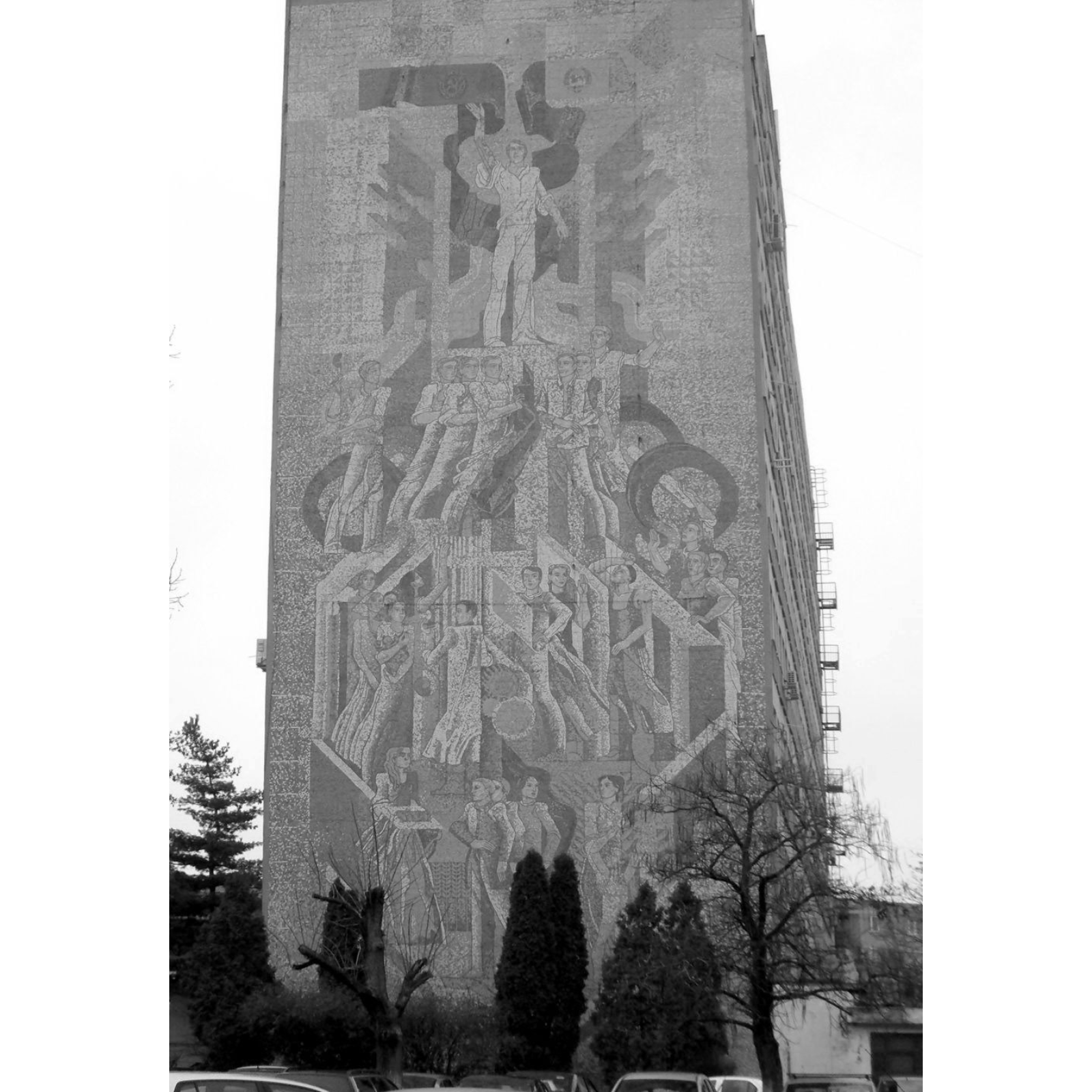
This text written by Ujj János and translated into English by Gabriel Roman offers an extensive overview of Socialist Realism as an artistic style, characterizing it as the dominant cultural force in Central and Eastern Europe during the communist era. The sources explain that this movement was an ideologically-driven variant of realism used to serve communist party propaganda, aiming to portray reality in a "historically accurate and concrete manner" while promoting the ideological transformation and education of workers in the socialist spirit. The discussion notes that while this art form is now largely rejected by later generations, it once demanded optimistic, heroic depictions of the proletariat and socialist achievements in various fields, including visual arts, literature, and architecture, with examples provided from the Soviet Union, Hungary, and Romania, such as the famous statue "The Worker and the Kolkhoz Woman." Finally, the text traces the style’s origins, its mandatory nature during the peak of the movement, and the subsequent easing of restrictions after Stalin's death, though its influence periodically resurfaced in countries like Romania. Free download books in Romanian and English about the history of Arad from the digital library here: https://www.arad.zone/biblioteca-digitala/biblioteca-digitala-copy