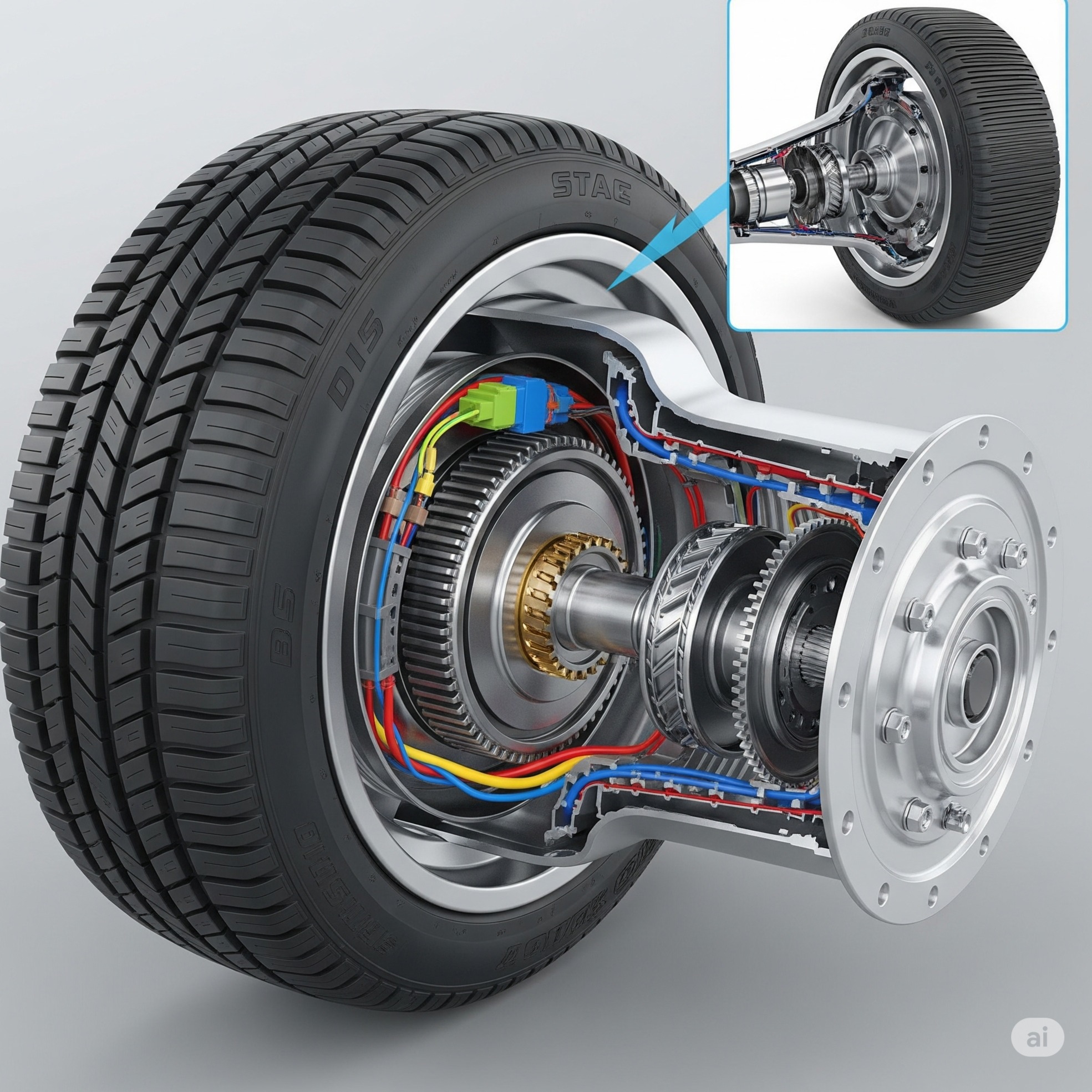
This briefing document summarizes the key themes and important facts regarding in-wheel EV hub motors, drawing insights from the provided source, "In-Wheel EV Hub Motors Could Be A Game-Changer. Why Aren't They Here Yet?".
1. What are In-Wheel EV Hub Motors?
In-wheel EV hub motors are a type of electric motor that is essentially integrated directly into the vehicle's wheel, rather than being located "inboard" within the car's body. This design eliminates the need for traditional drivetrain components like drive shafts and differentials. The concept is not new; Ferdinand Porsche conceived one of the earliest electric cars in 1900 with in-wheel hub motors.
2. Key Advantages of In-Wheel Hub Motors:
The source highlights several compelling benefits that suggest in-wheel motors could revolutionize EV design and performance:
- Space Optimization:
- Increased Interior/Cargo Room: "Having the motors in the wheels seems like a great way to make more room in the vehicle." This freed-up space can be utilized for larger batteries or expanded passenger and cargo capacity.
- Simpler Platform Design: Hub motors "simplify EV platforms and make subframe designs considerably simpler, too." This leads to "lower complexity," making them "cheaper to manufacture" and facilitating "platform modularity."
- True Skateboard Platforms: With four in-wheel motors, a vehicle could achieve a "true skateboard-like platform, freeing up the space between the wheels to be used in other ways (like for additional battery modules to extend the range)." This contrasts with current "skateboard platforms" which are often just structural battery packs with bolted subframes.
- Versatile Vehicle Development: The simplified design allows for "being able to build multiple different vehicles on the same platform with minimal modifications." This is particularly beneficial for startups to "reduce the upfront cost of engineering and manufacturing."
- Improved Efficiency and Performance:
- Reduced Drivetrain Losses: By directly powering the wheels, hub motors "result in less friction and less wasted energy." This "ensures that most of the motor’s power is put to the ground," improving "efficiency and range."
- Enhanced Torque Control and Vectoring: "Having individual motors can not only simulate what a limited-slip differential does, but it can go beyond that and offer traction levels you simply couldn’t achieve otherwise through exact control of each motor." This allows for more precise handling and performance, as touted by Renault for its upcoming 5 Turbo 3e, promising "responsiveness, 'for an effect not unlike the turbos of yesteryear, but without the lag time.'"