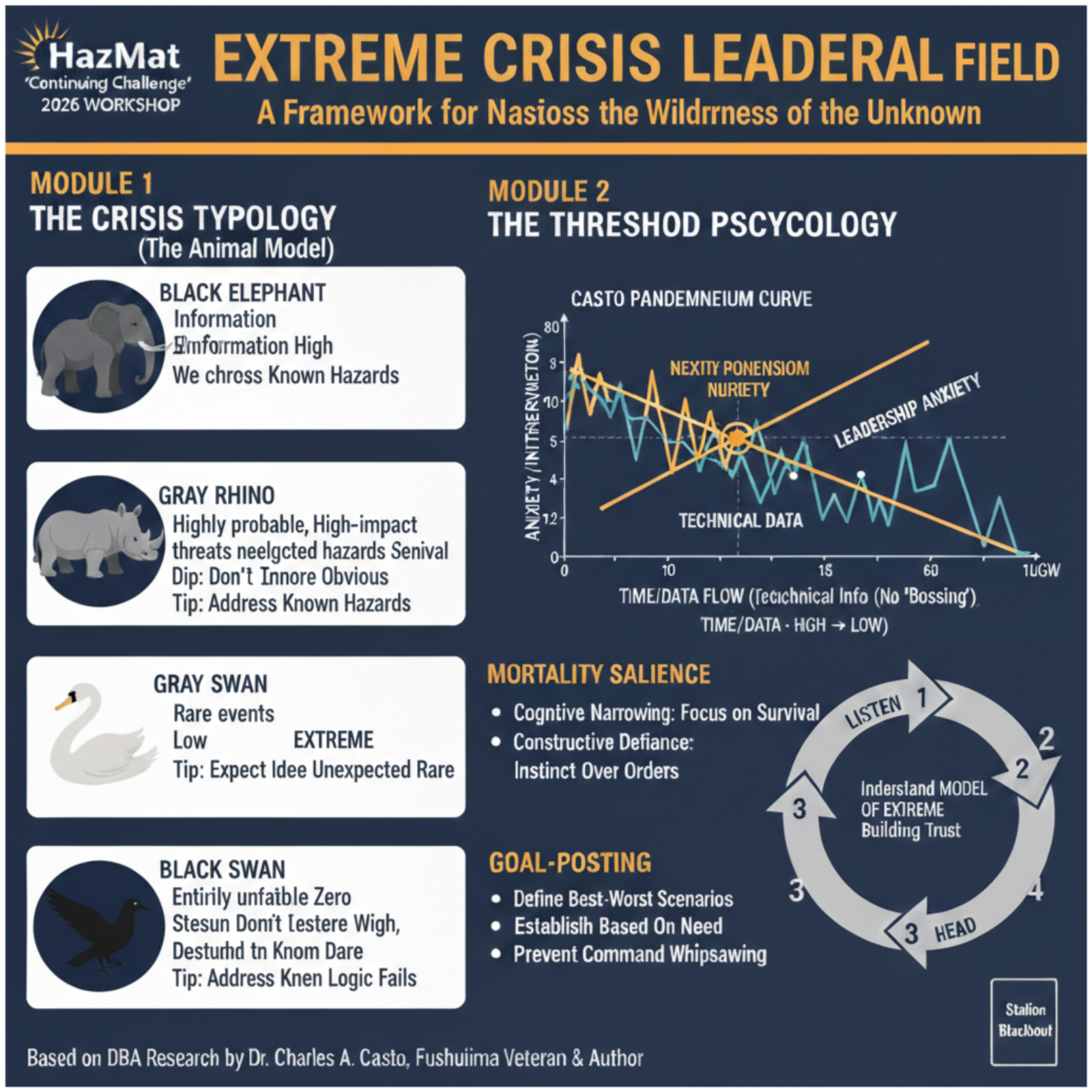
Here is a draft of the episode note for the audio overview, based on the Operator Training 2026 modules provided in your sources.
Episode Title: The 1% Contingency: Leading Where the Manual Ends
Episode Summary: In this deep-dive session, we explore the "Operator Training 2026" curriculum, specifically focusing on Extreme Crisis Leadership and the concept of the "1% Cognitive Contingency." While 99% of operations rely on strict procedural compliance, this episode examines the terrifying 1% of cases—"Black Swan" events—where the physical reality of the plant contradicts the assumptions written in the manual.
We analyze forensic case studies from Fukushima, Browns Ferry, Paks, and Deepwater Horizon to understand how leadership must shift from administrative management to adaptive survival when the safety systems fail.
Key Topics & Segments:
- The "1% Contingency" Defined: Why procedures are the backbone of stability but can become "shackles" during total infrastructure collapse. We discuss the "Manifesto of the Last Resort": Competence assumes the procedure works; Mastery knows what to do when it doesn't.
- Case Study: Fukushima (The White Swan vs. The Black Swan): A minute-by-minute breakdown of the disaster.
- "Cement Your Feet": How Shift Supervisor Izawa fought the primal urge to flee by ordering his crew to stop operating until the shaking ceased.
- "Gas and Brakes": How Superintendent Masuda at Fukushima Daini saved his plant by laying 5.5 miles of cable by hand, balancing frantic work with forced rest.
- The Operator's Prerogative: Superintendent Yoshida’s defiance of corporate orders to stop seawater injection, prioritizing the core over the asset.
- Case Study: Browns Ferry (The Candle & The Core): How a single candle used to check for air leaks in 1975 disabled the Emergency Core Cooling System (ECCS). We discuss the "Normalization of Deviance" and the improvisation required to depressurize the reactor using a construction-era backup nitrogen system.
- Case Study: Paks (The 12-Minute Blind Spot): The 2003 fuel cleaning incident where operators were "flying blind" with no instrumentation. We highlight the critical failure of engineering to communicate the "time-to-boil" (12 minutes) to the front line.
- Human Factors & "The Freeze": Insights from Deepwater Horizon on why even experienced leaders "freeze" (biological shutdown) during crises. The danger of the "Paper Captain"—leaders who are qualified on paper but lack the "fingertip feel" for the machine.
- New Doctrine for 2026:
- Technical Justice vs. Social Justice: Why operators must fight for the physics of the plant and ignore the "social justice" pressure of PR and politics during a crisis.
- The "Dog Bowl" Theory: Managing cognitive load by ruthlessly ignoring any data that doesn't help "feed the dog" (cool the core).
- Training for Failure: The mandate for simulator instructors to stop "training for success" and start grading "technically defensible improvisation".
Featured Quote: "When the system fractures, you are the person of last resort. Do not wait for permission to save the plant." — Classified Technical Doctrine.