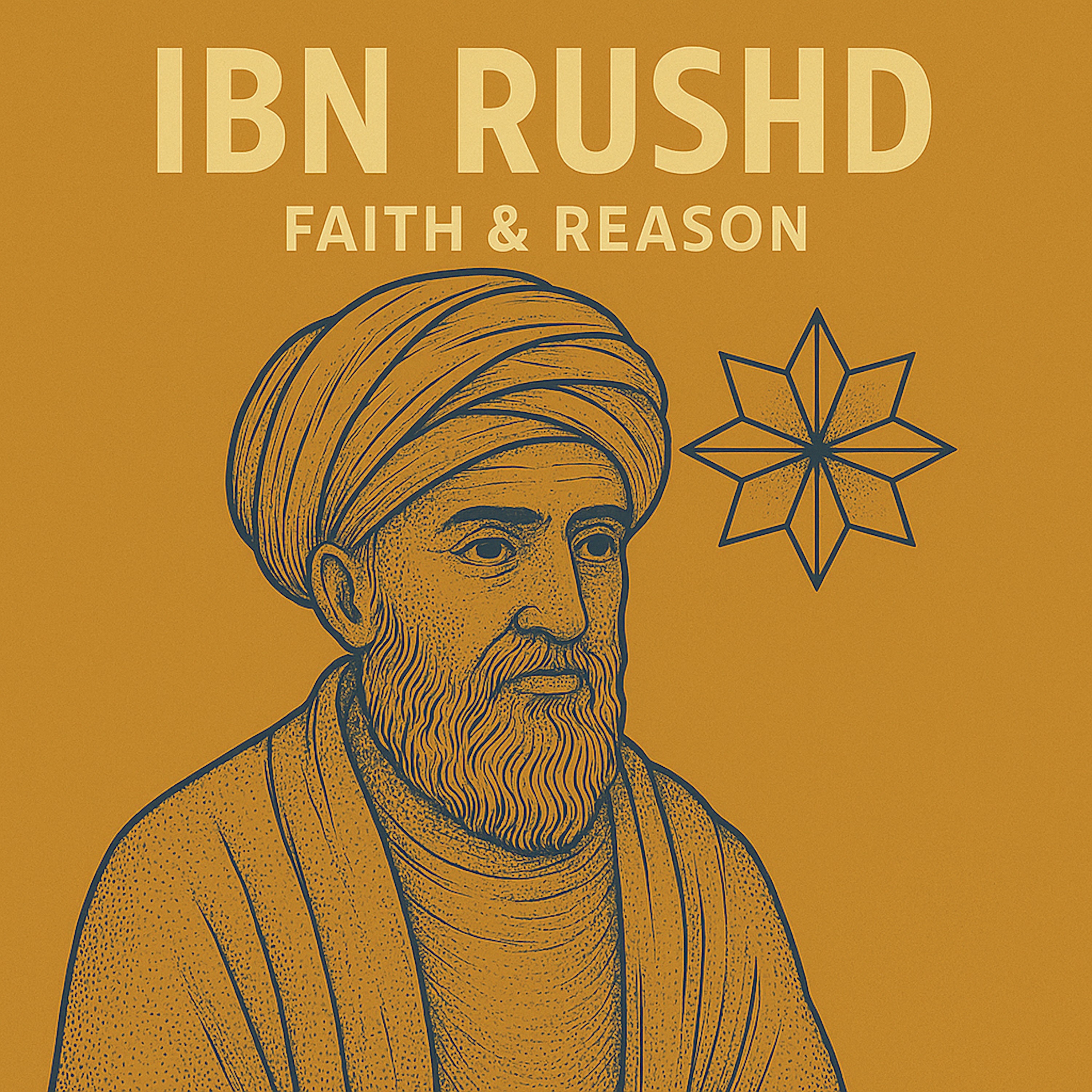
Today we cross the Strait of Gibraltar in our imagination and walk into twelfth‑century Córdoba, where books are copied by lamplight, law is argued in courtyards, and the moon above the Great Mosque looks like a coin balanced on the city’s palm. Our guide is Ibn Rushd, known in Latin as Averroes—judge, court physician, and the most relentless reader Aristotle ever had in Arabic. If al‑Ghazālī asked whether reason had forgotten its limits, Ibn Rushd asked whether faith had forgotten its confidence in reason. He will try to show us that properly used, reason is not a rival to revelation but its ally, that the law doesn’t only permit inquiry but commands it of those fit to carry it, and that a society which treats thinking as a vice is a society teaching itself to lose.
He was born in 1126 to a family of jurists; the law was his cradle language. Córdoba in his youth was an Andalusian capital with libraries large enough to make a boy greedy for paper. He studied the Malikī school of jurisprudence, mathematics, medicine, theology, and—quietly at first—Greek philosophy as it had flowed into Arabic through centuries of translation and commentary. The city’s scholars remembered Aristotle by many names; Ibn Rushd would come to be called simply “The Commentator,” and the definite article tells you everything about the reputation that followed him.
Produced by Selenius Media – Music by The Artificial Laboratory.