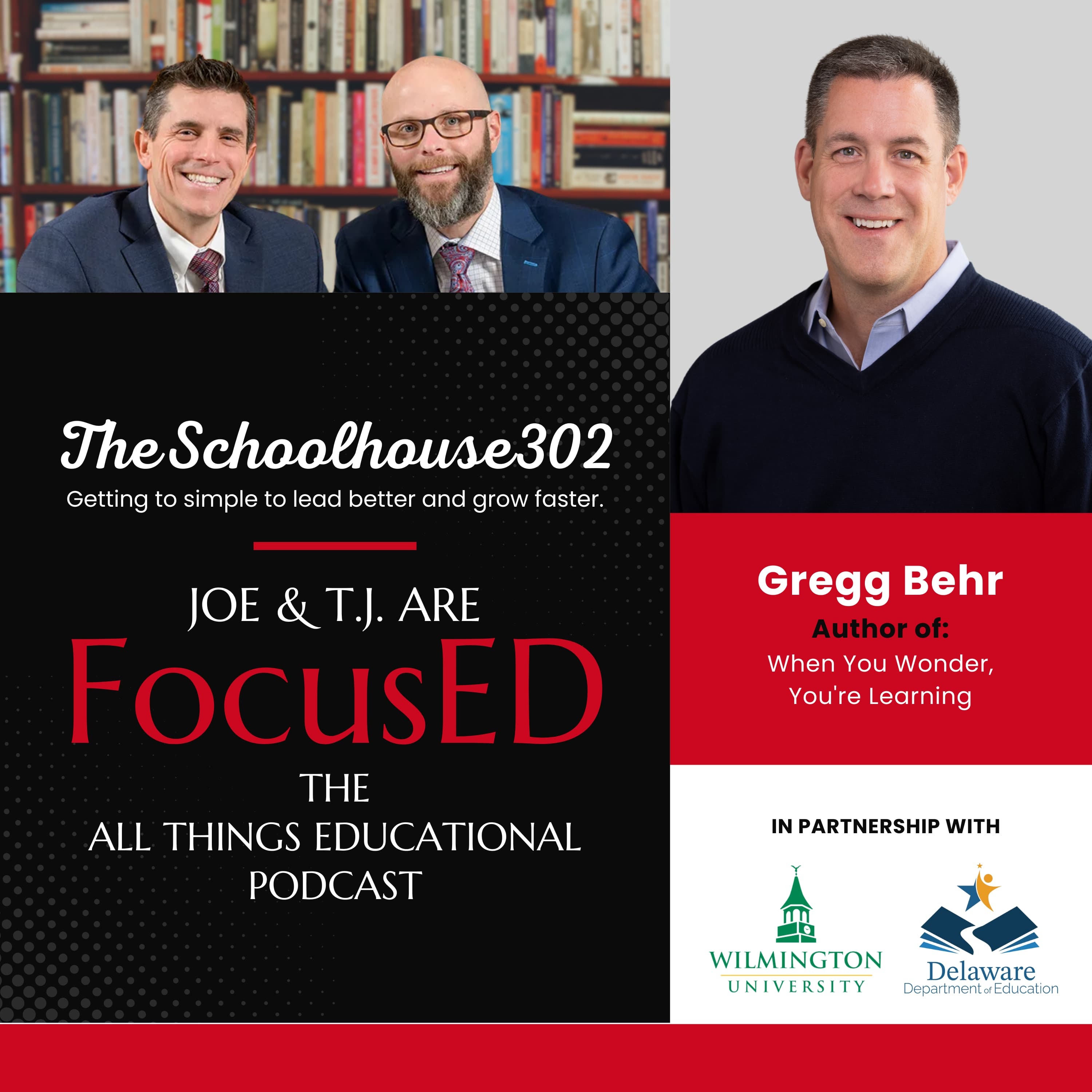
Gregg Behr, executive director of the Grable Foundation and co-author of When You Wonder, You’re Learning, joins Joe and TJ on FocusED.
The episode centers on Mr. Rogers’ lessons in creativity, curiosity, care, and what they mean for schooling today.
Fred Rogers is framed as an innovator who used the technology of his time to make what was attractive to kids also good and constructive.
Behr explains that Rogers studied with major child development experts and quietly embedded learning science into puppetry, lyrics, routines, and set design.
The book argues that Fred was ahead of his time and offers a blueprint for education in 2025 and beyond.
Rogers’ classic “crayon factory” episode illustrates starting with something familiar, then moving students into the unknown in a safe way.
Behr parallels this with a 10th grade AP World Cultures teacher who begins each lesson with a concrete artifact to spark curiosity before exploring complex historical content.
TJ raises the idea of teachers developing a deliberate “teacher self” or persona.
Behr emphasizes that Rogers would want adults to bring their full, authentic selves to learning spaces, viewing each interaction with a child as “holy ground.”
He notes that the goal is not to create “modern-day Fred Rogers,” but the most authentic version of each educator.
Behr argues that psychological safety, belonging, and feeling “loved and capable of loving” are prerequisites for academic outcomes.
He describes leaders who successfully blend care and accountability by granting teachers permission: small discretionary funds, time to observe others, and space for peer-led professional learning.
Behr calls wonder a skill that, like empathy, must be practiced intentionally.
He shares the “Ask It Basket” strategy, where off-topic student questions are written down, saved, and revisited together, signaling that wondering is valued and safe.
He also highlights “awe walks” in nature, literature, math, and school hallways as routine opportunities to notice and nurture curiosity.
For leaders focused on test scores and strategic plans, Behr points to evidence from schools that build in “guaranteed wonder time” through personalized learning and maker spaces.
These environments increase student agency, reduce dropouts, decrease charter flight, and improve math and English scores while fostering deeper unmeasured learning.
Behr describes Remake Learning as a 20-year network of 800+ schools, museums, libraries, early learning centers, and creative industries advancing engaging, relevant learning.
Resources at remakelearning.org and remakelearningdays.org include open publications on profiles and portfolios, maker-centered learning, STEM, and human flourishing.
Behr describes his hoped-for legacy as creating a real-life “land of make believe” for children—a connected learning landscape across schools, after-school programs, early learning, and internships.
He wants regional pathways where kids can find passions, interests, and purpose, supported by intentional collaboration among caring adults.