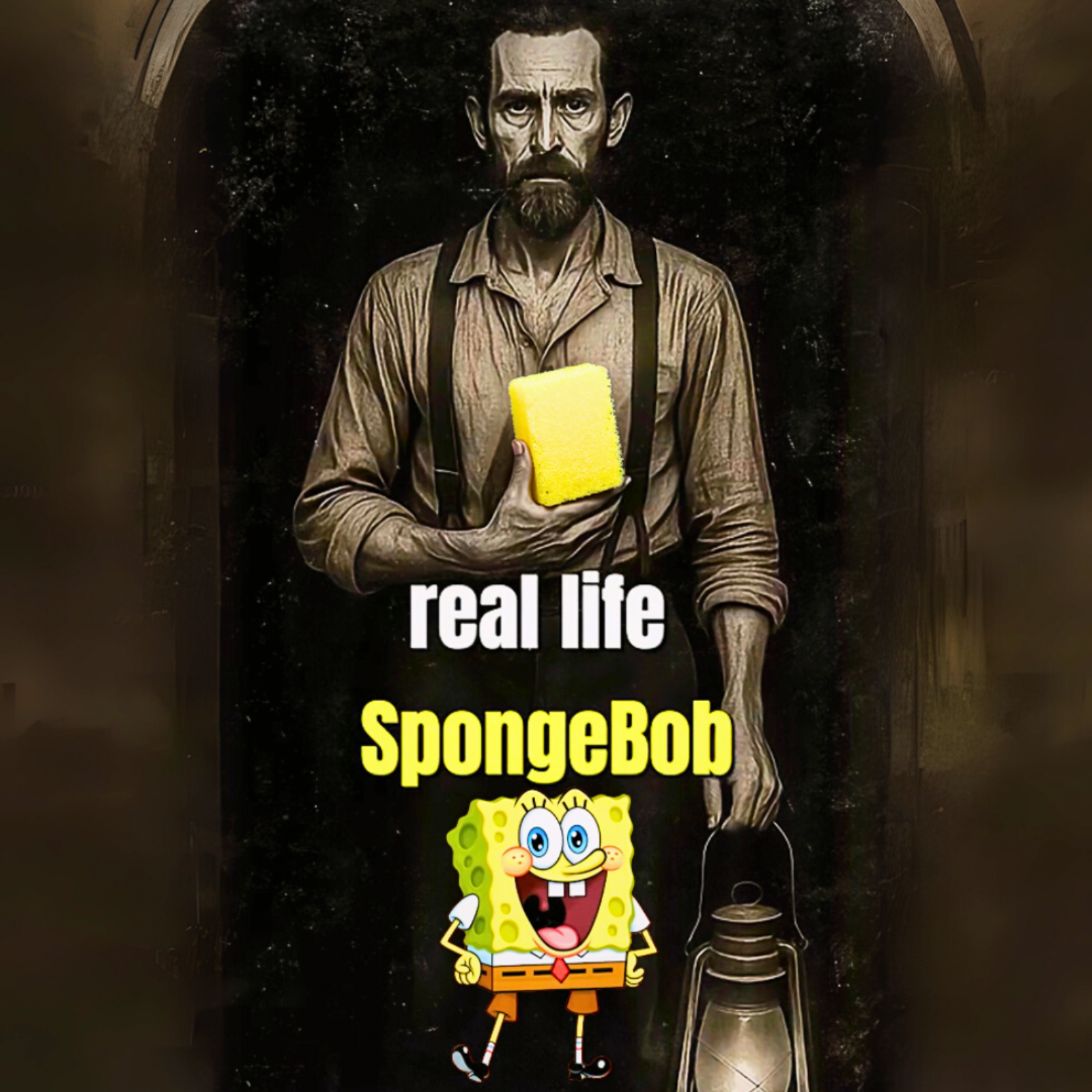
He wasn’t a cartoon. In 1843, a recluse named Robert Spence moved into an abandoned lighthouse off the coast of Maine. Locals called him SpongeBob because he salvaged sea sponges from shipwrecks and sold them to passing boats. His letters hinted at a dangerous project—cleansing seawater and making the ocean breathe. The lighthouse windows were always clouded. The shore was littered with barrels stamped CORROSIVE.
When authorities finally searched the tower, they found the walls lined with yellowed sponges, each one tagged with dates and notes in Spence’s tight hand. Some were still damp. His journals spoke of awakening the colony and voices echoing through the water. Spence himself was gone. On the top floor, a single soaked sponge sat beside a flickering lantern.
To this day, locals say if you stand near the rocks at night, you can hear it—the wet slap of something crawling back to shore. Maybe it’s the tide. Maybe it’s a lighthouse experiment that never stopped breathing.