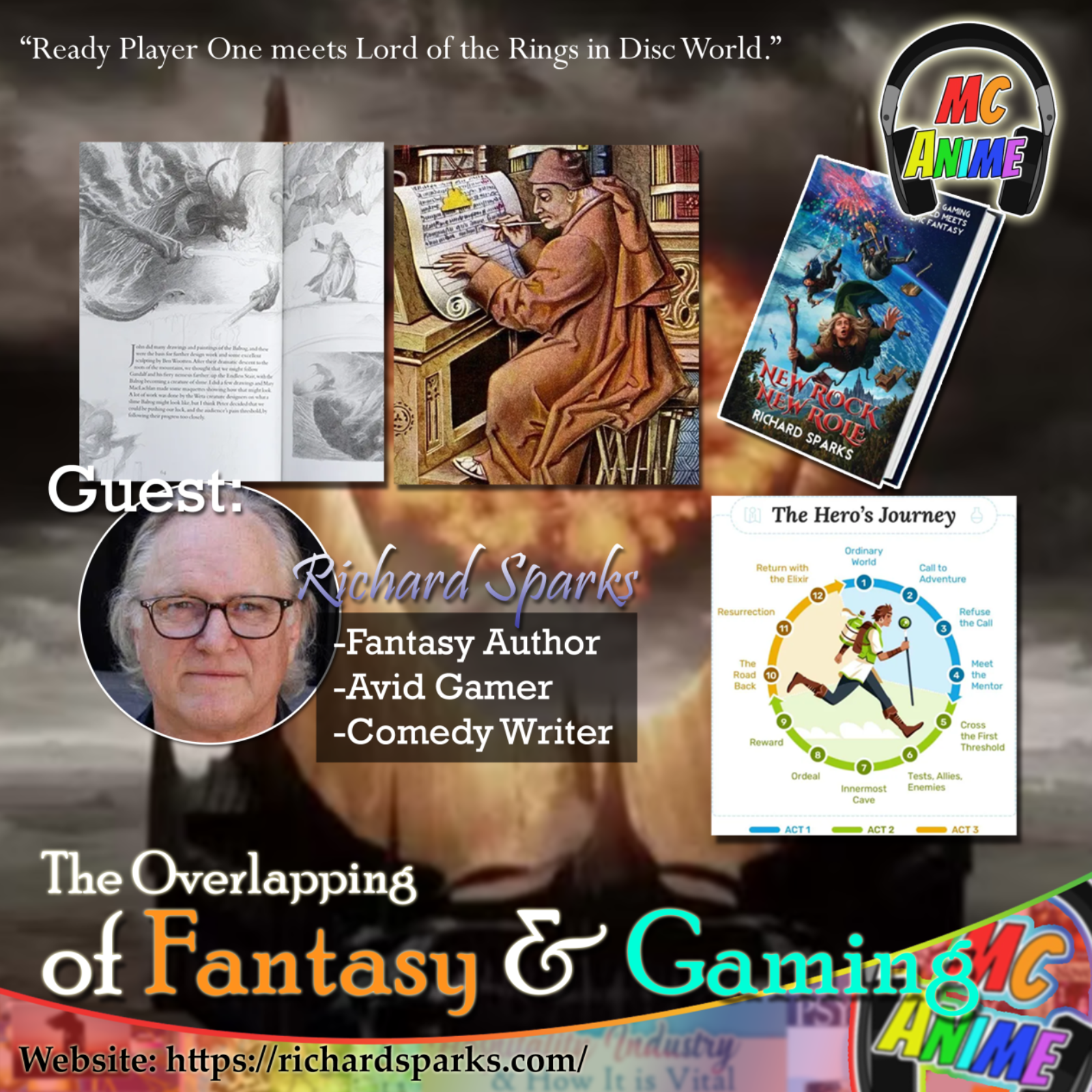
Richard Sparks joins the show to explore the rich intersection between fantasy storytelling and modern gaming, offering insights drawn from his work as a fantasy author, comedy writer, and lifelong gamer. He shares how immersive game worlds—especially sprawling RPGs like Elder Scrolls Online—have influenced his approach to worldbuilding in the New Rock series, where layered histories and interactive-style environments bring his settings to life. Sparks explains how gaming has reshaped audience expectations, pushing writers to create worlds that feel explorable, dynamic, and alive.
The conversation dives into the roots of fantasy itself, tracing inspiration back to Old English hero epics and mythological traditions that continue to shape creature design and narrative tone today. Sparks discusses how these ancient archetypes found modern expression in works like The Lord of the Rings, and how he adapts those influences into fresh, engaging creations. By blending the familiar with the unexpected, he builds creatures and cultures that resonate with readers while still offering something new.
A major focus of the episode is character development, particularly the balance between relatability and humor. Sparks emphasizes the importance of writing characters who feel human—even in fantastical settings—and how comedy can make them more accessible. He explains how witty dialogue and grounded reactions help readers connect emotionally, even when the story involves dragons, magic, or epic quests.
The discussion also highlights Sparks’ approach to the classic Hero’s Journey, showing how he uses its structure as a foundation while still allowing room for subversion and humor. Rather than treating the framework as rigid, he views it as a guide that can be adapted to suit modern audiences. This flexibility enables him to maintain narrative momentum while surprising readers along the way.
Sparks reflects on his journey as an author, offering encouragement to aspiring writers who may feel intimidated by the competitive publishing landscape. He speaks candidly about the challenges of breaking in and the importance of persistence, creativity, and finding one’s unique voice. His story reinforces the idea that new authors still have a place—and a chance to succeed—if they remain committed to their craft.
Wrapping up, the episode paints a compelling picture of how fantasy and gaming continue to influence each other in meaningful ways. From worldbuilding and character design to narrative structure and humor, Sparks demonstrates that the overlap between these mediums creates exciting opportunities for storytellers. Whether you’re a writer, gamer, or fan of fantasy, this conversation offers inspiration and practical insight into crafting engaging, imaginative worlds.