Hey! We would love to hear your thoughts, send us a voice note.
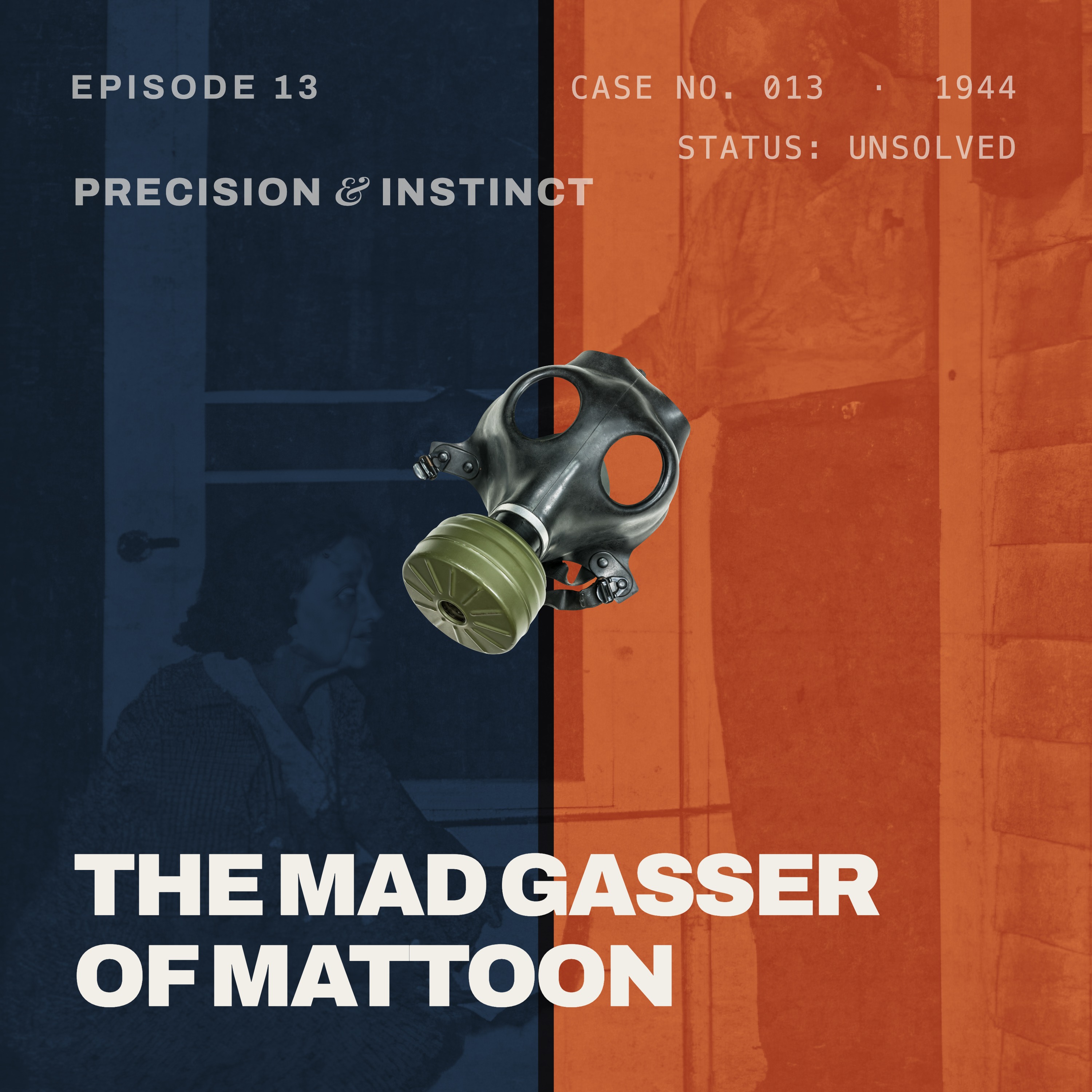
In September 1944, in the small Illinois railroad town of Mattoon, a woman named Beulah Cordes picked up a cloth left on her own front porch — and within seconds her lips were swelling and her mouth and throat were burning, with a skeleton key and a lipstick tube, neither hers, sitting beside it. Over the next two weeks, dozens of residents reported a mysterious "gas maniac" breaking into homes at night to leave people gassed and paralyzed, drawing in the Illinois State Police and the FBI, before the panic collapsed within days of the police chief publicly doubting it — and no suspect was ever arrested or charged. This week, Eli and Simone dig into a case the town's own public health commissioner couldn't fully settle in real time: whether this is one of history's clearest documented cases of mass hysteria, or whether one badly-explained porch means something in Mattoon actually happened.
Want to see for yourself? The case file has the full story in writing, and the source list shows which claims are confirmed, which are disputed, and which rest on a single account.
Case file: https://precisionandinstinct.com/cases/mad-gasser-of-mattoon/
Source list: https://notes.precisionandinstinct.com/episodes/13-the-mad-gasser-of-mattoon.html
Leave us your questions and comments: https://rss.com/podcasts/precision-instinct/voicemail/
CONTENT NOTE: This episode discusses a wartime panic involving documented chemical injury to a real, named private individual (Beulah Cordes) and references to wartime loss (a household member killed at Normandy) as historical context, not as a focus of grief or tragedy narration. One contested historical candidate (Farley Llewellyn) is named once, sourced to a single self-published book flagged as unreliable by Wikipedia's own editors; no motive, personal life, or biographical detail about him is discussed. No suspect was ever arrested or charged in this case, and it remains officially unresolved.
The hosts are fictional characters created by Verb Editorial, with AI-generated voices designed specifically for each one. Each episode is researched and written with AI assistance, then fact-checked, edited, and produced by a human team.