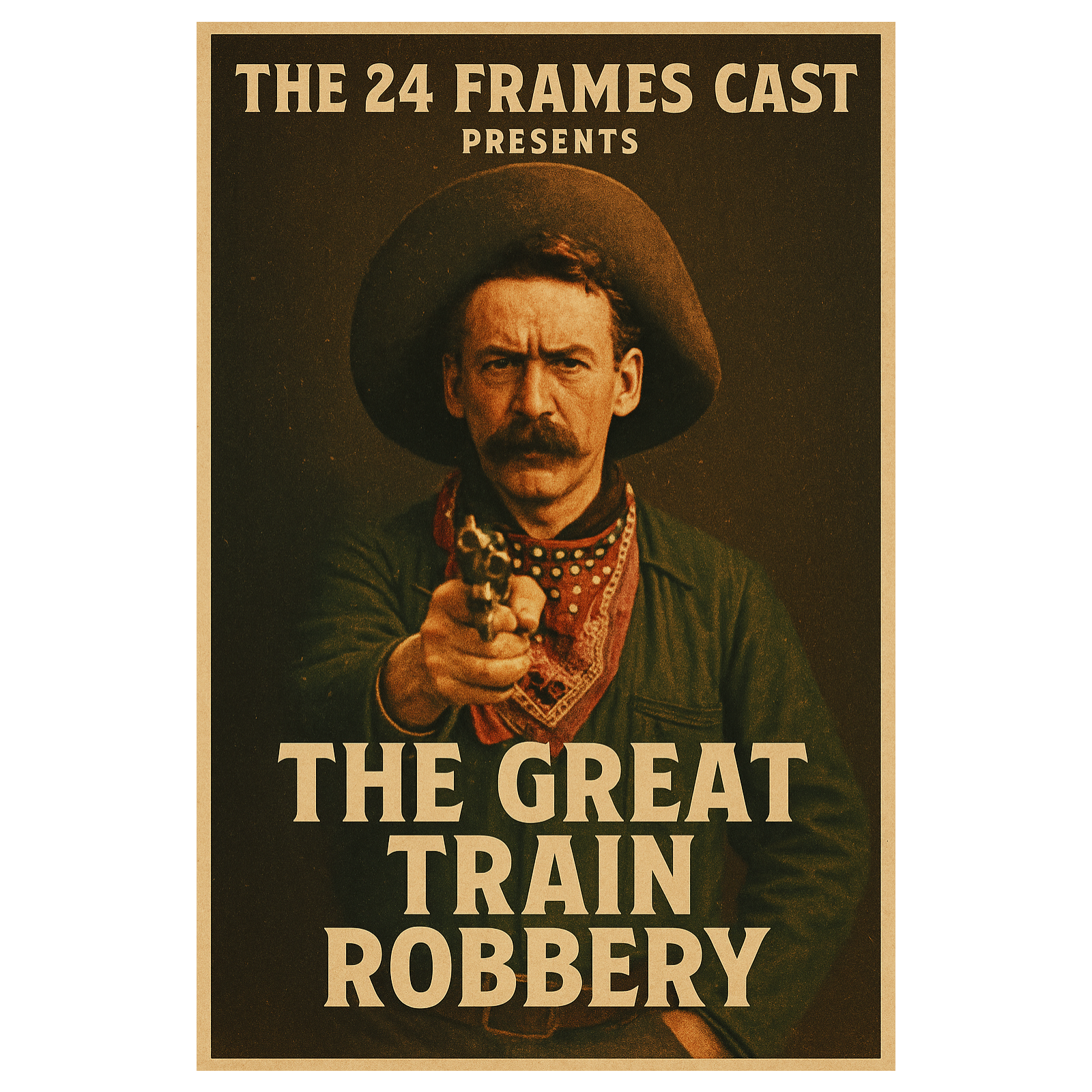
In this episode, we travel back to 1903 to explore the film that helped define American cinema long before Hollywood found its voice. The Great Train Robbery isn’t just an early Western—it’s a landmark collision of myth, modernity, and narrative invention. Released while real outlaws were still roaming the frontier, the film stands at a pivotal moment when the American West was fading into history but rising into legend.
We examine how Edwin S. Porter’s short, violent, technically daring film transformed cinema from a novelty into a storytelling medium. From its startling alignment with the outlaws to its groundbreaking use of action, movement, and editing, The Great Train Robbery shaped the themes that would dominate American film for the next century: frontier justice, charismatic violence, technological change, and the thin line between spectator and participant.
We also unpack the film’s iconic final shot—a bandit firing directly into the camera—and why it remains one of the most provocative gestures in film history.
If you’ve ever wondered how the Western became myth, how cinema learned to tell stories, or why American film has always been fascinated with outlaws, this deep dive uncovers the origins of it all.
A revisionist Western before revisionism existed. A myth created in real time. And a twelve-minute film that changed everything.
Where to watch:
https://www.youtube.com/watch?v=In3mRDX0uqk
All music licensed through Music Bed