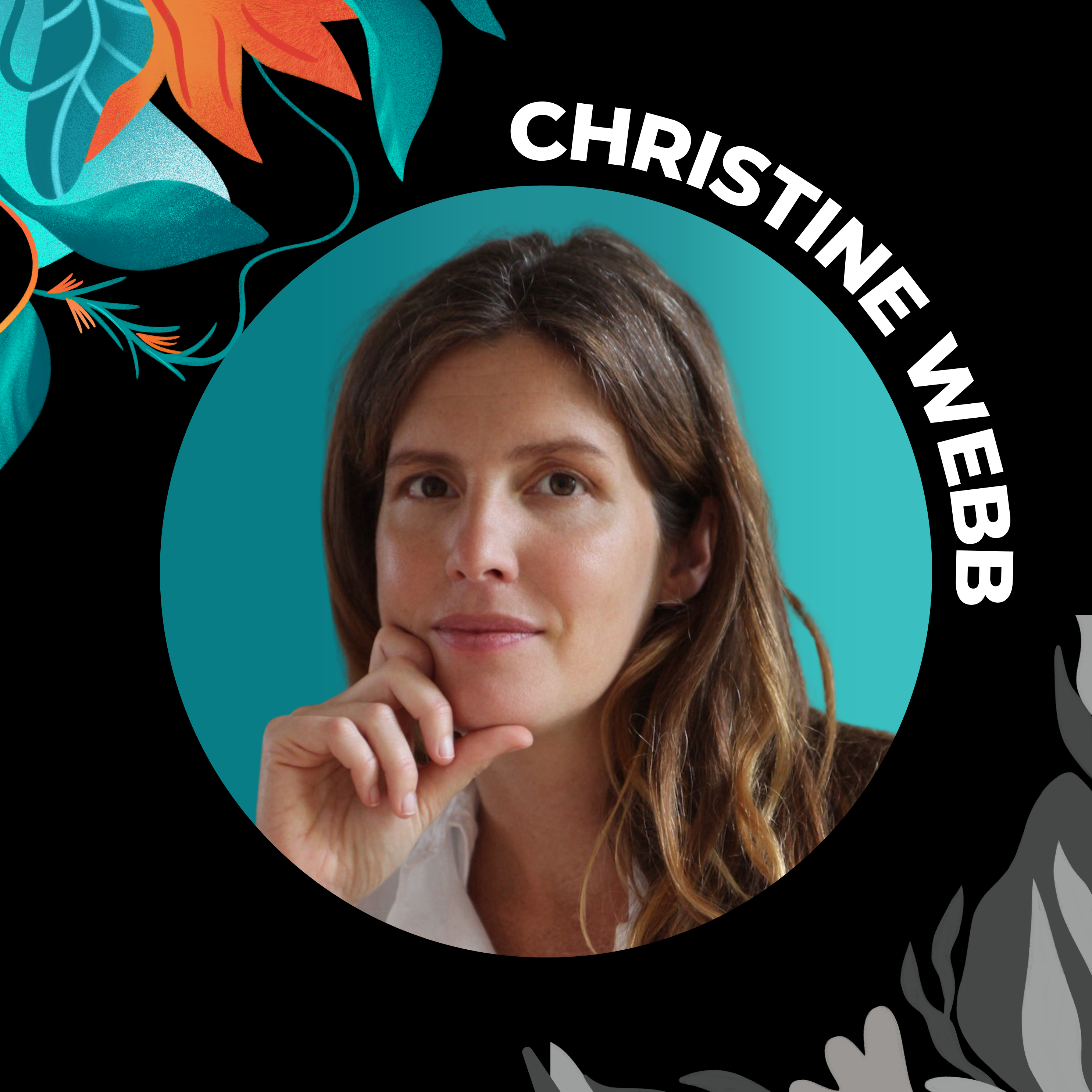
The myth of human exceptionalism casts humans as separate from and superior to the rest of life. Primatologist Christine Webb, author of The Arrogant Ape, dismantles this belief, showing how science and culture sustain human exceptionalism - and why replacing it with awe and empathy for the natural world is essential to life's future on Earth. Highlights include:
How an early experience with Bear the baboon led Christine to a deep insight about nonhuman animals' complex theory of mind - the ability to know what others know;
How human exceptionalism is deeply rooted in Western thought from Aristotle through medieval Christianity to the Enlightenment and modern science;
How human exceptionalism influences both the research questions asked and the methods used in primate research and science in general - such as using symbolic language tests on captive animals that privilege human cognition, and self-recognition mirror tests that privilege visually dominant animals like humans and disadvantage animals like dogs that 'see' with their sense of smell;
Why animals should be studied in their natural habitats, taking seriously each species' worldview, and developing relationships with individual animals grounded in mutual accommodation and trust which allows them to show who they really are;
How many Indigenous societies have long understood animals as individuals with agency and autonomy who structure their own societies - a relational understanding Western science has only recently begun to recognize;
Why empathy, the attempt to understand the "minded life of another being", must be "un-tabooed" in Western science;
How human population pressure, in addition to driving animal depopulation and extinction, also reduces the complexity of animals' social relationships and cultural diversity;
Why "human exemptionalism", the belief that technology will save humanity from environmental limits, is a delusional form of human exceptionalism;
How her book ultimately calls us to resist the inherited role of the "arrogant ape" through everyday awe practices, such as "slow-looking" practices in nature that shift our perspective toward deeper understanding and appreciation of the more-than-human world.
See episode website for show notes, links, and transcript:
https://www.populationbalance.org/podcast/christine-webb
OVERSHOOT | Shrink Toward Abundance
OVERSHOOT tackles today's interlocked social and ecological crises driven by humanity's excessive population and consumption. The podcast explores needed narrative, behavioral, and system shifts for recreating human life in balance with all life on Earth. With expert guests from wide-ranging disciplines, we examine the forces underlying overshoot: from patriarchal pronatalism that is fueling overpopulation, to growth-biased economic systems that lead to consumerism and social injustice, to the dominant worldview of human supremacy that subjugates animals and nature. Our vision of shrinking toward abundance inspires us to seek pathways of transformation that go beyond technological fixes toward a new humanity that honors our interconnectedness with all beings.
Hosted by Nandita Bajaj and Alan Ware. Brought to you by Population Balance.
Subscribe to our newsletter here: https://www.populationbalance.org/subscribe
Support our work with a one-time or monthly donation: https://www.populationbalance.org/donate
Learn more at https://www.populationbalance.org
Copyright 2016-2026 Population Balance