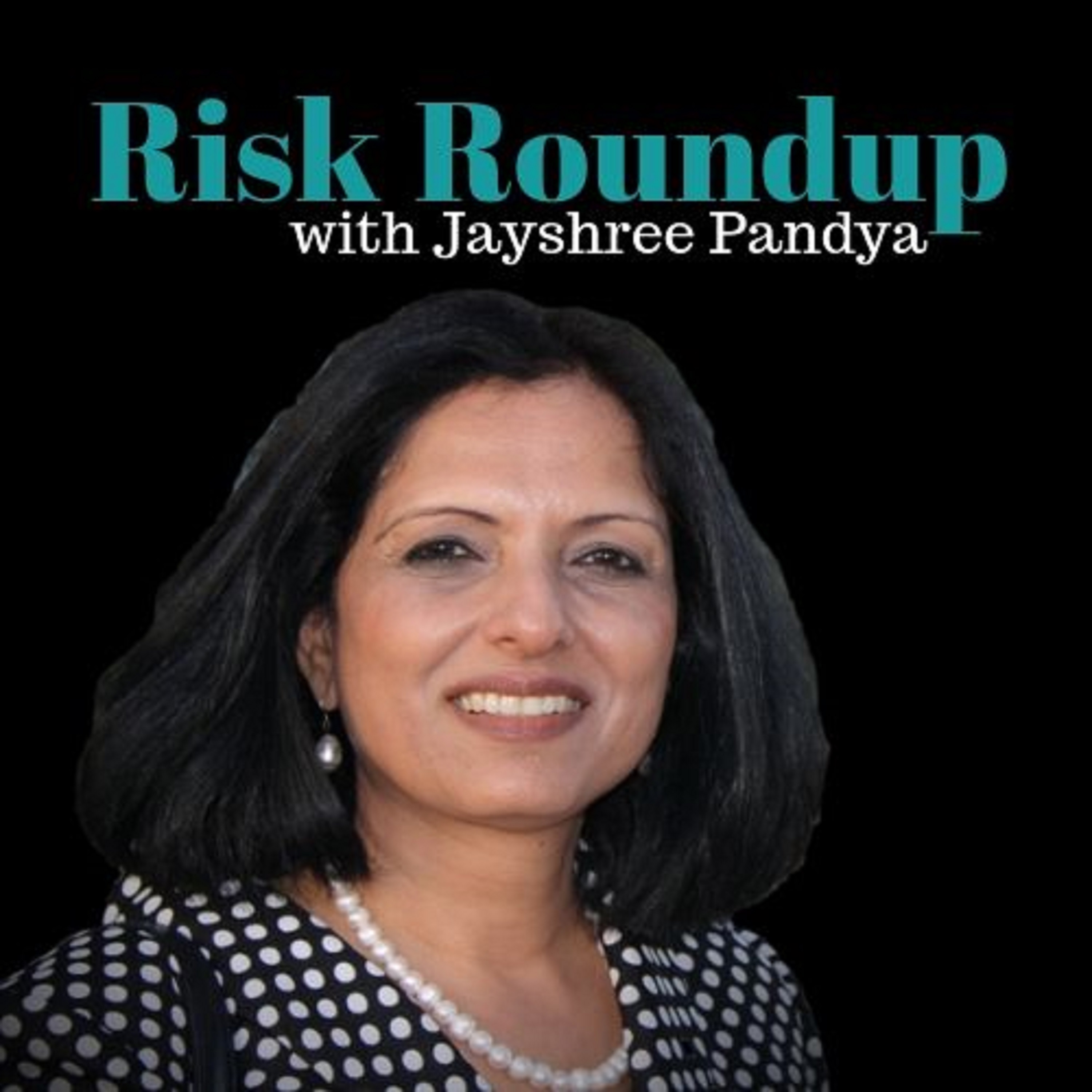
Dr. O. Shawn Cupp, Professor at US Army, participates in Risk Roundup to discuss Cyberspace Policy.
Cyberspace
Cyberspace is fundamentally changing the human ecosystem in aquaspace, geospace, and space (CAGS). As seen, billions of devices are already connected to the internet today, and billions more will be connecting in the coming tomorrow. The growth in high-speed internet access and devices connected to the internet has given rise to big data that has helped transform every component of a nation.
As seen today, individuals and entities across nations: its government, industries, organizations, and academia (NGIOA) already rely on computer-driven and interconnected information and communication technologies. As a result, each nation’s security now depends on how all components of a nation (individually and collectively) respond to cyberspace.
Understandably, securing cyberspace has become a survival need for everyone across nations. The reason is that cyberspace is an inseparable component of nations’ digital systems and a way of life now. Not only that, cyberspace is connecting geospace, aquaspace, and space as well. From financial system to social, economic system to commerce, government and political life, everyone and everything are getting connected. This fundamentally changes how nations operate across CAGS.
Cyber Policy
Today, cyberspace is a contested common along with aquaspace, geospace, and space and its use as a battleground to wage war is rapidly intensifying. Cyberspace seems to be evolving faster than the policymaker’s ability to handle the transformative changes brought on by the technology.
Keeping up with
the rapidly growing complexity of the raging war in cyberspace is a challenge
facing not only nations military, but also individuals and entities across
nations: its government, industries, organizations, and academia (NGIOA), and even
the policy community.
So, how do
nations keep up?
To begin with, every entity across NGIOA needs to define protection mechanisms for their digital infrastructure, data, and systems. Defining security controls, tools, and processes is a survival need today. So, as we develop a security policy, it is not just a technological solution; it is instead, a doctrine to give measurable goals for our collective security controls and response.
Since security policy applies to the entire nations, it, therefore, must be defined, described, and documented in clear terms for digital infrastructure, physical security, critical infrastructure security across CAGS, hardware, software, systems, war weapons, and so on. Developing a cyber policy needs to be a collective effort from all security stakeholders across NGIOA. It is therefore essential to evaluate:
The ultimate goal
of the cyber policy is to create a cybersecurity framework to increase the
security posture of cyberspace. The time is now to discuss and debate Cyber
Policy!
For more, please watch the Risk Roundup Webcast or hear the Risk Roundup Podcast
About the Guest
Dr. Cupp is a faculty member of a multi-departmental teaching team instructing the Intermediate Level Education (ILE) including the ILE Core Course and the Advanced Operational Warfighting Course (AOWC). Responsible for presentation, revision, development, and evaluation of graduate-level, force projection, and maneuver sustainment, resource planning, and force management instruction; to a diverse audience of US and international field grade officers. Serves as a mentor and coaches 16 operations career field students as their Staff Group Advisor (ASGA). Educate and counsel officers in a course that develops and improves their problem solving, critical reasoning and creative thinking, leadership development, cultural awareness, and military-media relations. Curriculum, course author, and lesson author duties include A430 Characteristics of Domestic Incidents in the Advance Application Program (AAP) as part of the Homeland Security Studies Program Track V. Subject matter expert within the college for adult education, domestic threats, agroterrorism, and research in homeland security threats.
About the Host of Risk Roundup
Jayshree Pandya (née Bhatt), the founder and
chief executive officer of Risk Group LLC (www.riskgroupllc.com) is working passionately to define a new security-centric
operating system for humanity. Her efforts towards building a strategic
security risk analytics platform are to equip the global strategic security
community with the tools and culture to collectively imagine the strategic
security risks to our future and to define and design a new security-centric
operating system for the future of humanity.
About Risk Roundup
Risk Roundup, a global initiative
launched by Risk Group, is a security risk reporting for risks emerging from
existing and emerging technologies, technology convergence, and transformation
happening across cyberspace, aquaspace, geospace, and space. Risk Roundup is
released in both audio (Podcast) and video (Webcast) format and is available
for subscription at (Risk Group Website, iTunes, Google Play, Stitcher Radio, Android, and Risk Group Professional Social Media).
About Risk Group
Risk Group LLC is a leading strategic
security risk analytics platform.
Copyright Risk Group LLC. All Rights
Reserved
The post Cyber Policy appeared first on Risk Group.