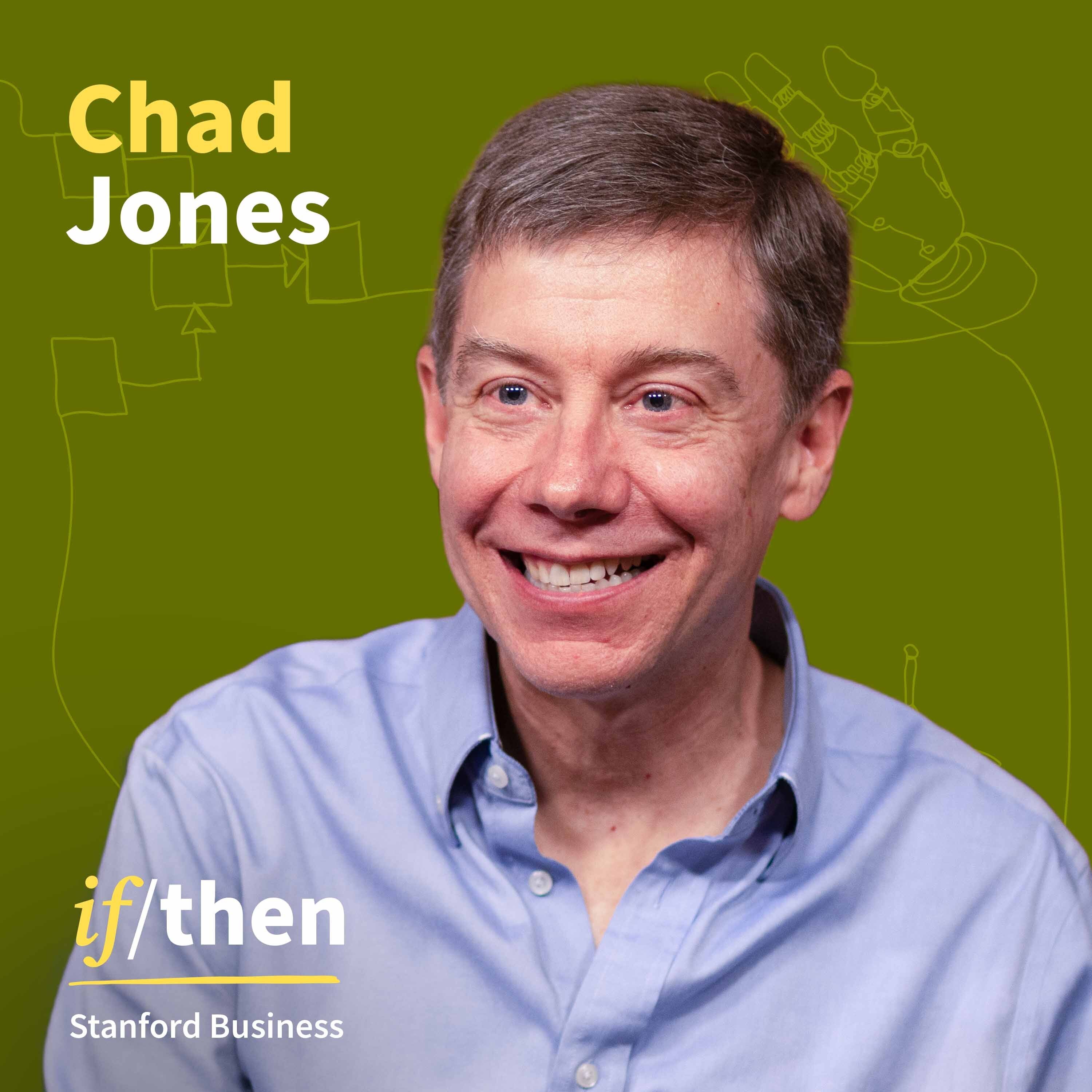
Chad Jones, a professor of economics at Stanford Graduate School of Business, recently published a paper, “AI and Our Economic Future.” Using more than 100 years of economic data, he modelled several potential AI-infused economic futures we may experience. These include the good (abundance, we never work again), the not-so-bad (business more or less as usual), and the ugly (a superintelligence that turns on us, among other catastrophic options). Cheery stuff, Jones acknowledges, but essential to face.
“I think the ability for an AI to do everything on a computer that the best software engineer can do, that seems like it’s either here now or will be here within five years easily,” Jones says. “Hacking the electric grid, hacking the financial system, these kinds of scenarios are things that we definitely have to worry about. The good news is, I think if we get through that, the ability of AI to transform the economy for good, it is really there and present. And, that would be a very great and bright future.”
Related Content:
Chapters:
00:00:00 Introduction
00:01:32 The difference between now & previous periods of innovation
00:02:29 Two scenarios for AI-driven growth
00:06:18 The case for business-as-usual
00:11:06 Weak links and the limits of automation
00:17:53 What the models are showing about growth
00:19:58 The economics of abundance
00:25:29 The weak-link model’s timing & possible adaptations
00:27:51 Who gains in an AI economy?
00:29:55 Catastrophic risk and the downside of acceleration
00:34:31 The downsides of the weak link model
00:36:38 Meaning, identity, and human value
00:39:55 Leisure in a post-work world
00:41:43 What the next generation may inherit
00:44:07 Conclusion
If/Then, from Stanford GSB, features conversations with faculty that explore how their research deepens our understanding of business and leadership.
See Privacy Policy at https://art19.com/privacy and California Privacy Notice at https://art19.com/privacy#do-not-sell-my-info.