What if your worst enemy wasn't a foreign adversary—but a virtual clone of you?
A digital twin that knows your habits, your cravings, your blind spots.
It knows when you're tired. When you're distracted. When you're easiest to influence.
Sounds like Black Mirror.
It isn't.
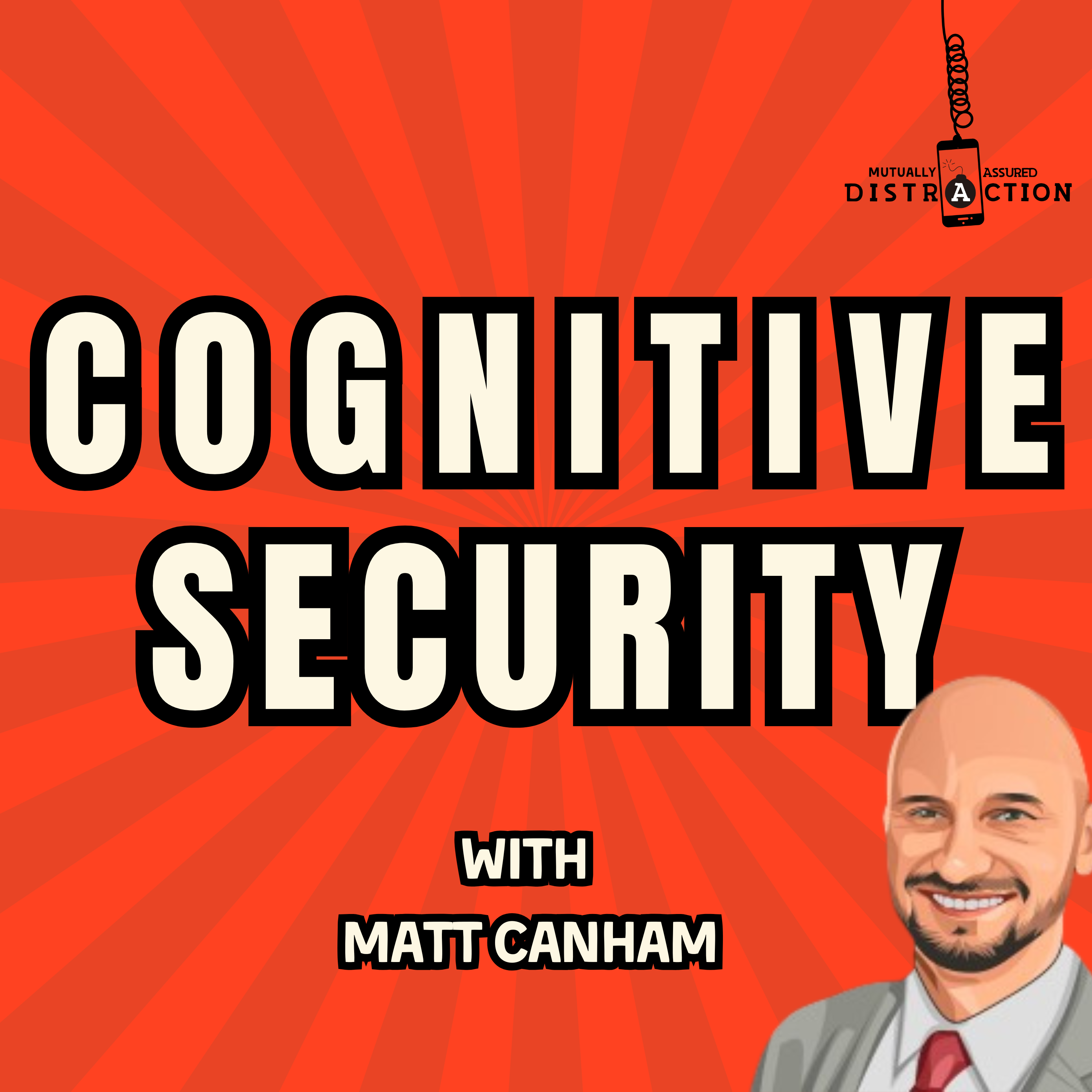
In this episode, we sit down with Matt Canham—former FBI supervisory special agent, trainer to NASA and DARPA, and founder of the Cognitive Security Institute—to talk about digital twins, social engineering, and why the human mind is now the primary target.
This is a conversation about prediction , personalization, and what happens when systems know you better than you know yourself.
⸻
Key Topics
What "cognitive security" actually means—and why it's not psychology cosplay
Digital twins as behavioral models, not avatars
Why prediction beats persuasion every time
How social engineering exploits routine, not stupidity
Personalization as a structural vulnerability
Why awareness doesn't equal protection
The difference between influence, manipulation, and coercion
Why humans are easier to model than systems
What institutions are quietly preparing for
Where responsibility ends: individual brains vs. system design
⸻
Resources + Links
Cognitive Security Institute
https://www.cognitivesecurityinstitute.org/
Matt Canham — speaking, training, and research on cognitive security
https://www.linkedin.com/in/matthew-cognitivesecurity/
⸻
WANT TO SUPPORT MAD?
Sponsor us.
We'll make you a weird, wonderful custom video.
Email: madwarfarepodcast@gmail.com
(Or just send snacks. Still counts.)
⸻
MAD Warfare™ is hosted by narrative strategist Jocelyn Brady and cognitive neuroscientist Sean Anthony Guillory.
Edited and produced by Amine el Filali.
Visit madwarfare.com for extra giggles.
Send your wishes, weird ideas, dream guests, and sponsorship inquiries (yes, again) to madwarfarepodcast@gmail.com.
⸻
FAIR USE
This show is MAD enough to include homages, short clips, and references that provide vital context and/or moments of joy. We deeply respect every creator's work and use these moments for educational, artistic, and transformative purposes under Fair Use. If we missed an attribution or you'd like to collaborate, reach out—we're happy to chat.