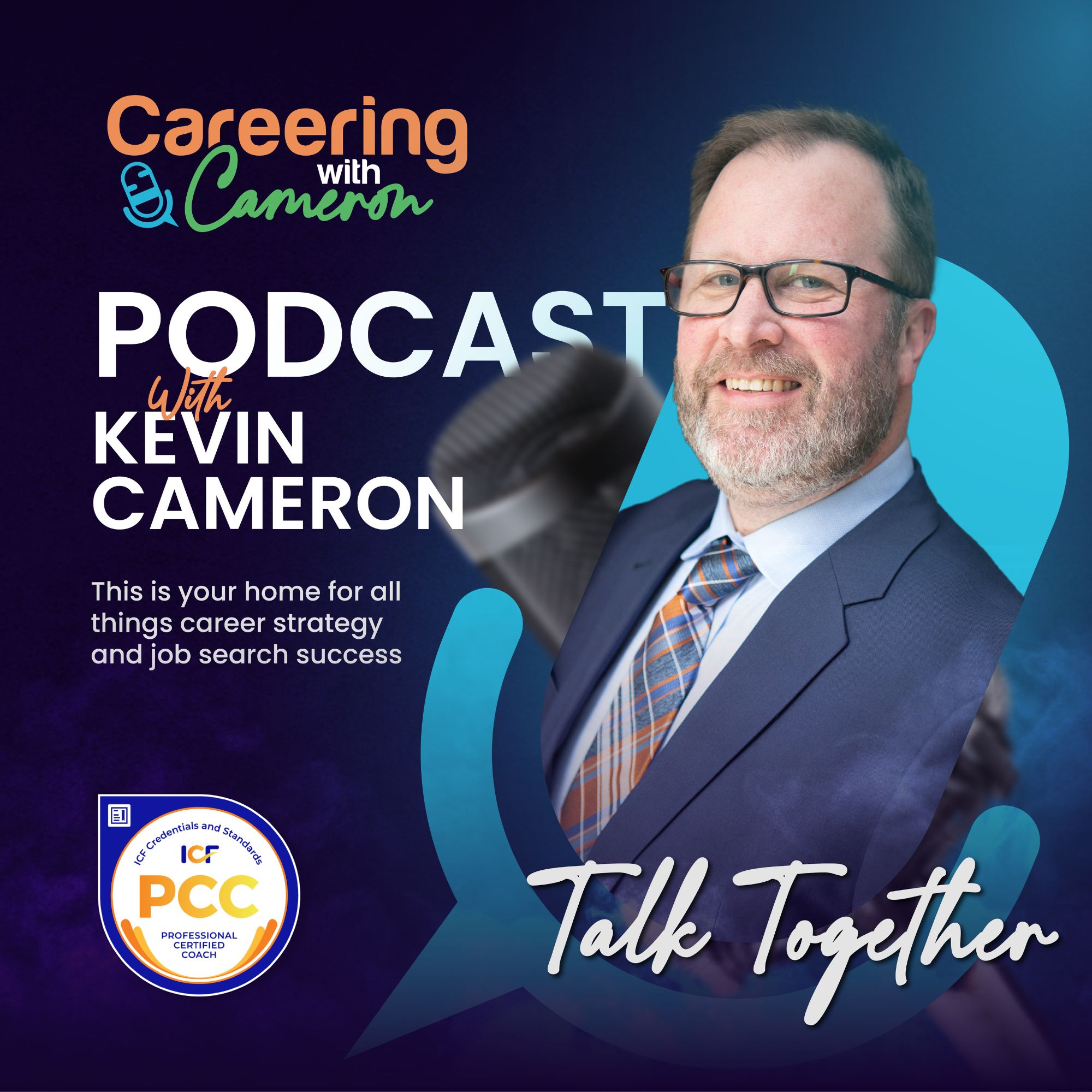
Finding your first internship can feel like a "chicken and the egg" situation - how do you get experience if you don't have any yet? In this episode of Careering With Cameron, host Kevin Cameron breaks down the mystery of the internship search for students and parents alike.
Kevin Cameron provides a clear, actionable roadmap to help you navigate the process with confidence, reminding listeners that companies hire interns specifically because they know you are still in the learning phase.
You will learn why you don't need to have the next 50 years of your life planned out to start applying today. Kevin Cameron explains how to "audit" your life for experience - from class projects to volunteer work - and how to build a "Master Resume" that stands out to human recruiters rather than bots. Whether you are looking for a massive corporation or a fast-paced startup, this episode provides the essential tools to define your target and land an opportunity that actually excites you.
Key Takeaways
Define your target by narrowing your focus to two or three specific roles to make your search more efficient.
Audit your experience by looking at class projects, volunteer work, and high school jobs to identify your "breadcrumb" interests and hard skills.
Build a one-page Master Resume using strong action verbs and quantified data to measure your results.
Optimize your LinkedIn profile as your "digital storefront" by using a clear headshot and a headline that explicitly states what you are looking for.
Leverage the power of networking by connecting with alumni and peers who can help "triangulate" your application within an organization.
Episode Highlights
Kevin Cameron discusses why an internship is not a "marriage" to an employer but an opportunity for mutual support and engagement.
Advice on why you should never name your resume files after the specific employer you are applying to.
The importance of saving job descriptions as PDFs or Word documents in case the posting is taken down before your interview.
How to prepare a 60-second elevator pitch that covers who you are, what you've done, and why you want the role.
Why the "thank you note" is still a non-negotiable step that must be sent within 24 hours of an interview.
Timestamps
00:24 — Leveraging university career services and hidden job boards
01:08 — Identifying your interests and school "breadcrumbs"
02:28 — Step 1: Defining your target and role specificity
03:10 — Step 2: Auditing your experience and class projects
05:06 — Step 3: Building a one-page Master Resume
07:21 — Step 4: Optimizing your LinkedIn digital storefront
08:36 — Step 5: Returning to the career center for alumni connections
09:14 — Step 6: The "Save and Search" phase using Handshake and LinkedIn
10:40 — Step 7: Customizing applications and using AI guardrails
11:46 — Step 8: The power of networking with alumni and peers
13:04 — Step 9: Preparing your 60-second elevator pitch
13:35 — Step 10: Following up and the Amazon "star" analogy
15:31 — The 24-hour thank you note rule 16:12 — Why cover letters are making a comeback
If you found this advice valuable, please hit subscribe, leave us a review or follow @careeringwithcameron_ so you don't miss our next episode!
Share this episode with a friend currently navigating the job market!
Production Credit: Edited and produced by @the32collective_ / https://www.the32collective.co/