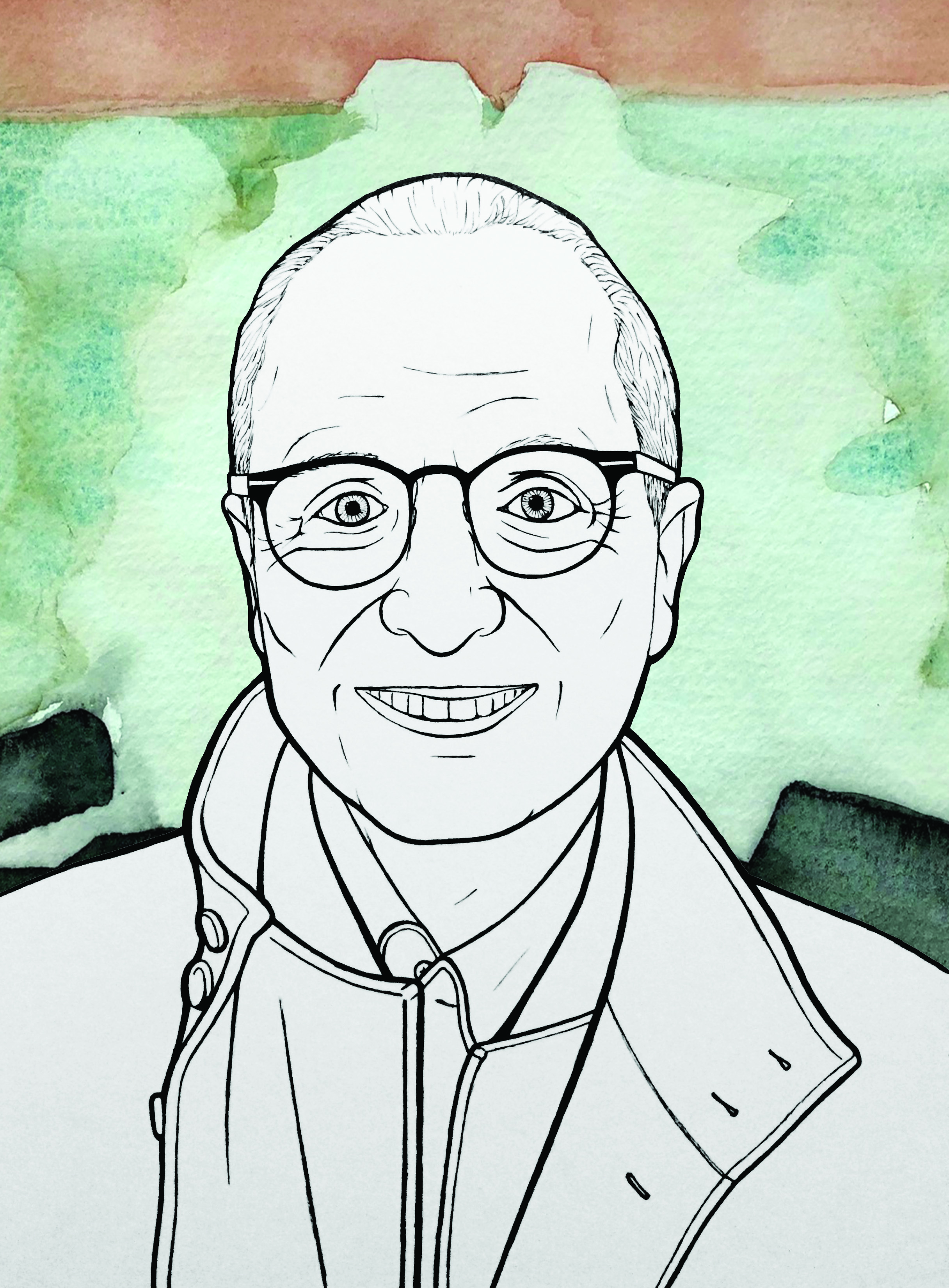
The father of Philip Enquist was a rebel who didn’t appreciate shortly-cropped mowed lawns, and he allowed the grass in the front yard of their Southern California home to grow long. The neighbors didn’t share his aesthetic, and occasionally one or another of them couldn’t resist the temptation to show up and boldly mow the Enquist lawn. Eventually, Philip’s father moved the whole family away from suburbia out into the Mojave desert where there were no lawns. “Just native chaparral and native groundcovers,” Philip recalls. “That’s really where I was exposed to the beauty of natural landscapes: roadrunners, quail, and it was wonderful.” “You might think when you first arrive in a city that there’s no nature. But it’s here, and it’s very interesting. It’s just fragmented. This century is the century to put things back together.” – Philip Enquist is a consulting partner with Skidmore, Owings & Merrill where he led the urban designpractice for 20 years. He is a Fellow in the American Institute of Architects and an Honorary Member of the American Society of Landscape Architects. He currently serves as a Governor’s Chair for Energy and Urbanism at the University of Tennessee and Oak Ridge National Laboratory.