Past Participles
The form of the verb that implies completion. The action described by the verb is completed with respect to a specific point in time.
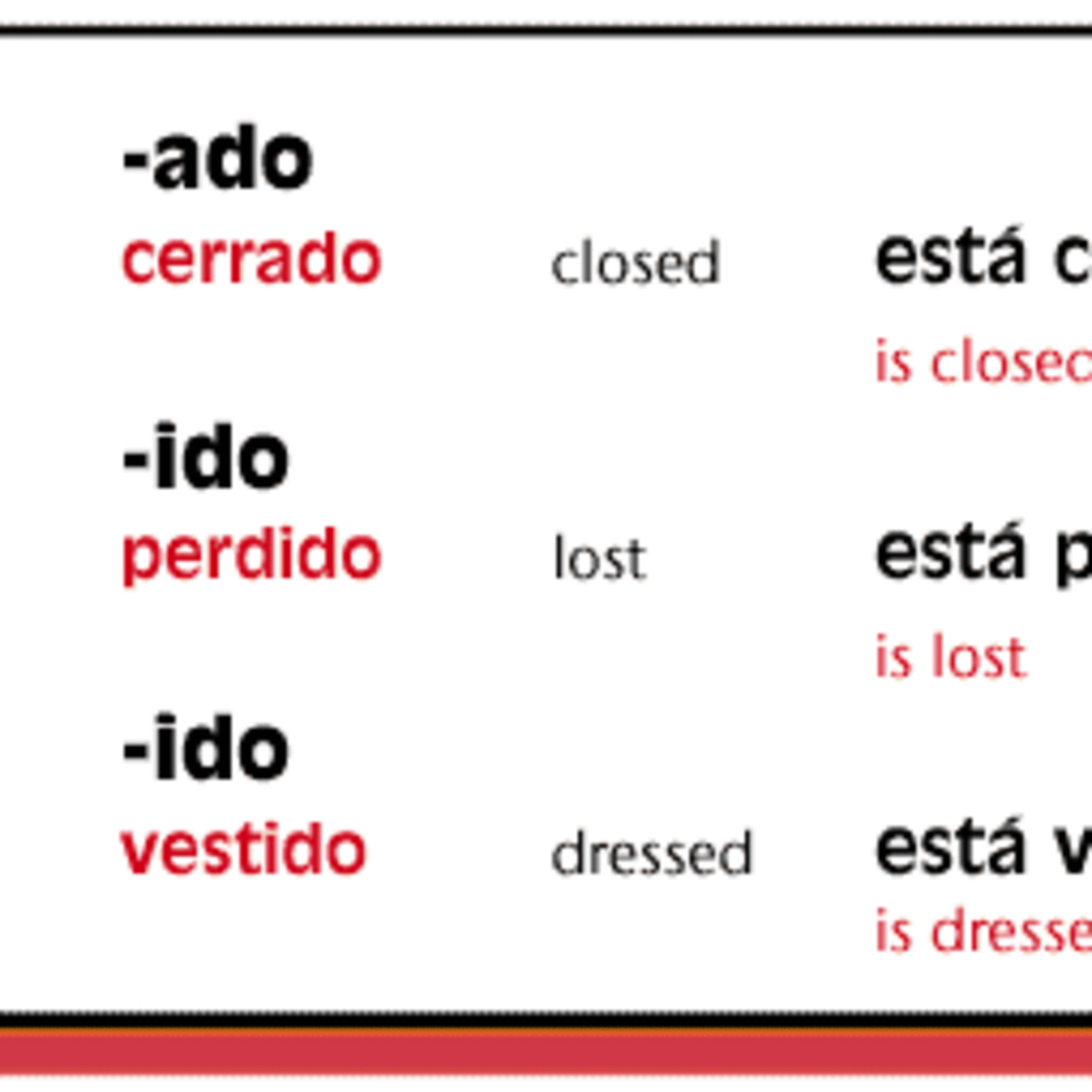
Formed by dropping the ending and adding
-ado to the stem of -ar verbs
-ido to the stem of -er and -ir verbs
Used the same way in Spanish as in English
1. We have always loved animals. (-ed form)
Siempre hemos querido a los animales.
2. I have given him my car. (-en form/passive voice)
Le he dado mi coche.
Irregular Past Participles
abrir... to open... abierto
decir... to say... dicho
hacer... to do/make... hecho
morir... to die... muerto
romper... to break... roto
ver... to see... visto
cubrir... to cover... cubierto
escribir... to write... escrito
imprimir... to print... impreso
poner... to put... puesto
volver... to return... vuelto
REMEMBER when the past participle is used as an adjective, it MUST agree in gender and number with noun it is modifying.
La ventana está rota. El barco está roto.
Some verbs have two forms for the past participle.
1. The regular form is used to form the compound tenses... Estoy confundido. I'm confused.
2. The irregular form is used as an adjective... La explicación es muy confusa. The explanation is very confusing.