John Daly (Hillsboro Fine Art Gallery) & Artist, Eoin MacLochlainn
Hillsboro Fine Art
"Founded by gallery director John Daly in 1995, Hillsboro Fine Art is widely recognized as Ireland’s leading 20th-century and contemporary gallery and has now established a significant reputation around the world."
Alan Davie
"Born in Grangemouth, Scotland, in 1920 Alan Davie studied painting from 1937 to 1941 at the Edinburgh College of Art and also learnt silversmithing. A multi-faceted talent from the start, Davie was interested in exotic art, played several instruments, discovered jazz and joined the Cam Robbie jazz band as a saxophonist. While serving in the Royal Artillery between 1941 and 1946, Davie was inspired by reading James Joyce to write poetry himself.
On his return to London, Alan Davie was particularly taken with the work of Paul Klee and Pablo Picasso exhibited there, which left a lasting impression on him and made him seek contact with modern English painters and their work. Taking Paul Klee's pictorial language as his point of departure, Davie was already working in a manner close to Abstract Expressionism when he linked up with the tradition of early 20th-century Scottish modern art. After his marriage to the artist Janet Gaul, Davie abandoned painting for jazz for a while.
In 1948 Alan Davie met Peggy Guggenheim, who introduced him to early American Abstract Expressionism. Much impressed by the work of Jackson Pollock, Davie returned to painting. 'Music for a Pagan Dance' (1949) is Davie's first public foray into the new abstract 'all-over' style of painting. From then on a semi-automatic method of painting would be characteristic of Davie's approach to his work. Confirmation of Davie's painting came with Peggy Guggenheim's purchase of one of his works.
In 1950 Davie had his first one-man London show, at Gimpel Fils (in 1946 he had already had one at Grant's Bookshop in Edinburgh), where he continued to show regularly. In 1956 Davie went to New York. Primitive art now inspired him to a powerfully gestural approach to painting; in 'Footprint Image' he combined vehement brush strokes with his own footprints. Action Painting became important and Davie sought to contact the conventional painting process by working rapidly on the floor, adding pieces of rubbish, dripping paint and turning pictures around and over.
In the 1960s Davie switched from 'all-over' to compositions of real and fictive signs shaped by contours. Music, to which Davie again began devoting more time in the 1970s, has remained a constant in his life. Considered by many to be one of the most important British artists of the post-war era, his work is distinguished by spontaneity, exuberant colour and improvisation.
One of the few artists from his generation who enjoys truly international recognition, his work can be seen in galleries and museums worldwide, including Tate Modern, London; The Scottish National Gallery of Modern Art, Edinburgh; the Peggy Guggenheim Collection, Venice; Museum of Modern Art, New York; Stedelijk Museum, Amsterdam; Museu de Arte Contemporanea, São Paulo."
http://www.hillsborofineart.com
The Paul Kane Gallery
"The Paul Kane Gallery was established in 1997 -in its original venue in South William St.-to promote the work of contemporary Irish artists through a regular program of exhibitions, both in South William St. and elsewhere.
In it's new space at 6 Merrion Square, The Paul Kane Gallery continues as before but is widening its remit to include a selection of International Artists such as Tom Hammick, Basil Beattie, and Jane Bustin."
http://www.thepaulkanegallery.com/
"'WE ARE WHERE WE ARE''
Corridor
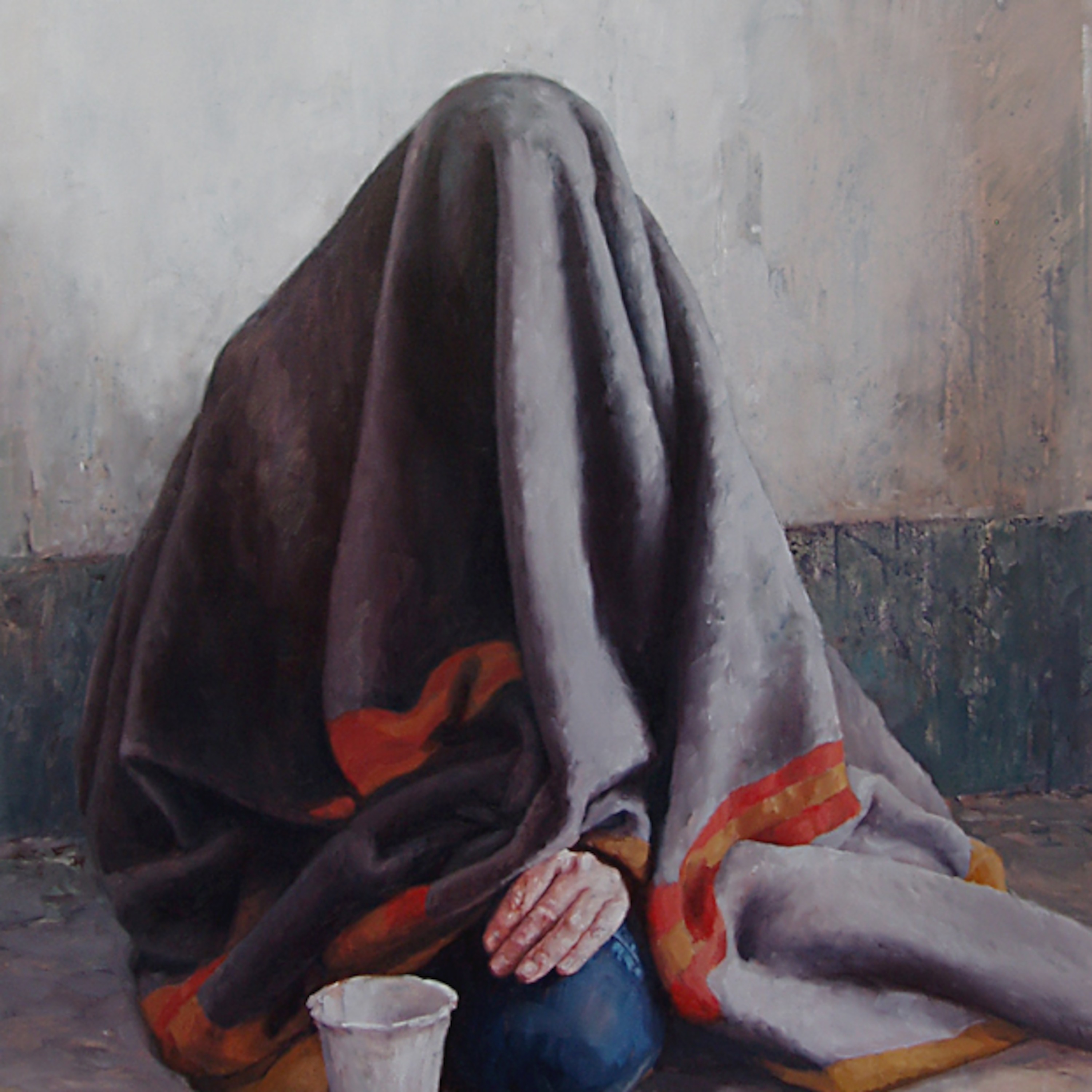
“ We are where we are” is an exhibition of new works by Eoin Mac Lochlainn, it explores the human dimension to the economic downturn, empathising in particular with those on the margins of society.
Artist’s Statement :
I take images from the media as the subjects of my paintings. It is easy to become inurred to the individual stories that lie behind any of these images, but by choosing one and making it the subject of a painting, I try to emphasise the importance of that human story and, in a way, to subvert the notion of the “15 minutes of fame”.
Over the last year much has been written about empty hotels, tenantless apartment blocks and ghost estates, an estimated 300,000 units vacant or unfinished. At the same time we read about the growing problem of homelessness… My work engages with contradictions such as these but, whilst the subject matter may be tough and the questions raised uncomfortable, my primary intention is to make paintings whose colour and form are equally compelling."
http://www.eoinmaclochlainn.com/