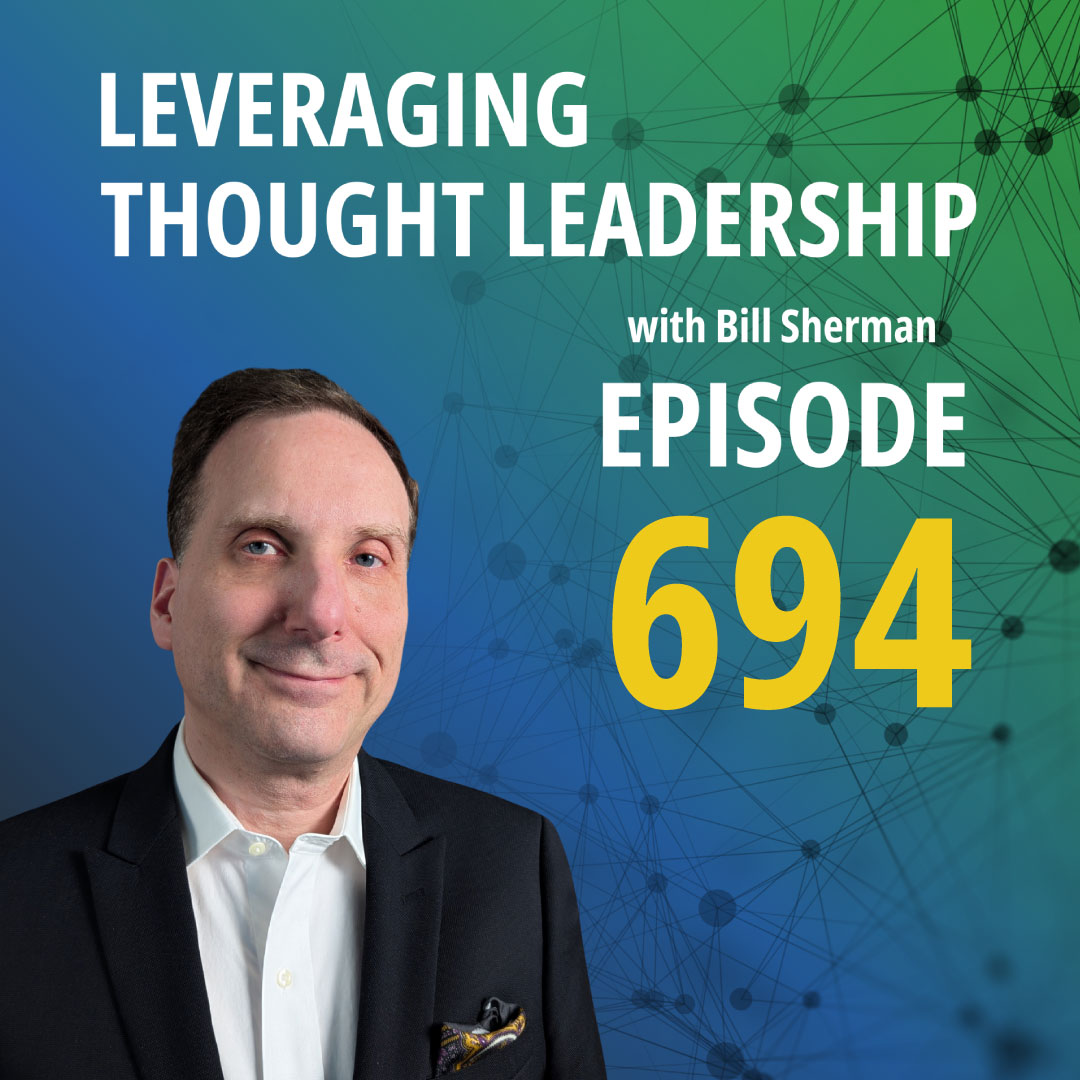
What if the biggest lever you have today isn't another action plan—but one decision?
In this episode, Bill Sherman talks with Apollo Emeka, who calls himself "the big decisions guy," and traces how that identity started early—when Apollo was effectively handed the power to choose school or not as a kid, and felt the real-world consequences of deciding either way.
Apollo's path is anything but linear: military service, Iraq deployment, an FBI internship, and a mindset shaped by high-stakes environments where "what could go wrong?" isn't drama—it's a discipline. He shares a vivid example: after his family was impacted by the Eaton fire in Altadena and evacuated, they stress-tested a radical idea (moving to Panama) by asking that question seriously, researching risks, and acting fast once no deal-breakers showed up.
A turning point came when Apollo commissioned a third party to interview his clients and surface where his real impact was. The message was consistent: decision-making. That clarity gave him permission to drop the "other consulting stuff" and go all-in on helping leaders make better decisions faster—then validating the shift publicly and operationally (including flipping his website).
You'll hear practical tools, not theory. Apollo describes how most leaders' stated goals score shockingly low on a fulfillment scale—often a 6 or 7—because they're inherited, socially pressured, or "sensible," not energizing. That insight becomes the doorway to choosing goals you actually want, not goals you can defend.
He also lays out what he calls a "big decision" framework: it must be a 10/10 on fulfillment, read like a toddler's run-on sentence (because it forces your competing life priorities onto the same page), make other decisions easier, and be bold enough that people might call you crazy. Apollo reads his own big decision statement—including the ambition to build scale through a best-selling book, a top podcast, and bigger stages, while protecting what matters at home.
Finally, Apollo names the hidden saboteurs that keep smart people stuck: the "decision monsters." He trains clients to stop living in "can / should / could," and to recognize three common blockers—feasibility, worthiness, and social judgment—so leaders can choose with intention instead of permission.
Three Key Takeaways:
• Make one "big decision" that simplifies everything else. A real big decision is designed to be high-fulfillment (a 10/10), bold enough to feel uncomfortable, and specific enough that future choices get easier because they can be measured against it.
• Stop chasing goals you can defend and start choosing goals you actually want. Apollo argues many leaders rate their current goals at only a 6–7 on fulfillment because they're inherited, socially expected, or "sensible." The fix is to re-select goals based on energy and meaning—not optics.
• Name the "decision monsters" before they run the meeting in your head. He calls out the common traps—living in "can/should/could," fear about feasibility, doubts about worthiness, and worry about social judgment. Once you label the blocker, you can choose directly instead of negotiating with it.
If this week's episode got you thinking about making one clear decision that cuts through noise, you'll get even more value from Lee Caraher's conversation—because it lives in the same territory: clarity under pressure and the choices leaders make when the old playbook stops working. Lee digs into how to lead across generations without the drama, how to shift your approach when talent and expectations change, and what to do when a business model needs a reset. Listen to sharpen your decision filters, reduce second-guessing, and walk away with practical moves you can use immediately.