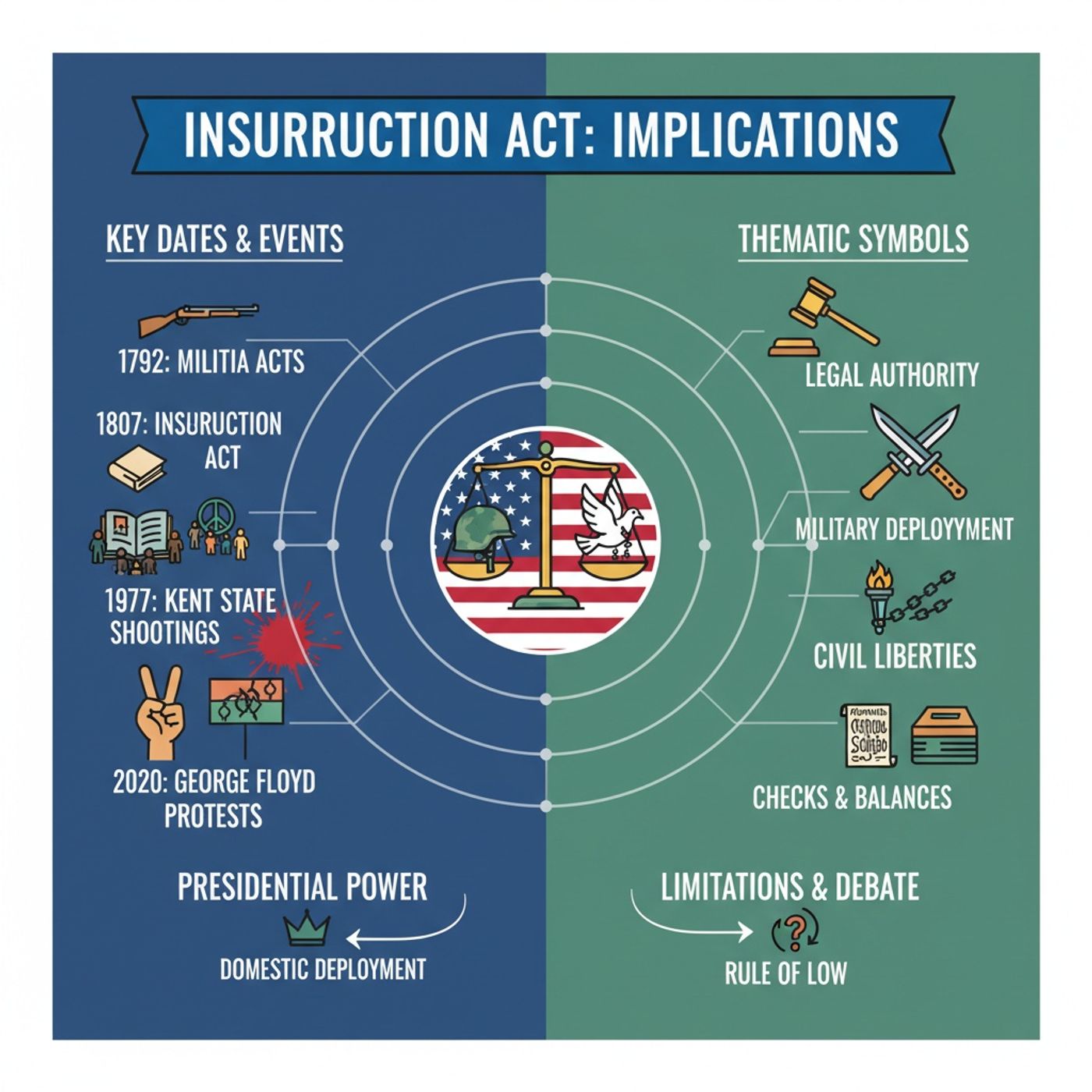
Imagine a scenario: civil unrest grips a city, protests escalate, and local authorities find themselves overwhelmed. In times like these, the Insurrection Act—a rare piece of legislation—comes into play, granting the President the power to deploy military forces on U.S. soil. Welcome to today’s episode of the Fortune Factor podcast, where we’re diving into the fascinating world of the Insurrection Act, exploring its history, its applications, and the many debates surrounding its use. Are you ready? Let’s get started!First off, let’s drop some history. The Insurrection Act was enacted back in 1807. If we travel back in time, you’ll find that it was designed to empower the President to step in during insurrections, essentially acting when state authorities can’t handle the chaos. It’s like a last resort for ensuring federal laws are enforced and civil rights protected when local governments are struggling or unwilling to act.Now, it’s important to understand that the Insurrection Act is a notable exception to something called the Posse Comitatus Act of 1878. That act typically prohibits federal military personnel from getting involved in domestic law enforcement. So, the Insurrection Act holds a unique place in U.S. law—its power is potent, but it comes with serious responsibilities.
Become a supporter of this podcast: https://www.spreaker.com/podcast/conspiracy-theories-exploring-the-unseen--5194379/support.