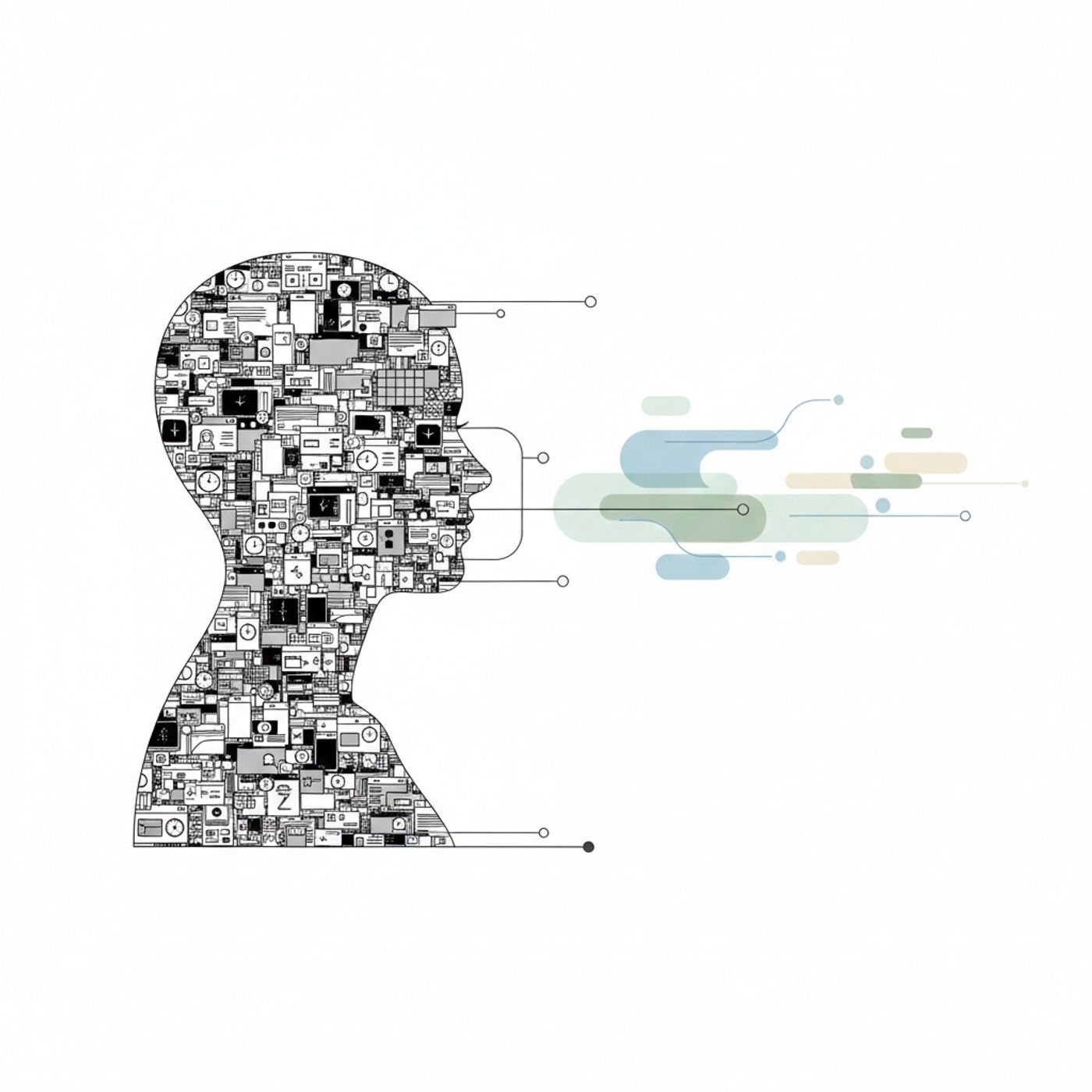
This text explores the anticipated decline of the Software-as-a-Service (SaaS) model as artificial intelligence begins to automate tasks once managed through rigid digital interfaces. The author argues that this shift creates a cognitive energy dividend, liberating workers from the fragmented, high-tempo demands of constant app switching and manual data entry. Organisations are encouraged to adopt a staged portfolio transition to move away from traditional software dependencies while mitigating counterparty risks. For individuals, the transition represents a move from tool fluency to intent literacy, where value is found in human judgment rather than software navigation. Ultimately, the source suggests that reclaiming mental continuity allows for deeper, more meaningful cognition that is no longer dictated by machine-driven workflows. The future of work will therefore be defined by our ability to redirect this newfound capacity toward truth, trust, and discernment. Read the article.
About the Author - Greg Twemlow writes and teaches at the intersection of technology, education, and human judgment. He works with educators and businesses to make AI explainable and assessable in classrooms and boardrooms — to ensure AI users show their process and own their decisions. His cognition protocol, the Context & Critique Rule™, is built on a three-step process: Evidence → Cognition → Discernment — a bridge from what’s scattered to what’s chosen. Context & Critique → Accountable AI™. © 2025 Greg Twemlow. “Context & Critique → Accountable AI” and “Context & Critique Rule” are unregistered trademarks (™).