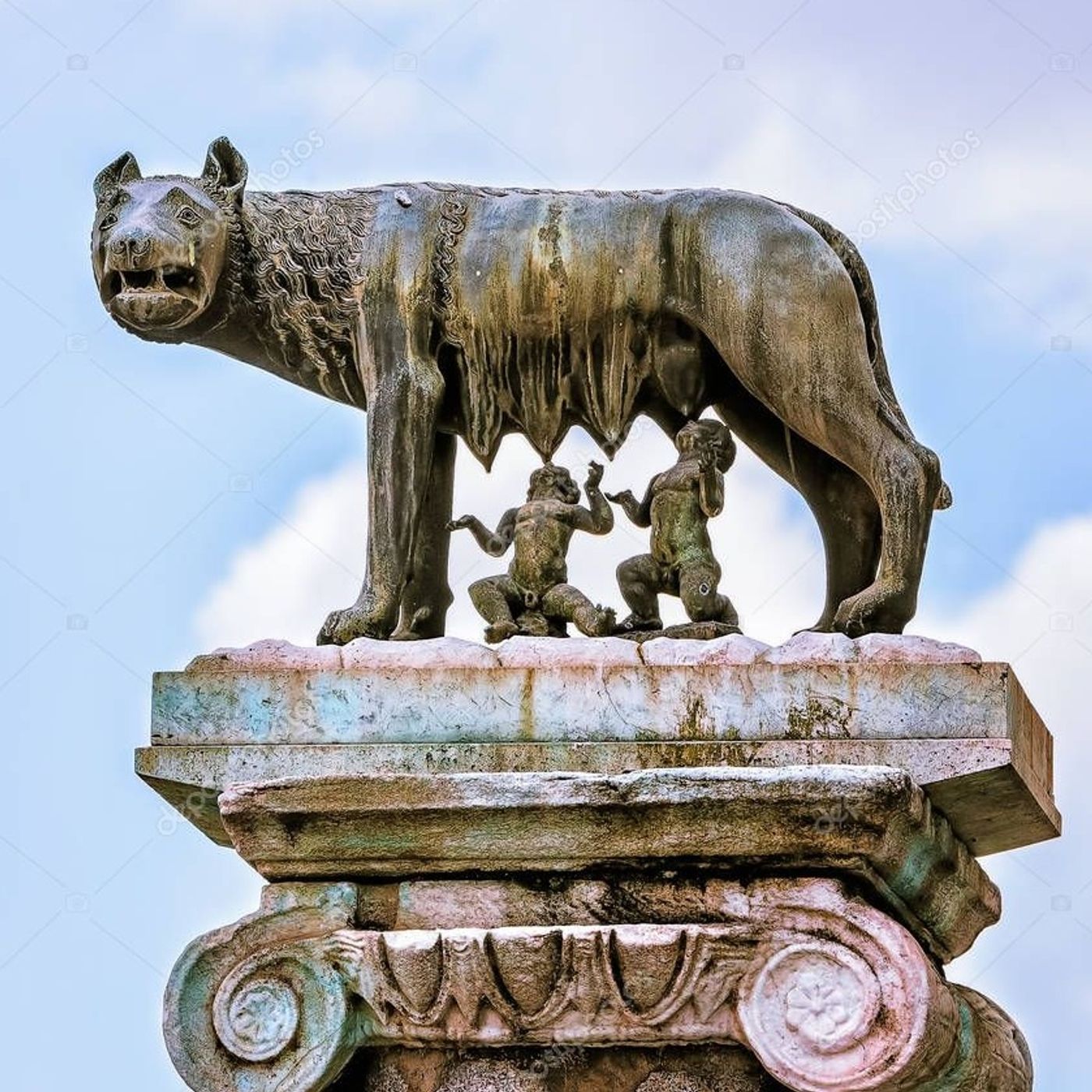
Medieval Rome.
Break with Constantinople and formation of the Papal States.
In 727, Pope Gregory II refused to accept the decrees of Emperor Leo III, which promoted the Emperor's iconoclasm. Leo reacted first by trying in vain to abduct the Pontiff, and then by sending a force of Ravennate troops under the command of the Exarch Paulus, but they were pushed back by the Lombards of Tuscia and Benevento. Byzantine general Eutychius sent west by the Emperor successfully captured Rome and restored it as a part of the empire in 728.
On 1 November 731, a council was called in St. Peter's by Gregory III to excommunicate the iconoclasts. The Emperor responded by confiscating large Papal estates in Sicily and Calabria and transferring areas previously ecclesiastically under the Pope to the Patriarch of Constantinople. Despite the tensions Gregory III never discontinued his support to the imperial efforts against external threats.
In this period the Lombard kingdom revived under the leadership of King Liutprand. In 730, he razed the countryside of Rome to punish the Pope, who had supported Duke Transamund II of Spoleto. Though still protected by his massive walls, the Pope could do little against the Lombard king, who managed to ally himself with the Byzantines. Other protectors were now needed. Gregory III was the first Pope to ask for concrete help from the Frankish Kingdom, then under the command of Charles Martel (739).
Liutprand's successor Aistulf was even more aggressive. He conquered Ferrara and Ravenna, ending the Exarchate of Ravenna. Rome seemed to be his next victim. In 754, Pope Stephen II went to France to name Pippin the Younger, king of the Franks, as patricius Romanorum, i.e. protector of Rome. In August that year, the King and Pope together crossed back the Alps and defeated Aistulf at Pavia. When Pippin went back to St. Denis however, Aistulf did not keep his promises, and in 756 besieged Rome for 56 days. The Lombards returned north when they heard news of Pippin again moving to Italy. This time he agreed to give the Pope the promised territories, and the Papal States were born.
In 771 the new King of the Lombards, Desiderius, devised a plot to conquer Rome and seize Pope Stephen III during a feigned pilgrimage within its walls. His main ally was one Paulus Afiarta, chief of the Lombard party within the city. He conquered Rome in 772 but angered Charlemagne. However the plan failed, and Stephen's successor, Pope Hadrian I called Charlemagne against Desiderius, who was finally defeated in 773. The Lombard Kingdom was no more, and now Rome entered into the orbit of a new, greater political institution.
Numerous remains from this period, along with a museum devoted to Medieval Rome, can be seen at Crypta Balbi in Rome.
Formation of the Holy Roman Empire.
On 25 April 799 the new Pope, Leo III, led the traditional procession from the Lateran to the Church of San Lorenzo in Lucina along the Via Flaminia (now Via del Corso). Two nobles (followers of his predecessor Hadrian) who disliked the weakness of the Pope with regards to Charlemagne, attacked the processional train and delivered a life-threatening wound to the Pope. Leo fled to the King of the Franks, and in November, 800, the King entered Rome with a strong army and a number of French bishops. He declared a judicial trial to decide if Leo III were to remain Pope, or if the deposers' claims had reasons to be upheld. This trial, however, was only a part of a well thought out chain of events which ultimately surprised the world. The Pope was declared legitimate and the attempters subsequently exiled. On 25 December 800, Pope Leo III crowned Charlemagne Holy Roman Emperor in St. Peter's Basilica.
This act forever severed the loyalty of Rome from its imperial progenitor, Constantinople. It created instead a rival empire which, after a long series of conquests by Charlemagne, now encompassed most of the Christian Western territories.
Following the death of Charlemagne, the lack of a figure with equal prestige led the new institution into disagreement. At the same time the universal church of Rome had to face emergence of the lay interests of the City itself, spurred on by the conviction that the Roman people, though impoverished and abased, had again the right to elect the Western Emperor. The famous counterfeit document called the Donation of Constantine, prepared by the Papal notaries, guaranteed to the Pope a dominion stretching from Ravenna to Gaeta. This nominally included the suzerainty over Rome, but this was often highly disputed, and as the centuries passed, only the strongest Popes were to be able to assert it. The main element of weakness of the Papacy within the walls of the city was the continued necessity of the election of new popes, in which the emerging noble families soon managed to insert a leading role for themselves. The neighbouring powers, namely the Duchy of Spoleto and Toscana, and later the Emperors, learned how to take their own advantage of this internal weakness, playing the role of arbiters among the contestants.
Rome was indeed prey of anarchy in this age. The lowest point was touched in 897, when a raging crowd exhumed the corpse of a dead pope, Formosus, and put it on trial.
Roman Commune.
From 1048 to 1257, the papacy experienced increasing conflict with the leaders and churches of the Holy Roman Empire and the Byzantine (Eastern Roman) Empire. The latter culminated in the East-West Schism, dividing the Catholic Church and Eastern Orthodox Church. From 1257 to 1377, the pope, though the bishop of Rome, resided in Viterbo, Orvieto, and Perugia, and then Avignon. The return of the popes to Rome after the Avignon Papacy was followed by the Western Schism: the division of the western church between two, and for a time three, competing papal claimants.
In this period the renovated Church was again attracting pilgrims and prelates from all the Christian world, and money with them: even with a population of only 30,000, Rome was again becoming a city of consumers dependent upon the presence of a governmental bureaucracy. In the meantime, Italian cities were acquiring increasing autonomy, mainly led by new families which were replacing the old aristocracy with a new class formed by entrepreneurs, traders and merchants. After the sack of Rome by the Normans in 1084, the rebuilding of the city was supported by powerful families such as the Frangipane family and the Pierleoni family, whose wealth came from commerce and banking rather than landholdings. Inspired by neighbouring cities like Tivoli and Viterbo, Rome's people began to consider adopting a communal status and gaining a substantial amount of freedom from papal authority.
Led by Giordano Pierleoni, the Romans rebelled against the aristocracy and Church rule in 1143. The Senate and the Roman Republic, the Commune of Rome, were born again. Through the inflammatory words of preacher Arnaldo da Brescia, an idealistic, fierce opponent of ecclesiastical property and church interference in temporal affairs, the revolt that led to the creation of the Commune of Rome continued until it was put down in 1155, though it left its mark on the civil government of the Eternal City for centuries. 12th-century Rome, however, had little in common with the empire which had ruled over the Mediterranean some 700 years before, and soon the new Senate had to work hard to survive, choosing an ambiguous policy of shifting its support from the Pope to the Holy Roman Empire and vice versa as the political situation required. At Monteporzio, in 1167, during one of these shifts, in the war with Tusculum, Roman troops were defeated by the imperial forces of Frederick Barbarossa. Luckily, the winning enemies were soon dispersed by a plague and Rome was saved.
In 1188 the new communal government was finally recognised by Pope Clement III. The Pope had to make large cash payments to the communal officials, while the 56 senators became papal vassals. The Senate always had problems in the accomplishment of its function, and various changes were tried. Often a single Senator was in charge. This sometimes led to tyrannies, which did not help the stability of the newborn organism.
Become a supporter of this podcast: https://www.spreaker.com/podcast/history-of-rome--6894861/support.
Wikipedia: Text is available under the Creative Commons Attribution-ShareAlike 4.0 License;
This episode includes AI-generated content.