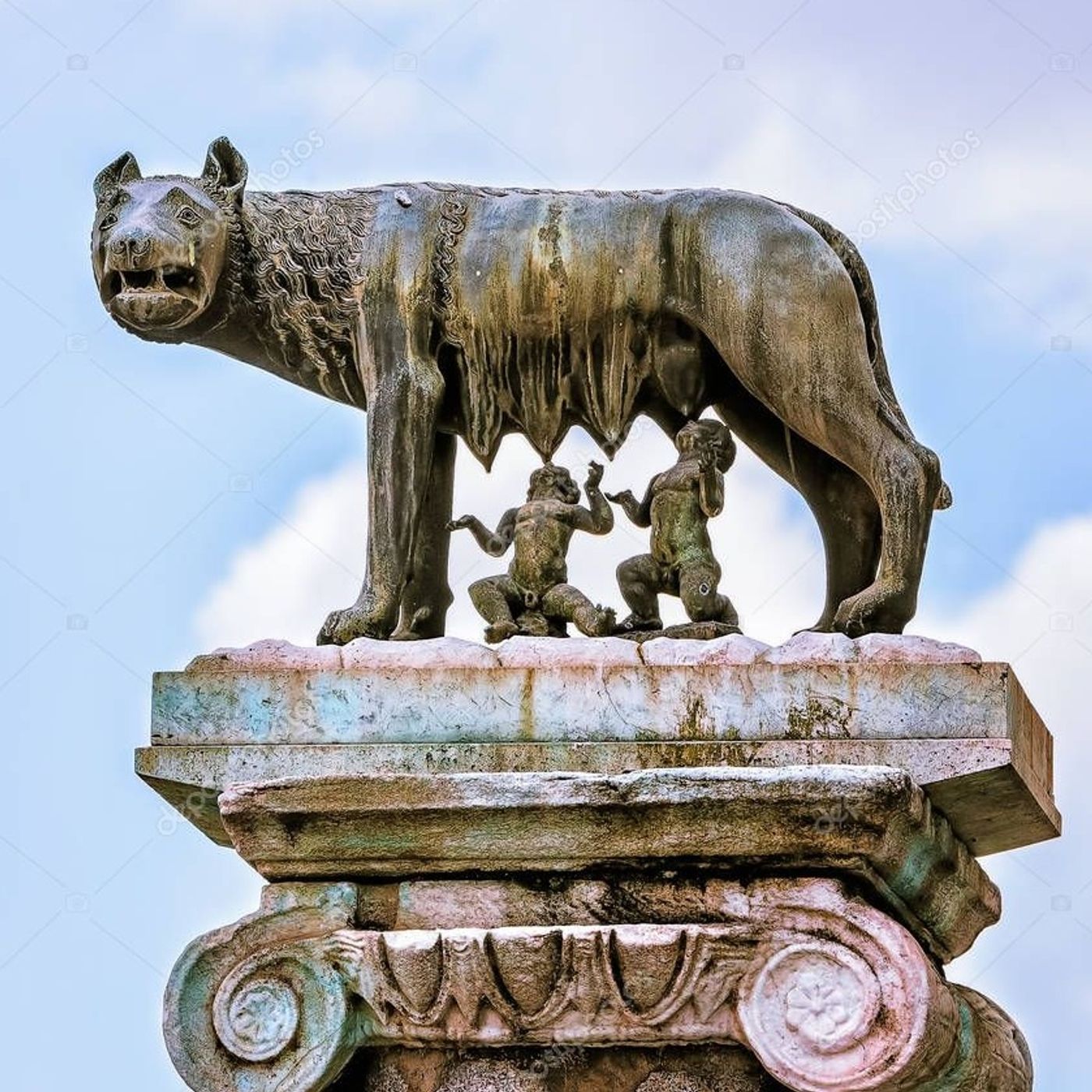
Renaissance Rome.
The latter half of the 15th century saw the seat of the Italian Renaissance move to Rome from Florence. The Papacy wanted to surpass the grandeur of other Italian cities. To this end the popes created increasingly extravagant churches, bridges, town squares and public spaces, including a new Saint Peter's Basilica, the Sistine Chapel, Ponte Sisto (the first bridge to be built across the Tiber since antiquity), and Piazza Navona. The Popes were also patrons of the arts engaging such artists as Michelangelo, Perugino, Raphael, Ghirlandaio, Luca Signorelli, Botticelli, and Cosimo Rosselli.
Under Pope Nicholas V, who became Pontiff on 19 March 1447, the Renaissance can be said to have begun in Rome, heralding a period in which the city became the centre of Humanism. He was the first Pope to embellish the Roman court with scholars and artists, including Lorenzo Valla and Vespasiano da Bisticci.
On 4 September 1449 Nicholas proclaimed a Jubilee for the following year, which saw a great influx of pilgrims from all Europe. The crowd was so large that in December, on Ponte Sant'Angelo, some 200 people died, crushed underfoot or drowned in the River Tiber. Later that year the Plague reappeared in the city, and Nicholas fled.
However Nicholas brought stability to the temporal power of the Papacy, a power in which the Emperor was to have no part at all. In this way, the coronation and the marriage of Frederick III, Holy Roman Emperor on 16 March 1452, was more a civil ceremony. The Papacy now controlled Rome with a strong hand. A plot by Stefano Porcari, whose aim was the restoration of the Republic, was ruthlessly suppressed in January 1453. Porcari was hanged together with the other plotters, Francesco Gabadeo, Pietro de Monterotondo, Battista Sciarra and Angiolo Ronconi, but the Pope gained a treacherous reputation, as when the execution was beginning, he was too drunk to confirm the grace he had previously given to Sciarra and Ronconi.
Nicholas was also actively involved in Rome's urban renewal, in collaboration with Leon Battista Alberti, including the construction of a new St Peter's Basilica.
Nicholas' successor Calixtus III neglected Nicholas's cultural policies, instead devoting himself to his greatest passion, his nephews. The Tuscan Pius II, who took the reins after his death in 1458, was a great Humanist, but did little for Rome. During his reign Lorenzo Valla demonstrated that the Donation of Constantine was a forgery. Pius was the first Pope to use guns, in campaign against the rebel barons Savelli in the neighbourhood of Rome, in 1461. One year later the bringing to Rome of the head of the Apostle St. Andrew produced a great number of pilgrims. The reign of Pope Paul II (1464–1471) was notable only for the reintroduction of the Carnival, which was to become a very popular feast in Rome in the following centuries. In the same year (1468) a plot against the Pope was uncovered, organised by the intellectuals of the Roman Academy founded by Pomponio Leto. The conspirators were sent to Castel Sant'Angelo.
More important by far was the Pontificate of Sixtus IV, considered the first Pope-King of Rome. In order to favour his relative Girolamo Riario, he promoted the unsuccessful Congiura dei Pazzi against the Medici of Florence (26 April 1478) and in Rome fought the Colonna and the Orsini. The personal politics of intrigue and war required much money, but in spite of this Sixtus was a true patron of art in the manner of Nicholas V. He reopened the academy and reorganised the Collegio degli Abbreviatori, and in 1471 began the construction of the Vatican Library, whose first curator was Platina. The Library was officially founded on 15 June 1475 by Pope Sixtus IV with the issuance of the papal bull Ad decorem militantis ecclesiae. He restored several churches, including Santa Maria del Popolo, the Aqua Virgo and the Hospital of the Holy Spirit; paved several streets and also built a famous bridge over the Tiber River, which still bears his name. His main building project was the Sistine Chapel in the Vatican Palace. Its decoration called on some of the most renowned artists of the age, including Mino da Fiesole, Sandro Botticelli, Domenico Ghirlandaio, Pietro Perugino, Luca Signorelli and Pinturicchio, and in the 16th century Michelangelo decorated the ceiling with his famous masterpiece, contributing to what became one of the most famous monuments of the world. Sixtus died on 12 August 1484.
Chaos, corruption and nepotism appeared in Rome under the reign of his successors, Innocent VIII and Pope Alexander VI (1492–1503). During the vacation period between the death of the former and the election of the latter there were 220 murders in the city. Alexander had to face Charles VIII of France, who invaded Italy in 1494 and entered Rome on 31 December of that year. The Pope could only barricade himself into Castel Sant'Angelo, which had been turned into a true fortress by Antonio da Sangallo the Younger. In the end, the skilful Alexander was able to gain the support of the king, assigning his son Cesare Borgia as military counsellor for the subsequent invasion of the Kingdom of Naples. Rome was safe and, as the King directed himself southwards, the Pope again changed his position, joining the anti-French League of the Italian States which finally compelled Charles to flee to France.
The most nepotist Pope of all, Alexander, favoured his ruthless son Cesare, creating for him a personal Duchy out of territories of the Papal States, and banning from Rome Cesare's most relentless enemy, the Orsini family. In 1500 the city hosted a new Jubilee, but grew ever more unsafe as, especially at night, the streets were controlled by bands of lawless "bravi". Cesare himself assassinated Alfonso of Bisceglie; as well as, presumably, the Pope's son, Giovanni of Gandia.
The Renaissance had a great impact on Rome's appearance, with works like the Pietà by Michelangelo and the frescoes of the Borgia Apartment, all made during Innocent's reign. Rome reached the highest point of splendour under Pope Julius II (1503–1513) and his successors Leo X and Clement VII, both members of the Medici family. During this twenty-year period Rome became the greatest centre of art in the world. The old St. Peter's Basilica was demolished and a new one begun. The city hosted artists like Bramante, who built the Temple of San Pietro in Montorio and planned a great project to renovate the Vatican; Raphael, who in Rome became the most famous painter in Italy, creating frescos in the Cappella Niccolina, the Villa Farnesina, the Raphael's Rooms, and many other famous paintings. Michelangelo began the decoration of the ceiling of the Sistine Chapel and executed the famous statue of Moses for the tomb of Julius. Rome lost in part its religious character, becoming increasingly a true Renaissance city, with a great number of popular feasts, horse races, parties, intrigues and licentious episodes. Its economy was prosperous, with the presence of several Tuscan bankers, including Agostino Chigi, a friend of Raphael and a patron of the arts. Despite his premature death, and to his eternal credit, Raphael also promoted for the first time the preservation of the ancient ruins.
Sack of Rome (1527).
In 1527 the ambiguous policy followed by the second Medici Pope, Pope Clement VII, resulted in the dramatic sack of the city by the unruly Imperial troops of Charles V, Holy Roman Emperor. After the execution of some 1,000 defenders, the pillage began. The city was devastated for several days, many of the citizens were killed or took shelter outside the walls. Of 189 Swiss Guards on duty only 42 survived. The Pope himself was imprisoned for months in Castel Sant'Angelo. The sack marked the end of one of the most splendid eras of modern Rome.
The 1525's Jubilee resulted in a farce, as Martin Luther's claims had spread criticism and even hatred against the Pope's greed throughout Europe. The prestige of Rome was then challenged by the defections of the churches of Germany and England. Pope Paul III (1534–1549) tried to recover the situation by summoning the Council of Trent, although being, at the same time, the most nepotist Pope of all. He even separated Parma and Piacenza from the Papal States to create an independent duchy for his son Pier Luigi. He continued the patronage of art supporting the Michelangelo's Last Judgment, asking him to renovate the Campidoglio and the ongoing construction of St. Peter's. After the shock of the sack, he also called the brilliant architect Giuliano da Sangallo the Younger to strengthen the walls of the Leonine City.
The need for renovation in the religious customs became evident in the vacancy period after Paulus' death, when the streets of Rome became seat of masked carousels which satirised the Cardinals attending the conclave. His two immediate successors were feeble figures who did nothing to escape the actual Spanish suzerainty over Rome.
Become a supporter of this podcast: https://www.spreaker.com/podcast/history-of-rome--6894861/support.
Wikipedia: Text is available under the Creative Commons Attribution-ShareAlike 4.0 License;
This episode includes AI-generated content.