Roman Kingdom, part 2.
Senate.
According to legend, Romulus established the Senate after he founded Rome by personally selecting the most noble men (wealthy men with legitimate wives and children) to serve as a council for the city. As such, the Senate was the King's advisory council as the Council of State. The Senate was composed of three hundred senators, with a hundred senators representing each of the three ancient tribes of Rome: the Ramnes, Tities, and Luceres. Within each tribe, a senator was selected from each of the tribe's ten curiae. The king had the sole authority to appoint the senators, but this selection was done in accordance with ancient custom.
Under the monarchy, the Senate possessed very little power and authority as the king held most of the political power of the state and could exercise those powers without the Senate's consent. The chief function of the Senate was to serve as the king's council and be his legislative coordinator. Once legislation proposed by the king passed the Curiate Assembly, the Senate could either veto it or accept it as law. The king was, by custom, to seek the advice of the Senate on major issues. However, it was left to him to decide what issues, if any, were brought before them and he was free to accept or reject their advice as he saw fit. Only the king possessed the power to convene the Senate, except during the interregnum, during which the Senate possessed the authority to convene itself.
Kings of Rome.
Romulus.
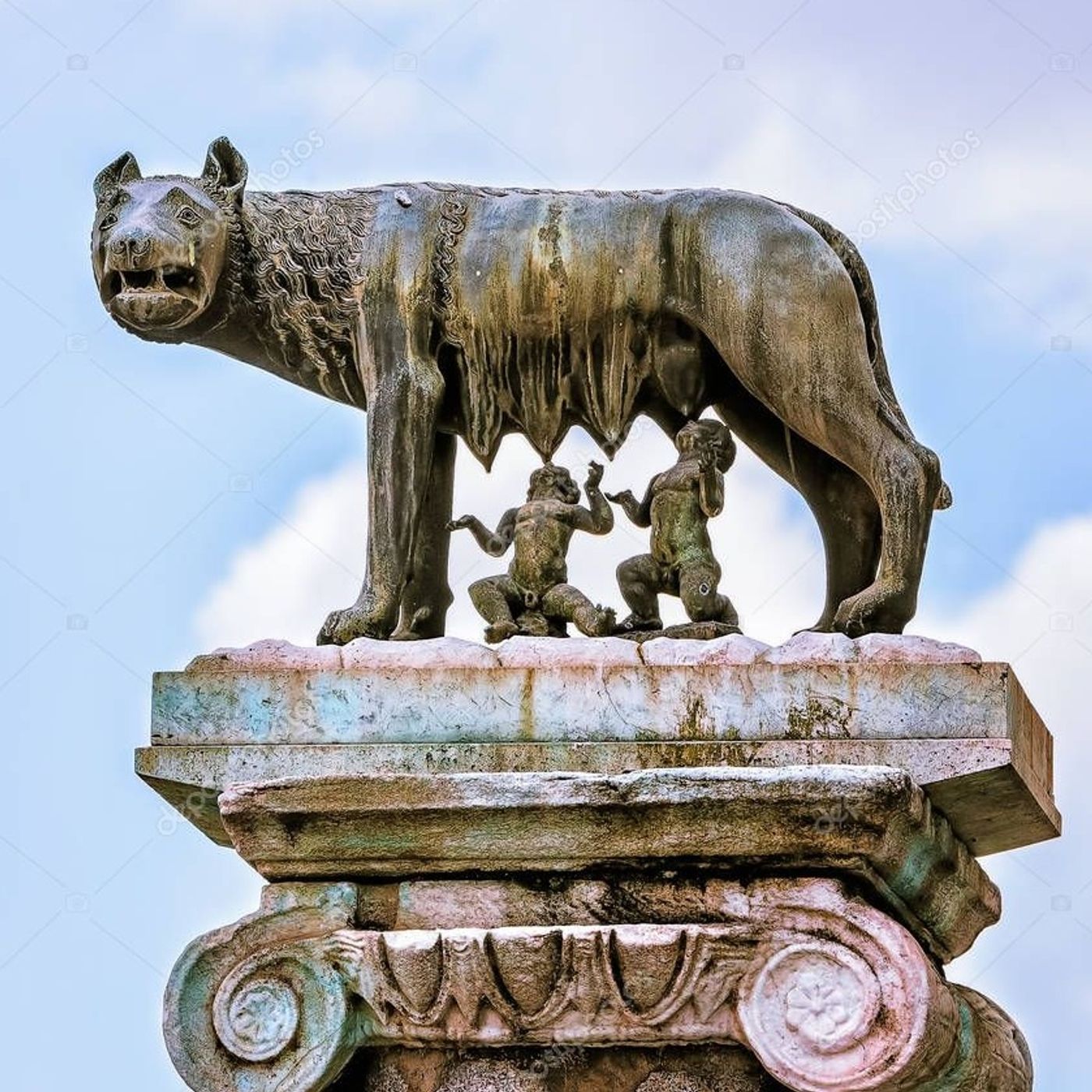
Son of the Vestal Virgin Rhea Silvia, ostensibly by the god Mars, the legendary Romulus was Rome's founder and first king. After he and his twin brother Remus had deposed King Amulius of Alba and reinstated the king's brother and their grandfather Numitor to the throne, they decided to build a city in the area where they had been abandoned as infants. After killing Remus in a dispute, Romulus began building the city on the Palatine Hill. His work began with fortifications. He permitted men of all classes to come to Rome as citizens, including slaves and freemen without distinction. He is credited with establishing the city's religious, legal and political institutions. The kingdom was established by unanimous acclaim with him at the helm when Romulus called the citizenry to a council for the purposes of determining their government.
Romulus established the Senate as an advisory council with the appointment of 100 of the most noble men in the community. These men he called patres (from pater, father, head), and their descendants became the patricians. To project command, he surrounded himself with attendants, in particular the twelve lictors. He created three divisions of horsemen (equites), called centuries: Ramnes (Romans), Tities (after the Sabine king) and Luceres (Etruscans). He also divided the populace into 30 curiae, named after 30 of the Sabine women who had intervened to end the war between Romulus and Tatius. The curiae formed the voting units in the popular assemblies (Comitia Curiata).
Romulus was behind one of the most notorious acts in Roman history, the incident commonly known as The Rape of the Sabine Women. To provide his citizens with wives, Romulus invited the neighbouring tribes to a festival in Rome where the Romans committed a mass abduction of young women from among the attendees. The accounts vary from 30 to 683 women taken, a significant number for a population of 3,000 Latins (and presumably for the Sabines as well). War broke out when Romulus refused to return the captives. After the Sabines made three unsuccessful attempts to invade the hill settlements of Rome, the women themselves intervened during the Battle of the Lacus Curtius to end the war. The two peoples were united in a joint kingdom, with Romulus and the Sabine king Titus Tatius sharing the throne. In addition to the war with the Sabines, Romulus waged war with the Fidenates and Veientes and others.
He reigned for thirty-seven years. According to the legend, Romulus vanished at age fifty-four while reviewing his troops on the Campus Martius. He was reported to have been taken up to Mount Olympus in a whirlwind and made a god. After initial acceptance by the public, rumours and suspicions of foul play by the patricians began to grow. In particular, some thought that members of the nobility had murdered him, dismembered his body, and buried the pieces on their land. These were set aside after an esteemed nobleman testified that Romulus had come to him in a vision and told him that he was the god Quirinus. He became not only one of the three major gods of Rome, but the very likeness of the city itself.
A replica of Romulus's hut was maintained in the centre of Rome until the end of the Roman Empire.
Numa Pompilius.
After Romulus died, there was an interregnum for one year, during which ten men chosen from the Senate governed Rome as successive interreges. Under popular pressure, the Senate finally chose the Sabine Numa Pompilius to succeed Romulus, on account of his reputation for justice and piety. The choice was accepted by the Curiate Assembly.
Numa's reign was marked by peace and religious reform. He constructed a new temple to Janus and, after establishing peace with Rome's neighbours, closed the doors of the temple to indicate a state of peace. They remained closed for the rest of his reign. He established the Vestal Virgins at Rome, as well as the Salii, and the flamines for Jupiter, Mars and Quirinus. He also established the office and duties of pontifex maximus. Numa reigned for 43 years. He reformed the Roman calendar by adjusting it for the solar and lunar year, as well as by adding the months of January and February to bring the total number of months to twelve.
Tullus Hostilius.
Tullus Hostilius was as warlike as Romulus had been, completely unlike Numa as he lacked any respect for the gods. Tullus waged war against Alba Longa, Fidenae and Veii and the Sabines. During Tullus's reign, the city of Alba Longa was completely destroyed and Tullus integrated its population into Rome. Tullus is attributed with constructing a new home for the Senate, the Curia Hostilia, which survived for 562 years after his death.
According to Livy, Tullus neglected the worship of the gods until, towards the end of his reign, he fell ill and became superstitious. However, when Tullus called upon Jupiter and begged assistance, Jupiter responded with a bolt of lightning that burned the king and his house to ashes. His reign lasted for 32 years.
Ancus Marcius.
Following the mysterious death of Tullus, the Romans elected a peaceful and religious king in his place, Numa's grandson, Ancus Marcius. Much like his grandfather, Ancus did little to expand the borders of Rome and only fought wars to defend the territory. He also built Rome's first prison on the Capitoline Hill.
Ancus further fortified the Janiculum Hill on the western bank and built the first bridge across the Tiber River. He also founded the port of Ostia Antica on the Tyrrhenian Sea and established Rome's first salt works, as well as the city's first aqueduct. Rome grew, as Ancus used diplomacy to peacefully unite smaller surrounding cities into alliance with Rome. Thus, he completed the conquest of the Latins and relocated them to the Aventine Hill, thus forming the plebeian class of Romans.
He died a natural death, like his grandfather, after 25 years as king, marking the end of Rome's Latin–Sabine kings.
Lucius Tarquinius Priscus.
Lucius Tarquinius Priscus was the fifth king of Rome and the first of Etruscan birth. After immigrating to Rome, he gained favour with Ancus, who later adopted him as son. Upon ascending the throne, he waged wars against the Sabines and Etruscans, doubling the size of Rome and bringing great treasures to the city. To accommodate the influx of population, the Aventine and Caelian hills were populated.
One of his first reforms was to add 100 new members to the Senate from the conquered Etruscan tribes, bringing the total number of senators to 200. He used the treasures Rome had acquired from the conquests to build great monuments for Rome. Among these were Rome's great sewer systems, the Cloaca Maxima, which he used to drain the swamp-like area between the Seven Hills of Rome. In its place, he began construction on the Roman Forum. He also founded the Roman games.
Priscus initiated great building projects, including the city's first bridge, the Pons Sublicius. The most famous is the Circus Maximus, a giant stadium for chariot races. After that, he started the building of the temple-fortress to the god Jupiter on the Capitoline Hill. However, before it was completed, he was killed by a son of Ancus Marcius, after 38 years as king. His reign is best remembered for introducing the Roman symbols of military and civil offices, and the Roman triumph, being the first Roman to celebrate one.
Become a supporter of this podcast: https://www.spreaker.com/podcast/history-of-rome--6894861/support.
Wikipedia: Text is available under the Creative Commons Attribution-ShareAlike 4.0 License;
This episode includes AI-generated content.