Shows
mbanerjeepalmer+listennotes 's Listen LaterBuilding Meter for decades, not an exit | Anil Varanasi (Co-founder and CEO) Podcast: In Depth (LS 41 · TOP 1.5% what is this?)Episode: Building Meter for decades, not an exit | Anil Varanasi (Co-founder and CEO)Pub date: 2025-12-10Get Podcast Transcript →powered by Listen411 - fast audio-to-text and summarizationAnil Varanasi is the co-founder and CEO of Meter, which provides full-stack networking infrastructure as a service for businesses. Since founding Meter with his brother Sunil in 2015, Anil has been playing a distinctly long game in one of the most entrenched markets in technology, betting on vertical integration, business model innovation, and a multi-decade tim...
2025-12-121h 14
In DepthBuilding Meter for decades, not an exit | Anil Varanasi (Co-founder and CEO)Anil Varanasi is the co-founder and CEO of Meter, which provides full-stack networking infrastructure as a service for businesses. Since founding Meter with his brother Sunil in 2015, Anil has been playing a distinctly long game in one of the most entrenched markets in technology, betting on vertical integration, business model innovation, and a multi-decade time horizon. In this conversation, he unpacks Meter’s origin story, from four-plus years of heads-down R&D, and shares how his unconventional approach to planning, management, and pace keeps him excited to run the company for decades.
In today’s episode, we disc...
2025-12-101h 14
Full Shard PodcastEpisode 11 - The New EGLD ModelHow do you redesign an economy from first principles?Beniamin Mincu sits down with renowned economist, professor at George Mason University, and co-founder of Marginal Revolution University, Alex Tabarrok, to explore foundations of growth, incentives, and creative destruction.Together they discuss the evolution of the EGLD economic model, how DATs & ETFs reshape value flow, and what crypto as money for AI could mean for the next decade.
2025-10-171h 37
Kinsella On LibertyKOL469 | Haman Nature Hn 149: Tabarrok on Patents, Price Controls, and Drug ReimportationKinsella on Liberty Podcast: Episode 469.
Related:
Tabarrok and Murphy: Why Are US Drug Prices So High?
Pharmaceutical Shills and Think Tank Corruption: Sally Pipes’s The World’s Medicine Chest: How America Achieved Pharmaceutical Supremacy―and How to Keep It
This is my appearance on Adam Haman’s podcast and Youtube channel, Haman Nature (Haman Nature substack), episode HN 149, “Free The DRUGS! Stephan KINSELLA Counters Economist Alex TABARROK On Price Controls | Hn 149” (recorded June 25, 2025).
Tabarrok seems to be generally pro-free market and an Austrian or fellow traveler. However, although he sometimes criticizes existing IP law, he is not opposed to intellectual pr...
2025-07-2800 min
Haman NatureFree The DRUGS! Stephan KINSELLA Counters Economist Alex TABARROK On Price Controls | Hn 149Adam Haman welcomes patent attorney and libertarian legal theorist Stephan Kinsella back to the show to talk about why prescription drugs are so expensive in the US and what can (and should) be done about it. Even "free market" economists like George Mason University's Alex Tabarrok get this wrong! 00:00 — Intro. Welcoming my friend and verifiably smart person, Stephan Kinsella! 00:44 — Is Trump's new executive order going to make drugs cheaper in the US? 02:26 — What ever would we do without the government? Are they here to make us safe? 04:30 — Bob Murphy interviewed Alex Tabarrok...
2025-07-281h 03
The Human Action PodcastWhy Are US Drug Prices So High?Economist Alex Tabarrok joins Bob to review Trump’s executive order on prescription drug pricing. They explore how price discrimination works in global pharmaceutical markets, the unintended consequences of importation policies, and why U.S. consumers often pay more—yet benefit most from drug innovation. Tabarrok also critiques the FDA’s role in delaying treatments and explains how regulatory reform, not price caps, could make healthcare more affordable and effective.
Alex's Article, "Econ 101 is Underrated: Pharma Price Controls": https://Mises.org/HAP500a
2025-05-1952 min
The Human Action PodcastWhy Are US Drug Prices So High?Economist Alex Tabarrok joins Bob to review Trump’s executive order on prescription drug pricing. They explore how price discrimination works in global pharmaceutical markets, the unintended consequences of importation policies, and why U.S. consumers often pay more—yet benefit most from drug innovation. Tabarrok also critiques the FDA’s role in delaying treatments and explains how regulatory reform, not price caps, could make healthcare more affordable and effective.Alex's Article, "Econ 101 is Underrated: Pharma Price Controls": Mises.org/HAP500aThe Mises Institute is giving away 100,000 copies of Murray Rothbard’s, What Has Government Done to Our M...
2025-05-1900 min
Not My Generation39 - Alex Tabarrok is Bringing the (Marginal) Revolution to You!In this episode, Dr. Alex Tabarrok, the Bartley J. Madden Chair in Economics at the Mercatus Center and a professor of economics at George Mason University, visits with James and his guest co-host, Craig Dawkins about the important insights gained from economics. From opportunity cost to scarcity, and more, Dr. Tabarrok helps us understand how these economic concepts can provide greater clarity about the world around us.Along the way, we learn about his use of AI in writing, his role in "Operation Warp Speed" which facilitated the development of vaccines for COVID-19, and we discuss his...
2025-04-301h 07
InFi: the Future of FinanceEp. 75: Alex Tabarrok on the History and Economics of Life InsuranceAlex Tabarrok is an economics professor at George Mason University and (with Tyler Cowen) co-host of a popular podcast. He and Tyler recently discussed the history and economics of life insurance, and in addition Alex has written extensively on blockchain finance. He was thus an obvious guest for Bob to interview. Watch the video version of this episode here: https://www.youtube.com/watch?v=Z24Z0eo9IEI Related: - https://marginalrevolution.com/marginalrevolution/2025/02/the-licensing-racket.html - https://www.youtube.com/watch?v=xsbvHcX_Ilk - https://www.youtube.com/watch?v=c...
2025-02-1450 min
The Remnant with Jonah GoldbergEconomists Without BordersAlex Tabarrok, professor of economics at George Mason University, joins Jonah Goldberg to discuss the exceptional nature of American democratic capitalism and debate the merits of all sorts of borders.Later in the episode, Jonah gets a crash course in crypto and asks Alex about the future and ethics of AI and large language models.Show Notes:— Alex’s piece on Liberal Fascism and CurtisYarvinThe Remnant is a production of The Dispatch, a digital media company covering politics, policy, and culture from a non-partisan, conservative perspective. To access all of The Dispatc...
2025-02-051h 19
The Curious TaskAlex Tabarrok — Is Giving Gifts Inefficient?Today, we're revisiting this special Christmas episode of The Curious Task from 2019.
---
Alex Aragona chats with Alex Tabarrok on this very special Christmas episode of The Curious Task as he explores whether gift giving is inefficient, and if there are better ways to give to others.
References from Episode 21 with Alex Tabbarok
You can watch a video of Alex Tabbarok and Tyler Cowen discuss gift giving here
Giving to my Wild Self article can be found here
2024-12-2542 min
Bail in the MidwestBail in the Midwest, Alex Tabarrok, Economist and Professor at George Mason UniversityJoin host Shane Rolf and his guest, Dr. Alex Tabarrok, who is the Director of the Center for Study of Public Choice, The Bartley J. Madden Chair in Economics at the Mercatus Center which is a part of George Mason University.Dr. Tabarrok is the author of several textbooks on economics and is the Co-Founder of Marginal Revolution University, which can be found at MRU.org. The accompanying blog, MarginalRevolution.com, has nearly 2,500 pages on an incredible variety of topics. There are also links to podcasts (and additional media) from the Mercatus Center.
2024-12-051h 01
Puliyabaazi Hindi Podcast पुलियाबाज़ी हिन्दी पॉडकास्टWhy is India’s Real Estate Market Broken? शहरों में घरों की कमी क्यों ft. Vaidehi TandelWhy is the housing market in India so expensive? Why is buying a house a decision fraught with risk and uncertainty? How can we find clues about the nexus between the builders and the politicians? This week, we speak to Vaidehi Tandel, an urban economist, who has researched into the issues that plague India’s housing market.भारत में घर इतने महंगे क्यों है? घर खरीदना जोखिम और अनिश्चितता से भरा फैसला क्यों है? बिल्डरों और राजनेताओं के बीच सांठगांठ के बारे में सुराग कैसे मिलेंगे? इस सप्ताह पुलियाबाज़ी पर हमारे साथ जुडी अर्बन अर्थशास्त्री वैदेही टंडेल, जिन्होंने भारत के रियल एस्टेट को प्रभावित करने वाले मुद्दों पर शोध की है। वे मैनचेस्टर यूनिवर्सिटी में अर्बन इकोनॉमिक्स और रियल एस्टेट के विषय पढ़ाती हैं। We discuss:* Magical cities* Why are cities more productive?* Are Indian cities dense?* How to improve housing supply?* Issues with FSI constraints* Is the CBD-centric model good or bad?* Why are our urban areas dilapidated?* Vacant lands in cities* Litigations in Real Estate* Lemons in Housing Market* Impact of RERA* Real Estate in China* Rationalisation of building codesReadings:Do Mandatory Disclosures Squeeze the Lemons? The Case of Housing Markets in India by Vaidehi Tandel, Sahil Gandhi, Anupam Nanda & Nandini AgnihotriBuilding networks: Investigating the quid pro quo between local politicians & developers by Vaidehi Tandel, Sahil Gandhi and Alex TabarrokToo slow for the urban march: Litigations and the rea...
2024-10-101h 08
Summation (formerly World of DaaS)Alex Tabarrok - Unpacking the Decline of U.S. Economic DynamismAlex Tabarrok is a professor of economics at George Mason University and the co-author of Marginal Revolution, one of the most popular and long-running blogs on the internet. In this episode of World of DaaS, Alex and Auren discuss: The decline of American dynamismChallenges to innovationCrime and bail reformPreparing for the next pandemicLooking for more tech, data and venture capital intel? Head to worldofdaas.com for our podcast, newsletter and events, and follow us on X @worldofdaas. You can find Auren Hoffman on X at @auren and Alex Tabarrok on X...
2024-08-1354 min
UNECEInnovation Matters - the Innovation RenaissanceInnovation has created huge wealth and opportunities over the past two centuries, and since the mid-20th century in particular. But over the past decades, many point to stagnating productivity. That makes it all the more important to aim for a fundamental reconceptualization and rebirth of innovation for the future.
In this episode, Prof. Alex Tabarrok argues that by embracing a culture of growth and significantly reforming education, intellectual property laws, and bureaucratic regulations, societies can reignite the kind of innovation that drives substantial economic advances and improves the standard of living worldwide.
Prof. Alex Tabarrok holds the Bartley J...
2024-05-151h 11
English Academic Vocabulary Booster5003. 113 Academic Words Reference from "Alex Tabarrok: How ideas trump crises | TED Talk"This podcast is a commentary and does not contain any copyrighted material of the reference source.
We strongly recommend accessing/buying the reference source at the same time.
■Reference Source
https://www.ted.com/talks/alex_tabarrok_how_ideas_trump_crises
■Post on this topic (You can get FREE learning materials!)
https://englist.me/113-academic-words-reference-from-alex-tabarrok-how-ideas-trump-crises-ted-talk/
■Youtube Video
https://youtu.be/STEsz-IUzY4 (All Words)
https://youtu.be/MNzYpTziKGs (Advanced Words)
https://youtu.be/Blp0Wvk1G84 (Quick Look)
...
2023-09-201h 41
Conversations with TylerCelebrating Marginal Revolution's 20th AnniversaryWhen Alex Tabarrok and Tyler Cowen launched Marginal Revolution in August of 2003, they saw attracting a few thousand academic-minded readers as a runaway success. To their astonishment, the blog soon eclipsed that goal, and within a decade had become one of the most widely read economics blogs in the world. Just as remarkably, the blog maintained its relevance in its second decade, bringing in a new generation of readers without a dip in the pace or quality of the posts. As Alex and Tyler jest, only the onset of senility could possibly rein them in. To mark...
2023-08-2358 min
How I WriteTyler Cowen and Alex Tabarrok, on The Story of Marginal RevolutionFor the past 20 years, they have run the world’s largest economics blog. This is the story of how they publish every day, generate ideas when they’re stuck, and plan to teach millions of people the basics of supply & demand.Tyler and Alex's newsletter: https://marginalrevolution.com/Tyler's website: https://tylercowen.com/ Tyler's Twitter: https://twitter.com/tylercowenAlex's Twitter: https://twitter.com/ATabarrokAlex's website: https://alextabarrok.com/ Want to learn more about the next cohort with Write of Passa...
2023-08-231h 06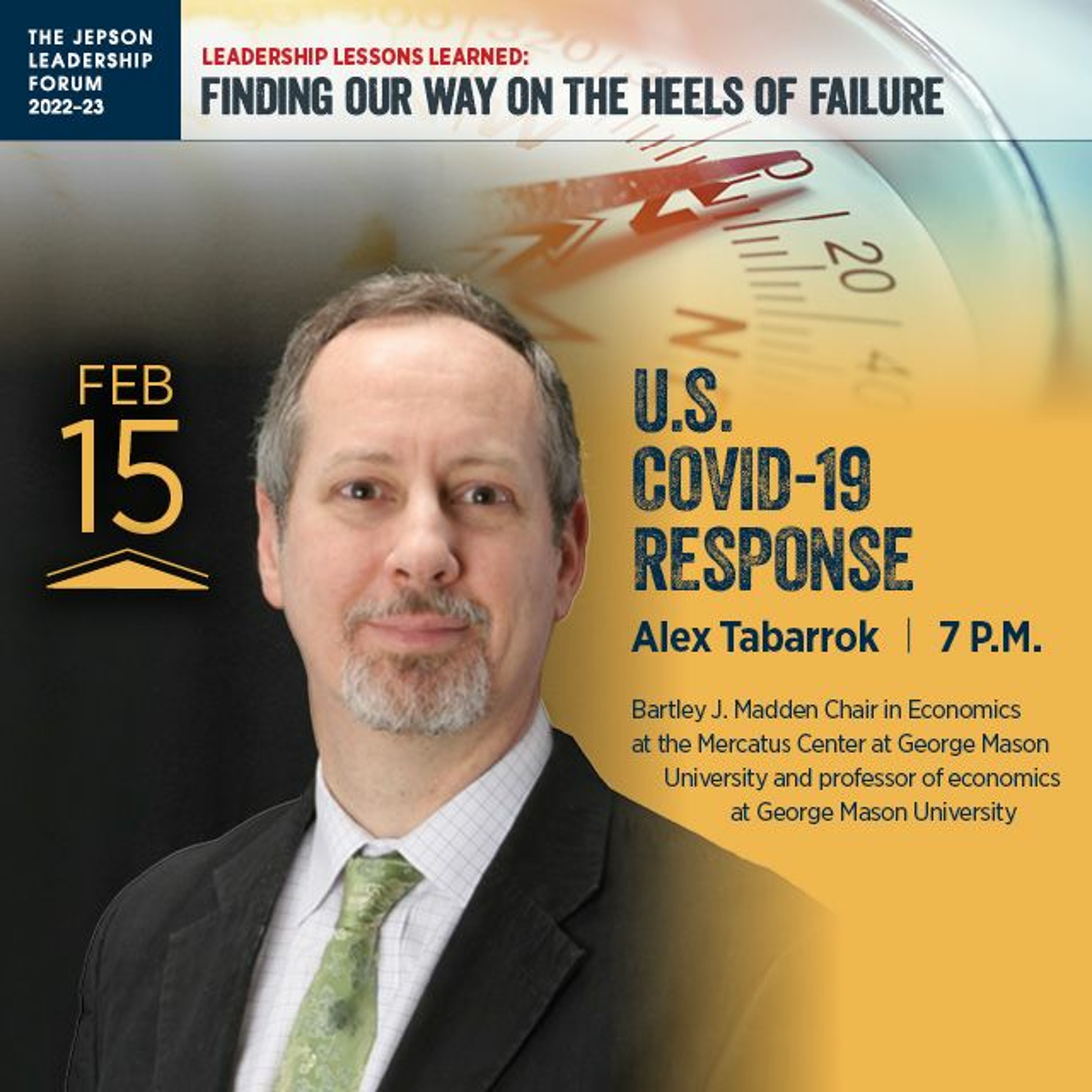
Jepson School of Leadership StudiesTake 5 with Alex TabarrokJepson student Kathryn Reda, ’23, sits down with Jepson Leadership Forum speaker Alex Tabarrok, Bartley J. Madden Chair in Economics at the Mercatus Center at George Mason University and professor of economics at George Mason University, prior to his presentation "U.S. COVID-19 Response" at the Jepson School of Leadership Studies. The 2022-23 Jepson Leadership Forum focuses on past and present failures in leadership and followership by shining a spotlight on times where we could – and should – have done better. Take 5 is a series of informal interviews with the scholars and experts who present as part of the lecture series. Feb. 15, 2023
2023-04-2405 min
Stranded Technologies PodcastEp. 39: Alex Tabarrok on the Dance between Centralization and Decentralization in City Governance, Baumol Effect vs. Regulation in Increasing Price Levels and Economic Insights for EntrepreneursAlex Tabarrok is a professor of economics at George Mason University, and a research fellow with the Mercatus Center.Alex is one of the world’s best teachers of economics and reaching a large, worldwide audience as the cofounder of Marginal Revolution University and the popular Marginal Revolution blog together with Tyler Cowen.This episode is an intellectual journey that discovers insights that can be used by entrepreneurs and city developers.Alex has been teaching economics for decades, so we start the episodes with our favorite concepts.We talk about the Ba...
2023-03-071h 26
econGully Marathi Podcast119. Understanding Indian Economy Through 3 Movies ft. Dr Ashish Kulkarni - 3 चित्रपटांद्वारे भारतीय अर्थव्यवस्था समजून घेणे डॉ आशिष कुलकर्णी यांच्यासहAshish Kulkarni teaches courses in economics, finance and statistics. He blogs daily at econforeverybody.com, and his mission is to make learning as interesting as possible for everyone. In this interview, we are discussing how to apply economics knowledge in everyday life. In this episode, we discuss the current state of Indian and the world economy and Ashish's outlook on the future. Then, he recommends three movies which depict the transition of Indian economy in a perfect manner. Later, I also ask Ashish movie and book recommendations. This is the fifth and the last part of...
2023-03-0218 min
econGully Marathi Podcast115. Gaming Attendance & Demonetisation ft. Dr Ashish Kulkarni - गेमिंग अटेंडन्स आणि नोटाबंदी डॉ आशिष कुलकर्णी यांच्यासोबतAshish Kulkarni teaches courses in economics, finance and statistics. He blogs daily at econforeverybody.com, and his mission is to make learning as interesting as possible for everyone. In this interview, we are discussing how to apply economics knowledge in everyday life. In this episode, we start with the basic concept of 'incentives' in economics and how that shapes many of our decisions. This is the first part of the five-part series of the audio version of the interview. You can watch the full video on YouTube from Friday (24th Feb) on my channel. Link to...
2023-02-2118 min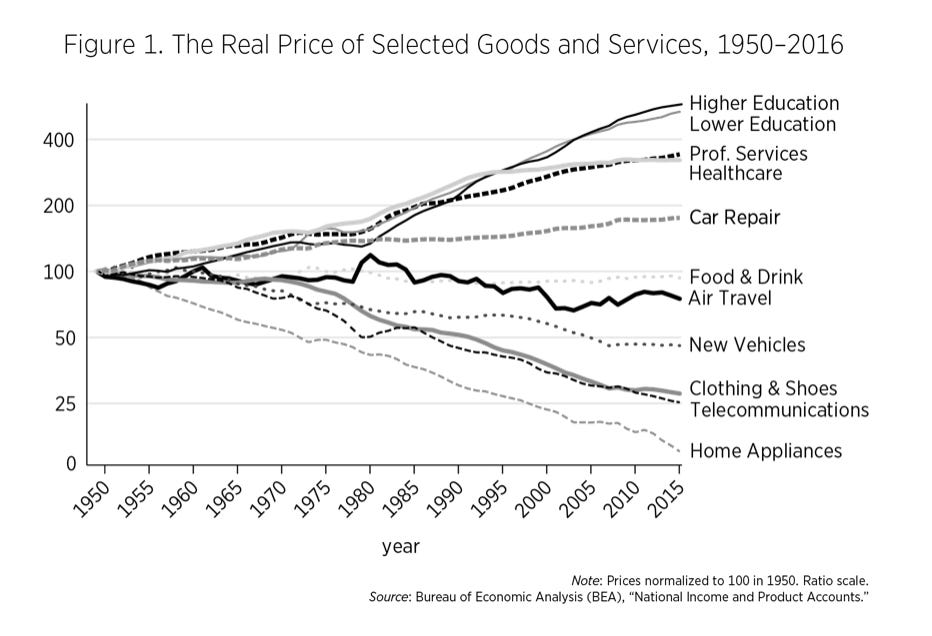
CSPI PodcastOperation Warp Speed and the Triumph of Governance | Alex Tabarrok & Richard HananiaAlex Tabarrok is a professor of economics at George Mason University. He joins the podcast to talk about his involvement in Operation Warp Speed, a uniquely successful federal government project. Richard asks how broadly applicable its lessons are, whether or not we could do something similar for cancer, and why economists and public health officials had such divergent opinions on the need to speed up the process of approving and distributing a vaccine. Alex also discusses the Baumol effect, which he argues can explain much about rising costs in healthcare and education. Richard pushes back on the...
2022-10-101h 34
Policy@McCombsPolicy@McCombs with Alex TabarrokAlex Tabarrok is a professor of economics at George Mason University. He joins the podcast to talk to Richard Hanania about his involvement in Operation Warp Speed, a uniquely successful federal government project. Richard asks how broadly applicable its lessons are, whether or not we could do something similar for cancer, and why economists and […]
2022-10-0500 minPolicy@McCombsPolicy@McCombs with Alex TabarrokAlex Tabarrok is a professor of economics at George Mason University. He joins the podcast to talk to Richard Hanania about his involvement in Operation Warp Speed, a uniquely successful federal government project. Richard asks how broadly applicable its lessons are, whether or not we could do something similar for cancer, and why economists and public health officials had such divergent opinions on the need to speed up the process of approving and distributing a vaccine.
Alex also discusses the Baumol effect, which he argues can explain much about rising costs in healthcare and education. Richard pushes b...
2022-10-0500 minPolicy@McCombsPolicy@McCombs with Alex TabarrokAlex Tabarrok is a professor of economics at George Mason University. He joins the podcast to talk to Richard Hanania about his involvement in Operation Warp Speed, a uniquely successful federal government project. Richard asks how broadly applicable its lessons are, whether or not we could do something similar for cancer, and why economists and […]
2022-10-0500 min
The Best Paragraph I've Read...Online Learning!!! Has the Promise Been Met? Does It Meet the Market Test? Where Does It Fit After Covid? What Does Online Instruction Get Right & Wrong? Dr. Shannon Smith of Michigan Virtual JoinsThe Best Paragraph I've Read:
Technology is disrupting the market for education just as it has disrupted the market for news. We do not yet know how the industry will shake out, but a few points can be made with confidence. Online education offers tremendous savings both in terms of money and of time. Online education will also increase the quality of education for many but not all courses, especially as investment in complementary technologies increases. The for-profit universities have already moved heavily into online education and the non-profits are poised to follow. What is less clear is who will...
2022-09-2354 min
From the New WorldNils Gilman: Why Can't We Build?Nils is the VP of programs at the Bergruen institute and deputy editor of Noema magazine.Issues and Timestamps:0:00 right-wing policy movement8:30 supreme court18:54 legitimacy29:12 right wing postmodernists32:50 state capacity52:00 fda and neuroticism1:39:00 populists right vs. libertarians153:30 aesthetic preferences223:00 problems of power analysis238:00 centralization vs. bureaucracy3:00:00 politics of recognitionRelevant links:Nils Gilman on twitter:https://twitter.com/nils_gilman?Noema magazine:https://www.noemamag...
2022-07-113h 12
The Ezra Klein ShowA Critique of Government That Liberals Need to HearGovernment is a bureaucratic, slow-moving institution. It’s too easily captured by special interests. It’s often incapable of acting at the speed and scale our problems demand. And when it does act, it can make things worse. Look no further than the Food and Drug Administration’s slowness to approve rapid coronavirus tests or major cities’ inability to build new housing and public transit or Congress’s failure to pass basic voting rights legislation.This criticism is typically weaponized as an argument for shrinking government and outsourcing its responsibilities to the market. But the past two years have...
2022-02-181h 16
Bretton GoodsEp 24: COVID and the FDA with Alex TabarrokI talked to Alex Tabarrok, Professor of Economics at George Mason University about the FDA's response on COVID along with a variety of other topics. We talked about
What happens if the public wants an inefficient COVID response?
What mistakes did zero-COVID countries make?
What are bottlenecks to Indian growth?
Why he thinks investing in life extension research gives a very high return?
Who is the most underrated economist of the 20th century?
---
Send in a voice message: https://podcasters.spotify.com/pod/show/pradyumna-sp/message
2021-12-1259 min
Call Me Back - with Dan SenorPresidents and Pandemics - with Tevi TroyBooks and essays discussed in this episode: Shall We Wake the President: Two Centuries of Disaster Management from the Oval Office by Tevi Troyhttps://www.barnesandnoble.com/w/shall-we-wake-the-president-tevi-troy/1132107909 “Presidents and Public-Health Crises” in National Affairs by Tevi Troyhttps://www.nationalaffairs.com/publications/detail/presidents-and-public-health-crises “Operation Warp Speed: A Story Yet to be Told”by Alex Tabarrok in Marginal Revolutionhttps://marginalrevolution.com/marginalrevolution/2021/09/operation-warp-speed-a-story-yet-to-be-told.html
2021-09-1751 min
The Good FightHow to Boost InnovationAlex Tabarrok is a professor of economics and co-author, with Tyler Cowen, of the blog Marginal Revolution. A strident critic of institutional failure during the pandemic, Tabarrok has applied his libertarian perspective to a wide range of topics, including public health, regulation and the law, criminal justice, and entrepreneurship.In this week’s conversation, Alex Tabarrok and Yascha Mounk discuss the failure of American institutions to respond to COVID-19, the cost of insufficient economic innovation, and the possibility of building a more agile and resilient American society.This transcript has been condensed and...
2021-08-1457 min
The Remnant with Jonah GoldbergLiberal Fights and HistoryGet your bingo cards ready, because Yuval Levin is back on The Remnant today to counteract Alex Tabarrok’s libertarian influence. Which side is the aggressor in the culture war? How will history remember the Trump era? And why is the left substituting relativism for absolutism? Tune in for answers to these vital questions (which include plenty of ostentatious references to Leo Strauss), but stick around to hear Yuval deliver a heartening affirmation of American exceptionalism. The United States is facing challenges, and we have much to fix, but we have even more to be proud of. As any im...
2021-07-151h 15
The Remnant with Jonah GoldbergMarginal RevolutionariesAlex Tabarrok, perhaps the world’s sole Canadian libertarian, joins The Remnant today for the first time. Inflation is on the rise, the vaccine rollout is stalling, and illiberalism is resurgent. In other words, there are plenty of demanding issues for Americans to be concerned about. Thankfully, Tabarrok has a range of considered policy solutions for Jonah to explore. How can we revitalize democracy? Would open borders work? And should we abandon advanced civilization now before the machines destroy us all?
Show Notes:
-Alex’s website
-“Inflation, no chance …”
-Jonah o...
2021-07-131h 33
Policy PunchlineAlex Tabarrok: Fractional Dosing Vaccine, Libertarianism in COVID, and the Great Tech StagnationAlex Tabarrok is Bartley J. Madden Chair in Economics at the Mercatus Center and a professor of economics at George Mason University. Along with Tyler Cowen, he is the co-author of the popular economics blog Marginal Revolution and co-founder of Marginal Revolution University. He is the author of numerous academic papers in the fields of law and economics, criminology, regulatory policy, voting theory and other areas in political economy. He is co-author with Tyler of Modern Principles of Economics, a widely used introductory textbook. He gave a TED talk in 2009. His articles have appeared in the New York Times, the...
2021-06-241h 41
Interpreting IndiaDiscussing Patent Laws and Vaccines with Alex TabarrokAlex Tabarrok joins Anirudh Burman to discuss if the existing law on patents is affecting India’s ability to vaccinate its citizens. As India battles a devastating second wave of Covid-19, many advocate for a waiver of intellectual property rights on coronavirus vaccines. However, some argue that this might be an incomplete solution; on its own, a TRIPS waiver would do little to alleviate the problem. In this episode, we understand the logic behind the proposal for the TRIPS waiver, and what must be done to globally increase vaccine supplies. --EPISODE CONTRIBUTORSAle...
2021-05-2735 min
What Happens Next in 6 MinutesCOVID, Stimulus, Fake News, Future of Retail - What Happens Next - 5.23.2021Host: Larry Bernstein. Guests include Alex Tabarrok, Desmond Lachman, Sam Wineburg, Jason Goldberg, Katherine Monasebian, and Sucharita Kodali. Get full access to What Happens Next in 6 Minutes with Larry Bernstein at www.whathappensnextin6minutes.com/subscribe
2021-05-232h 04
The External Medicine PodcastThe Invisible Graveyard: A Conversation with Economist Alex TabarrokIn this interview, Mitch Belkin and Daniel Belkin speak with Professor Alex Tabarrok about what economists can bring to discussions of the pandemic, the US government’s response to COVID-19, the performance of the FDA and the CDC, regulatory nationalism, the first doses first campaign, and why America should vaccinate the world. This conversation was recorded on May 2nd, 2021. Who is Alex Tabarrok?Professor Alex Tabarrok is the Bartley J. Madden Chair in Economics at the Mercatus Center and a professor of economics at George Mason University. He is the co-author of the pop...
2021-05-141h 01
Building BridgesAround Europe (and the World)Today’s episode of the Building Bridges podcast is my conversation with Tyler Cowen, an economist, director of the Mercatus Center at George Mason University, blogger at Marginal Revolution, and host of the podcast Conversations with Tyler.I first met Tyler back in 2019 when my colleague Zineb Mekouar and I spent a few days in Washington, DC to promote my book Hedge and to connect with John Dearie’s Center for American Entrepreneurship. We had lunch with Tyler and his colleague and co-author Alex Tabarrok in a Chinese restaurant near George Mason University. Most of our conversation that day was abou...
2021-04-2244 min
European StraitsAround Europe w/ Tyler Cowen. Lobbying. Startups Across Borders. Biden’s Global Tax Reform.The Agenda 👇Economist and blogger Tyler Cowen on everything Europe 🎧Founders, investors, and governments: all can contribute to upgrading regulations—in SiftedWe need to learn to solve ‘hard’ problems when building startups across bordersI’ve written so much over the years about the difficulty of crossing borders: here’s an overviewJoe Biden is about to bring the reform of corporate taxation to the finish lineToday’s episode of the Building Bridges podcast is my conversation with Tyler Cowen, an economist, director of the Mercatus Center at George M...
2021-04-1444 min
Advisory OpinionsJustice Breyer's WarningOur hosts start today’s episode by diving into the Supreme Court’s 6-2 opinion in Google v. Oracle, a multibillion dollar copyright case involving whether Google unlawfully used Oracle’s programming code when the tech titan created its Android operating system. Also on today’s podcast, Sarah and David chat about Justice Stephen Breyer’s Scalia Lecture, misdemeanor prosecutions, a new study on religious liberty’s winning streak on the Roberts Court, and a Native American adoption law case.
Show Notes:
-Google v. Oracle
-Justice Breyer’s Scalia lecture.
-Misdemeanor...
2021-04-081h 09
Browser BitesBrowser Conversations: Alex Tabarrok and Bill Emmott Bill Emmott, former editor-in-chief of The Economist and now co-director of the Global Commission for Post-Pandemic Policy, talks to Alex Tabarrok, Professor of Economics at George Mason University and co-author of the blog Marginal Revolution, on lessons learned from the pandemic so far, and what lies ahead.
2021-02-1944 min
The Seen and the Unseen - hosted by Amit VarmaLessons From 2020Finally, 2020 is behind us. It changed our world, the way we live our lives, and how we relate to each other and to ourselves. Shruti Rajagopalan and Alex Tabarrok join Amit Varma in episode 206 of The Seen and the Unseen to take stock of the year gone by, with each of them picking five lessons they feel 2020 holds for us. Because they can't count, though, they end up with more than 15 -- here they are, below. (Listen to the episode for the elaborations and arguments.) The Lessons: 0. Don't take anything for granted. (Amit) 1. Don't make the mistake of Omission, Commission...
2021-01-032h 47
hippoBrainE23: Civiconomics with Shruti Rajagopalan, Senior Research Fellow, Mercatus CenterConversations can be very powerful. Sometimes, all it takes is one phrase or word to change your perspectives completely. That’s what this week’s conversation did to us—changed our perspectives towards economics, markets, pricing, and most importantly—India’s Constitution.
This week, we have lawyer-turned-economist, Dr Shruti Rajagopalan, who researched about the Indian Constitution and its economic impact for her PhD. How she got there? That is an interesting conversation in itself. It all boils down to the controversy of giving farmer’s land in Singur to produce Tata Nano.
2020-11-2000 min
Dwarkesh PodcastAlex Tabarrok - Prizes, Prices, and Public GoodsAlex Tabarrok is a professor of economics at George Mason University and with Tyler Cowen a founder of the online education platform http://MRU.org.I ask Alex Tabarrok about the Grand Innovation Prize, the Baumol effect, and Dominant Assurance Contracts.Watch on YouTube, or listen on Spotify, Apple Podcasts, or any other podcast platform.Episode website here.Follow Alex on Twitter. Follow me on Twitter for updates on future episodes.Alex Tabarrok's and Tyler Cowen's excellent blog: https://marginalrevolution.com/ Thanks for reading The Lunar Society! Subscribe to f...
2020-10-191h 26
The Looking Forward PodcastThe Looking Forward Podcast Episode 83: Trump's COVID: Halo or Catastrophe?Trump has tested positive for COVID-19 less than one month before the US election. What will this mean for the politics surrounding the upcoming election and could this revelation play for or against Trump’s faltering campaign? (1:59-21:45)
Trump has also received a kind of ‘cocktail’ of medication in response to contracting the virus, not all of which is available to the common American citizen. In the spirit of Right to Try, should this accelerate clinician’s access to beneficial drugs rather than just waiting for a vaccine? And are lockups and the wait for a vaccine just mak...
2020-10-071h 04The Best Paragraph I've Read...Three Questions: Pay People to Get Covid-19 Vaccines? What Happened to Ticker Tape Parades? Is America Thinking Enough About War?The Best Paragraph I've Read:
When I was a child, doctors giving vaccine shots used to hand out candy or a little toy to take the sting and fear out of the shot. A similar idea could rescue the U.S. economy when one or more COVID vaccines are approved by the FDA and widely available for mass uptake... … ...
The “adult” version of the doctor handing out candy to children, fortunately, points toward a solution: pay people who get the shot....
How much? I know of no hard science that can answer that questi...
2020-09-1149 min
ericmckay4 's Listen LaterAlex Tabarrok versus the People (Parasite and Burning reviewed) Podcast: Subject to Change (LS 39 · TOP 2% what is this?)Episode: Alex Tabarrok versus the People (Parasite and Burning reviewed)Pub date: 2020-09-02Get Podcast Transcript →powered by Listen411 - fast audio-to-text and summarizationIn this episode we discussed two Korean films. Parasite and Burning. On the podcast in this episode was Alex Tabarrok who was defending the thesis he outlined in his wonderful blog piece, The Gaslighting of Parasite. Joining me to throw rocks at his theory were Chicago philosopher Agnes Callard and her son Abe.If you...
2020-09-051h 26
Subject to ChangeAlex Tabarrok versus the People (Parasite and Burning reviewed)In this episode we discussed two Korean films. Parasite and Burning. On the podcast in this episode was Alex Tabarrok who was defending the thesis he outlined in his wonderful blog piece, The Gaslighting of Parasite. Joining me to throw rocks at his theory were Chicago philosopher Agnes Callard and her son Abe.
2020-09-021h 26
Explain It to MeTrump's peddling a fake Covid-19 cureJane, Dara, and Matt on convalescent plasma, FDA reform, and the politics of science.Resources:"Trump used a rare disease survivor to take a shot at the FDA" by Julia Belluz, Vox"Making American Great Again–The FDA" by Alex Tabarrok, Marginal Revolution"Reopening schools safely is going to take much more federal leadership" by Matthew Yglesias, Vox"Straight talk on the FDA’s tumultuous weekend — and new questions about its independence" by Adam Feuerstein & Matthew Herper, Stat NewsOne Billion Americans by Matthew YglesiasWhite...
2020-08-2549 minThe Best Paragraph I've Read...Three Quick Ideas: Reset Facebook, Eliminate Traffic Police, Give $100 to Every American Every YearThe Best Paragraph I've Read:
"There are other ideas, like declaring “platform bankruptcy.” This would involve platforms resetting all of their user and group follower counts to zero and rebuilding communities from the ground up, with the platforms’ current rules in place."
This paragraph comes from an editorial in the New York Times by Charlie Warzel. The editorial is titled: "Facebook Can't be Reformed."
https://www.nytimes.com/2020/07/01/opinion/facebook-zuckerberg.html
Zac and Don discuss the merit of forcing Facebook...
2020-07-2633 min
The Seen and the Unseen - hosted by Amit VarmaElite Imitation in Public PolicyIndian decision makers often blindly copy public policy from abroad, without considering whether it would work in local conditions. Shruti Rajagopalan and Alex Tabarrok join Amit Varma in episode 180 of The Seen and the Unseen to explain the damage caused by such 'isomorphic mimicry,' and why it happens in the first place. Also check out: 1. Premature Imitation and India's Flailing State -- Shruti Rajagopalan & Alexander Tabarrok. 2. Modern Principles of Macroeconomics -- Tyler Cowen & Alex Tabarrok. 3. Modern Principles of Microeconomics -- Tyler Cowen & Alex Tabarrok. 4. DeMon, Morality and the Predatory Indian State -- Episode 85 of The Seen and the...
2020-07-051h 59Policy@McCombsAlex Tabarrok – COVID-19 InterviewAlex Tabarrok is Bartley J. Madden Chair in Economics at the Mercatus Center and a professor of economics at George Mason University. Along with Tyler Cowen, he is the co-author of the popular economics blog Marginal Revolution and co-founder of Marginal Revolution University. He is the author of numerous academic papers in the fields of law and economics, criminology, regulatory policy, voting theory and other areas in political economy. He is co-author with Tyler of Modern Principles of Economics, a widely used introductory textbook. He gave a TED talk in 2009. His articles have appeared in the New York Times...
2020-06-2500 minPolicy@McCombsAlex Tabarrok – COVID-19 InterviewAlex Tabarrok is Bartley J. Madden Chair in Economics at the Mercatus Center and a professor of economics at George Mason University. Along with Tyler Cowen, he is the co-author of the popular economics blog Marginal Revolution and co-founder of Marginal Revolution University. He is the author of numerous academic papers in the fields of law and economics, criminology, regulatory policy, voting theory and other areas in political economy. He is co-author with Tyler of Modern Principles of Economics, a widely used introductory textbook. He gave a TED talk in 2009. His articles have appeared in the New York Times, the...
2020-06-2500 minPolicy@McCombsAlex Tabarrok – COVID-19 InterviewAlex Tabarrok is Bartley J. Madden Chair in Economics at the Mercatus Center and a professor of economics at George Mason University. Along with Tyler Cowen, he is the co-author of the popular economics blog Marginal Revolution and co-founder of Marginal Revolution University. He is the author of numerous academic papers in the fields of law and economics, criminology, regulatory policy, voting theory and other areas in political economy. He is co-author with Tyler of Modern Principles of Economics, a widely used introductory textbook. He gave a TED talk in 2009. His articles have appeared in the New York Times, the...
2020-06-2500 min
The Remnant with Jonah Goldberg'Some Birds Aren’t Meant to be Caged'Escaping household chaos, a car-bound Jonah talks prisons with Brown University’s David Skarbek. Bolivian jails and Soviet gulags are just two choices in this long game of Where’d-You-Rather: Incarceration Edition. Skarbek takes us through the highlights of his upcoming book and touches on the delicate subject of policing.Show Notes:-Skarbeck’s upcoming book: The Puzzle of Prison Order: Why Life Behind Bars Varies Around the World-Skarbek on EconTalk-Pirates, Prisoners, and Lepers: Lessons from Life Outside the Law, by Paul and Sarah Robinson-Cha...
2020-06-171h 27Explain It to MeFixing the policeJane, Dara, and Matt on what we know about police reform and its limitsResources:"Unbundle the Police" by Derek Thompson, The Atlantic"Why Are the Police in Charge of Road Safety?" by Alex Tabarrok, Marginal RevolutionCollective Bargaining Rights and Police Misconduct: Evidence from Florida, by Dhammika Dharmapala, Richard H. McAdams, & John Rappaport, University of ChicagoReducing Racial Disparities in Crime Victimization, by Anna Harvey & Taylor Mattia, NYUThe Impact of Racial and Ethnic Diversity in Policing by Bocar Ba, Dean Knox, Jonathan Mummolo, & Roman Rivera
2020-06-161h 10The Looking Forward PodcastEp 67: Policing Under PressureThis week saw thousands of Australians breaking social distancing laws protesting racism. As more people vote with their feet and ignore lockdown laws, is the pandemic effectively over and what does this mean for lockdown laws? (2:15-16:29) The protestors in the United States are now advocating for the police force to be defunded. What is the place for the police in our society and what would reasonable reform entail? (16:29-30:45) At the New York Times a staff revolt forced an editor to resign just for publishing an opinion piece by a Republican Senator. Has campus woke culture taken over...
2020-06-101h 02
The Seen and the Unseen - hosted by Amit VarmaThe Nuances of LockdownWhat do past epidemics teach us about Covid-19? What do past disasters teach us about politics and the state? Is there a false binary between lockdown and no-lockdown? Anup Malani joins Amit Varma in episode 176 of The Seen and the Unseen to share his insights on these subjects and more. Also check out: 1. Anup Malani's homepage. 2. Taking Stock of Covid-19 -- Episode 169 of The Seen and the Unseen (w Shruti Rajagopalan). 3. We Are Fighting Two Disasters -- Amit Varma. 4. The Economic Approach to Human Behaviour -- Gary Becker. 5. Learning During a Crisis: the SARS Epidemic in Taiwan...
2020-06-072h 10
The Seen and the Unseen - hosted by Amit VarmaTaking Stock of Covid-19How should India handle Covid-19? Every option on the table carries huge costs, and will take countless lives. Shruti Rajagopalan joins Amit Varma in episode 169 of The Seen and the Unseen to help navigate the complex decisions that policy makers are being forced to make with little information. Also check out: 1. India must shut itself down to contain the coronavirus -- Shruti Rajagopalan (Mar 16) 2. Shruti Rajagopalan on India and the coronavirus -- Marginal Revolution (Mar 25) 3. The lockdown may be doing us more harm than good -- Shruti Rajagopalan (Mar 30) 4. Assessing Healthcare Capacity in India -- Shruti Rajagopalan and Abishek Choutagunta 5...
2020-04-192h 50
Puliyabaazi Hindi Podcast पुलियाबाज़ी हिन्दी पॉडकास्टसरकारी तंत्र की काबिलियत के मायने. State Capacity in India.How is it that Indian governments are good at conducting elections and organising Kumbh Melas but are terrible at maintaining public infrastructure? Why does the Indian State seem to be omnipresent and inadequate at the same time? These are some questions that ‘State Capacity’ literature deals with. So in this episode, we discuss insights on Indian state capacity with Prakhar Misra (@PrakharMisra), Senior Associate at IDFC Institute, Mumbai.सरकार की नीति और उनके कार्यान्वन में अक़्सर काफ़ी अंतर होता है | इसका एक बड़ा कारण है हमारे सरकारी तंत्र की सीमित क्षमता | ऐसा क्यों कि भारतीय सरकार सर्वव्यापी भी है और ग़ैरहाज़िर भी? ऐसा क्यों कि भारतीय सरकारें कुछ काम बहुत अच्छे से करती है, जैसे कि कुम्भ मेला आयोजन, चुनाव इत्यादि जबकि स्वास्थ्य, शिक्षा क्षेत्रों में कई दशकों से प्रदर्शन फीका रहा है? इन्हीं विषयों पर चर्चा आईडीएफसी इंस्टिट्यूट में सीनियर एसोसिएट प्रखर मिश्रा (@PrakharMisra) के साथ|Readings:Why Does the Indian State Both Fail and Succeed? By Devesh KapurWhat is Governance? By Francis FukuyamaIs India a Flailing State? By Lant PritchettSolutions when The Solution is the Problem By Lant Pritchett and Michael WoolcockPremature Imitation and India’s Flailing State by Shruti Rajagopalan and Alex TabarrokPuliyabaazi is on these platforms:Twitter: https://twitter.com/puliyabaaziFacebook: https://www.facebook.com/puliyabaaziInstagram: https://www.instagram.com/puliyabaazi/Subscribe & listen to the podcast on iTunes, Google Podcasts, Castbox, AudioBoom, YouTube, Spotify or any other podcast app.See omnystudio.com/listener for privacy information. This is a public episode. If you would like to discuss this with other subscribers or get access to
2020-04-161h 07
Macro Musings with David BeckworthAlex Tabarrok on COVID-19 Response Efforts, Proposals for Continued Recovery, and Lessons for the FutureAlex Tabarrok is a professor of economics at George Mason University and a research fellow at the Mercatus Center. Alex joins David Beckworth on the podcast to discuss how best to deal with COVID-19 and what lessons we can learn from it moving forward. Transcript for the episode can be found here. Alex's Twitter: @ATabarrok Alex's GMU profile: https://mason.gmu.edu/~atabarro/ Related Links: Bonus segment with Tabarrok: https://www.youtube.com/watch?v=tQUnnumgXvw&feature=youtu.be ...
2020-04-1354 min
Unprepared: Government Failure at the CDC/FDAAlex Tabarrok on the CDC and FDA’s ‘Failure of Historic Proportions’
2020-04-1000 min
The Liam McCollum ShowEp. 9 Economist Alex Tabarrok on the Government's Response to the CoronavirusEconomist Alex Tabarrok joins me to talk about the FDA and CDC's "failure of historic proportions." We discuss coronavirus, the economy, benevolence in the market response and online education.
2020-04-0122 min
Macro Musings with David BeckworthMacro Musings Producers' Special – A Recap of 2019 and a Glimpse into the FutureTo accompany the new year, David Beckworth is joined by the producers of Macro Musings, Marc and Carter, to talk about the highlights of the podcast throughout 2019, including their personal favorite episodes and the top episodes according to listener statistics. They also discuss some of the most important macroeconomic issues and events of the past year, including the yield curve inversion and ensuing recession speculation, the secular decline of interest rates, the Fed's big 2019 review, and more. A massive thank you to all of our listeners who have tuned in over the past few years, a...
2020-01-2056 min
The Seen and the Unseen - hosted by Amit VarmaThe Art and Science of Economic PolicyEconomic policy affects each of us -- and yet, India has gotten it wrong for decades. In their groundbreaking new book, Vijay Kelkar and Ajay Shah write not just how to do policy, but how to think about policy. They join Amit Varma in episode 154 of The Seen and the Unseen to share their learnings, first principles onwards. Also check out: 1. In Service of the Republic -- Vijay Kelkar & Ajay Shah 2. Zombie Firms and Creative Destruction -- Ep 118 of The Seen and the Unseen (w Ajay Shah) 3. The Importance of Finance -- Ep 125 of The Seen and th...
2020-01-062h 43The Curious TaskAlex Tabarrok — Is Giving Gifts Inefficient?Alex Aragona chats with Alex Tabarrok on this very special Christmas episode of The Curious Task as he explores whether gift giving is inefficient, and if there are better ways to give to others.
References from Episode 21 with Alex Tabbarok
You can watch a video of Alex Tabbarok and Tyler Cowen discuss gift giving here
Giving to my Wild Self article can be found here
2019-12-2542 min
Interchain.FMAgoric: Smart Contracts & Funding Public Goods“Contract Law and the State of Nature” by Anthony T. Kronman (1985). The Journal of Law, Economics, and Organization, Volume 1, Issue 1, SPRING 1985, Pages 5–32. A great introduction to mechanisms of contract enforcement outside the state.Rules for a Flat World: Why Humans Invented Law and How to Reinvent It for a Complex Global Economy by Gillian K. Hadfield (2016)https://www.goodreads.com/book/show/29587067-rules-for-a-flat-worldAssurance Contracts: mechanisms for incentivizing the creation of public goods.https://en.wikipedia.org/wiki/Assurance_contractDominant Assurance Contractshttps://www.cato-unbound.org/2017/06/07/alex-tabarrok/making-markets-work-better-dominant-assurance-contracts-some-other-helpfulA...
2019-12-0348 min
We Are Not SavedBooks I Read in SeptemberIt's my monthly review of the books I read. In this episode I cover: Savage Worlds: Adventure Edition By: Shane Lacy Hensley Adrift: Seventy-Six Days Lost at Sea By: Steven Callahan Novacene: The Coming Age of Hyperintelligence By: James Lovelock Bronze Age Mindset By: Bronze Age Pervert Why Are The Prices So Damn High? By: Eric Helland, Alex Tabarrok An Introduction to the Book of Abraham (Religious) by: John Gee The Lies of Locke Lamora (Gentleman Bastard #1) By: Scott Lynch No More Mr Nice Guy: A Proven Plan for Getting What You Want in Love, Sex, and Life By...
2019-10-0426 min
The Seen and the Unseen - hosted by Amit VarmaTwelve Dream ReformsTimes are bad -- but pessimists can dream! Tired of only talking about problems, Shruti Rajagopalan, Rajeswari Sengupta and Vivek Kaul join Amit Varma in episode 138 of The Seen and the Unseen, to propose solutions! Three each. Many bad jokes and Bollywood songs are thrown in. Also check out: Population Is Not a Problem, but Our Greatest Strength -- Amit Varma. Alone in the City -- Amit Varma Where Are the Jobs? -- Ep 87 of The Seen and the Unseen (w Yazad Jal) Education in India -- Ep 77 of The Seen and the Unseen (w Amit Chan...
2019-09-162h 52
Macro Musings with David BeckworthAlex Tabarrok on the Elements of Economic Growth and the Decline of DynamismAlex Tabarrok is a professor of economics at George Mason University and holds the Bartley J. Madden Chair in Economics at the Mercatus Center. Alex has written widely on long run economic growth and joins the show today to talk about it. David and Alex also discuss how capital relates to economic growth, the impact of regulation on dynamism, and the important distinction between "catch-up" and "cutting edge" growth. Transcript for the episode: https://www.mercatus.org/bridge/podcasts/09092019/alex-tabarrok-elements-economic-growth-and-decline-dynamism Alex's Twitter: @ATabarrok Alex's Mercatus profile: https://asp.mercatus.or...
2019-09-0957 min
Building TomorrowA Smarter Kickstarter (with Alex Tabarrok)If you, as a private citizen, want to build a bridge across the river to shorten your commute, you run into a few problems. The incredible cost of the proposed bridge puts it beyond your limited resources, so you try and convince thousands of your neighbors to chip in donations. But you don’t want to contribute money unless you reach the total amount necessary to build the bridge; a half-built bridge is worse than no bridge at all.One answer to this problem is to use the State to coerce contributions (taxes) from the co...
2019-08-1522 minBuilding TomorrowPrices Are Too Damn High (with Alexander Tabarrok)One of the most remarkable aspects of the last few generations is that for the first time in human history, at least to this degree, stuff has been getting cheaper while human labor gets more valuable. It’s a technology-enabled humanist revolution! At the same time, labor-intensive sectors like healthcare and education have become more expensive relative to the declining price of goods. Economists call this the “Baumol effect,” though it’s sometimes referred to as the “cost disease.” But economist Alex Tabarrok joins the show to discuss how that curse might actually be a blessing in disguise and...
2019-08-0833 min
Village Global PodcastWhat Alex Tabarrok Thinks About Basically EverythingAlex Tabarrok (@ATabarrok), economist and author, joins Erik on this episode for a wide-ranging discussion.They talk about:- The contributions of economics to society over the past several decades and the biggest challenges ahead for the field- What “the great forgetting” means in economics and why bad ideas from the past keep coming back- The arguments for open borders- Why Alex thinks we should focus on increasing the number of police as opposed to increasing punishment for offenders- Whether the US or China will...
2019-08-011h 56
Rationally Speaking PodcastRationally Speaking #236 - Alex Tabarrok on "Why are the Prices So D*mn High?"Over the last two decades, the prices of consumer goods like toys and electronics have gone way down, but the prices of health care and education have gone up roughly 200%. Why? In this episode, economist Alex Tabarrok discusses his latest book, co-authored with Eric Heller, "Why are the Prices So D*mn High?," which blames rising costs on a phenomenon called the Baumol Effect.
2019-07-2352 min
The Not Unreasonable PodcastAlex Tabarrok on Innovation and The Baumol EffectMy guest for this episode is Alex Tabarrok, the Bartley J. Madden Chair in Economics at the Mercatus Center and Professor of Economics at George Mason University, blogger at Marginalrevolution.com, co-founder of Marginal Revolution University and co-author with Eric Helland of "Why Are The Prices So Damn High?" which is short, free book and which we discuss on the show.Alex has written many other books and papers and there is a theme of thinking about innovation throughout his work. Several years ago he wrote a book on the topic called "Launching the Innovation Renaissance" which we...
2019-07-081h 10
Slate Star Codex PodcastFollowup on the Baumol Effect: Thanks, O BaumolLast week I reviewed Alex Tabarrok and Eric Helland’s Why Are The Prices So D*mn High?. On Marginal Revolution, Tabarrok wrote:
SSC does have some lingering doubts and points to certain areas where the data isn’t clear and where we could have been clearer. I think this is inevitable. A lot has happened in the post World War II era. In dealing with very long run trends so much else is going on that answers will never be conclusive. It’s hard to see the signal in the noise.
2019-06-2014 min
Astral Codex Ten PodcastFollowup on the Baumol Effect: Thanks, O BaumolLast week I reviewed Alex Tabarrok and Eric Helland’s Why Are The Prices So D*mn High?. On Marginal Revolution, Tabarrok wrote: SSC does have some lingering doubts and points to certain areas where the data isn’t clear and where we could have been clearer. I think this is inevitable. A lot has happened in the post World War II era. In dealing with very long run trends so much else is going on that answers will never be conclusive. It’s hard to see the signal in the noise. I think of the Baumol effect as...
2019-06-2015 minAstral Codex Ten PodcastBook Review: Why Are the Prices So D*mn High?Why have prices for services like health care and education risen so much over the past fifty years? When I looked into this in 2017, I couldn’t find a conclusive answer. Economists Alex Tabarrok and Eric Helland have written a new book on the topic, Why Are The Prices So D*mn High? (link goes to free pdf copy, or you can read Tabarrok’s summary on Marginal Revolution). They do find a conclusive answer: the Baumol effect. T&H explain it like this: In 1826, when Beethoven’s String Quartet No. 14 was first played, it took four pe...
2019-06-1214 min
Slate Star Codex PodcastBook Review: Why Are the Prices So D*mn High?Why have prices for services like health care and education risen so much over the past fifty years? When I looked into this in 2017, I couldn’t find a conclusive answer. Economists Alex Tabarrok and Eric Helland have written a new book on the topic, Why Are The Prices So D*mn High? (link goes to free pdf copy, or you can read Tabarrok’s summary on Marginal Revolution). They do find a conclusive answer: the Baumol effect.
T&H explain it like this:
In 1826, when Beethoven’s String Quartet No. 14
2019-06-1214 min
The Bob Murphy Show17. Alex Tabarrok on Tolerant Rothbardians, the Market for Kidneys, and Potential Security Flaws in BitcoinAlex Tabarrok is a professor of economics at George Mason University and co-author (with Tyler Cowen) of the very popular blog, Marginal Revolution. Bob and Alex cover a wide range of topics, including his early experience with Rothbardians, the brief window when economics blogs were the center of discussion, problems with the FDA, how a kidney market might work, and why Bitcoin is not as secure as some of its fans believe.
For more information, see BobMurphyShow.com. The Bob Murphy Show is also available on iTunes, Stitcher, Spotify, and via RSS.
2019-02-1900 min
80,000 Hours Podcast#52 - Glen Weyl on uprooting capitalism and democracy for a just societyPro-market economists love to wax rhapsodic about the capacity of markets to pull together the valuable local information spread across all of society about what people want and how to make it. But when it comes to politics and voting - which also aim to aggregate the preferences and knowledge found in millions of individuals - the enthusiasm for finding clever institutional designs often turns to skepticism. Today's guest, freewheeling economist Glen Weyl, won't have it, and is on a warpath to reform liberal democratic institutions in order to save them. Just last year he wr...
2019-02-082h 44
The Seen and the Unseen - hosted by Amit VarmaThe 100th Episode RambleThe Seen and the Unseen reaches 100 episodes! Yea! Economist Shruti Rajagopalan, the most frequent guest on the show, joins host Amit Varma as they shoot the breeze about the 99 episodes before this, the horrors of 2018, and the further horrors of 2019. Also check out: These past episodes with Gunvant Patil, Vikram Doctor, Harsha Bhogle, Gideon Haigh+Prem Panicker, Rajesh Jain, Vishwanath S, Parth Shah, Amit Chandra, Alex Tabarrok, Naveen Noronha, Kumar Anand, Vivek Kaul, Ashok Malik, Nikita+Supriya (on #MeToo), Devika+Nidhi+Hamsini and Matt Ridley. And also with Shruti on the Right to...
2018-12-241h 41
Future Skills39: Tyler Cowen - Economist and Master Generalist on: Economic Outlook, Social Change, and FutuTyler Cowen is an American economist, academic, and writer. He is the author of books like The Great Stagnation, Average is Over, The Complacent Class, and more. He occupies the Holbert L. Harris Chair of economics, as a professor at George Mason University, and is co-author, with Alex Tabarrok, of the popular economics blog Marginal Revolution. Cowen and Tabarrok have also ventured into online education by starting Marginal Revolution University. He currently writes a regular column for Bloomberg View. He also has written for such publications as The New York Times, The Wall Street Journal, Forbes, Time...
2018-11-1200 minBuilding TomorrowWhy Aren't There More Women In Tech?The presence of a gender gap in the tech industry is indisputable, but the causes and solutions for the gap are still up for debate. Ashkhen Kazaryan from TechFreedom joins Paul and Matthew to discuss several theories for the origins of the gap, ranging from overt discrimination to the insidious unintended consequences of the invention of the nerd archetype in the 1980s. Ashkhen compares her experience of discrimination in the tech policy world, which has relative gender parity, with the problems in the tech sector, which does not. Finally, the three talk about steps that can be...
2018-11-0842 min
Sean Carroll's Mindscape: Science, Society, Philosophy, Culture, Arts, and IdeasTyler Cowen on Maximizing Growth and Thinking for the FutureEconomics, like other sciences (social and otherwise), is about what the world does; but it's natural for economists to occasionally wander out into the question of what we should do as we live in the world. A very good example of this is a new book by economist Tyler Cowen, Stubborn Attachments. Tyler will be well-known to many listeners for his long-running blog Marginal Revolution (co-created with his colleague Alex Tabarrok) and his many books and articles. Here he offers a surprising new take on how society should arrange itself, based on the simple idea that the welfare of future...
2018-10-2259 min
The Not Unreasonable PodcastTyler Cowen on Stubborn Attachments, Tyrone and Multiple PerspectivesThis is a special interview for me because Tyler Cowen has been an enormous intellectual and moral influence on me over the last ten years or so.
I'm not alone. Tyler blogs with Alex Tabarrok at marginalrevolution.com, which is usually ranked as the top economics blog and Tyler as one of the most influential economists of the day. Tyler's books (see my blog post) are also enormously influential and you name your favorite economic or financial public intellectual and they probably read Tyler every single day.
The interview I've wanted to do with Tyler...
2018-10-011h 07Building TomorrowAugur(ing) AssassinationsAugur represents a new type of prediction market. It’s decentralized nature allows users to stay anonymous, which may be troubling for law enforcement or other state agents if the bets placed are threatening in nature. Right now, it only has a small number of users, but it has the potential to gain traction.In these prediction markets you have the ability to place a bet, using a type of cryptocurrency, on a future action such as; whether a Supreme Court nominee will be appointed by a certain date in time. However, Augur may also ho...
2018-09-0645 min
Slate Star Codex PodcastSelf-Serving BiasAlex Tabarrok beat me to the essay on Oregon’s self-service gas laws that I wanted to write.
Oregon is one of two US states that bans self-service gas stations. Recently, they passed a law relaxing this restriction – self-service is permissable in some rural counties during odd hours of the night.
2018-01-1210 min
The Pragati PodcastEp. 02: The Answer is TourismThe American economist Alex Tabarrok, who is in Mumbai these days, feels that tourism could be "India's leading export sector." In his piece in Pragati, 'Let the World In' (https://www.thinkpragati.com/opinion/937/let-the-world-in/), he discusses some of the reforms India needs to carry out to make this happen. Alex discusses those reforms with Pragati editor Amit Varma. Snake charmers and sim cards also feature in this episode! This is an IVM Production; for more such awesome podcasts on the go, download the IVM Podcasts app on Google Play: https://goo.gl/bI1toI or on...
2017-04-1900 min
The Seen and the Unseen - hosted by Amit VarmaEp. 14: Rent ControlRent control is a classic example of a regulation meant to help the poor that ends up hurting everyone. Alex Tabarrok joins Amit Varma to discuss how real estate in Mumbai would be so much cheaper if not for such government regulation. Follow The Seen and The Unseen: Website: www.seenunseen.in Facebook: https://www.facebook.com/theseenandtheunseen/ This is an IVM Production. For more awesome podcasts, download the IVM Podcasts app on - Google Play: https://goo.gl/bI1toI iOS: https://goo.gl/9UhnGd or, find us on:
2017-04-1717 min