Shows

CyberCode AcademyCourse 27 - Hacking Web Applications, Penetration Testing, CTF | Episode 1: Kali Linux EssentialsIn this lesson, you’ll learn about:Kali Linux, a Unix-like operating system designed for penetration testing and security assessments, preloaded with hundreds of specialized tools.Deployment options, including full hard drive installation, portable live USB/CD for field testing, and virtualized environments such as VMware Workstation for safe lab setups.System maintenance best practices, using apt update and apt upgrade to keep tools, dependencies, and security patches current for optimal performance and stability.Information gathering tools, including network and port scanning with Nmap and OSINT and relationship mapping with Maltego....
2026-03-0620 min
CyberCode AcademyCourse 26 - Assessing and Mitigating Security Risks | Episode 4: A Guide to Mitigation and Security ControlsIn this lesson, you’ll learn about:Core mitigation strategies and layered security controls used to defend modern network infrastructures against evolving threats.Asset inventory and continuous discovery, including identifying authorized and unauthorized devices and software using DHCP and DNS logs.Secure configuration management, ensuring hardware, software, and virtual systems comply with defined security baselines using tools like Desired State Configuration (DSC).Vulnerability management practices, including automated scanning, prioritization, and timely remediation of identified weaknesses.Privileged access protection, securing administrative accounts against credential theft, brute-force attacks, and privilege escalation....
2026-03-0421 min
CyberCode AcademyCourse 26 - Assessing and Mitigating Security Risks | Episode 3: Foundations of Successful Incident Identification and Response ManagementIn this lesson, you’ll learn about:How to shift from reactive to proactive security by using intrusion detection tools and manually analyzing network logs to identify threats early.The importance of an Incident Response Plan (IRP), including clearly defined roles, responsibilities, and escalation paths to ensure proper and authorized incident handling.The structured incident handling lifecycle, covering incident identification, documentation, communication, containment, and forensic investigation while preserving critical evidence.Threat eradication and system recovery, including removing malicious components, reimaging compromised systems, applying patches, and restoring data securely from backups....
2026-03-0321 min
CyberCode AcademyCourse 26 - Assessing and Mitigating Security Risks | Episode 2: The Fundamentals of Organizational Risk ManagementIn this lesson, you’ll learn about:The Foundations of Organizational Risk ManagementWhy security must begin with understanding a system’s requirements, limitations, and operational environment before deploymentHow improper preparation can lead to security failures, operational risks, and legal consequencesThe Four Stages of the Risk Management ProcessFraming: Defining the organizational context, objectives, and risk toleranceAssessing: Identifying threats, vulnerabilities, and estimating their potential impactResponding: Developing and implementing strategies to mitigate or accept risksMonitoring: Continuously reviewing systems to ensu...
2026-03-0220 min
CyberCode AcademyCourse 26 - Assessing and Mitigating Security Risks | Episode 1: Threats, Mindsets, and VulnerabilitiesIn this lesson, you’ll learn about:The Modern Cybersecurity LandscapeHow cybersecurity has evolved from an IT-only concern into a shared responsibility for all usersWhy understanding the attacker’s mindset is essential for identifying and preventing threatsSocial Engineering and Human ExploitationHow attackers manipulate emotions like fear, curiosity, greed, and trustThe differences between phishing (mass attacks) and spear phishing (targeted attacks)How human behavior can bypass even strong technical defensesMalware, Ransomware, and Advanced ThreatsThe evolution from...
2026-03-0123 min
CyberCode AcademyCourse 25 - API Python Hacking | Episode 7: Building Windows Executables from Python Scripts with PyInstallerIn this lesson, you’ll learn about:Converting Python Scripts into ExecutablesInstalling and using PyInstaller to package Python code into standalone .exe filesUnderstanding how executables allow programs to run on systems without Python installedCompilation Process with PyInstallerUsing the command pip3 install pyinstaller to install the packaging toolRunning PyInstaller on a Python script to generate a Windows Portable Executable (PE) fileObserving how PyInstaller bundles dependencies automaticallyUnderstanding the Output StructureLocating the compiled executable inside the di...
2026-02-2816 min
CyberCode AcademyCourse 25 - API Python Hacking | Episode 6: Privilege Modification and User ImpersonationIn this lesson, you’ll learn about:Programmatic Privilege ModificationHow to use the AdjustTokenPrivileges API to enable or disable specific privilegesUnderstanding the TOKEN_PRIVILEGES structure and how privilege attributes are modifiedEnabling critical privileges like SeDebugPrivilege to allow advanced system accessPreparing for Token ManipulationIdentifying a target process or user through window handles or process IDs (PID)Elevating your script’s permissions to allow interaction with protected system processesUnderstanding why privilege elevation is required before duplicating tokensToke...
2026-02-2717 min
CyberCode AcademyCourse 25 - API Python Hacking | Episode 5: Managing and Verifying Process PrivilegesIn this lesson, you’ll learn about:Fundamentals of Windows Access TokensTokens define a process's privileges, such as shutting down the system or debugging memoryTokens are static: you can enable/disable existing privileges but cannot add new onesDifference between default tokens (limited rights, e.g., SeChangeNotify) and administrative tokens (powerful rights, e.g., SeDebugPrivilege)Programmatic Access to TokensUsing Python’s ctypes to interface with kernel32.dll and advapi32.dllObtaining a privileged handle with OpenProcessAccessing a process token via...
2026-02-2616 min
CyberCode AcademyCourse 25 - API Python Hacking | Episode 4: Structures, Process Spawning, and Undocumented CallsIn this lesson, you’ll learn about:Defining Windows Internal Structures in PythonRepresenting structures like PROCESS_INFORMATION and STARTUPINFO using ctypes.StructureMapping Windows data types (HANDLE, DWORD, LPWSTR) with the _fields_ attributeInstantiating structures for API calls to configure or retrieve process informationSpawning System ProcessesUsing CreateProcessW from kernel32.dllSetting application paths (e.g., cmd.exe) and command-line argumentsManaging creation flags like CREATE_NEW_CONSOLE (0x10)Passing structures by reference with ctypes.byref to receive pr...
2026-02-2521 min
CyberCode AcademyCourse 25 - API Python Hacking | Episode 3: From ctypes Basics to Building a Process KillerIn this lesson, you’ll learn about:Interfacing Python with Windows API using ctypesLoading core DLLs: user32.dll and kernel32.dllExecuting basic functions like MessageBoxWMapping C-style data types (e.g., LPCWSTR, DWORD) to Python equivalentsError Handling and PrivilegesUsing GetLastError to debug API failuresCommon errors such as "Access Denied" (error code 5)Understanding how token privileges and administrative rights affect process interactionsProcKiller Project WorkflowFind Window Handle: FindWindowARetrieve Process ID: Ge...
2026-02-2420 min
CyberCode AcademyCourse 25 - API Python Hacking | Episode 2: Foundations of Windows Internals and API MechanismsIn this lesson, you’ll learn about:Fundamentals of Windows Processes and ThreadsA process is a running program with its own virtual memory spaceThreads are units of execution inside processes, allocated CPU time to perform tasksAccess tokens manage privileges and access rights; privileges can be enabled, disabled, or removed but cannot be added to an existing tokenKey System Programming TerminologyHandles: Objects that act as pointers to memory locations or system resourcesStructures: Memory formats used to store and pass data du...
2026-02-2321 min
CyberCode AcademyCourse 25 - API Python Hacking | Episode 1: GitHub Portfolio Building and Environment SetupIn this lesson, you’ll learn about:Building a Professional PortfolioCreating a GitHub account and configuring it for public repositoriesInitializing repositories specifically for Python projectsUploading and organizing files to showcase practical work for employersSetting Up a Windows-Based Technical WorkspaceInstalling Python 3 and verifying it is correctly added to the system PATHInstalling Notepad++ for code editing and pinning it for quick accessPreparing essential analysis tools:Process Explorer (system monitoring)PsExec (remote execution and administrative ta...
2026-02-2218 min
CyberCode AcademyCourse 24 - Machine Learning for Red Team Hackers | Episode 6: Security Vulnerabilities in Machine LearningIn this lesson, you’ll learn about:The major security threat categories in machine learning: model stealing, inversion, poisoning, and backdoorsHow model stealing attacks replicate black-box models through API queryingWhy attackers may clone models to reduce costs, bypass licensing, or craft offline adversarial examplesThe concept of model inversion, where sensitive training data (e.g., faces or private attributes) can be partially reconstructed from learned weightsWhy deterministic model parameters can unintentionally leak informationHow data poisoning attacks manipulate training datasets to degrade accuracy or sh...
2026-02-2116 min
CyberCode AcademyCourse 24 - Machine Learning for Red Team Hackers | Episode 5: The Complete Guide to Deepfake CreationIn this lesson, you’ll learn about:What deepfakes are and how neural networks enable face, voice, and style transferThe standard face swap pipeline: extraction → preprocessing → training → predictionWhy conducting a local dry run helps validate datasets before scaling to expensive GPU environmentsThe importance of face alignment, sorting, and dataset cleaning to reduce false positivesHow lightweight models are used for parameter tuning before full-scale trainingThe role of GPU acceleration in deep learning workflowsWhy cloud platforms like Google Cloud are used for larg...
2026-02-2013 min
CyberCode AcademyCourse 24 - Machine Learning for Red Team Hackers | Episode 4: Mastering White-Box and Black-Box AttacksIn this lesson, you’ll learn about:The difference between white-box and black-box threat models in machine learning securityWhy gradient-based models are vulnerable to carefully crafted input perturbationsThe core intuition behind the Fast Gradient Sign Method (FGSM) as a sensitivity-analysis techniqueHow adversarial perturbations exploit a model’s local linearity and gradient structureThe purpose of adversarial ML frameworks like Foolbox in controlled research environmentsHow pretrained architectures such as ResNet are evaluated for robustnessWhy datasets like MNIST are commonly used for benc...
2026-02-1915 min
CyberCode AcademyCourse 24 - Machine Learning for Red Team Hackers | Episode 3: Evading Machine Learning Malware ClassifiersIn this lesson, you’ll learn about:What adversarial machine learning is and why ML-based malware classifiers are vulnerable to manipulationThe difference between feature-engineered models like Ember and end-to-end neural approaches like MalConvWhy handling real malware (e.g., Jigsaw ransomware) requires a properly isolated virtual machine labHow libraries such as LIEF and pefile are used to safely parse and analyze Portable Executable (PE) structuresThe concept of model decision boundaries and detection thresholdsWhy “benign signal injection” works conceptually (model blind spots and over-reliance on sup...
2026-02-1816 min
CyberCode AcademyCourse 24 - Machine Learning for Red Team Hackers | Episode 2: Building and Implementing Evolutionary Testing ToolsIn this lesson, you’ll learn about:What fuzzing is and why it’s a powerful technique for discovering software vulnerabilitiesThe difference between basic randomized fuzzing and more advanced, coverage-guided approachesHow code coverage helps measure which parts of a program are exercised during testingWhy naive random input generation is inefficient for complex formats like PDFsThe concept of mutation-based fuzzing, including byte-level modifications such as insertion, deletion, swapping, and randomizationHow evolutionary fuzzing applies principles from genetic algorithms to improve input effectivenessThe...
2026-02-1716 min
CyberCode AcademyCourse 24 - Machine Learning for Red Team Hackers | Episode 1: Building an Automated CAPTCHA-Breaking BotIn this lesson, you’ll learn about:How CAPTCHA systems (like Really Simple CAPTCHA for WordPress) are designed to prevent automated abuseThe role of reconnaissance in identifying security mechanisms on web applications (for defensive testing with permission)How OpenCV is used in computer vision for:Grayscale conversionImage thresholdingNoise reduction and morphological operations (e.g., dilation)Contour detection and character segmentationThe fundamentals of building a Convolutional Neural Network (CNN) using frameworks like KerasWhy preprocessing (normalization, resizing, padding) is...
2026-02-1616 min
CyberCode AcademyCourse 23 - WiFi Hacking with Raspberry Pi | Episode 7: Building a Digital Ghost on Raspberry PiIn this lesson, you’ll learn about:What digital identity is and how IP and MAC addresses are used to track usersWhy masking an IP address is essential for protecting location and online activityHow the Tor network provides anonymity by routing traffic through multiple global nodesThe role of ProxyChains in forcing applications to operate through anonymizing networksWhat a MAC address represents and how it can be used for device-level identificationWhy MAC address randomization helps prevent physical and network-based trackingTh...
2026-02-1512 min
CyberCode AcademyCourse 23 - WiFi Hacking with Raspberry Pi | Episode 6: Fix These 5 Router Security LoopholesIn this lesson, you’ll learn about:Why default router settings are a major security risk and commonly targeted by attackersHow changing the administrative IP address reduces exposure to automated attacksThe importance of replacing default usernames and passwords with strong, unique credentialsWhy disabling WPS is critical to preventing brute-force and PIN-based attacksHow enabling modern encryption standards strengthens wireless network protectionThe role of built-in router firewalls in safeguarding connected devicesHow securing local and remote management settings closes common attack ve...
2026-02-1417 min
CyberCode AcademyCourse 23 - WiFi Hacking with Raspberry Pi | Episode 5: Cracking Wi-Fi Passwords With Raspberry PiIn this lesson, you’ll learn about:Using a Raspberry Pi as a mobile platform for wireless penetration testingLeveraging Wifite, an automated tool for auditing Wi‑Fi networksExploiting WPS vulnerabilities through the Pixie Dust attack to quickly recover router credentialsPerforming dictionary attacks on WPA/WPA2 networks by capturing handshake packets and testing against common password listsUnderstanding the security implications of handshake interception and why strong, unique passwords are criticalRecognizing the importance of disabling outdated protocols like WPS to protect networks from auto...
2026-02-1313 min
CyberCode AcademyCourse 23 - WiFi Hacking with Raspberry Pi | Episode 4: WiFi Jamming Techniques Using RaspberryIn this lesson, you’ll learn about:How a Raspberry Pi can be configured as a portable wireless security labMethods for remotely accessing a headless Raspberry Pi using command-line and graphical interfacesThe concept of wireless interference and denial-of-service at a high level (without operational details)Differences between automated and manual approaches to wireless disruption from a conceptual standpointWhat monitor mode is and why it matters in wireless security researchHow de-authentication behavior works in Wi-Fi protocols and why it represents a security risk...
2026-02-1211 min
CyberCode AcademyCourse 23 - WiFi Hacking with Raspberry Pi | Episode 3: Build a Portable Raspberry Pi CyberdeckIn this lesson, you’ll learn about:How to convert a standard Raspberry Pi into a portable penetration testing deviceThe required hardware components, including a touchscreen display, portable power source, and external wireless adapterWhy a specialized Wi‑Fi adapter with packet injection support is essential for advanced network attacksThe step-by-step assembly process for building a compact, mobile setupHow to flash a customized penetration-testing operating system onto a high-capacity SD cardThe role of pre-installed hacking and auditing tools in streamlining field operations
2026-02-1111 min
CyberCode AcademyCourse 23 - WiFi Hacking with Raspberry Pi | Episode 2: Building The Perfect Raspberry Pi Hacking KitIn this lesson, you’ll learn about:The purpose of this segment as a preparation and logistics guide for working with single-board computersWhere to acquire Raspberry Pi hardware, with emphasis on the official Raspberry Pi websiteThe advantages of purchasing bundled kits that include SD cards, power adapters, and essential peripheralsThe Raspberry Pi 3 as the minimum recommended model for following the courseCost-saving options through third-party online retailers and curated resource linksHow proper hardware preparation helps ensure a smooth transition into the technical ha...
2026-02-1011 min
CyberCode AcademyCourse 23 - WiFi Hacking with Raspberry Pi | Episode 1: Raspberry Pi Desktop And Hacking MachineIn this lesson, you’ll learn about:What a Raspberry Pi is and why it’s described as a low-cost, credit-card-sized single-board computerHow installing an operating system on a micro SD card turns the device into a fully functional computerThe types of operating systems supported, including Linux and WindowsCommon use cases such as DIY projects, robotics, and embedded systemsWhy the Raspberry Pi’s portability and low power consumption make it especially valuableHow this course specifically repurposes the Raspberry Pi into an advanc...
2026-02-0912 min
CyberCode AcademyCourse 22 - Digital Forensics: RAM Extraction Fundamentals | Episode 5: Forensic Access and RAM Extraction with InceptionIn this lesson, you’ll learn about:The forensic purpose of Inception for accessing live, locked systems without powering them downWhy volatile memory preservation makes Inception valuable during on-scene triageHow the DMA exploit works via FireWire and Thunderbolt interfacesThe concept of planting a temporary RAM-based authentication bypass that disappears after rebootHow Inception is integrated into the Paladin forensic suiteThe practical setup process, including booting Paladin, escalating privileges with sudo -s, and running inceptThe importance of selecting the correct operating sy...
2026-02-0814 min
CyberCode AcademyCourse 22 - Digital Forensics: RAM Extraction Fundamentals | Episode 4: RAM Capture via Magnet and FTK ImagerIn this lesson, you’ll learn about:A technical overview of memory acquisition using Magnet RAM Capture and FTK ImagerHow RAM footprint size affects evidence integrity during live memory collectionThe key features of Magnet RAM Capture, including custom output paths and memory image splittingWhy file segmentation is operationally important when handling large RAM capturesThe role of FTK Imager as a multifunctional triage and imaging toolFTK Imager’s additional capabilities, such as registry collection, hexadecimal viewing, and logical drive previewPerformance benc...
2026-02-0711 min
CyberCode AcademyCourse 22 - Digital Forensics: RAM Extraction Fundamentals | Episode 3: Comparing Belkasoft and Magnet ToolsIn this lesson, you’ll learn about:The role of RAM acquisition in digital forensics and why volatile memory is critical evidenceHow benchmarking RAM extraction tools helps investigators make defensible tactical decisionsA technical comparison between Belkasoft RAM Capturer and Magnet RAM CaptureThe trade-offs between system footprint and extraction speed during live memory captureHow both tools operate in kernel mode and why this matters for bypassing OS protectionsDifferences in output formats (.mem vs .dmp) and their forensic implicationsPractical factors fo...
2026-02-0611 min
CyberCode AcademyCourse 22 - Digital Forensics: RAM Extraction Fundamentals | Episode 2: Benchmarking Tools and Using MoonSols DumpItIn this lesson, you’ll learn about:Why Benchmarking RAM Extraction Tools MattersHow benchmarking supports defensible tool selection in forensic investigations.Using measurable metrics to justify decisions during reports or court testimony.Understanding that different systems and environments can affect tool behavior.Key Benchmarking CriteriaRAM Footprint: Measuring how much memory the tool consumes while running and how much evidence it overwrites.Extraction Speed: Evaluating how fast a full memory dump can be completed, especially when using high-speed media like USB 3.0 drives.Ex...
2026-02-0511 min
CyberCode AcademyCourse 22 - Digital Forensics: RAM Extraction Fundamentals | Episode 1: Value, Strategy, and Technical PreparationIn this lesson, you’ll learn about:Why RAM Is Critical Forensic EvidenceHow volatile memory captures data that never touches disk and is lost on shutdown.Recovering private browsing sessions, chat data, webmail content, and remnants of failed wiping attempts.Identifying in-memory malware, including rootkits, injected code, and hidden processes that evade disk-based scanners.Extracting encryption keys and credentials (e.g., BitLocker, TrueCrypt, cached passwords) that unlock otherwise inaccessible evidence.The “RAM Debate”: When to Capture vs. When to SkipUnderstanding how missing RAM eviden...
2026-02-0416 min
CyberCode AcademyCourse 21 - Digital Forensics: Windows Shellbags | Episode 5: Shellbags Forensics: Validating Network Drive ActivityIn this lesson, you’ll learn about:Validating Network Drive Activity with ShellbagsHow Windows Shellbags act as a silent witness for user interaction with network shares and mapped drives.Why UsrClass.dat is a critical artifact for proving access to remote resources, even when permissions are restricted.Recording Remote Folder AccessHow accessing a mapped network drive (e.g., Z:) generates Shellbag entries.Capturing exact remote folder paths (such as administrative or restricted directories) that a user navigated to.Demonstrating that Shellbags records navigation, no...
2026-02-0312 min
CyberCode AcademyCourse 21 - Digital Forensics: Windows Shellbags | Episode 4: Shellbag Forensics: Tracking USB Device History and Artifact ValidationIn this lesson, you’ll learn about:USB Forensics Using Shellbag ArtifactsHow Windows Shellbags can be leveraged to reconstruct user interaction with removable media.Why Shellbags are valuable for determining whether files were copied to or from USB devices, even when the media is no longer connected.Initial Evidence Generation and CollectionCreating controlled forensic artifacts by moving test files onto a FAT16-formatted USB drive.Exporting relevant registry hives (such as USRCLASS.DAT) using FTK Imager.Loading these hives into Shellbag Explorer for st...
2026-02-0212 min
CyberCode AcademyCourse 21 - Digital Forensics: Windows Shellbags | Episode 3: ShellBag Forensics: Practical Validation and Timestamp AnalysisIn this lesson, you’ll learn about:Practical ShellBag Forensics WorkflowHow ShellBags function as registry-based artifacts that record user folder interaction and view preferences.The full investigative cycle: evidence creation, acquisition, analysis, and validation.Registry Hive AcquisitionCreating controlled user activity (e.g., test folders) to deliberately generate ShellBag evidence.Exporting NTUSER.DAT from the root of the user profile and USRCLASS.DAT from the AppData directory using FTK Imager.Required system configuration steps, including enabling hidden files and protected operating system files, to ac...
2026-02-0113 min
CyberCode AcademyCourse 21 - Digital Forensics: Windows Shellbags | Episode 2: Forensic System Setup and Local Drive IntegrationIn this lesson, you’ll learn about:Preparing a Forensic WorkstationThe purpose of using a controlled forensic setup to safely extract and analyze system artifacts.Why working from an acquired drive or image is critical for maintaining evidentiary integrity.Essential Tools for Shellbag and Registry AnalysisShellbags Explorer: Used to parse and analyze shellbag artifacts associated with user folder navigation.FTK Imager (Lite): A portable, self-contained tool for accessing drives and exporting forensic artifacts without installing software on the target system.Loading a System Dr...
2026-01-3114 min
CyberCode AcademyCourse 21 - Digital Forensics: Windows Shellbags | Episode 1: Windows Shellbags: Forensic Fundamentals and Deep Dive AnalysisIn this lesson, you’ll learn about:What Windows Shellbags Are and Why They MatterHow shellbags are registry-based artifacts created by Windows Explorer to store folder view preferences.Why they are a powerful source of user activity evidence, even when files or folders no longer exist.How Shellbags Are Created and UpdatedThe specific user actions that trigger shellbag updates, such as resizing windows or changing icon views.Why even casual folder browsing can leave long-lasting forensic traces.Forensic Value of Shellbags...
2026-01-3013 min
CyberCode AcademyCourse 20 - Malware Analysis: Identifying and Defeating Code Obfuscation | Episode 5: Identifying and Analyzing Cryptography in MalwareIn this lesson, you’ll learn about:Why Malware Uses Cryptography and EncodingHow encryption and encoding are used to conceal payloads, configuration data, and command-and-control traffic.The difference between encoding (obfuscation for transport) and encryption (confidentiality and anti-analysis).Why cryptographic protections are often the final barrier hiding a malware sample’s true behavior.Common Encoding and Encryption TechniquesSimple schemes such as XOR loops and Base64 for lightweight obfuscation.Strong cryptographic algorithms including AES and RC4 to protect embedded payloads and network communications.
2026-01-2918 min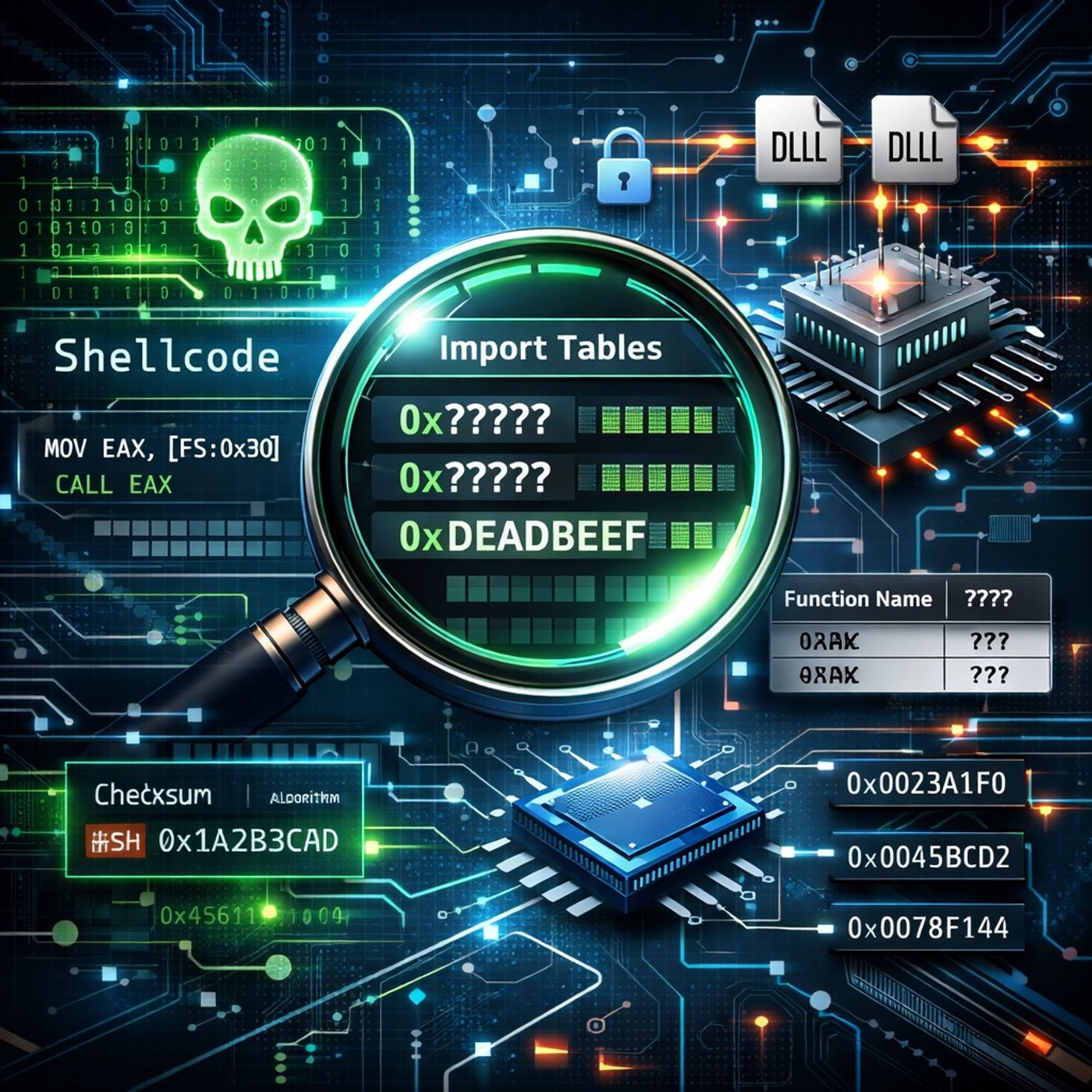
CyberCode AcademyCourse 20 - Malware Analysis: Identifying and Defeating Code Obfuscation | Episode 4: Dynamic API Resolution: Walking the PEB and ParsingIn this lesson, you’ll learn about:Why Malware Builds Its Own Import TablesHow bypassing static, dynamic, and runtime linking hides API usage from analysis tools.Why this technique is especially valuable for shellcode, which executes without a normal Windows loader.How custom API resolution breaks automated inspection and signature-based detection.Locating System Libraries via the PEBAccessing the Process Environment Block (PEB) through the FS register (offset 0x30).Navigating PEB_LDR_DATA to enumerate loaded modules.Walking linked lists such as...
2026-01-2816 min
CyberCode AcademyCourse 20 - Malware Analysis: Identifying and Defeating Code Obfuscation | Episode 3: Analyzing and Defeating String Obfuscation in NativeIn this lesson, you’ll learn about:String Obfuscation in Native Malware:Why string analysis is significantly harder in native code compared to interpreted languages.How compiled binaries store logic as machine instructions inside formats like the Portable Executable (PE), requiring reverse engineering rather than simple string extraction.Core Native String-Hiding Techniques:Stack Strings: Constructing strings dynamically on the stack using assembly instructions instead of storing them in readable sections of the binary.Checksum-Based Resolution: Hiding API and file names by comparing runtime-generated hashes against hard-coded ch...
2026-01-2715 min
CyberCode AcademyCourse 20 - Malware Analysis: Identifying and Defeating Code Obfuscation | Episode 2: Analyzing and Defeating Obfuscation in VBAIn this lesson, you’ll learn about:Obfuscation in Interpreted Code:Why interpreted languages like VBA and PowerShell are still heavily obfuscated despite being easier to access than native binaries.Common tactics such as junk instructions, string and object obfuscation, and nonsensical naming designed to slow analysis rather than prevent it.Analyzing Malicious VBA Macros:Extracting macro code from Office documents using stream-analysis tools.Identifying execution entry points such as AutoOpen to understand how and when malicious logic is triggered.Tracing string operations to un...
2026-01-2619 min
CyberCode AcademyCourse 20 - Malware Analysis: Identifying and Defeating Code Obfuscation | Episode 1: Defeating Malware Obfuscation: Fundamentals, ImpactIn this lesson, you’ll learn about:The Purpose of Code Obfuscation:Defining obfuscation as the practice of intentionally making software difficult to read or analyze.How malware authors use obfuscation to hide strings, functions, payloads, and command-and-control communication.The concept of “raising the bar” for analysts by increasing the time and effort required to understand malicious intent.Legitimate uses of obfuscation for protecting intellectual property in commercial software.Obfuscation Across Programming Architectures:The differences between native code (C, C++, Assembly) and interpreted or manage...
2026-01-2514 min
CyberCode AcademyCourse 19 - Ultimate Rust Crash Course | Episode 5: Rust Concurrency Fundamentals: Closures, Threads, and Channel CommunicationIn this lesson, you’ll learn about:Functional Programming with Closures:Defining closures as anonymous functions that capture values from their surrounding scope.Using closures with iterator methods like map, filter, and fold to transform data.The difference between borrowing closures and move closures, and why move semantics are required for safe multi-threaded execution.Multi-threaded Execution in Rust:Spawning threads with thread::spawn and running closures as thread entry points.Using join handles to wait for thread completion and handle potential panics.Understanding pe...
2026-01-2414 min
CyberCode AcademyCourse 19 - Ultimate Rust Crash Course | Episode 4: Rust Foundations: Structs, Traits, CollectionsIn this lesson, you’ll learn about:Data Organization with Structs and Traits:Using structs to group data fields, methods, and associated functions.Defining shared behavior with traits instead of inheritance.Writing generic functions that operate on any type implementing a required trait.Using default trait implementations to share common behavior without repetitive code.Managing Data with Standard Collections:Vectors (Vec): Dynamic lists or stacks for storing items of the same type.HashMaps: Key–value storage with efficient lookup and removal.Sp...
2026-01-2316 min
CyberCode AcademyCourse 19 - Ultimate Rust Crash Course | Episode 3: Rust Fundamentals: Mastering Ownership, References, and BorrowingIn this lesson, you’ll learn about:Ownership and Memory Management in Rust:How Rust guarantees memory safety without a garbage collector.The difference between stack and heap memory and how data lifecycles are managed.The Mechanics of Ownership:Rust’s three core ownership rules:Every value has a single owner.Only one owner exists at a time.Values are dropped immediately when the owner goes out of scope.The distinction between moving values (invalidating the original variable) and cloning valu...
2026-01-2210 min
CyberCode AcademyCourse 19 - Ultimate Rust Crash Course | Episode 2: Rust Core Foundations: Data Types, Control Flow, and String HandlingIn this lesson, you’ll learn about:Core Data Representations in Rust:Scalar types: integers (signed i and unsigned u), floating-point types (f32, f64), booleans, and Unicode char values.Compound types: tuples (accessed via indexing or destructuring) and fixed-size arrays stored on the stack, along with their practical limits.Project Organization and Reusability:Moving logic into a library file (lib.rs).Exposing functions with the pub keyword and importing them using use statements.Control Flow and Program Logic:Using if as an ex...
2026-01-2112 min
CyberCode AcademyCourse 19 - Ultimate Rust Crash Course | Episode 1: Rust Programming Foundations: From Cargo Tooling to Core Syntax and ModulesIn this lesson, you’ll learn about:The Rust Ecosystem and Tooling:Using Cargo as Rust’s package manager, build system, and documentation tool.Creating projects with cargo new, managing dependencies in Cargo.toml, and running code with cargo run.Understanding the difference between debug builds and optimized release builds.Variables and Constants:Declaring variables with let in a strongly typed language with type inference.Rust’s default immutability model and using mut for mutable values.Defining constants (const) with explicit types and co...
2026-01-2013 min
CyberCode AcademyCourse 18 - Evading IDS Firewalls and Honeypots | Episode 6: Mastering Malware Evasion: Stealth, Obfuscation, and Anti-AnalysisIn this lesson, you’ll learn about:Evading Initial Detection:Payload Obfuscation: Encoding payloads multiple times to cloak them from IDS detection.Benign Carrier Injection: Hiding malicious code inside legitimate scripts (e.g., Python Base64 payloads).Custom Packaging: Using packers to compress or encrypt malware, creating unique fingerprints that bypass signature-based detection.Post-Penetration Stealth:Fileless Attacks: Running scripts directly in memory via tools like PowerShell, avoiding disk storage.Folder Cloaking: Hiding directories using CLSID entries and desktop.ini files.Alternate Data Streams (AD...
2026-01-1912 min
CyberCode AcademyCourse 18 - Evading IDS Firewalls and Honeypots | Episode 5: Intrusion Detection and Prevention: Strategies, Tools, and IntelligenceIn this lesson, you’ll learn about:Foundations of Intrusion Defense:Multi-layered defense-in-depth strategies using models like SAPSA.Difference between Intrusion Detection Systems (IDS), which alert operators, and Intrusion Prevention Systems (IPS), which can actively block threats.The challenge of balancing false positives vs. false negatives in threat detection.Detection Methodologies:Signature-based detection: Matches traffic against known attack patterns with regularly updated signatures.Anomaly detection: Builds models of normal traffic to detect deviations, including protocol and statistical anomalies.Perimeter and Access Control:...
2026-01-1818 min
CyberCode AcademyCourse 18 - Evading IDS Firewalls and Honeypots | Episode 4: Advanced Application Security: WAFs, API Gateways, and Honeypot TrapsIn this lesson, you’ll learn about:Web Application Firewalls (WAFs):Protecting the application layer by inspecting HTTP/HTTPS and WebSocket traffic.Breaking SSL encryption to detect threats using malware signatures and logic-based anomaly detection.Deployment options: hardware, software, or cloud services; open-source examples like ModSecurity.API Gateways and Microservices Security:Acting as proxies between subscribers and backend services to prevent attacks such as cross-site scripting (XSS).Managing API keys, documentation, and subscriber catalogs.Practical configuration: using management consoles to create users an...
2026-01-1710 min
CyberCode AcademyCourse 18 - Evading IDS Firewalls and Honeypots | Episode 3: Network Emulation and Security Defense: Deploying Cisco ASA and Kali LinuxIn this lesson, you’ll learn about:GNS3 Platform Foundation and Image Integration:Installing GNS3 Windows All-in-One and preparing the environment for professional network emulation.Importing manufacturer-specific device images (e.g., Cisco 3745 router, ASA firewall) to run actual device code instead of generic simulators.Building a Routed Network:Configuring IP addresses and routing paths on Cisco routers.Calculating idle time to optimize host CPU usage during emulation.Establishing a functional network backbone before adding security layers.Deploying the Cisco ASA Firewall:...
2026-01-1610 min
CyberCode AcademyCourse 18 - Evading IDS Firewalls and Honeypots | Episode 2: Configuring a Cisco PIX Firewall to Establish a Secure EnclaveIn this lesson, you’ll learn about:Initializing and Configuring a Cisco PIX Firewall:Physical and software setup: connecting to the RS232 console port via USB-to-serial adapter and using Putty.Navigating the Cisco IOS CLI: moving from basic prompts to privilege mode and the configuration environment (config t).Administrative tasks:Checking existing configurations with show configure.Creating local user accounts and setting privilege levels.Naming and managing interfaces, identifying Ethernet 0 as "outside" (WAN) and Ethernet 1 as "inside" (internal network).Network Architecture and Co...
2026-01-1512 min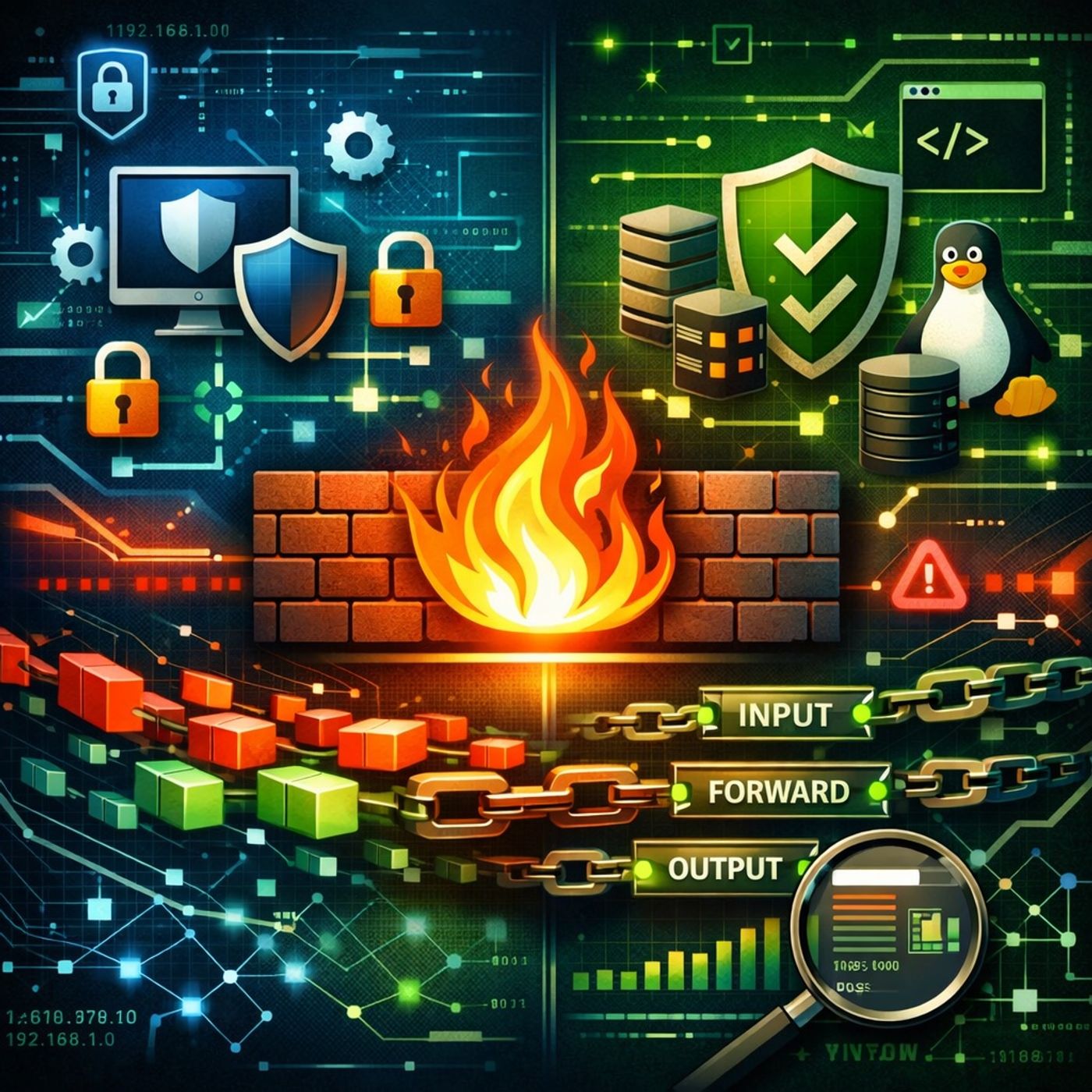
CyberCode AcademyCourse 18 - Evading IDS Firewalls and Honeypots | Episode 1: Firewall Management and Security Testing: From Windows and Linux ConfigurationsIn this lesson, you’ll learn about:Firewall Fundamentals and Windows Configuration:What a firewall is and how it mediates between network zones using rules based on source/destination addresses and ports.Windows Firewall network profiles: Domain, Private, and Public.Key practices:Application Control: Allow specific programs, block vulnerable protocols like SMB/RPC on public networks.Advanced Rules: Configure IPSec for authenticated/encrypted transmissions; set granular inbound/outbound rules.Logging and Analysis: Use tools to convert large text logs into graphical summaries to detect an...
2026-01-1413 min
CyberCode AcademyCourse 17 - Computer Network Security Protocols And Techniques | Episode 9: Foundations of VPN Security: The IPsec Protocol SuiteIn this lesson, you’ll learn about:The fundamentals of VPNs and IPsecKey management and Security Associations (SA)IPsec protocols: AH vs. ESPOperational modes: Transport vs. Tunnel1. VPNs and IPsec FundamentalsA VPN (Virtual Private Network) creates a secure, logical tunnel over the public internet, allowing private communication without costly dedicated lines.IPsec (Internet Protocol Security) operates at the network layer and supports both IPv4 and IPv6.Security services provided by IPsec include:Access Control – Only authorized user...
2026-01-1312 min
CyberCode AcademyCourse 17 - Computer Network Security Protocols And Techniques | Episode 8: TLS/SSL Foundations: From Conceptual "Toy" Models to ActualIn this lesson, you’ll learn about:The purpose and security objectives of TLS/SSLHow a simplified "Toy TLS" model illustrates key conceptsHow actual TLS works, including handshake, key derivation, and record protocolsThe role of cipher suites and secure data transfer1. Core Security Services of TLS/SSL TLS (Transport Layer Security) is designed to protect communications over insecure networks. Its four main security services are:Authentication – Verify the identities of client and server using digital certificates.Encryption – Protect data from being...
2026-01-1213 min
CyberCode AcademyCourse 17 - Computer Network Security Protocols And Techniques | Episode 7: Understanding Pretty Good Privacy (PGP) for Secure EmailIn this lesson, you’ll learn about:What PGP is and where it operates in the network stackHow PGP secures email confidentiality and authenticityThe three-part structure of a PGP-secured messageHow session keys, public keys, and digital signatures work togetherThe cryptographic algorithms supported by PGPIntroduction Pretty Good Privacy (PGP) is an application-layer security protocol designed to protect email communications. It combines symmetric encryption, public key cryptography, and digital signatures to ensure that messages remain confidential, authentic, and tamper-proof during transmission. How PGP Se...
2026-01-1111 min
CyberCode AcademyCourse 14 - Wi-Fi Pentesting | Episode 6: WPA/WPA2 Cracking Introduction: Exploiting the WPS VulnerabilityIn this lesson, you’ll learn about:The fundamental difference between WEP and WPA/WPA2 securityWhy WPA and WPA2 are significantly harder to crack than WEPThe role of TKIP and CCMP in protecting data integrityWhat WPS (Wi-Fi Protected Setup) is and why it introduces riskHow the WPS PIN design weakens WPA/WPA2 securityWhy push-button authentication (PBC) blocks WPS PIN attacksWhy testing for WPS vulnerabilities is the first step in WPA/WPA2 assessmentsTransition from WEP to WP...
2025-12-1910 min
CyberCode AcademyCourse 14 - Wi-Fi Pentesting | Episode 1: Setting Up the Virtual Hacking Lab: VirtualBox and Kali LinuxIn this lesson, you’ll learn about:How to set up a complete virtual hacking labThe role of VirtualBox in safe security testingInstalling and configuring Kali Linux as a virtual machineUnderstanding NAT networking in virtual environmentsNavigating the Kali Linux desktop and workspace systemBuilding a Virtual Hacking Lab with VirtualBox & Kali Linux Installing VirtualBox VirtualBox is a virtualization platform that allows you to run multiple operating systems on a single physical machine (host), including Windows, macOS, and Linux. Key benefits:...
2025-12-1409 min
CyberCode AcademyCourse 11 - Mobile Forensics Fundamentals | Episode 1: Legal Authority, Acquisition Procedures, and Examiner ResponsibilitiesIn this lesson, you’ll learn about: • The purpose and scope of mobile forensicsIntroduction to the course structure, online training logistics, and preparation for the Certified Mobile Forensic (CMF) exam.Overview of provided resources such as forensic report templates, chain-of-custody forms, and research platforms like Packetstorm and Exploit-DB.• Unique technical challenges in mobile device acquisitionWhy mobile forensics is inherently less forensically sound due to unavoidable data alteration when powering on or connecting devices.The constant arms race with advanced device encryption and OS security patches that can rapidl...
2025-11-2912 min
CyberCode AcademyCourse 9 - Internet of Things Security | Episode 3: IOT Security: Challenges, Vulnerabilities, and Real-World Cyber-Physical AttacksIn this lesson, you’ll learn about:The major security challenges and market pressures affecting IoTCommon vulnerabilities and design flaws in IoT devicesReal-world attack case studies demonstrating the risks of insecure IoT systemsBest practices and recommendations for implementing secure IoT solutionsI. Security Challenges and Market PressuresCyber Insurance: The rapid growth of cyber insurance highlights the financial and reputational risks associated with cyber-attacks and IoT data breaches.Balancing Functionality and Security: IoT devices are often rushed to market, creating a...
2025-11-2110 min
CyberCode AcademyCourse 9 - Internet of Things Security | Episode 2: UK Legislation, Data Privacy (GDPR), and Liability for Drones and Autonomous VehiclesIn this lesson, you’ll learn about:The rationale for applying legal frameworks to IoTPrivacy, security, liability, contractual, and criminal concerns in IoTExisting UK laws relevant to IoT securityEuropean Union regulations, particularly GDPREmerging regulatory responses to new IoT technologies, such as drones and autonomous vehicles1. Why Law Applies to the IoTPrivacy Concerns: Legal frameworks address collection, storage, and usage of personal data from connected devices, like smart fridges.Physical and Cyber Security: Laws cover malicious acts or...
2025-11-2013 min
CyberCode AcademyCourse 8 - Penetration Testing OSINT Gathering with Recon-ng | Episode 1: Recon-ng Installation, Shell Exploration and Data ManagementIn this lesson, you’ll learn about: Recon-ng Installation, Shell Navigation, and Data Management for Penetration Testing 1. Installation and Environment Setup Recon-ng is a powerful OSINT framework designed for information gathering in penetration testing. Installation options:Linux (Kali Linux): Pre-installed, straightforward to use.Other Linux (Ubuntu): Clone the repository using Git from Bitbucket; requires Python 2 (Python 3 not supported).Windows or Mac: Run via Docker or a VirtualBox VM.Dependencies: Install Python packages via pip install -r requirements.API Credentials: Initial launch may show errors; these are addressed when configuring mo...
2025-11-1509 min
CyberCode AcademyCourse 7 - Secure SDLC (Software Development Life Cycle) | Episode 8: Phase 8: Collaboration, Maturity Models, and Strategic PlanningIn this lesson, you’ll learn about: Phase 8 — Collaborative Model & Continuous Security Improvement 1. Overview Phase Eight of the Secure SDLC emphasizes the Collaborative Model, which focuses on addressing security challenges in distributed and enterprise environments. Collaboration strengthens security by bridging gaps between security, IT, and operations teams, breaking down silos, and integrating defense-in-depth strategies. Key success factors include strong stakeholder support for integration, budgeting, and cross-functional alignment. 2. Team Composition and Benefits Security is an ecosystem involving:Macro-level players: Governments, regulators, and standards organizations.Micro-level players: End-users, corporations, and security professionals.Benefits of strong team...
2025-11-1412 min
CyberCode AcademyCourse 7 - Secure SDLC (Software Development Life Cycle) | Episode 4: Integrating Secure Coding, Code Review, and Application Security TestiIn this lesson, you’ll learn about: Secure Build — SDLC Phase 4 1. Overview Secure Build is the practice of applying secure requirements and design principles during the development phase. Its goal is to ensure that applications used by the organization are secure from threats. Key Participants:Software developersDesktop teamsDatabase teamsInfrastructure teams2. Core Development Practices Secure Coding GuidelinesDevelopers follow standardized rules to ensure threat-resistant code.Security libraries in frameworks are used for critical tasks, such as:Input validationAuthentication
2025-11-1410 min
CyberCode AcademyCourse 6 - Network Traffic Analysis for Incident Response | Episode 6: Investigating RATs, Worms, Fileless, and Multi-Stage Malware VariantsIn this lesson, you’ll learn about: Advanced Malware Traffic Analysis — how to detect, decode, and investigate RATs, fileless exploits, worms, and multi-stage infections using real network captures. 1. Remote Access Trojans (RATs) WSH RATUses plaintext beaconing for C2 → very easy to identify.Key data exfiltrated in HTTP requests:Unique device IDComputer nameUsername (“admin”)RAT version (often hidden in the User-Agent field)NJRATShows extensive data exfiltration:Windows XP build infoCPU type (Intel Core i7)Username...
2025-11-1410 min
CyberCode AcademyCourse 6 - Network Traffic Analysis for Incident Response | Episode 4: Mapping, Decoding, and Decrypting Network Traffic IntelligenceIn this lesson, you’ll learn about: Intelligence Collection from Network Traffic Captures — focusing on anomalies, attacker behavior, and extracting actionable intelligence. 1. Network Mapping & VisualizationHumans struggle with long lists → visualizing traffic helps you feel the environment.Tools like pcap viz generate maps at different OSI layers:Layer 3 (IP Addresses)Shows which machines talk to each other.Helps detect unusual communication paths.Layer 4 (TCP/UDP Ports)Shows communication between applications.Unusual ports (e.g., 900) may indicate custom or C2 protocols.2. Content Deobfu...
2025-11-1411 min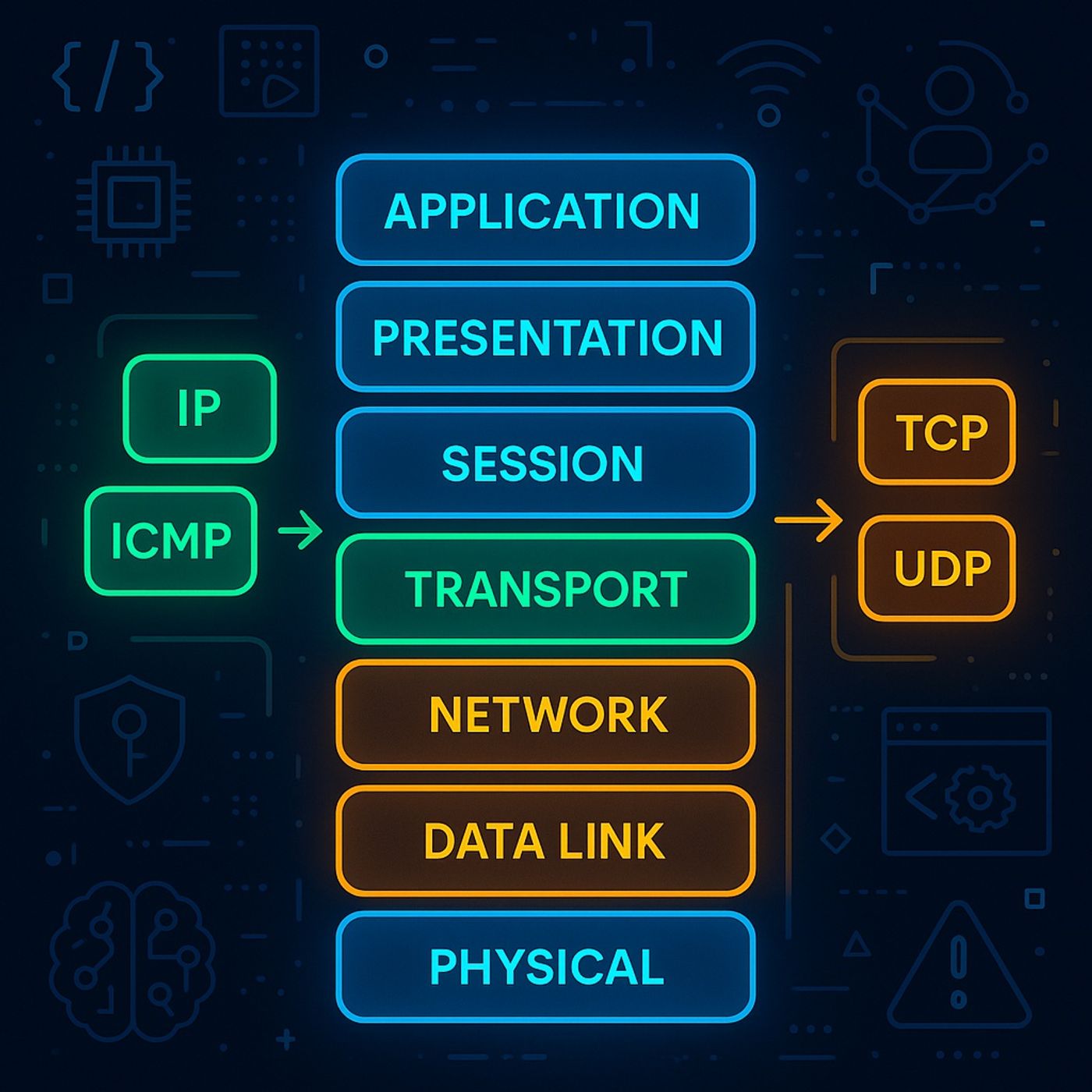
CyberCode AcademyCourse 6 - Network Traffic Analysis for Incident Response | Episode 1: Fundamentals of Networking: The OSI Model and Essential ProtocolsIn this lesson, you’ll learn about:The core networking concepts required before beginning any network traffic analysis.The relationship between the OSI model, low-level protocols, and application-level protocols, and how they shape the behaviour of traffic you’ll examine in a tool like Wireshark.How to recognize common protocol behaviours at a high level so you can later understand patterns, anomalies, and security-related findings during analysis.1. The OSI Model and the Network Stack (high-level foundation)The OSI model divides networking functionality into structured layers.Hardware-oriented layers:
2025-11-1411 min
CyberCode AcademyCourse 5 - Full Mobile Hacking | Episode 2: Setting Up the iPhone Simulator on Mac OS using Xcode for Mobile Penetration TestingIn this lesson, you’ll learn about:iPhone Simulator on macOS — purpose & use: running a full iOS simulator via Xcode to test, debug, and perform mobile app analysis without physical hardware.Prerequisites: a Mac running macOS and a working installation of Xcode (installed from the App Store; note: large download).Launching the Simulator: open Xcode, load or create a project, then use Xcode → Open Developer Tool → Simulator to start a virtual device.Selecting device & OS: choose device models (e.g., iPhone 12 Pro Max) and iOS system images (e.g., iOS 14.1) from the simu...
2025-11-1308 min
CyberCode AcademyCourse 5 - Full Mobile Hacking | Episode 1: Android Studio: Running AVDs and Installing Apps on WindowsIn this lesson, you’ll learn about:Setting up Android Studio on Windows:Launching Android Studio (built on IntelliJ) for developing, testing, and examining APKs.Verifying proper installation of the Android SDK to ensure access to essential developer tools.Creating and managing Android Virtual Devices (AVDs):Using the AVD Manager to configure emulators by selecting:Platform type (e.g., Phone)Specific device model (e.g., Pixel 3)System image (e.g., Android 10 / Q)Launching the configured AVD and accessing advanced options vi...
2025-11-1310 min
CyberCode AcademyCourse 4 - Learning Linux Shell Scripting | Episode 9: Process Management, Scheduling, User Control, and Scripting UtilitiesIn this lesson, you’ll learn about:Process and signal management:Understanding Linux processes and gathering details using ps, top (for CPU-intensive tasks), and pgrep (to find PIDs).Analyzing process attributes such as PID, user, memory usage, and CPU time, and learning to filter and format outputs.Managing processes through signals — terminating with kill (default SIGTERM) or force-stopping using SIGKILL.Implementing custom signal handling in scripts using trap to gracefully manage interrupts like SIGINT (Ctrl+C).System monitoring and communication:Retrieving system details including host...
2025-11-1309 min
CyberCode AcademyCourse 4 - Learning Linux Shell Scripting | Episode 8: System Monitoring, Performance Measurement, and Log ManagementIn this lesson, you’ll learn about:Resource monitoring & optimization:Using df and du to calculate disk usage and free space, display results in human-readable form (-H), summarize totals, exclude directories, and locate the largest files with du | sort.Tracking disk I/O activity with iotop in both interactive and script modes.Checking filesystem integrity using fsck, with options to simulate or automatically repair issues.Measuring and tuning system power usage with powertop, generating HTML reports, and adjusting power-saving settings.Performance measurement & process analysis:Me...
2025-11-1312 min
CyberCode AcademyCourse 4 - Learning Linux Shell Scripting | Episode 7: Comprehensive Network Diagnostics and Remote Host ManagementIn this lesson, you’ll learn about:Network connectivity & diagnostics: using ping to verify reachability and measure RTT (use -c to limit packets, check exit status), and traceroute to map hops. Techniques for discovering live hosts via parallel ping scripts or fping for fast network sweeps.Secure remote access & automation (SSH): running remote commands securely, enabling compression (-C), X11 forwarding for GUI apps, and setting up passwordless login with ssh-keygen + authorized_keys for automated scripts and non-interactive sessions.File transfer methods: classic FTP/lftp scripting, and secure alternatives over SSH — SCP, SFTP, and...
2025-11-1313 min
CyberCode AcademyCourse 4 - Learning Linux Shell Scripting | Episode 6: The Backup PlanIn this lesson, you’ll learn about: The Backup Plan — Data Management, Archiving, and Backup AutomationThis section provides a deep dive into data management strategies, focusing on archiving, compression, specialized file systems, and automated backup solutions. It builds upon the previous lesson, where web interaction through shell scripting was introduced. 🗃️ Archiving Fundamentals • tar (Tape Archive):Create and manage archive files (“tarballs”).Perform operations like create, list, extract, append (-R), update (-u), and concatenate (-A).Use verbose output (-v), wildcards for file selection, and exclude unwanted directories (e.g., .git).• c...
2025-11-1316 min
CyberCode AcademyCourse 4 - Learning Linux Shell Scripting | Episode 5: Shell Scripting for Web Automation, Data Retrieval, and ParsingIn this lesson, you’ll learn about: Tangled Web — Automating Web Interaction with Shell ScriptingThis section focuses on how shell scripting and command-line tools can be used to interact with and automate web-related tasks. It explains how to retrieve, parse, send, and monitor web data using the HTTP protocol through utilities like wget, curl, and links. 🌐 Core Command-Line Utilities for Web Interaction • wget (Web Download Utility):Download files and web pages with options to resume interrupted downloads (-C) and set retry limits (-t).Control bandwidth usage (--limit-rate) and quotas (--quota, -Q).
2025-11-1314 min
CyberCode AcademyCourse 4 - Learning Linux Shell Scripting | Episode 4: Shell Text Processing: Mastering Utilities and Regular ExpressionsIn this lesson, you’ll learn about: 🧠 Core Concept: Text Processing in Unix/LinuxThis section, titled “Texting and Driving,” focuses on the art and science of text manipulation—a cornerstone of shell scripting. You’ll explore powerful utilities like grep, sed, awk (or ORC), and cut, all built around Regular Expressions (REs)—a miniature programming language for pattern matching across characters, words, lines, columns, and rows. 🔍 Core Utilities and Functions• Grep (Searching and Mining): Search for text patterns within files using features like:-E for extended regex, -o to show only matches...
2025-11-1317 min
CyberCode AcademyCourse 4 - Learning Linux Shell Scripting | Episode 3: Comprehensive Unix File and Directory Management UtilitiesIn this lesson, you’ll learn about: 📁 File Creation, Size, and Storage Management• Generating Files of Any Size: Learn to use the low-level dd command to create files of specific sizes using block size (BS) and count parameters—ideal for test data or loopback file systems.• Loopback File Systems: Understand how to create virtual disk images that can be mounted like physical drives using mount -o loop, and how to partition them with tools like fdisk.• Generating Blank Files in Bulk: Use touch to create empty files or modify timestamps, with examples...
2025-11-1315 min
CyberCode AcademyCourse 4 - Learning Linux Shell Scripting | Episode 2: Essential Unix/Linux Command Line Utilities and Advanced TechniquesIn this lesson, you’ll learn about:Text & File Management BasicsUsing cat to read, display, and concatenate files, including combining stdin and file input.Cleaning up file output (removing blank lines, showing tabs as ^I).Splitting files with split (by size or line count) and csplit (by context or text match).Creating temporary files/directories using mktemp, stored securely in /tmp.Manipulating filenames via shell operators (%, %%, #, ##) to extract extensions or URL parts.Performing bulk renaming/moving with find, mv, and rename using regex or su...
2025-11-1313 min
CyberCode AcademyCourse 4 - Learning Linux Shell Scripting | Episode 1: Essential: Utilities, Variables, I/O, and Program FlowIn this lesson, you’ll learn about:Shell I/O & printing: echo (flags like -n), printf for formatted output, colored text via escape sequences, and printing alignment/rounding.File descriptors & redirection: stdin/stdout/stderr (0/1/2), >, >>, 2>, &>, piping |, tee, /dev/null, and creating custom FDs with exec.Reading input & command output: read (including fixed-char reads), capturing command output via $(...) or backticks, and assigning pipeline results to variables.Variables & environment: scalar assignment, environment variables (env), key system vars (PATH, UID, PS1), checking string length, and prepending paths.Arrays: indexed arrays and associative arrays (Ba...
2025-11-1317 min
CyberCode AcademyCourse 3 - Mastering Nuclei for Bug Bounty | Episode 8: Nuclei File-Based Templates: Implementing Content Matching and Secret ExtractionIn this lesson, you’ll learn about:Nuclei file-based templates — purpose: extending Nuclei beyond HTTP to scan local files and codebases for sensitive content (hard‑coded secrets, API keys, credentials, tokens).File block basics: replace requests with a file: block in the template to target files instead of sending network requests.Targeting options:extensions: specify file types to scan (e.g., txt, py).- or hyphen all / match all patterns to search across all extensions.max-size: limit (bytes) to skip very large files (e.g., 1024) and save r...
2025-11-1208 min
CyberCode AcademyCourse 3 - Mastering Nuclei for Bug Bounty | Episode 7: Exploiting Business Logic Flaws and Achieving Multiple RedemptionsIn this lesson, you’ll learn about:Race conditions — definition & impact: concurrency bugs that occur when multiple requests/threads read/write the same resource simultaneously; often business‑logic flaws (e.g., redeeming a single‑use coupon multiple times) that can cause direct financial loss.Common targets & scenarios: single‑use tokens, gift cards, coupon redemptions, inventory decrements, account balance updates, and other stateful operations that must be atomic.Detection approaches:Identify endpoints that perform state changes (POST/PUT) with weak server‑side atomicity.Look for operations lacking proper locking, transactional guarantees...
2025-11-1209 min
CyberCode AcademyCourse 3 - Mastering Nuclei for Bug Bounty | Episode 6: Nuclei Fuzzing Techniques: Cluster Bomb, Pitchfork, and Battering RamIn this lesson, you’ll learn about:Fuzzing with Nuclei — purpose: using custom YAML templates to brute-force or enumerate inputs (usernames, passwords, endpoints, parameters) to find misconfigurations, default creds, or hidden functionality.Template components for fuzzing: define raw request, payloads (wordlists), payload positions, attack type, and matchers (e.g., word: success + status: 200) that mark a successful hit.Cluster‑Bomb (combinatorial) fuzzing:Mechanism: one position is fixed while another iterates through its entire list; repeats for each fixed value (good for username × password lists).Use case: test many passwords per given u...
2025-11-1209 min
CyberCode AcademyCourse 3 - Mastering Nuclei for Bug Bounty | Episode 5: Matching Conditions in the Body and HeaderIn this lesson, you’ll learn about:POST-based matchers in Nuclei — overview: moving from simple GET checks to POST requests that include payloads; used when the vulnerable endpoint expects body data.Matching in the body:Set request method: post and provide body: (key=value pairs, e.g., search=apple or YAML-style search: apple).Create matchers that look for a word (e.g., apple) in the response body and typically assert a status code (e.g., status: 200) for a confident hit.Matching in response headers:Use part: header in t...
2025-11-1210 min
CyberCode AcademyCourse 3 - Mastering Nuclei for Bug Bounty | Episode 4: Headers, Body, Raw Requests, and Response MatchingIn this lesson, you’ll learn about:Custom headers in templates: define headers: as key–value pairs (e.g., User-Agent, X-Forwarded-Host, or custom headers like X-Test: hello world) to tag or alter requests.Request bodies: use the body: block to send POST/PUT payloads (e.g., search=apple) required by many vulnerable endpoints.Cookie reuse / session handling: enable cookie reuse: true to persist cookies across requests when the target requires session continuity.Raw requests: use the raw: block to supply an exact HTTP request (as copied from Burp) supporting methods like...
2025-11-1212 min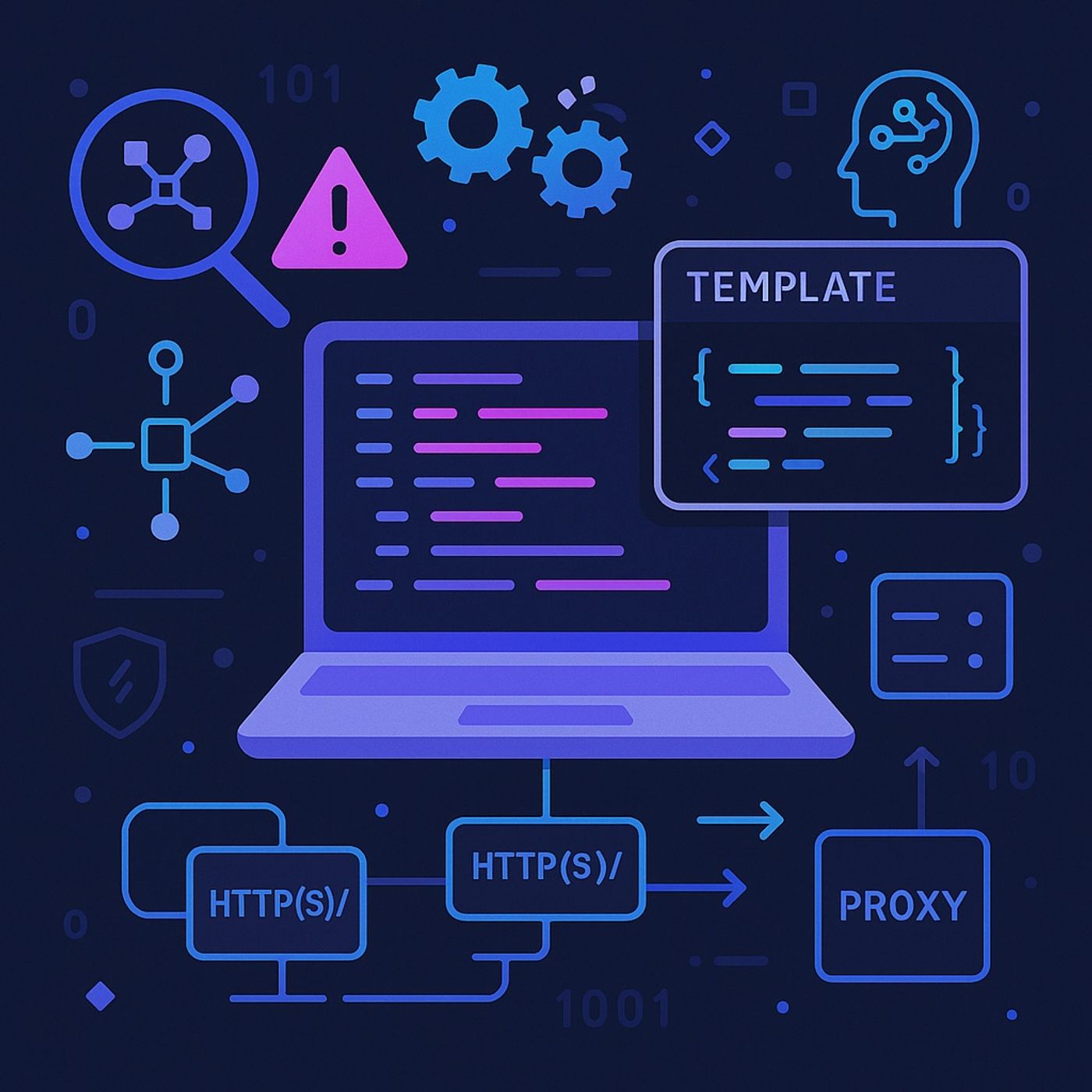
CyberCode AcademyCourse 3 - Mastering Nuclei for Bug Bounty | Episode 3: Scanning Lists, Metrics, Template Writing, and ProxyingIn this lesson, you’ll learn about:Feeding targets to Nuclei: enumerating subdomains (e.g., Subfinder), validating live hosts with HTTPX, and supplying host lists to Nuclei via STDIN or the -l flag; importance of prepending http:// / https:// when needed.Tool maintenance: updating Nuclei from the terminal using nuclei -update to get the latest templates and fixes.Real-time monitoring: enabling -metrics to view live scan stats (duration, errors, matches, total requests) in your browser (e.g., localhost:9092/metrics).Custom template authoring — structure & blocks: building id and info blocks (name, author, seve...
2025-11-1213 min
CyberCode AcademyCourse 3 - Mastering Nuclei for Bug Bounty | Episode 2: Controlling Scans, Traffic Tuning, and Custom Template DevelopmentIn this lesson, you’ll learn about:Controlling Nuclei template selection — include templates by tags (e.g., xss, tech, enginex), severity (info, low, medium, high, critical), or author; and exclude specific templates/tags/severity with exclusion flags to avoid noisy results.Performance tuning & safe scanning — tune rate-limit (requests/sec), bulk-size (parallel hosts per batch), and -C (concurrency for templates) to avoid overwhelming targets or triggering WAFs; prefer conservative defaults for bug‑bounty targets.Request identification & tracking — add custom HTTP headers with -H / --header to tag traffic (useful for program owners and triage).Persiste...
2025-11-1213 min
CyberCode AcademyCourse 3 - Mastering Nuclei for Bug Bounty | Episode 1: Nuclei: Installation, Template Setup, and First ScanIn this lesson, you’ll learn about:Nuclei — definition & purpose: a template‑based automated vulnerability scanner written in Go, designed for fast, customizable scanning, mass hunting, and CI/CD integration.Claims & note: community descriptions sometimes state very low false‑positive rates; always validate findings in-scope before reporting.Supported template types: HTTP, DNS, TCP, and file‑based templates (organized by categories like CVEs, misconfiguration, takeovers, fuzzing).Templates are the core: templates are YAML files that define checks; most are community‑maintained in the official GitHub repo and can be auto‑downloaded or installed m...
2025-11-1211 min
CyberCode AcademyCourse 2 - API Security Offence and Defense | Episode 4: Aggressive Attacks, Traditional Vulnerabilities and Exploitation of Staging APIsIn this lesson, you’ll learn about:Aggressive Attacks on APIsDenial of Service (DoS): Flooding servers to disrupt service; Layer 7 attacks mimic normal users.Brute Force: Guessing secrets like passwords, JWTs, tokens, or 2FA codes.Mitigation: Rate limiting, authentication for heavy processes, short expiration for secrets, complex codes, caching, load balancing, restricting direct IP access.Targeting Non-Production APIsDevelopment, staging, and deprecated APIs often lack proper security.Risks include exposed debugging info, weaker policies, and connection to production databases.Mitigation: Delete de...
2025-11-1218 min
CyberCode AcademyCourse 2 - API Security Offence and Defense | Episode 3: OAuth Protocol: Standards, Authorization Flows, Attacks, and Real-World Case StudyIn this lesson, you’ll learn about:OAuth — purpose & distinction: an authorization protocol that grants third-party apps scoped access to user resources without sharing user credentials; it’s about authorization, not authentication.OAuth 1.0a — core concepts & flows:Concepts: Consumer Key/Secret, Nonce, Signed requests (HMAC‑SHA1).Flows: one‑legged (trusted apps), two‑legged (token exchange), and three‑legged (adds user approval and a verifier; e.g., Twitter sign‑in).OAuth 2.0 — concepts & common flows:Concepts: Client ID/Secret, Scope (permissions), Response Type, State (CSRF defense).Flows: two‑legged (machine‑...
2025-11-1210 min
CyberCode AcademyCourse 2 - API Security Offence and Defense | Episode 2: Authentication Methods and Security: Basic, Digest, and JSON Web Tokens (JWT)In this lesson, you’ll learn about:Authentication & Authorization Fundamentals:Authentication: Identifying the user.Authorization: Defining what actions an authenticated user can perform.Stateful vs. Stateless:Stateful: Session cookies store session data on the server.Stateless: Tokens are validated without server-side session storage.Basic and Digest Authentication:Basic Auth: HTTP-based, sends Base64-encoded credentials; vulnerable because Base64 is easily decoded.Digest Auth: Adds MD5 hashing with a nonce to protect credentials; less common.Attacks on Traditional Methods:...
2025-11-1212 min
CyberCode AcademyCourse 2 - API Security Offence and Defense | Episode 1: API Fundamentals: Standards, Versioning, and Investigative TechniquesIn this lesson, you’ll learn about:APIs — Definition & Evolution:API (Application Programming Interface): A mechanism originally designed to allow software to access operating system libraries; now primarily used for data exchange between servers, web apps, mobile apps, and frontend frameworks like React or Vue.Evolution of API standards:XML-RPC: Early XML-based method, complex and insecure.SOAP (Simple Object Access Protocol): Standardized XML-based protocol, widely adopted but rigid.REST (Representational State Transfer): Modern standard, relies on HTTP methods (GET, POST, PUT, DELETE) and commonly uses JSON or X...
2025-11-1210 min
CyberCode AcademyCourse 1 - BurpSuite Bug Bounty Web Hacking from Scratch | Episode 12: Cookies, Sessions, and Session Management Manipulation VulnerabilityIn this lesson, you’ll learn about:HTTP is stateless: every request is independent, so web apps must implement state mechanisms to track users.Cookies — client-side state: small text files (≈4 KB) stored in the browser holding prefs, auth data, and often session IDs; key attributes: Domain, Path, Expires, Secure (HTTPS-only), and HttpOnly (not accessible to JavaScript).Sessions & Session IDs — server-side state: session data lives on the server and is referenced by a unique, high-entropy Session ID (long, random alphanumeric string) sent to the client; sessions are generally more secure because sensitive data is not expo...
2025-11-1213 min
CyberCode AcademyCourse 1 - BurpSuite Bug Bounty Web Hacking from Scratch | Episode 11: Injection and Directory Path Traversal Attacks.In this lesson, you’ll learn about:Critical Web Security Vulnerabilities — Overview: Focus on Injection Attacks and Directory Path Traversal Attacks, two high-risk categories in web applications.Injection Attacks — definition & mechanism:Occur when untrusted input is sent to an interpreter (SQL, OS commands, HTML, CSS, or JavaScript), altering program execution.Can lead to data theft, data loss, denial of service, or full system compromise.Types include:Client-side: Cross-Site Scripting (XSS), HTML injection, CSS injection.Server-side: SQL injection, command injection, CRLF injection.Requires input/output...
2025-11-1212 min
CyberCode AcademyCourse 1 - BurpSuite Bug Bounty Web Hacking from Scratch | Episode 10: XSS: Overview, Security Level Testing, and Real-World AttacksIn this lesson, you’ll learn about:Definition of Cross-Site Scripting (XSS):A client-side web vulnerability where an application executes user-supplied JavaScript instead of treating it as text. It typically occurs in user input areas such as search fields, comment boxes, or feedback forms.Main Types of XSS:Reflected XSS (Non-persistent):The malicious input is not stored in the database.It only affects users who execute the injected script (e.g., by clicking a crafted link).Commonly found in search or URL parameters....
2025-11-1217 min
CyberCode AcademyCourse 1 - BurpSuite Bug Bounty Web Hacking from Scratch | Episode 9: Understanding and Finding SQL Injection VulnerabilitiesIn this lesson, you’ll learn about:SQL Injection (SQLi) — definition & importance: what SQL is (Structured Query Language) and why data-driven apps are high-value targets for injection attacks.Core mechanism: how attackers inject malicious input into dynamic SQL statements (queries built from runtime parameters) to alter logic — e.g., commenting out parts of a query or appending always-true conditions.Types of SQLi: error-based, blind (boolean), time-based, and union-based injections — each exploits the DB engine differently and requires different discovery/exploitation techniques.Potential impact: full database disclosure (dumping data), modifying/inserting/deleting records...
2025-11-1211 min
CyberCode AcademyCourse 1 - BurpSuite Bug Bounty Web Hacking from Scratch | Episode 8: Exploiting Hidden Administrative Pages and Directory ListingIn this lesson, you’ll learn about:Security Misconfiguration — overview: a broad class of vulnerabilities caused by insecure defaults, incorrect application logic, or poorly documented configuration choices.Why it matters: misconfigurations often expose sensitive functionality or data and are frequently exploitable with low effort, making them high-impact risks.Secret administrative pages (hidden-by-obscurity):Developers sometimes “hide” admin pages by using obscure filenames (e.g., admin.php) instead of enforcing access controls.Attack technique: brute force or dictionary-based guessing of common admin filenames/paths (using tools like Burp Intruder).Demonstr...
2025-11-1211 min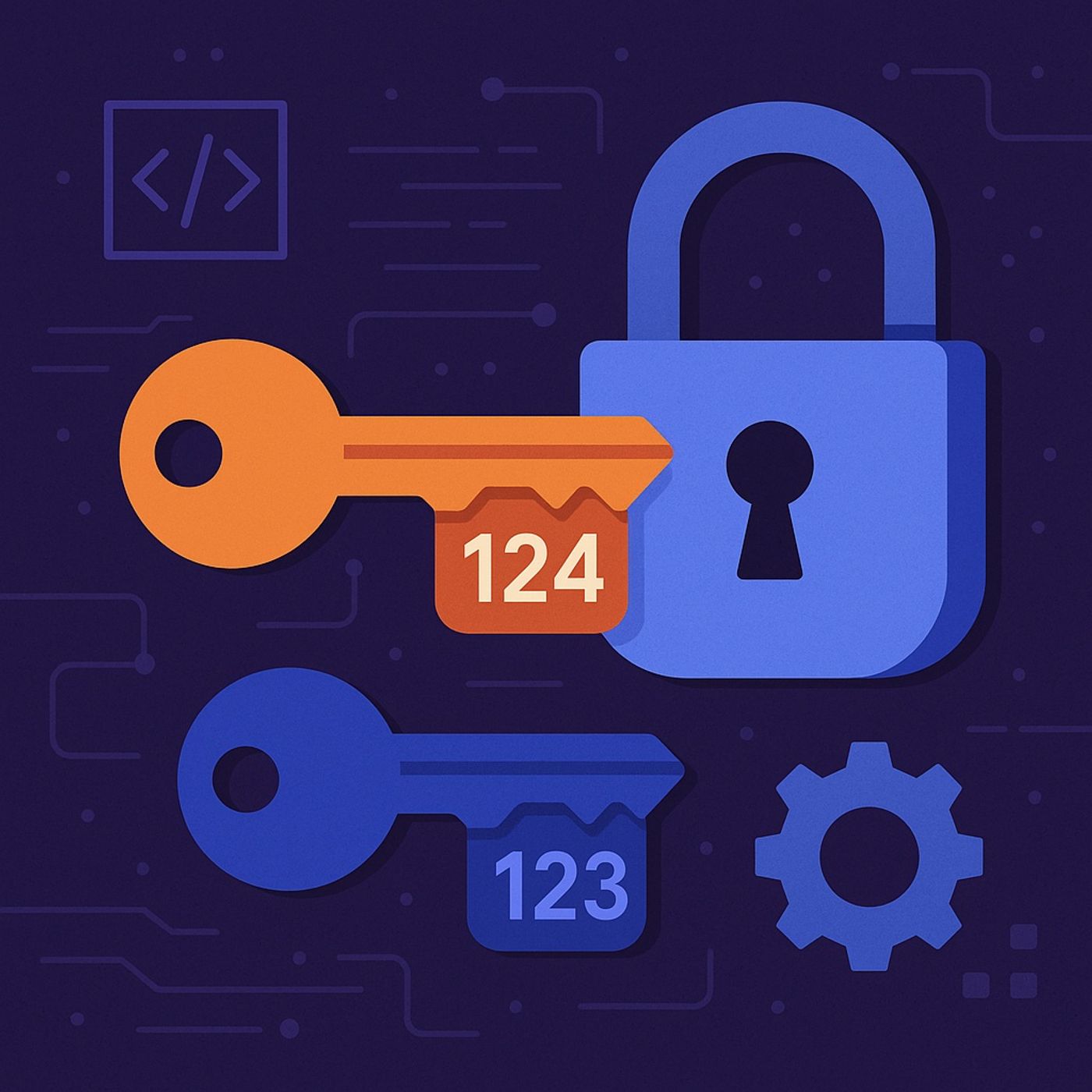
CyberCode AcademyCourse 1 - BurpSuite Bug Bounty Web Hacking from Scratch | Episode 7: Insecure Direct Object Reference (IDOR): Understanding, TestingIn this lesson, you’ll learn about:IDOR (Insecure Direct Object Reference) — definition: when user-supplied references (IDs) let attackers access or modify objects they’re not authorized to (files, records, accounts).Core mechanism: the app trusts the client-supplied identifier instead of enforcing authorization checks on the server side.Simple IDOR testing (numeric IDs): try adjacent or sequential IDs (e.g., /user=123 → /user=124) and watch for different responses.Automation of basic tests: use tools like Burp Intruder with a numeric payload (start/stop/step) and monitor response lengths/status for differences.Detect...
2025-11-1212 min
CyberCode AcademyCourse 1 - BurpSuite Bug Bounty Web Hacking from Scratch | Episode 6: Broken Authentication and Session Management: Exploits and DefensesIn this lesson, you’ll learn about:Broken Authentication and Session Management (BASM):A critical OWASP Top 10 vulnerability that arises from poor handling of user authentication and session controls.Common causes include developer negligence and insecure practices that allow attackers to hijack or reuse valid sessions.Key causes and developer mistakes:Exposing session IDs in the URL.Failing to implement proper session timeouts.Reusing the same session ID before and after login.Storing or transmitting session cookies insecurely, making them vulnerable to theft (e...
2025-11-1212 min
CyberCode AcademyCourse 1 - BurpSuite Bug Bounty Web Hacking from Scratch | Episode 5: Utilizing Burp Suite Decoder, Comparer, Sequencer, and Engagement ToolIn this lesson, you’ll learn about:Burp Decoder — purpose & features: decode/encode request and response content (URL, HTML, Base64, ASCIIhex, etc.); smart-decode that detects likely encodings automatically; useful for deobfuscating payloads and analyzing encoded data.Burp Comparer — purpose & uses: visually diff two pieces of content (requests/responses) to highlight added, removed, or changed text; great for spotting subtle response differences during username enumeration, analyzing Intruder outputs, or comparing blind-SQLi responses.Burp Sequencer — purpose & methodology: collect samples of tokens (session IDs, CSRF nonces) via live capture or manual input; run statistical/randomness tests (i...
2025-11-1213 min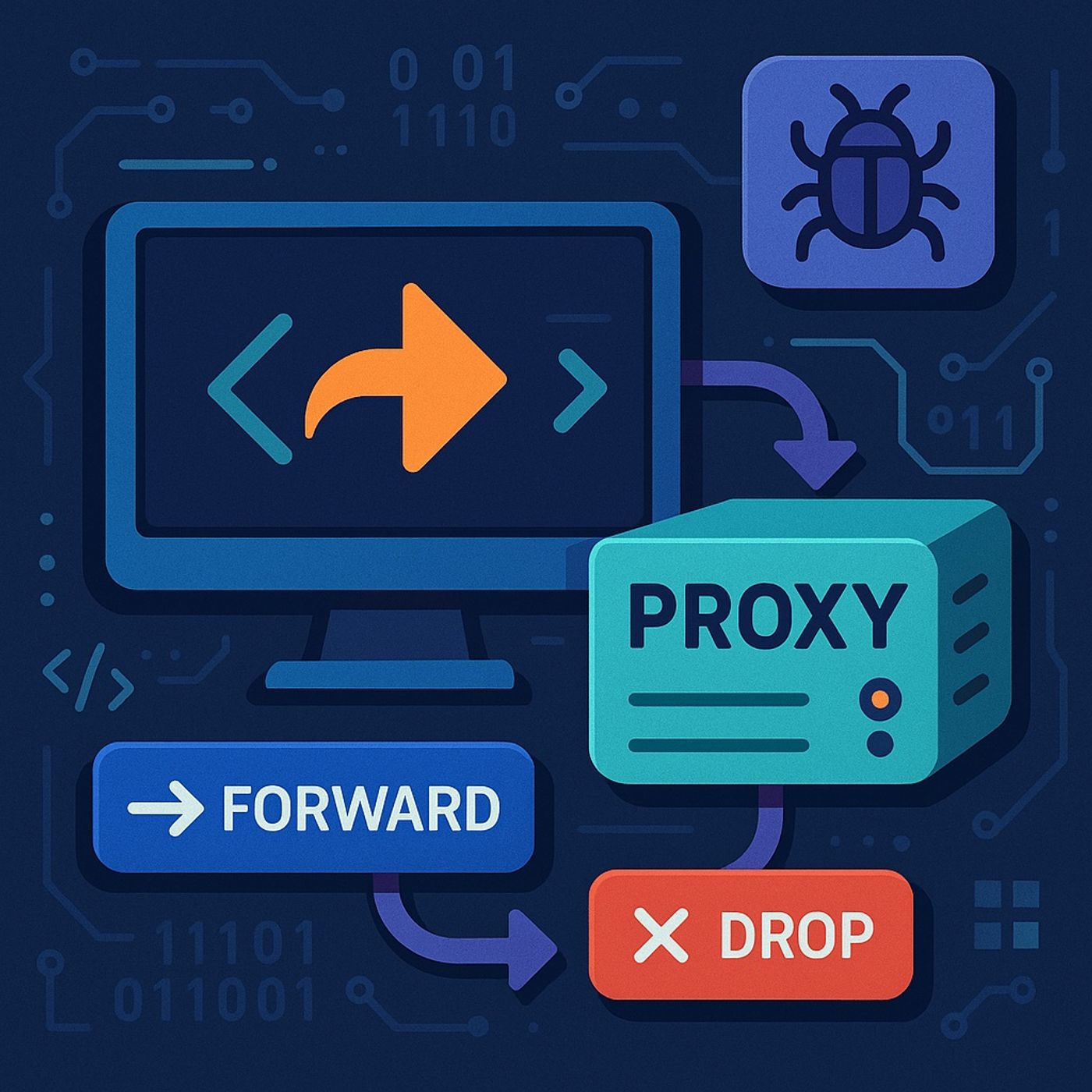
CyberCode AcademyCourse 1 - BurpSuite Bug Bounty Web Hacking from Scratch | Episode 4: Burp Suite Proxy: Configuration, Request Interception, and RepeaterIn this lesson, you’ll learn about:Burp Proxy tab — purpose & subtabs: Intercept (toggle request interception), HTTP History (record of proxied requests), and Options (listen address/port configuration).How the proxy works: Burp listens for browser traffic on a configured IP and port (default 127.0.0.1:8080); the browser must be configured for manual proxying to point to the same host/port.Intercept workflow: with Intercept on you can view request details (headers, cookies, params, user-agent), then Forward the request to the server or Drop it to stop it.Configuring the listening interface: use Prox...
2025-11-1215 min
CyberCode AcademyCourse 1 - BurpSuite Bug Bounty Web Hacking from Scratch | Episode 3: Burp Suite: Web Security Testing and Target Scope ConfigurationIn this lesson, you’ll learn about:Burp Suite — definition & purpose: a Java-based web-application penetration testing framework by PortSwigger used to discover attack vectors and security flaws.Supported platforms & editions: runs on Windows, macOS, and Linux; available as a Free (Community) edition with limited features and a paid Professional edition with full capabilities.Overall architecture & UI model: a collection of specialized tools organized in tabs (Proxy, Target, Scanner, Intruder, Spider, Repeater, Decoder, Comparer, etc.) that work together in a user-driven workflow.Key components & what they do:Proxy (interception): capt...
2025-11-1214 min
CyberCode AcademyCourse 1 - BurpSuite Bug Bounty Web Hacking from Scratch | Episode 2: Program Types, Methodologies, and the Path to Becoming a HunterIn this lesson, you’ll learn about:Bug bounty programs: their purpose and structure as platforms rewarding ethical hackers for discovering and responsibly disclosing security vulnerabilities.Program types:Public programs — open to anyone, often including both white hat and black hat hackers; no certification required.Private programs — invite-only, restricted to trusted and skilled researchers with proven track records; typically limited to certified white hat professionals.Bug bounty methodologies: how professional hunters plan and execute effective testing strategies.1. Scope analysis: identifying and confirming in-scope assets before testing.2. T...
2025-11-1212 min
CyberCode AcademyCourse 1 - BurpSuite Bug Bounty Web Hacking from Scratch | Episode 1: Installing Burp Suite, OWASP BWA, and Bee-Box (Bwapp)In this lesson, you’ll learn about:Setting up a web security testing lab to practice web application security, pentesting, and exploiting common web vulnerabilities.Burp Suite — installation & overview: Java requirement (Oracle Java), download from portswigger.net, available editions: Community (free, limited/no scanners/payloads) and Professional (paid, includes passive/active scanners and built-in payloads), and installation options (Windows executables or cross-platform JAR).OWASP Broken Web Applications (BWA): purpose as a vulnerable VM for learning and testing; requires VirtualBox and is imported as a ready OS image (no new VM creation); includes apps like...
2025-11-1214 min