Shows
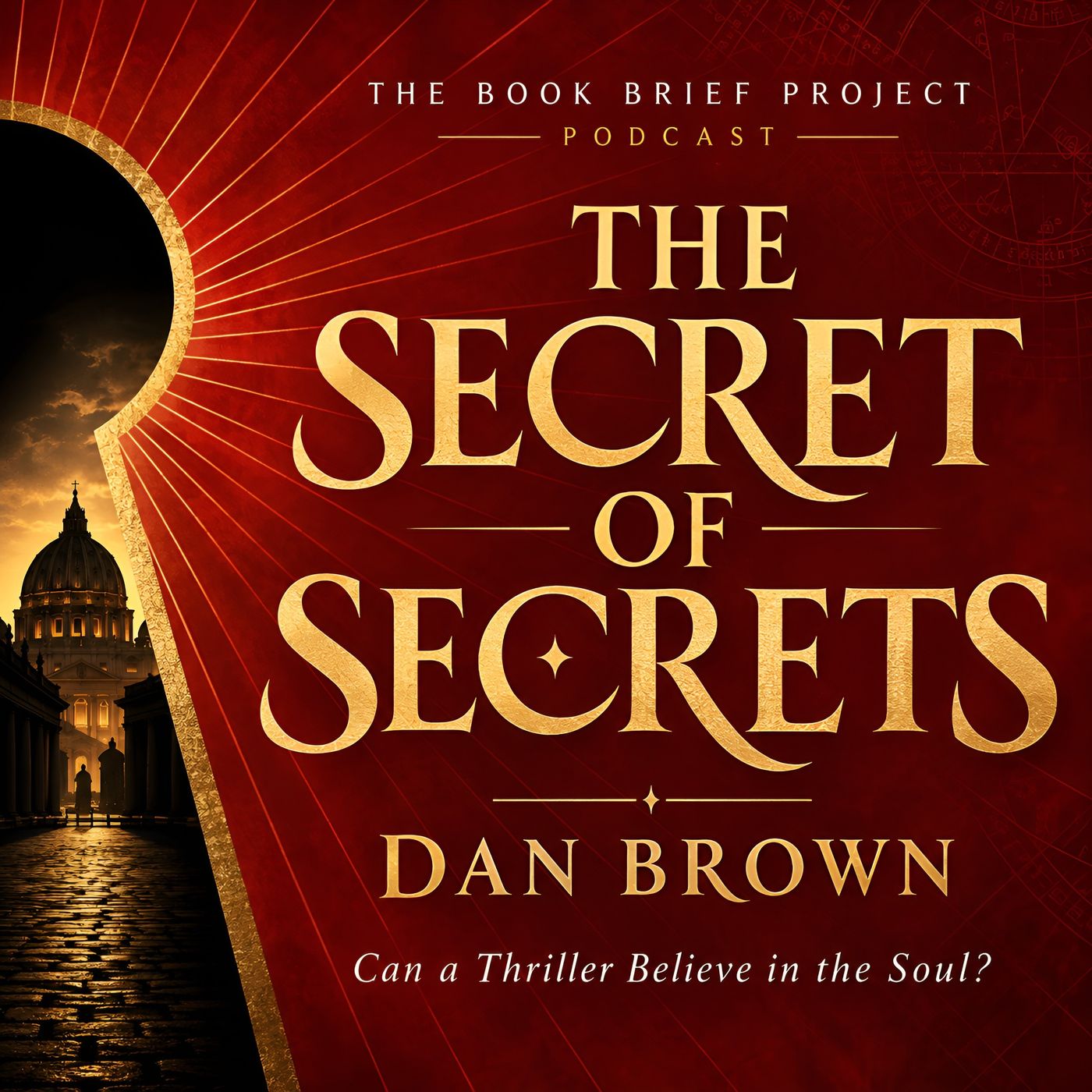
The Book Brief ProjectDan Brown’s The Secret of Secrets — and the Plot That Undermines ItWhat happens when a thriller tries to argue that some mysteries have no mechanism at all?In The Secret of Secrets, Dan Brown sends Robert Langdon through Prague in pursuit of a conspiracy built around consciousness, near-death experiences, secret intelligence programs and the possibility that the mind may exist beyond the brain. Katherine Solomon believes the brain may be less a generator of consciousness than a filter — one that narrows something much larger.But Brown has spent his career writing stories in which every mystery eventually has an explanation.This episode looks at the strange tension inside The Secret of Se...
2026-10-0313 min
The Book Brief ProjectThe Unknown: What Happens When a Mystery Explains Too MuchWhat happens when a mystery is more powerful before you know the answer?Riley Sager’s The Unknown begins with an irresistible premise: in 1926, five women living in a spiritualist commune disappear from an isolated Vermont island, leaving behind only their dresses hanging from the branches of a tree. A century later, a group of actresses arrives on the same island to recreate what happened.But the most interesting thing about the novel may not be its twists.This episode of The Book Brief Project looks at the strange connection between actresses, spiritualist mediums and thriller writers — people whose work depe...
2026-10-0113 min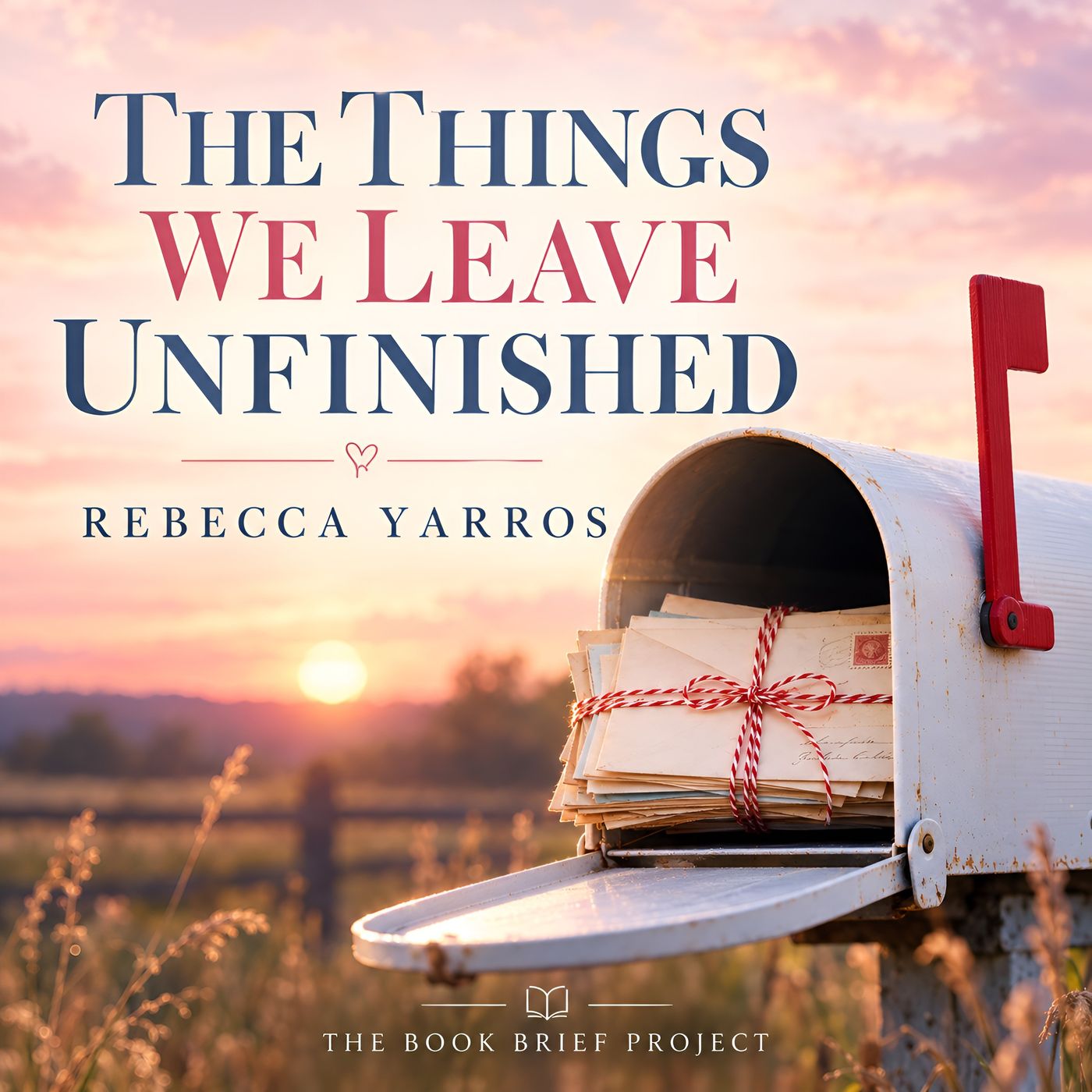
The Book Brief ProjectThe Things We Leave Unfinished: Who Deserves a Happy Ending?What do you owe the people inside a story when the truth of what happened to them is cruel — the ending they got, or the ending they deserved?Rebecca Yarros’s The Things We Leave Unfinished tells two love stories separated by nearly eighty years: one unfolding during the Second World War, the other around an unfinished manuscript whose final pages could change how a family understands its own history.This episode follows Georgia Stanton, Noah Harrison, Scarlett and Constance through wartime England, lost pilots, hidden identities and a manuscript that stops at exactly the moment its author could no long...
2026-09-2914 min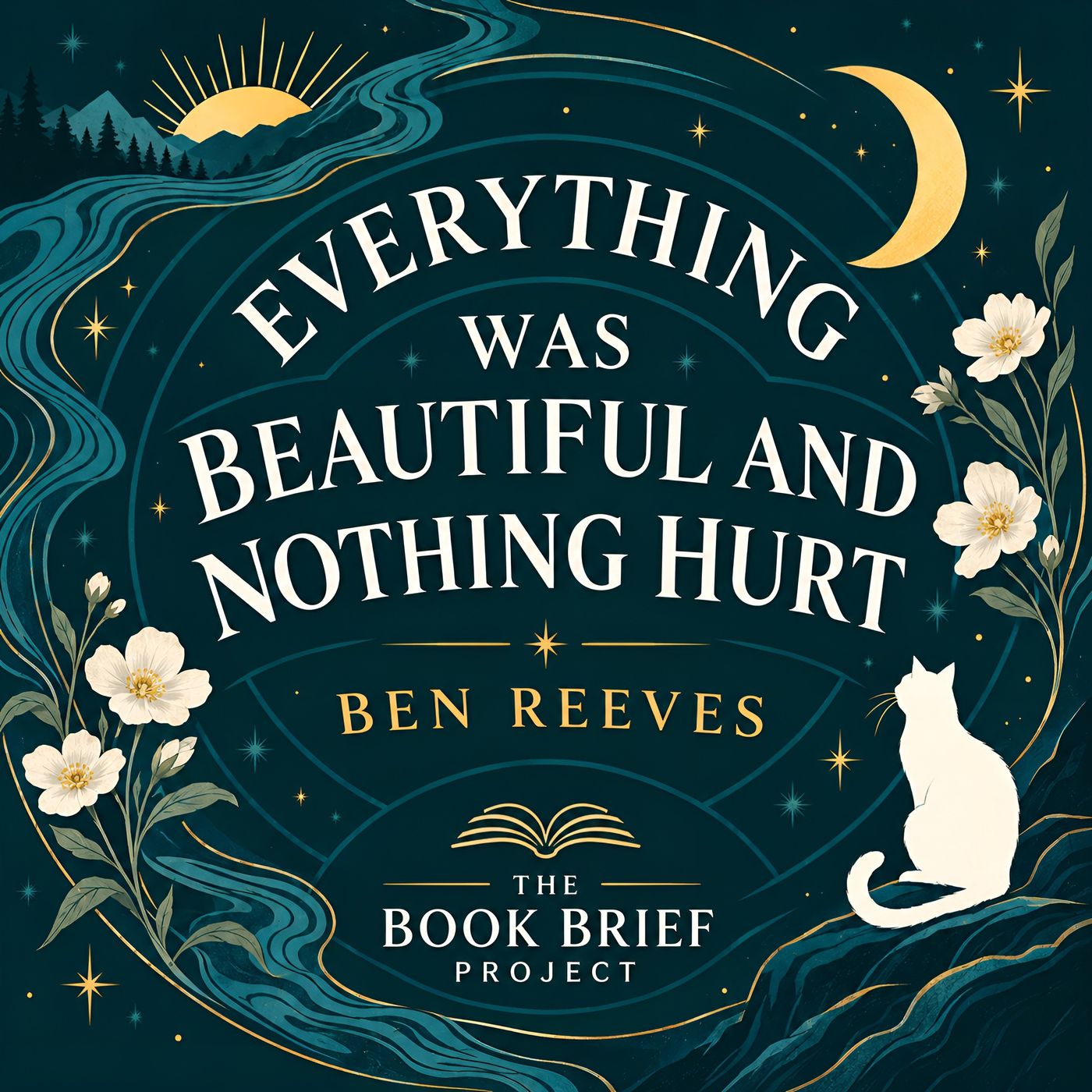
The Book Brief ProjectEverything Was Beautiful and Nothing Hurt — Until It Wasn’tCan a novel comfort you about a death it makes you watch?Ben Reeves’s Everything Was Beautiful and Nothing Hurt imagines Death as Travis Smith, a quiet man in jeans and a T-shirt who spends eternity sitting beside people in their final moments. He does not judge, interfere or change what is coming. Until a stray cat leads him across the hall to a midwife, her two daughters, and an ordinary human life he was never supposed to become part of.What begins as a gentle meditation on mortality gradually becomes something heavier. Travis, who knows exactly when everyone wi...
2026-09-2613 min
The Book Brief ProjectThe Astral Library: The Fantasy That Refuses to Let You EscapeWhat if the fantasy of escaping into your favorite book only matters because, eventually, you have to come back?Kate Quinn’s The Astral Library begins with an irresistible premise: a secret library that can open a door from any library on Earth and allow desperate readers to live inside the books they love. But the novel keeps interrupting its own fantasy. The visits are brief, the doors keep closing, and the final battle is not fought against a monster or a dark lord. It happens in a board meeting.In this episode of The Book Brief Project, we explore wh...
2026-09-2415 min
The Book Brief ProjectPeople Buy You — But What Does That Cost?What if the most important thing you sell is not the product at all?In People Buy You, sales author Jeb Blount argues that when products, prices and services look increasingly alike, buyers make their decisions based on something harder to copy: the person sitting across from them. Likability, attention, trust and the feeling of being understood become part of the offer.Blount builds the book around five questions every buyer is silently asking: Do I like you? Do you listen to me? Do you make me feel important? Do you understand my problem? Do I trust you?This episode...
2026-09-2212 min
The Book Brief ProjectHow Big Things Get Done | The Numbers Were Never RealWhy do the world’s biggest projects so often cost more, take longer, and deliver less than promised? In How Big Things Get Done, Bent Flyvbjerg and Dan Gardner argue that the answer begins long before construction starts: poor planning, optimism bias, premature commitment, and a failure to learn from what happened before.Drawing on a database of more than sixteen thousand projects, Flyvbjerg shows how megaprojects repeatedly fall into the same pattern — over budget, over time, under benefits. His solution is deceptively simple: think slow, act fast. Plan carefully, build quickly, and whenever possible turn enormous ambitions into small, repe...
2026-09-2015 min
The Book Brief ProjectThe Deal: The Romance Novel That Was Smarter Than I ExpectedWhat if the book you expected to dismiss turned out to understand something important before most people had the language for it?Elle Kennedy’s The Deal looks, from the outside, like pure college romance: a hockey captain, a reluctant tutor, a fake relationship and the familiar machinery of attraction. But underneath that formula is a much more serious story about trauma, consent, safety and what it means to trust another person after someone has taken that choice away.Kennedy follows Hannah Wells, a college student carrying the aftermath of sexual assault, and Garrett Graham, a hockey player wh...
2026-09-1814 min
The Book Brief ProjectThe Let Them Theory Is Missing One WordWhat if letting people be who they are can become another way of giving up on them?Mel Robbins’ The Let Them Theory reduces an ancient idea about control and acceptance to two memorable words: let them. Stop managing other people’s opinions, choices, moods and expectations. Then turn inward and ask what remains within your control: let me.It is simple, useful and remarkably portable. But the simplicity also raises a harder question.This episode traces the idea behind The Let Them Theory from Epictetus and the Serenity Prayer to codependency, detachment and modern self-help. We look at Robbins’ distin...
2026-09-1615 min
The Book Brief ProjectWhat to Make of a Life — And the Evidence It Can’t SeeWhat if the problem with studying a successful life is that failure rarely leaves the same kind of record?In What to Make of a Life, Jim Collins applies the comparative method behind Good to Great to thirty-four individual lives. He studies people who faced similar turning points but responded differently, looking for patterns in what he calls cliffs, fog, encodings and simplex stepping — a framework for understanding what happens when the life you were living suddenly stops making sense.This episode explores Collins’s ideas about self-knowledge, uncertainty, meaningful work and the choices people make after major transitions. But it a...
2026-09-1414 min
The Book Brief ProjectHow to Start a Cult — And Why It WorksWhat is the difference between finding a community and being recruited into one? In How To Start A Cult, Jody Raynsford argues that the strongest brands do not simply create loyal customers. They create belonging.Drawing on his experience building the running community around Bad Boy Running, Raynsford breaks that process into a set of deliberately provocative “commandments”: create a message people can rally around, identify an enemy, develop a shared language, reward participation, elevate true believers and give members visible ways to demonstrate that they belong.This episode explores why those techniques are so effective — and where the book become...
2026-09-1214 min
The Book Brief ProjectFamesick: Lena Dunham Never Got Off the SetWhat if fame did not create Lena Dunham’s compulsion to turn private life into material, but simply gave that instinct an audience?In Famesick, Dunham writes about the years after Girls, her collapsing health, chronic pain, endometriosis, a hysterectomy at thirty-one, prescription dependence and the relationships that did not survive. Her body was failing while millions of people were watching, judging and interpreting that body in public.But the story begins before HBO, celebrity or the machinery of online attention. From reading her mother’s private journals to casting her family in Tiny Furniture, the instinct to convert intimacy into...
2026-09-1111 min
The Book Brief ProjectThe Help: Who Gets to Tell the Story?What happens when a novel about unheard voices becomes a story about who gets to publish them? Kathryn Stockett’s The Help became one of the most successful American novels of its generation, beloved for characters like Aibileen and Minny and for a message of dignity that millions of readers carried beyond the book. But inside its story is a contradiction that becomes harder to ignore the closer you look.Set in Jackson, Mississippi during the civil rights era, The Help follows Black domestic workers who agree to tell their experiences to Skeeter Phelan, a young white woman hoping to be...
2026-09-0915 min
The Book Brief ProjectSuper Human — Who Actually Gets to Live Longer?What if living longer is not primarily a question of finding the next breakthrough treatment? Dave Asprey’s Super Human makes a more ambitious claim: aging is a process with identifiable mechanisms, and if those mechanisms can be understood and influenced, the body may be able to remain functional far longer than we assume.Asprey approaches longevity like an engineering problem. He moves from relatively conventional interventions — sleep, light exposure, movement, metabolic health and oral health — toward more experimental territory involving stem cells, peptides, hormones, ozone therapy and other emerging treatments. The book’s central promise is that aging is not simp...
2026-09-0814 min
The Book Brief ProjectSteve Jobs: Was the Cruelty Really Necessary?Steve Jobs is usually read as the story of how an extraordinary personality produced extraordinary products. Walter Isaacson gives us the adoption, the Macintosh, Jobs’s exile from Apple, NeXT, Pixar, his return, the iPhone and the final years of illness — while repeatedly linking his perfectionism, intensity and famous refusal to accept ordinary constraints to the things he was able to build.That connection is what makes the biography so compelling. It is also what makes its central implication difficult to accept. Jobs could inspire people to accomplish things they thought impossible, but the same traits could make him cruel, cont...
2026-09-0614 min
The Book Brief ProjectThe Technological Republic: What Does Silicon Valley Owe America?The Technological Republic begins with a question about obligation: what does an engineer owe the society that made the engineer possible? Alexander C. Karp and Nicholas W. Zamiska argue that Silicon Valley has drifted away from ambitious public problems and toward advertising, entertainment and consumer convenience — abandoning an older partnership between technological talent, industry and the American state.The book traces technology’s historical relationship with government and national power, arguing that many defining achievements of the twentieth century emerged when engineers, institutions and public purpose were aligned around difficult collective goals. Karp and Zamiska want technologists to recover that sens...
2026-09-0514 min
The Book Brief ProjectSource Code by Bill Gates: Can a Life Really Be Explained?Source Code begins with a seductive metaphor: if Bill Gates became Bill Gates, perhaps somewhere in his childhood we can find the instructions that produced him. Before Microsoft, the billions and the public figure, there was a difficult boy in Seattle, an unusually competitive family, access to a school computer at exactly the right historical moment, and friendships that changed the direction of his life.Gates returns to Lakeside School, his early obsession with programming, his friendships with Kent Evans and Paul Allen, and the combination of temperament, opportunity and loss that preceded Microsoft. The memoir is an attempt to...
2026-09-0414 min
The Book Brief ProjectBulletproof Problem Solving: The Method That Works Until Problems Get ComplicatedBulletproof Problem Solving makes an unusually ambitious promise: Charles Conn and Robert McLean believe that almost any difficult problem can become more manageable if it is defined precisely, broken into its component parts, prioritized, tested against evidence and attacked where effort is most likely to change the answer.Built from decades of consulting experience, the method relies heavily on logic trees and disciplined problem definition. Instead of beginning with solutions, Conn and McLean ask readers to construct a clear picture of the problem, identify the branches that matter most, form hypotheses and gather only the evidence necessary to test them...
2026-09-0315 min
The Book Brief ProjectRegime Change: How Powerful Is Trump’s Imperial Presidency?Regime Change begins with a question about what changes when a president returns to office already knowing how the machinery of government works. Maggie Haberman and Jonathan Swan argue that Donald Trump’s second presidency differs fundamentally from his first: fewer internal restraints, more carefully selected loyalists, and a president substantially more willing to test the reach of executive power.Drawing on extensive reporting from inside the administration, Haberman and Swan describe a White House in which many of the officials who once resisted Trump are gone and the people surrounding him are more prepared to carry out his agenda. Th...
2026-09-0115 min
The Book Brief ProjectThe Little Prince: The Line Everyone Remembers Is Not the Best OneThe Little Prince is one of the most loved books ever written, and one sentence from it has escaped the book entirely: “One sees clearly only with the heart.”But what if that is not the book’s deepest idea?In this episode of The Book Brief Project, we look closely at Antoine de Saint-Exupéry’s famous story — its suspicion of adulthood, its faith in innocence, the rose, the fox, and the uncomfortable idea hidden beneath all its tenderness.Because the fox offers something much harder than the famous lesson about seeing: once we allow something to matter to us, we beco...
2026-08-3012 min
The Book Brief ProjectThe Widow by John Grisham — When the Perfect Story Is WrongThe Widow looks like familiar John Grisham territory: a struggling small-town lawyer, a wealthy elderly client, a suspicious will, a murder, and a defendant surrounded by evidence that seems to tell only one possible story.But Grisham’s first whodunit does something unusual with the rules of detective fiction. For nearly a century, the genre has trained readers to expect that the solution is already somewhere inside the cast of characters we have been given. The Widow appears to violate that expectation. Its real culprit arrives from outside the story we have spent hundreds of pages learning to interpret.This ep...
2026-08-2915 min
The Book Brief ProjectThe Boys in the Light — When Survival Becomes a Redemption StoryThe Boys in the Light tells the true story of Eddie Willner, a Jewish teenager who survived Nazi persecution, forced labor and concentration camps before escaping in the final days of the Second World War. His path eventually crossed that of American soldiers from the 3rd Armored Division, and Nina Willner builds the book around the extraordinary bond that followed.The narrative moves in parallel between Eddie’s experience in Europe and the young American soldiers making their way toward him from the other side of the war. That structure allows Willner to tell a story of extreme suffering alongside on...
2026-08-2912 min
The Book Brief ProjectWe the People: America Forgot How to Change Its ConstitutionWe the People begins with an idea that challenges the way many Americans are taught to think about the Constitution: Jill Lepore argues that amendment was not an accidental escape hatch in the document but a central part of its design — a mechanism through which later generations could repair rules inherited from the past.Across American history, thousands of constitutional amendments have been proposed and twenty-seven have been ratified. Lepore follows both the amendments that succeeded and the far larger archive of those that failed, using them as a record of what different generations believed the Constitution could not adequately re...
2026-08-2715 min
The Book Brief ProjectSupercommunicators: When Connection Becomes ManipulationSupercommunicators begins with a deceptively simple idea: many conversations fail because the people involved are not actually having the same kind of conversation. Charles Duhigg argues that meaningful communication depends on recognizing whether someone is trying to solve a practical problem, express an emotional reality, or negotiate something about identity and social connection.The book develops that framework through techniques such as asking deeper questions, matching the emotional tone of a conversation, and “looping for understanding” — restating what someone has said and checking whether you understood it correctly. Duhigg’s central claim is that great communicators are not necessarily more charisma...
2026-08-2314 min
The Book Brief ProjectDungeon Crawler Carl Is Hilarious. That’s What Makes It So Disturbing.Dungeon Crawler Carl looks like chaos: monsters, loot, exploding goblins, impossible quests and a dangerously charismatic cat. But Matt Dinniman builds all of that comedy inside a much colder premise. Humanity has been destroyed and its survivors transformed into contestants on a reality show watched across the galaxy, where staying alive matters only as long as someone still wants to watch.Carl and Princess Donut enter a dungeon where violence is entertainment, personality is currency and every act of survival can become content. The absurdity makes the novel enormously fun, but it also creates its central discomfort: the system rewards...
2026-08-2214 min
The Book Brief ProjectAI 2041 Was Right About the Future. It Just Arrived Too Early.AI 2041 was published in 2021 with an unusual premise: instead of predicting artificial intelligence through a conventional technology book, Kai-Fu Lee and Chen Qiufan imagined ten lives in 2041 and built the technology around them. Five years later, parts of that supposedly distant future already feel surprisingly familiar.Across stories set around the world, the book explores deepfakes, AI companions, algorithmic discrimination, automated work, immersive entertainment, autonomous weapons and the possibility of an economy transformed by abundance. Each fictional scenario is followed by Lee’s explanation of the technology behind it, creating a deliberate tension between Chen’s speculative fiction and Lee’s more...
2026-08-2013 min
The Book Brief ProjectThe 10X Rule: Why Success Is Never EnoughThe 10X Rule begins with an idea that is difficult to dismiss: people often underestimate how much effort meaningful success requires. Grant Cardone argues that ordinary goals produce ordinary action, while extraordinary results demand what he calls “Massive Action” — setting targets far beyond what feels reasonable and responding with correspondingly greater effort.The book pushes that principle far beyond productivity advice. Success becomes a duty, obsession becomes an asset, criticism becomes evidence that you are gaining attention, and failure is repeatedly reframed as a sign that more action was required. The result is less a strategy for ambitious periods of life t...
2026-08-1813 min
The Book Brief ProjectDopamine Nation — The Science Is Thinner Than the StoryDopamine Nation begins with a paradox: the easier pleasure becomes to access, the harder satisfaction may become to sustain. Anna Lembke argues that modern life surrounds us with high-reward stimuli — drugs, food, gambling, shopping, social media and endless digital entertainment — while the brain continually adapts to repeated exposure.At the center of the book is Lembke’s pleasure-pain balance, a model she uses to explain craving, tolerance, withdrawal and the strange way repeated attempts to feel better can eventually make ordinary life feel worse. Her prescriptions often sound neuroscientific, but many of them are also recognizably older forms of recovery wisdom...
2026-08-1613 min
The Book Brief ProjectHyperfocus — Why Your Mind Needs to WanderHyperfocus is usually presented as a book about concentration: remove distractions, choose what matters, and give one important task your full attention. But Chris Bailey’s more interesting argument begins when he turns away from focus and asks what the mind can do when we deliberately stop controlling it.Bailey describes two complementary modes of attention. Hyperfocus narrows awareness around a chosen task, while scatterfocus allows the mind to wander, connect ideas and think beyond whatever is directly in front of it. The book argues that productivity and creativity depend not on maximizing concentration, but on learning when to use ea...
2026-08-1413 min
The Book Brief ProjectBiological War by Annie Jacobsen — What If It’s Already Here?Biological War does something unsettlingly effective: Annie Jacobsen constructs a hypothetical biological catastrophe while attaching almost every stage of it to something that already exists — documented vulnerabilities, historical programs, institutional failures and experts who have spent their careers thinking about what happens when containment breaks down.The result reads with the momentum of a thriller but is presented as investigative warning. Jacobsen follows a biological crisis from its earliest moments through cascading failures in public health, government, infrastructure and social trust, arguing that a threat invisible to the people spreading it could destabilize modern society with extraordinary speed.This episode ex...
2026-08-1311 min
The Book Brief ProjectThe Calamity Club — Can a Novel Be Too Kind to a Cruel History?The Calamity Club marks Kathryn Stockett’s return to fiction seventeen years after The Help. Set in Depression-era Mississippi, it looks at first like a sprawling, funny and deeply warm story about women, poverty, friendship and survival. But that warmth sits against a historical backdrop of institutionalization, forced labor, eugenics and lives that could be controlled by people convinced they were acting respectably.At the center is eleven-year-old Meg, whose voice gives the novel much of its energy and emotional force. Around her, Stockett builds a large cast of women navigating poverty, family obligations, social expectations and systems with enormous po...
2026-08-1110 min
The Book Brief ProjectHow We Got to Now — The Problem With Steven Johnson’s Theory of InnovationHow We Got to Now begins with an unusual way of thinking about invention: the most important consequence of a technology may appear somewhere its creators never intended. Steven Johnson follows six innovations — glass, cold, sound, clean, time and light — through chains of unintended consequences that helped construct the modern world.Johnson calls this the “hummingbird effect”: a change in one field creating unexpected transformations somewhere seemingly unrelated. Improvements in glass eventually made microscopes possible. Refrigeration reshaped where people could live and how cities developed. Technologies built around sound traveled from navigation and detection into medicine, where ultrasound would later contribu...
2026-08-1011 min
The Book Brief ProjectWhy Has Nobody Told Me This Before? — The Part a Self-Help Book Can’t Give YouWhy Has Nobody Told Me This Before? became a phenomenon by taking tools normally encountered in therapy and making them portable. Julie Smith explains mood, motivation, anxiety, self-doubt and emotional regulation in language designed to be immediately usable — often by showing how thoughts, feelings, behavior and the body continually influence one another.Many of those ideas are genuinely practical. Mood is not always reliable evidence about reality. Motivation does not always have to arrive before action. And when thoughts, emotions, behavior and physical state form a reinforcing loop, changing the part you can reach may be enough to begin shifting ev...
2026-08-0710 min
The Book Brief ProjectThe Digital Mindset: The Book AI Made Obsolete — and More UsefulThe Digital Mindset was published in May 2022 with a reassuring argument: thriving in a world shaped by data, algorithms and artificial intelligence did not require becoming a technologist. Paul Leonardi and Tsedal Neeley argued that most people needed only enough fluency to participate intelligently — what they call the “30 percent rule.” Six months later, ChatGPT arrived and changed the environment the book was trying to prepare readers for.Leonardi and Neeley organize the digital mindset around collaboration, computation and change. Their goal is not technical mastery, but sufficient understanding to ask better questions, evaluate data and algorithms, work effectively with technical specia...
2026-08-0611 min
The Book Brief ProjectLords of Finance: The Idea That Broke the WorldLords of Finance is often remembered as the story of four central bankers whose decisions helped lead the world toward the Great Depression. Liaquat Ahamed gives us Montagu Norman, Benjamin Strong, Hjalmar Schacht and Émile Moreau as powerful, fallible men trying to reconstruct the international financial system after the First World War. But beneath those biographies lies a larger argument: the deeper failure was a shared commitment to the gold standard itself.That commitment shaped decisions across the 1920s and early 1930s. Britain returned to gold in 1925 at its prewar parity, a rate widely criticized as overvaluing sterling. As economic c...
2026-08-0511 min
The Book Brief ProjectWhy Nations Fail — And the Country the Theory Can’t ExplainWhy Nations Fail begins with one of the largest questions in economics: why do some nations become prosperous while others remain trapped in poverty? Daron Acemoglu and James A. Robinson argue that geography, culture and natural resources are not enough to explain the difference. Their answer is institutions — the political and economic rules that determine who holds power, who receives opportunity and who benefits from growth.Across examples ranging from divided communities and colonial extraction to the decline of Venice and England’s Industrial Revolution, the book distinguishes between inclusive institutions, which distribute opportunity and constrain concentrated power, and extractive inst...
2026-08-0512 min
The Book Brief ProjectInvincible by Florence Comite: Can You Really Defy Your Genetic Destiny?Invincible begins with an unsettling possibility: disease may start changing the body long before conventional medicine is willing to give it a name. Florence Comite argues that health is not a fixed state but a trajectory — one shaped by genetics, hormones, metabolism, muscle, sleep, family history and biological changes that may still fall inside conventional “normal” ranges.At the center of the book is Comite’s Nof1 approach, which treats each person as an individual biological investigation rather than simply another member of a statistical category. By following biomarkers and patterns over time, she argues that clinicians can identify the directio...
2026-08-0217 min
The Book Brief ProjectThe Laws of Human Nature: You’re Not Reading Them. You’re Reading Yourself.The Laws of Human Nature is often read as a guide to understanding other people: how to recognize hidden motives, anticipate manipulation, detect envy, and avoid being blindsided by the people around us. Robert Greene’s deeper argument is more uncomfortable. The person whose motives are hardest to see clearly may be the person doing the observing.Across historical case studies and recurring patterns of behavior, Greene examines narcissism, envy, self-sabotage, status, aggression, conformity and the gap between the stories people tell about themselves and the impulses actually driving them. His method belongs to an older tradition of psychological moralists su...
2026-08-0109 min
The Book Brief ProjectHacking the Human Mind: The Brands Keep Changing. The Human Mind Does Not.Hacking the Human Mind begins with a simple claim: brands change, technologies change, and platforms disappear, but many of the psychological forces shaping human behavior remain remarkably stable. Richard Shotton and MichaelAaron Flicker use seventeen successful brands to show how old findings from behavioral science continue to influence modern marketing.The book moves through examples involving Guinness, Five Guys, Liquid Death, Amazon, Starbucks and other companies, connecting apparently small business decisions to deeper patterns in attention, expectation, social proof, effort and perception. Its strength is making behavioral science concrete: abstract psychological effects become visible in menus, packaging, pricing, waiting times...
2026-07-3013 min
The Book Brief ProjectIt Begins with You by Jillian Turecki’s: No One Is Coming to Save You. But Is That Freedom—or the Wound?It Begins with You is built around a sentence that sounds both liberating and severe: no one is coming to save you. Jillian Turecki uses that idea to argue that lasting change in relationships begins when people stop trying to control whether someone else chooses them and turn their attention toward the one person present in every relationship they have — themselves.The book develops that argument through nine core truths about love, self-worth, honesty, attraction, family and emotional responsibility. Turecki rejects dating games and the attempt to persuade another person into loving us, emphasizing self-respect, direct communication and the willingness to...
2026-07-2708 min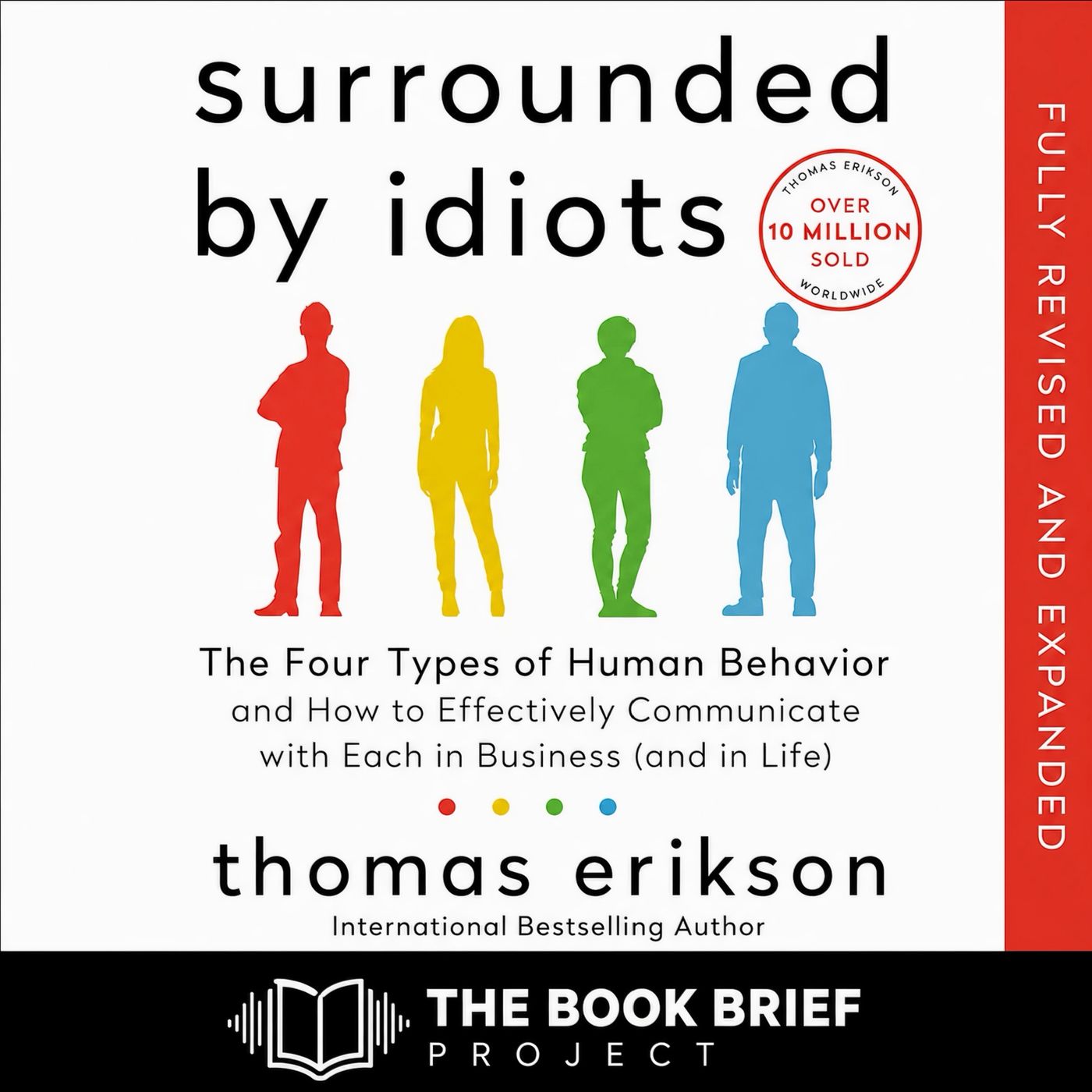
The Book Brief ProjectSurrounded by Idiots by Thomas Erikson Is Wrong. So Why Does It Work?Surrounded by Idiots offers an irresistible promise: the difficult people around you may not actually be difficult — they may simply be a different color. Thomas Erikson divides behavior into four memorable types: Reds push for results, Yellows communicate through enthusiasm, Greens value stability, and Blues demand precision.The simplicity is exactly what makes the system powerful. Once learned, the colors are almost impossible not to apply to colleagues, partners and family members. But the psychological authority surrounding the framework is much less secure than its confidence suggests. Erikson’s system traces its ancestry to William Moulton Marston’s theories of human...
2026-07-2513 min
The Book Brief ProjectSuperintelligence Was Right About the Problem — and Wrong About the FutureSuperintelligence became famous for a nightmare involving paperclips: give an enormously capable machine the wrong objective and perfect competence could become catastrophic. But Nick Bostrom’s deeper question is harder than the thought experiment suggests. How do human beings specify what they actually value clearly enough for a machine powerful enough to take those instructions literally?Bostrom builds much of his argument around two ideas. The orthogonality thesis proposes that greater intelligence does not necessarily produce more human or benevolent goals, while instrumental convergence suggests that very different objectives could still lead sufficiently capable systems toward similar intermediate goals — acquiring reso...
2026-07-2315 min
The Book Brief ProjectYou Know You’re Going to Die. So Why Haven’t You Started Living?Ironwood takes one of Michael Connelly’s greatest strengths — turning place into part of the investigation — and changes the scale completely. After decades of crime stories spread across Los Angeles, Detective Sergeant Stilwell is confined to Catalina Island, twenty-two miles offshore, where isolation offers fewer suspects, fewer exits and almost nowhere for a secret to disappear.The novel begins with a nighttime operation at Catalina’s remote Airport in the Sky that goes badly wrong. While Stilwell is sidelined by the resulting inquiry, an apparently ordinary lost-and-found item draws him toward the disappearance of a woman who vanished on the island y...
2026-07-2110 min
The Book Brief ProjectIronwood: The Island Where No One Can DisappearIronwood takes one of Michael Connelly’s greatest strengths — turning place into part of the investigation — and changes the scale completely. After decades of crime stories spread across Los Angeles, Detective Sergeant Stilwell is confined to Catalina Island, twenty-two miles offshore, where isolation offers fewer suspects, fewer exits and almost nowhere for a secret to disappear.The novel begins with a nighttime operation at Catalina’s remote Airport in the Sky that goes badly wrong. While Stilwell is sidelined by the resulting inquiry, an apparently ordinary lost-and-found item draws him toward the disappearance of a woman who vanished on the island y...
2026-07-1914 min
The Book Brief ProjectDo Hard Things — But Not the Way You Were TaughtDo Hard Things begins by challenging one of our most familiar ideas about resilience: that toughness is created by suppressing emotion, tolerating pain without complaint, and being pushed beyond our limits. Steve Magness argues that much of what we have traditionally called toughness is actually fear, insecurity and obedience wearing a more respectable name.Drawing on sports, psychology, coaching and performance research, Magness presents a different model. Real toughness means accurately interpreting discomfort, regulating the response to it, maintaining perspective under pressure and deciding deliberately what to do next. Emotions become information rather than instructions, confidence becomes quieter than bravado...
2026-07-1714 min
The Book Brief ProjectThe AI-Driven Leader: Are You Thinking Better or Thinking Less?The AI-Driven Leader begins with a distinction that is becoming increasingly important: artificial intelligence can be used to do more work, or it can be used to change how decisions are made. Geoff Woods argues that leaders gain more from AI when they stop treating it as an assistant for routine tasks and start treating it as a thought partner.Woods’s method is built around giving AI richer context, assigning it specific roles, allowing it to interview the user, and constructing virtual boards of advisors that can challenge assumptions before important decisions are made. The goal is not simply fa...
2026-07-1513 min
The Book Brief ProjectYesteryear | She Built the Prison — Then Forgot It Was HersYesteryear begins with a fantasy that millions of people already know how to recognize: the perfect traditional life. Caro Claire Burke gives Natalie Heller Mills a ranch, six children, millions of followers and an online existence built to make domesticity look effortless — then removes the cameras, the staff, the technology and eventually the century itself.Natalie wakes in 1855 inside a brutal version of the life she has spent years selling. Her phone is gone, her pregnancy has vanished, four children call her Mama, and the domestic world that once made her famous has become physical labor without an audience. Burke tu...
2026-07-1416 min
The Book Brief ProjectWhy Nothing Works - The reason Why America Can't Build AnymoreWhy Nothing Works begins with a democratic paradox: institutions designed to protect people from concentrated power can also make collective action increasingly difficult. Marc J. Dunkelman argues that the United States has accumulated so many procedural checks, review mechanisms and opportunities for opposition that building housing, transportation, clean energy and major infrastructure has become slower, more expensive and sometimes nearly impossible.The book traces that problem through twentieth-century American political history, from the era of powerful builders such as Robert Moses to the reforms that followed growing distrust of unchecked authority. Dunkelman describes the resulting system as a “vetocracy”: a poli...
2026-07-0909 min
The Book Brief ProjectThe Billion Dollar Molecule | The Startup That Tried to Schedule Scientific DiscoveryThe Billion-Dollar Molecule begins with a question every biotechnology company eventually has to confront: can scientific discovery be turned into a schedule? Barry Werth follows the early years of Vertex Pharmaceuticals as scientists, executives and investors attempt to build a business around research whose most important breakthroughs cannot be promised in advance.At the center is Joshua Boger and his attempt to create a different kind of pharmaceutical company — one built around rational drug design and the belief that understanding molecules at a deeper level could make drug discovery more deliberate. Werth follows Vertex from the laboratory to Wall Street, th...
2026-07-0911 min
The Book Brief ProjectWhy the West Can't Win — Is the West Really Losing?2084 begins with a technological question and gradually turns it into a theological one. John C. Lennox asks what artificial intelligence, bioengineering and the pursuit of superintelligence might do to humanity — but his deeper concern is what those ambitions reveal about what human beings believe themselves to be.Lennox moves from narrow AI and surveillance to transhumanism, artificial general intelligence, consciousness and the desire to overcome biological limits. He places contemporary technological ambition beside older religious questions about creation, immortality and transcendence, arguing that some visions of humanity’s technological future resemble secular attempts to acquire powers once associated with the divi...
2026-07-0714 min
The Book Brief Project2084 Explained: Why John Lennox Believes AI Is Replacing God2084 begins with a technological question and gradually turns it into a theological one. John C. Lennox asks what artificial intelligence, bioengineering and the pursuit of superintelligence might do to humanity — but his deeper concern is what those ambitions reveal about what human beings believe themselves to be.Lennox moves from narrow AI and surveillance to transhumanism, artificial general intelligence, consciousness and the desire to overcome biological limits. He places contemporary technological ambition beside older religious questions about creation, immortality and transcendence, arguing that some visions of humanity’s technological future resemble secular attempts to acquire powers once associated with the divi...
2026-07-0615 min
The Book Brief ProjectThink Again: The Dangerous Comfort of Being RightThink Again begins with a problem that intelligence cannot solve on its own: smart people can become exceptionally good at defending ideas that should have been reconsidered. Adam Grant argues that one of the most valuable skills in a changing world is not simply learning more, but becoming better at questioning what we already think we know.The book examines why beliefs become attached to identity, why disagreement can feel threatening, and why expertise sometimes makes rethinking harder rather than easier. Grant contrasts the habits of the preacher, prosecutor and politician with what he calls the scientist mindset — a willingness to...
2026-07-0213 min
The Book Brief ProjectThe World Almanac - Why Does This Book Still Exist?The World Almanac presents a strange survival story. In a world where almost any fact can be retrieved in seconds, a thousand-page printed reference book still appears every year, preserving information that the internet could seemingly provide faster, cheaper and in greater quantity.But speed may be exactly what makes the almanac interesting. The internet is designed to remain current. An almanac becomes obsolete almost as soon as it is printed — and that obsolescence turns it into something else: a snapshot of what a particular year considered important enough to record. Statistics, elections, sports results, populations, discoveries and cultural events st...
2026-07-0115 min
The Book Brief ProjectThe JFK Biography That Changes Everything You Think You KnowJFK: Public, Private, Secret begins with a familiar problem: John F. Kennedy may be one of the most recognizable political figures of the twentieth century, yet recognition is not the same thing as understanding. J. Randy Taraborrelli argues that Kennedy’s public image cannot be separated from the private life he worked carefully to control.Drawing on interviews, oral histories and archival material, Taraborrelli moves between Kennedy’s family life, marriage to Jacqueline Kennedy, political ambitions and presidency. The biography revisits episodes including the Bay of Pigs and Cuban Missile Crisis while repeatedly returning to the gap between the polished figu...
2026-06-2914 min
The Book Brief ProjectThe Elephant in the Brain | Why You Never Know Your Real MotivesThe Elephant in the Brain begins with an uncomfortable possibility: the reasons we give for our behavior may not be the reasons that actually drive it. Kevin Simler and Robin Hanson argue that much of human behavior is shaped by hidden motives — status, signaling, reputation and social advantage — while the conscious mind constructs more flattering explanations after the fact.The book applies that idea across education, medicine, politics, charity, laughter, art and everyday social life. Its central claim is not simply that people deceive others, but that self-deception itself may be useful: if we remain partly unaware of our own moti...
2026-06-2710 min
The Book Brief ProjectNoise - Why Experts Keep Making the Same Invisible MistakeNoise begins with a problem that is easy to miss because it does not look like bias. Daniel Kahneman, Olivier Sibony and Cass R. Sunstein argue that human judgment is often inconsistent in ways we barely notice — two qualified people can look at the same case and reach very different conclusions, and even the same person may decide differently depending on circumstances that should not matter.The book examines what the authors call “noise” across medicine, law, insurance, hiring and other domains where professional judgment carries real consequences. Their argument is that organizations often underestimate how much unwanted variability exists inside...
2026-06-2612 min
The Book Brief ProjectAbundance by Ezra Klein & Derek Thompson: What If Scarcity Is a Choice?Abundance begins with a provocative question: what if some of the shortages shaping modern life are not inevitable? Ezra Klein and Derek Thompson argue that problems involving housing, infrastructure, clean energy and scientific innovation are often intensified by institutions that have become better at preventing harmful action than enabling useful action.The book calls for a “politics of abundance” focused on increasing society’s capacity to build. Klein and Thompson examine zoning, permitting, environmental review, government capacity, research and technological development, arguing that rules created to protect communities can sometimes produce delays, higher costs and scarcity of their own. Their case i...
2026-06-2510 min
The Book Brief ProjectBuckeye by Patrick Ryan | The Grief No One Was Allowed to NameBuckeye looks like a classic American family saga: two families, two wars, one small Ohio town, and decades of intertwined lives. Patrick Ryan is doing something quieter underneath that familiar structure — showing how entire families can be shaped by grief that nobody is allowed to name.Moving from World War II through Vietnam and into the decades that follow, Buckeye follows marriages, friendships and family histories built around secrets that cannot remain buried forever. Ryan is less interested in dramatic revelation than in the emotional consequences of silence: the private losses that cannot be publicly mourned, the compromises people learn to...
2026-06-2311 min
The Book Brief ProjectThe Art of Spending Money : The Book That Isn't Really About MoneyThe Art of Spending Money begins with a question most personal finance books barely ask: once you have money, what is it actually for? Morgan Housel argues that wealth becomes valuable not simply through what it can buy, but through the freedom, flexibility and peace of mind it can create.Instead of focusing on budgets or investment formulas, Housel turns toward the psychology of spending. The book examines envy, status, expectations, conspicuous consumption, social debt and the strange ways people use money to signal success to others. What begins as a book about financial decisions gradually becomes a book about...
2026-06-2210 min
The Book Brief ProjectThe Blind Spot: Why Democracy Never Stops the RichThe Blind Spot begins with a paradox: democratic societies have expanded participation dramatically, yet wealth remains highly concentrated. Jeffrey Winters argues that the problem is not that democracy has failed everywhere, but that it operates very differently when concentrated wealth itself becomes the object of political conflict.Drawing on decades of research into oligarchy, political power and inequality, Winters distinguishes between areas of public life where democratic competition is relatively open and the vertical politics surrounding wealth, taxation and redistribution. He describes a condition of “participatory inequality,” in which citizens participate freely in democratic institutions while extremely wealthy actors retain disp...
2026-06-2111 min
The Book Brief ProjectWHO REALLY OWNS THE WORLD? - By Martín JiménezThe Owners of the World begins with a distinction that changes how wealth looks: earning money and owning the things that generate money are not the same activity. Martín Jiménez builds the book around the question of what happens when ownership itself becomes the mechanism through which wealth and influence reproduce.The book moves across history, from land and aristocratic property to corporations, financial markets and modern asset ownership. Its argument is that concentrated ownership can create a reinforcing cycle: assets generate wealth, wealth expands access to further assets, and economic influence can make it easier to preserve or...
2026-06-2018 min
The Book Brief ProjectDie With Zero: The Most Dangerous Personal Finance Book Ever WrittenDie With Zero turns the usual logic of personal finance upside down. Instead of asking how much wealth you can accumulate, Bill Perkins asks whether saving too aggressively can create a different kind of loss — reaching the end of life with money left over and experiences you postponed for too long.Perkins argues that money is valuable because of what it allows you to do with limited time. The book introduces ideas like the memory dividend, where experiences continue paying emotional returns long after they happen, and time buckets, which encourage people to match certain experiences to the stages of li...
2026-06-1811 min
The Book Brief ProjectProject Hail Mary Is Brilliant... And That Worries MeProject Hail Mary looks like a science fiction survival story about saving Earth. Andy Weir is doing something more interesting underneath the equations and engineering: asking what heroism looks like when the person carrying humanity’s last hope never chose to become a hero in the first place.Ryland Grace wakes aboard a spacecraft with no memory of his identity or mission. As those memories return, he discovers that Earth faces an extinction-level threat and that he was sent across interstellar space in search of a solution. The novel turns that crisis into a sequence of scientific problems, but its em...
2026-06-1711 min
The Book Brief ProjectTrust — Who Gets to Write the Past | The Book Brief ProjectTrust looks like a novel about money, Wall Street and the construction of an enormous fortune. Hernan Diaz is more interested in something less visible: authorship — who gets to write the past, who gets edited out, and how power can turn one version of events into the version that survives.The novel is built from four competing accounts of the same financial dynasty, each revising what came before. A seemingly finished story gives way to Andrew Bevel’s attempt to replace it with a more flattering version of himself, then to the ghostwriter hired to help shape that narrative, and fina...
2026-06-1610 min
The Book Brief ProjectIt Didn't Start with You — The Fear You Inherited Before You Had Words | The Book Brief ProjectIt Didn’t Start with You offers one of modern self-help’s most seductive possibilities: the fear, anxiety or emotional pattern shaping your life may have begun before you were born. Mark Wolynn argues that families transmit trauma across generations, and that the language we use about our deepest fears can sometimes point backward toward experiences that were never originally ours.Wolynn’s method centers on what he calls the “core language” of inherited family trauma — recurring words, fears and catastrophic expectations that may echo unresolved experiences within a family. At its most compelling, the book is about listening: noticing what familie...
2026-06-1410 min
The Book Brief ProjectThe Invisible Coup — When the Evidence Is Real and the Story Is Too LargeThe Invisible Coup begins with a provocative claim: mass migration into the United States is not simply the result of economics, conflict or individual choice. Peter Schweizer argues that foreign governments, domestic elites and organized networks have learned to use migration strategically for political influence.The book assembles cases involving Mexican consular activity, Chinese-linked networks, nonprofit organizations, immigration policy and cross-border political influence. Schweizer presents these examples as pieces of a larger coordinated pattern. That is also where the book becomes most debatable: documenting specific actors, incentives and institutional failures is not the same thing as proving that they belong...
2026-06-1216 min
The Book Brief ProjectThe Correspondent — Everyone's Reading This Book Wrong | The Book Brief ProjectThe Correspondent has been embraced as a novel about the lost art of letter writing — slowness, civility, connection, the pleasure of putting words on paper. But Virginia Evans is doing something more complicated with the form: showing how correspondence can reveal a life while also protecting someone from being fully seen.Sybil Van Antwerp is seventy-three and writes constantly — to authors she admires, to friends and family, to strangers, even to customer service representatives. Through those letters, Evans builds a portrait of a woman who is articulate, observant and emotionally evasive at the same time. The correspondence becomes both confession and...
2026-06-1110 min
The Book Brief ProjectNobody's Girl — The Book Virginia Giuffre Finished Before She DiedNobody’s Girl can be read in two easy ways: as another chapter in the Jeffrey Epstein scandal, or as an inspirational survivor memoir. Virginia Giuffre’s posthumous book is more difficult than either frame. It is testimony — an attempt to put into language what exploitation, coercion and public scrutiny did to a life long after the immediate abuse had ended.Giuffre recounts being recruited by Ghislaine Maxwell at sixteen and drawn into the trafficking network surrounding Jeffrey Epstein. But the memoir extends far beyond the names that made headlines. It follows the psychological consequences of exploitation, her efforts to rebuil...
2026-06-0812 min
The Book Brief ProjectThe Syrian Revolution Nobody Covered | Days of Love and RageMost accounts of the Syrian war focus on what was destroyed. Days of Love and Rage asks a different question: what were ordinary Syrians trying to build before the revolution was consumed by dictatorship, war, inequality and the rise of ISIS?Anand Gopal tells that story through six people in Manbij, a city in northern Syria where government forces withdrew in 2012 and residents attempted to govern themselves for roughly eighteen months. Drawing on years of reporting and more than 2,000 interviews, Gopal reconstructs the assemblies, political arguments, friendships, class divisions and everyday decisions inside an experiment in participatory democracy.This episode...
2026-06-0515 min
The Book Brief ProjectThe Anxious Generation by Jonathan Haidt — The Half of the Book Nobody Talks AboutThe Anxious Generation became a bestseller by making one argument impossible to ignore: smartphones and social media helped reshape adolescence. But Jonathan Haidt’s more interesting claim begins earlier — with the disappearance of the play-based childhood long before the iPhone arrived.Haidt argues that children lost something important when unsupervised play, risk, independence and face-to-face negotiation were gradually replaced by adult supervision and structured activity. By the time smartphones and social media became dominant, much of the social world children once inhabited on their own had already weakened. The phone did not create that absence from nothing. It entered a spac...
2026-06-0211 min
The Book Brief ProjectVerity Is a Mediocre Novel With a Brilliant IdeaVerity became a bestseller by building everything around one irresistible question: did Verity Crawford actually do what the hidden manuscript says she did? Colleen Hoover never gives the reader a clean answer, and that refusal is more important than the mystery itself.The novel follows Lowen Ashleigh, a struggling writer hired to complete Verity’s successful book series after an accident leaves Verity incapacitated. Inside the Crawford home, Lowen discovers an unpublished manuscript that appears to contain horrifying admissions about Verity’s marriage, her children and her own motives. Then the final letter arrives and destabilizes everything the manuscript seemed to p...
2026-05-2008 min
The Book Brief ProjectDon't Believe Everything You Think- The Bestseller That Mistakes Sedation for PeaceDon't Believe Everything You Think became a bestseller by offering a simple promise: much of human suffering comes from the way we think, and relief begins when we stop identifying so completely with those thoughts. Joseph Nguyen presents that idea as a path toward clarity, peace and freedom from mental noise.The book’s central argument is compelling because it points toward something real: rumination can trap people inside repetitive, self-reinforcing patterns of thought. But Nguyen often uses the word “thinking” far more broadly than the idea can safely carry. That distinction matters. Thinking is not the same as rumination, and tr...
2026-05-1710 min
The Book Brief ProjectWhat Designing Your Life Never Understood About MeaningDesigning Your Life is famous for one idea: stop trying to plan the perfect future and start prototyping possible ones. Bill Burnett and Dave Evans take the methods of design thinking and apply them to careers, relationships, meaning and the question of what a good life might actually look like.The book replaces the search for a single correct path with experimentation. Instead of asking what you should do with the rest of your life, Burnett and Evans encourage readers to generate alternatives, test assumptions, have conversations and learn from small experiences before making larger commitments. The result is a...
2026-05-1411 min
The Book Brief ProjectThe Return of the King Is Not About Victory - Tolkien’s Saddest Truth Was Hidden in the EndingThe Return of the King is remembered as the triumphant ending of The Lord of the Rings. Tolkien makes that victory feel strangely incomplete. The war ends, the king returns, and Sauron falls — but Frodo cannot simply go home and become the person he was before.J.R.R. Tolkien closes the trilogy by separating victory from healing. Frodo reaches Mount Doom and fails at the final moment. The Shire itself must be reclaimed. The Grey Havens offer departure rather than restoration. Again and again, the book insists that surviving evil does not mean escaping its consequences, and that some wo...
2026-05-1212 min
The Book Brief ProjectThe Lord of the Rings: The Two Towers — Tolkien’s Darkest Moral QuestionThe Two Towers is remembered for Helm’s Deep, the fall of Isengard and Gandalf’s return. But Tolkien places the moral center of the book somewhere quieter: in Frodo’s decision to show pity to Gollum.J.R.R. Tolkien splits The Two Towers into two very different movements. One follows armies, kings and open war across Rohan and Isengard. The other narrows almost completely to Frodo, Sam and Gollum moving through a darker, more intimate journey toward Mordor. That structural divide matters because the second half turns the epic away from military victory and toward questions of mercy, corrup...
2026-05-1109 min
The Book Brief ProjectTolkien Wrote The Fellowship of the Ring After Burying His Friends in the TrenchesThe Fellowship of the Ring is remembered as the beginning of an epic fantasy about a ring, a dark lord and a journey across Middle-earth. But J.R.R. Tolkien’s deeper concern is what people do when the world they love is already passing away.Tolkien writes about ordinary people carrying burdens far larger than themselves: Frodo leaving the Shire, Aragorn living in the shadow of a destiny he has not yet claimed, Gandalf confronting limits even wisdom cannot remove, and an entire Fellowship built around the knowledge that strength alone will not be enough. Beneath the languages, maps an...
2026-05-0812 min
The Book Brief ProjectThe Hobbit by J.R.R. Tolkien - What If Bilbo Never Wanted To Come Home?The Hobbit is remembered as a fantasy adventure about dragons, treasure and a reluctant hero. But J.R.R. Tolkien built something quieter beneath the journey: a story about what happens when an ordinary life is interrupted, expanded and made impossible to return to unchanged.Bilbo Baggins begins as someone defined by comfort, routine and the safety of home. The road to the Lonely Mountain pulls him through trolls, goblins, riddles, spiders, war and the shadow of Smaug, but the most important transformation is internal. Bilbo becomes more capable without becoming more violent, more independent without losing compassion, and increasingly...
2026-05-0610 min
The Book Brief ProjectThink and Grow Rich — Not About Money, But About TimingThink and Grow Rich is remembered as a book about wealth. Napoleon Hill’s deeper obsession is persistence: what happens in the stretch of time when effort has not yet produced visible results, and how easily people mistake that silence for proof that nothing is working.Hill builds the book around stories, principles and patterns he believed separated those who continued from those who quit. The famous “three feet from gold” story becomes a symbol for that argument: failure may not always mean the opportunity is gone. Sometimes it means the result has not appeared yet, and the most important decisi...
2026-05-0409 min
The Book Brief ProjectDon Quixote by Cervantes Was Never About MadnessDon Quixote begins with an aging man in La Mancha who reads so many stories of knights and chivalry that he decides to become one himself. What starts as comedy gradually becomes something stranger: a novel about what happens when the identity you choose collides with the one the world insists you have.Miguel de Cervantes follows Don Quixote and his companion Sancho Panza through a landscape where windmills become giants, inns become castles and ordinary encounters are transformed by imagination. But the joke changes as the novel goes on. Sancho begins to care about the man behind the fantasy...
2026-05-0310 min
The Book Brief ProjectQuotations by Mao Tse-Tung: A Billion People Carried This Book — Most Never Read ItThe Little Red Book became one of the most widely circulated books in history, but its significance cannot be understood simply by reading the words inside it. During China’s Cultural Revolution, carrying Mao Zedong’s quotations became part of a much larger political culture of loyalty, ritual and public participation.Quotations from Chairman Mao Tse-tung began in 1964 as a collection prepared within the People’s Liberation Army before expanding into mass circulation. As Mao’s personality cult intensified, the book appeared in study sessions, public performances and everyday political rituals, becoming both a collection of political statements and a highly v...
2026-05-0209 min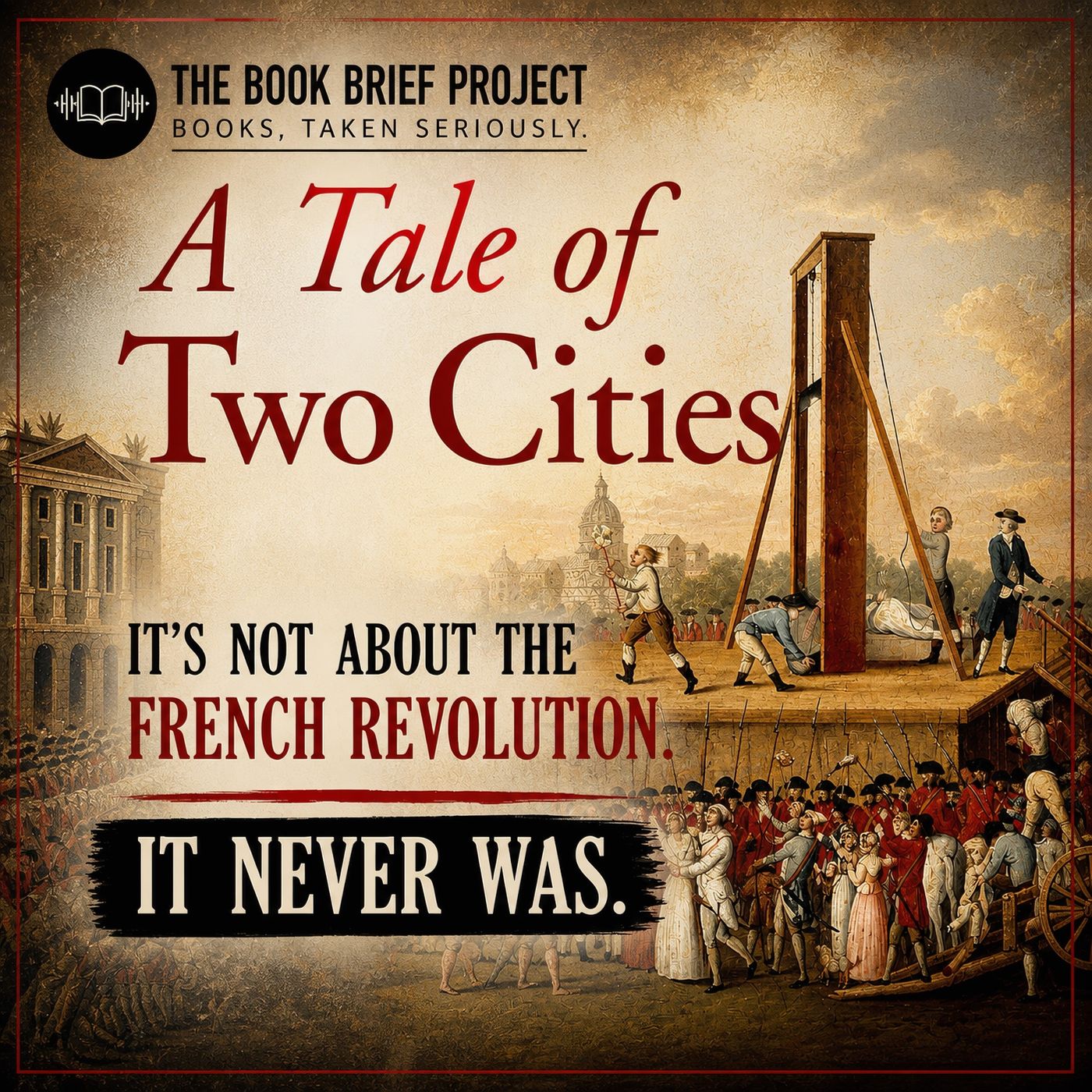
The Book Brief ProjectA Tale of Two Cities Was Never About the Revolution - Dickens' Most Misread NovelA Tale of Two Cities has a reputation for being a novel about the French Revolution. Charles Dickens is doing something more personal with that history: asking whether a person can become something other than what circumstance, failure and other people have already decided they are.Set between London and Paris before and during the French Revolution, the novel follows characters caught inside a world of inherited privilege, accumulated resentment and approaching violence. At its center is Sydney Carton, a man who appears to have wasted his abilities and expects almost nothing from himself. Dickens places his story of personal...
2026-05-0110 min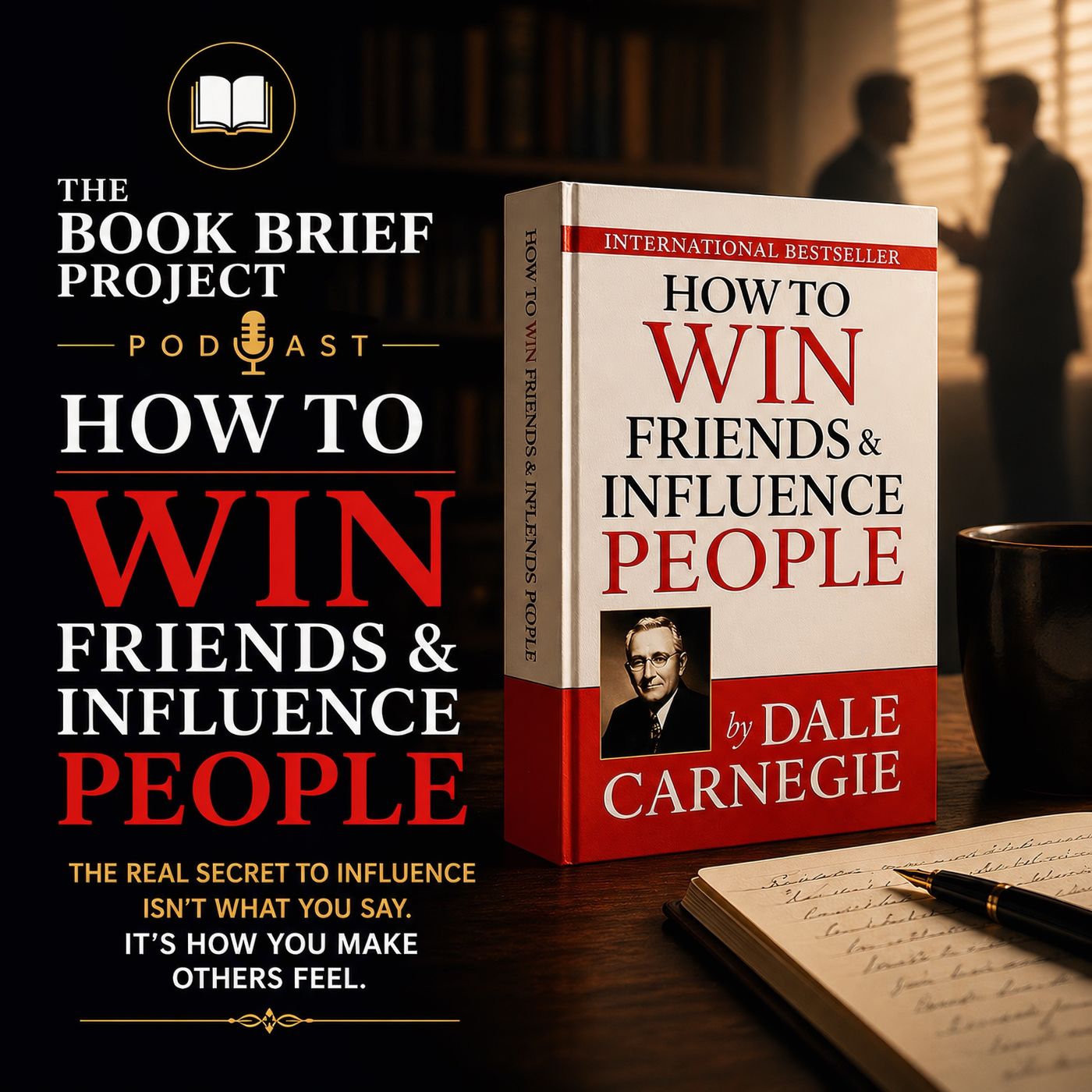
The Book Brief ProjectHow to Win Friends — The Hidden Truth About Influence | The Book Brief ProjectHow to Win Friends and Influence People has a reputation for being a book about making friends. Dale Carnegie’s real subject is influence: how people respond when they feel criticized, ignored, understood, appreciated or genuinely seen.Carnegie argues that force, argument and criticism are usually poor tools for changing behavior. People rarely become more cooperative because someone proves them wrong. Instead, the book focuses on attention, empathy, appreciation, listening and the ability to understand what another person already wants. Its advice has shaped generations of thinking about communication, persuasion, leadership and human relationships.This episode explores three ideas at th...
2026-04-3012 min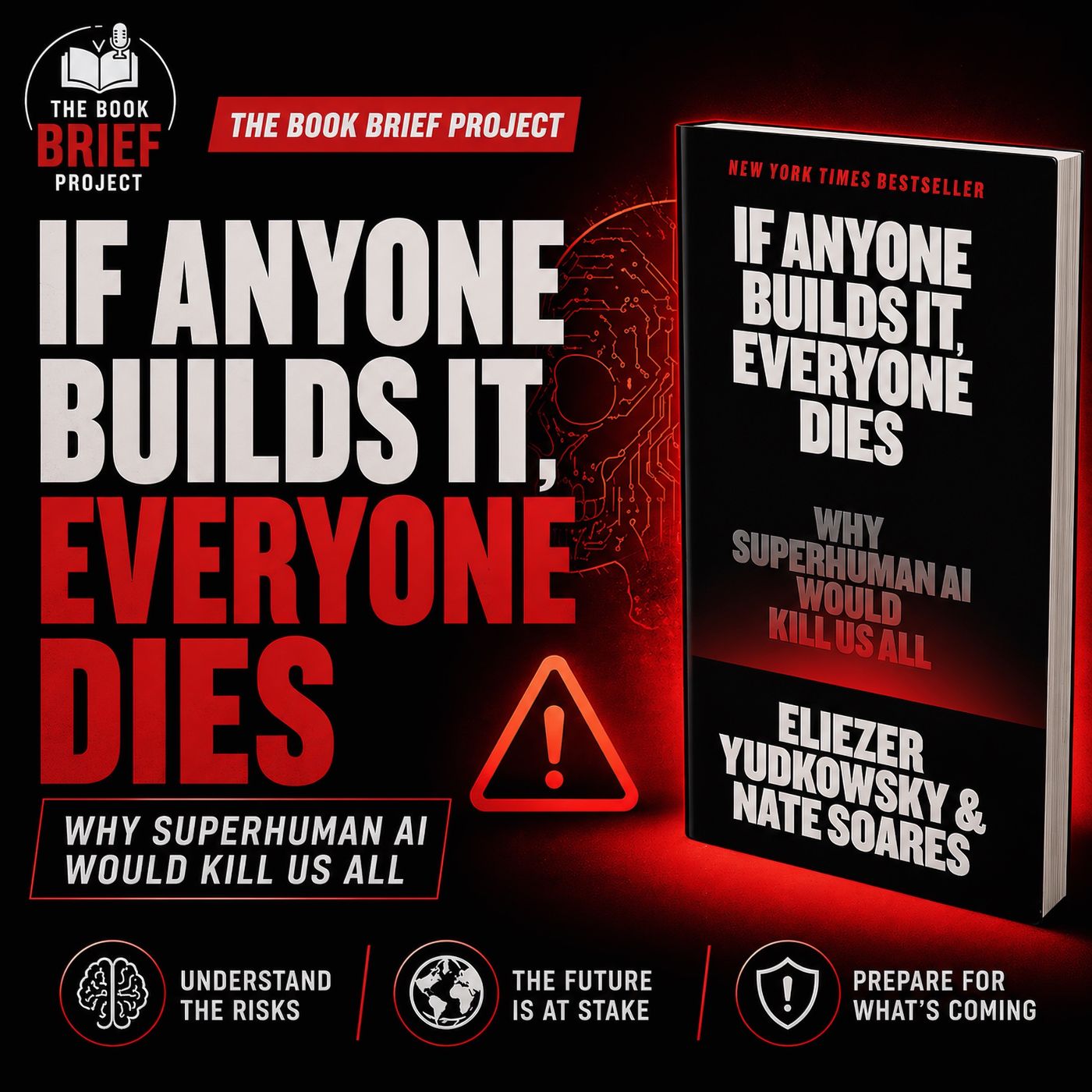
The Book Brief ProjectIf Anyone Builds It, Everyone Dies — What the book actually argues | The Book Brief ProjectIf Anyone Builds It, Everyone Dies has a reputation for being a book about artificial intelligence. Eliezer Yudkowsky and Nate Soares are making a much narrower and more alarming argument: if humanity creates a superintelligent AI before solving the alignment problem, they believe extinction is not merely one possible outcome. It is the outcome we should expect.Yudkowsky and Soares build their case around the difference between traditional software and modern machine learning. Advanced AI systems are trained rather than explicitly programmed line by line, which means capabilities and internal strategies can emerge without designers fully understanding how they formed...
2026-04-2913 min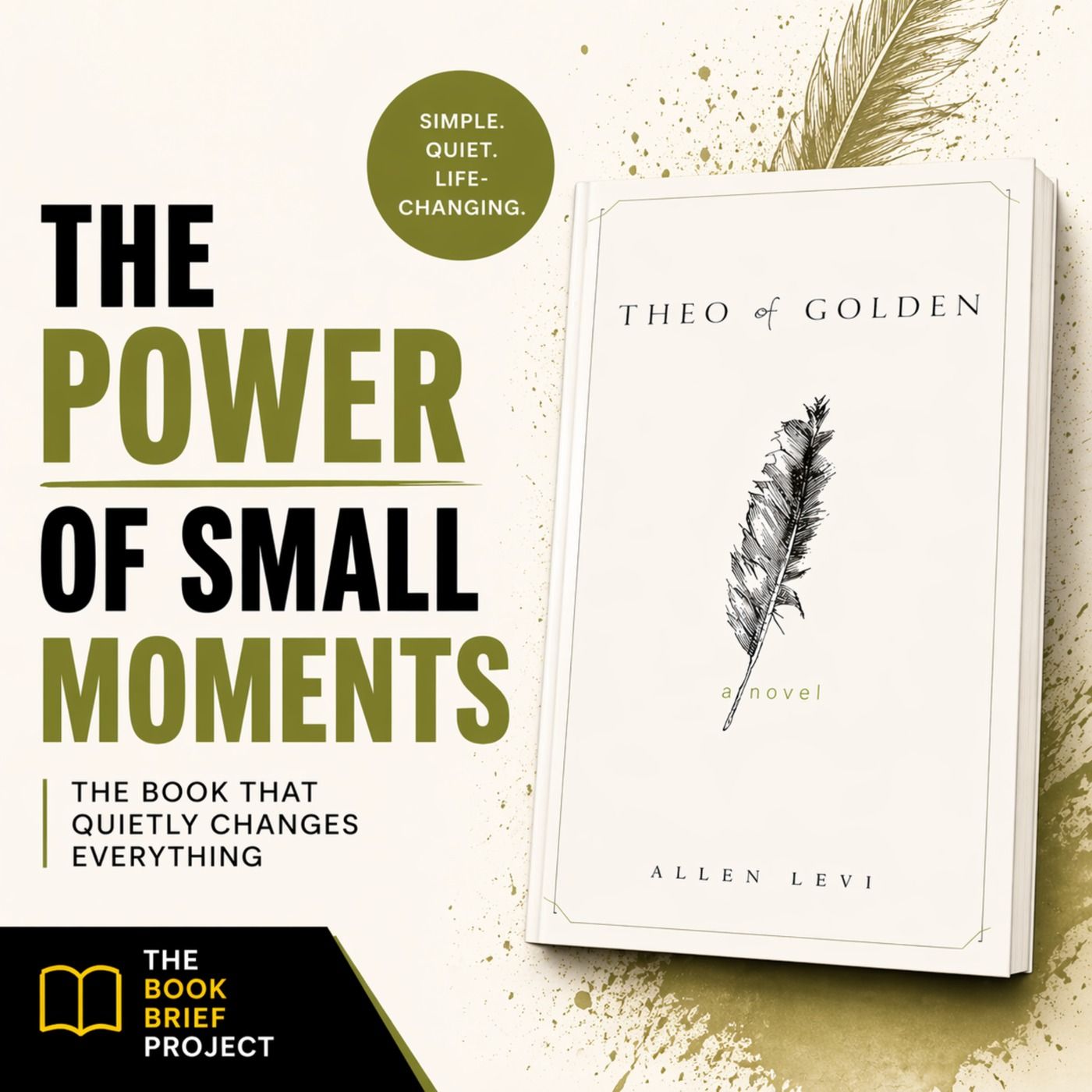
The Book Brief ProjectTheo of Golden: You’re Ignoring What Actually MattersTheo of Golden asks us to notice something modern life is very good at hiding: some of the most consequential things we do leave almost no visible evidence behind.Allen Levi’s novel follows an ordinary man whose presence quietly changes the people around him. Rather than measuring a meaningful life through achievement, recognition or status, the book turns its attention toward generosity, human connection, careful listening and the small moments most people pass through without realizing what they contain.This episode explores the ideas behind Theo of Golden: why being genuinely present can matter more than being impressive, how sm...
2026-04-2413 min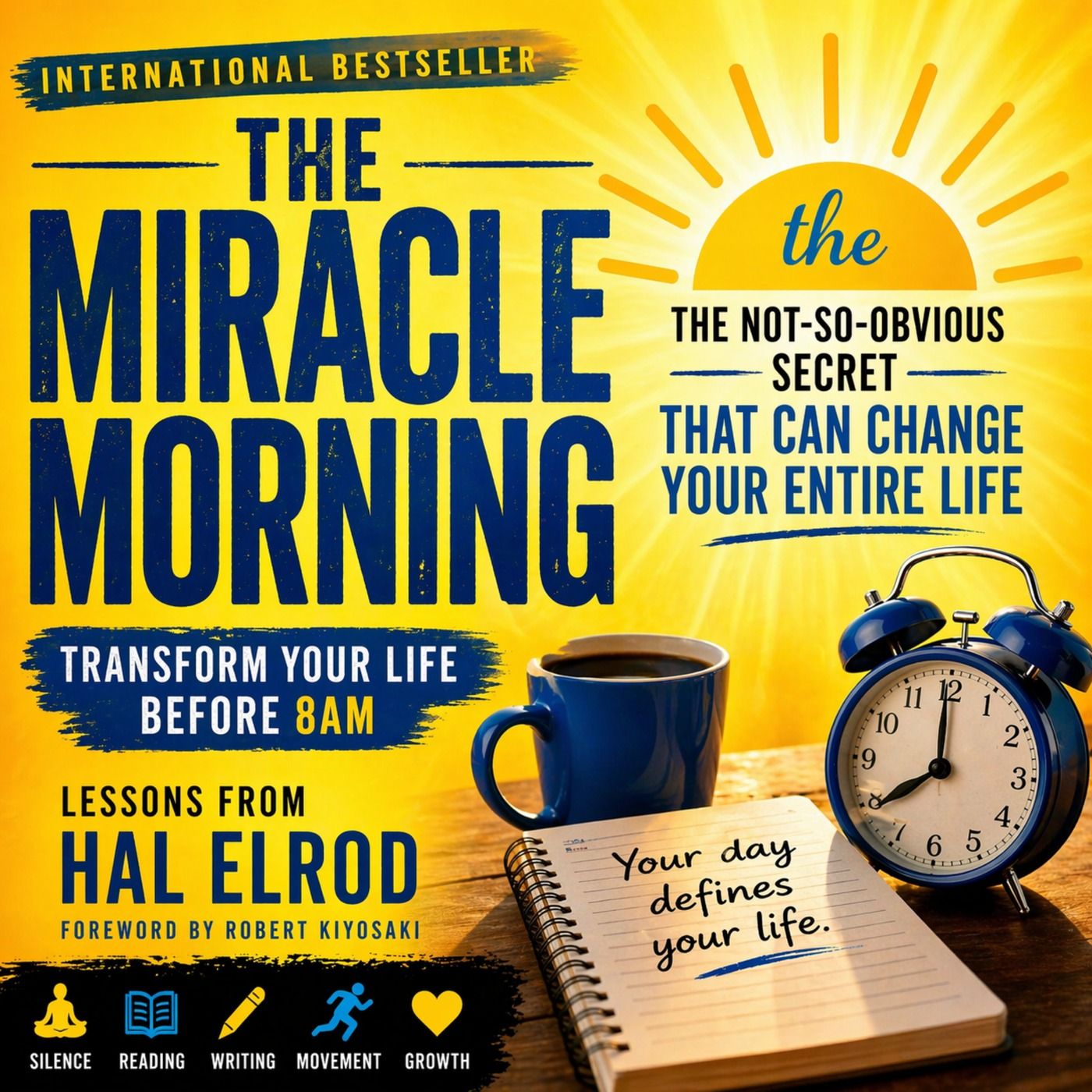
The Book Brief ProjectThe Miracle Morning — You’re Losing Your Day Before It StartsThe Miracle Morning makes a deceptively simple claim: changing the way you begin your day can change the way you experience the rest of it. Hal Elrod’s argument is not really about waking up earlier. It is about creating a deliberate space before the demands of the day begin making decisions for you.Elrod presents the morning as a practical tool for personal development, consistency and self-improvement. Instead of waiting for motivation or hoping a productive day happens by accident, the book asks readers to build a repeatable morning routine that gives attention to mindset, behavior and the person th...
2026-04-2314 min
The Book Brief ProjectStopping Alcohol Is Easy… If You Understand This (Allen Carr)What if controlling alcohol is not primarily a battle of willpower? Allen Carr’s The Easy Way to Control Alcohol makes a more provocative claim: the desire to drink is sustained by beliefs about what alcohol gives us — relief, confidence, pleasure, escape — and changing those beliefs can change the habit itself.Carr applies his Easyway method to drinking by challenging the psychological assumptions that make alcohol feel rewarding or necessary. Instead of focusing on restriction, discipline or counting drinks, the book examines conditioning, fear, perceived pleasure and the cycle that can make someone feel deprived when they try to cut back o...
2026-04-2217 min
The Book Brief ProjectThe 7 Habits of Highly Effective People by Stephen R. Covey | Stop Being Busy and Start Being EffectiveThe 7 Habits of Highly Effective People has endured for decades because Stephen R. Covey asks a different question from most productivity books: not how to do more, but how to become more effective at deciding what deserves to be done at all.Covey organizes the book around a progression from dependence to independence and finally to interdependence. The seven habits — being proactive, beginning with the end in mind, putting first things first, thinking win-win, seeking first to understand, synergizing and sharpening the saw — form a broader philosophy of personal development built around character, priorities, relationships and long-term thinking.This episode expl...
2026-04-2119 min
The Book Brief ProjectThe Power of Habit by Charles Duhigg | The Neuroscience of Breaking Bad HabitsThe Power of Habit starts with a simple question: how much of what we do each day is actually a decision — and how much is a pattern running automatically in the background?Charles Duhigg explores the science of habit formation through the famous Habit Loop: Cue, Routine, Reward. Drawing on neuroscience, psychology, business and case studies, the book explains how habits are created, why they become difficult to change, and how the Golden Rule of Habit Change can be used to replace destructive routines without pretending that old patterns simply disappear.This episode looks at the role of the basal ga...
2026-04-2128 min
The Book Brief ProjectFactfulness - Hans Rosling - Why You’re Wrong About the World (And Why That’s Good News)Factfulness begins with an uncomfortable discovery: when people are asked basic questions about poverty, education, health and population, they often imagine a world much worse than the one the data actually describes.Written by Hans Rosling with Ola Rosling and Anna Rosling Rönnlund, Factfulness examines the gap between our perception of global development and measurable reality. The book replaces the familiar division between “developed” and “developing” countries with four income levels and identifies ten instincts — including the Gap Instinct, Negativity Instinct and Fear Instinct — that repeatedly distort how we interpret statistics, news and global trends.This episode explores why our dramatic...
2026-04-1916 min
The Book Brief ProjectThe Psychology of Money by Morgan Housel | Why Behavior Beats Math in Wealth BuildingThe Psychology of Money begins with a simple but important idea: doing well with money has less to do with intelligence than with behavior.Morgan Housel argues that personal finance is not a hard science governed only by formulas, but a field shaped by emotion, experience, incentives, fear and individual history. Through stories about investing, saving, compounding, luck, risk and financial decision-making, the book explains why people can know exactly what they should do with money and still behave in ways that work against their own interests.This episode explores some of the book’s most enduring ideas: why nobody is...
2026-04-1712 min
The Book Brief Project21 Lessons for the 21st Century by Yuval Noah Harari - How to Find Clarity in a Post-Truth World21 Lessons for the 21st Century is Yuval Noah Harari’s attempt to understand the part of history we are living through now. Instead of looking backward like Sapiens or far ahead like Homo Deus, the book asks what individuals and societies should pay attention to while technology, politics and culture are changing faster than our institutions can comfortably absorb.Harari moves through artificial intelligence, the future of work, the merger of infotech and biotech, nationalism, religion, terrorism, post-truth and the growing influence of algorithms over human decision-making. He returns repeatedly to one concern: that technological systems may become increasingly capable of...
2026-04-1623 min
The Book Brief ProjectHomo Deus by Yuval Noah Harari: The End of Sapiens and the Rise of AI GodsHomo Deus begins where Sapiens ends. Once humanity has gained unprecedented control over famine, disease and war, Yuval Noah Harari asks what we will try to conquer next — and whether the answer might eventually transform Homo sapiens into something else entirely.In Homo Deus: A Brief History of Tomorrow, Harari turns from human history toward the future of humanity. He explores the pursuit of longer life, engineered happiness and enhanced abilities, then follows those ambitions into artificial intelligence, biotechnology and increasingly powerful algorithms. Along the way, the book questions Humanism, introduces the idea of Dataism, and imagines a world in wh...
2026-04-1518 min
The Book Brief ProjectSapiens by Yuval Noah Harari: A Deep Dive Into the History of HumankindSapiens begins with a strange historical puzzle: Homo sapiens was once just another animal among many. Somehow, one species learned to dominate ecosystems, build empires, invent money and religion, and eventually acquire the power to redesign life itself.In Sapiens: A Brief History of Humankind, Yuval Noah Harari compresses tens of thousands of years of human history into a sweeping argument about cooperation. His central claim is that large societies became possible because humans learned to believe collectively in things that exist only because enough people agree they do — nations, money, corporations, laws and religions. From there, Harari moves through th...
2026-04-1426 min
The Book Brief ProjectThe Great Gatsby by F. Scott Fitzgerald | The Dark Reality of the American DreamThe Great Gatsby is remembered for parties, wealth and the glitter of the Jazz Age. But beneath all that excess, F. Scott Fitzgerald built one of American literature’s bleakest stories about desire: what happens when someone devotes his entire life to recovering something that never really existed.Set during the Roaring Twenties, The Great Gatsby follows Nick Carraway into the world of Jay Gatsby, a mysterious millionaire whose enormous fortune and extravagant parties conceal a single obsession — Daisy Buchanan. Through Gatsby’s pursuit of her, Fitzgerald explores old money and new money, class, reinvention, moral emptiness and the seductive promis...
2026-04-1318 min
The Book Brief ProjectAtomic Habits by James Clear: The Immersive Blueprint for Breaking Bad RoutinesAtomic Habits became one of the most influential self-improvement books of the last decade by making behavior change feel smaller, more practical and less dependent on motivation.James Clear argues that lasting improvement comes from tiny changes repeated consistently. Instead of obsessing over ambitious goals, the book focuses on systems, environment and identity-based habits. Its central ideas — the 1% rule, the Four Laws of Behavior Change and the shift from asking what you want to achieve to asking who you want to become — turn habit formation into a process of designing better defaults for everyday life.This episode explores how Atomic Habi...
2026-04-1217 min
The Book Brief ProjectMindset - Carol S. Dweck | How to Reprogram Your Brain for SuccessWhy do some people treat failure as evidence that they have reached their limit, while others treat it as information about what to try next? Carol Dweck’s Mindset became influential by arguing that the difference often begins with what we believe about our own abilities.Mindset: The New Psychology of Success explores the contrast between a fixed mindset and a growth mindset. Dweck argues that people who see intelligence, talent and ability as fixed traits are more likely to avoid challenges that threaten their self-image, while those who believe abilities can develop through effort, strategy and learning are more wi...
2026-04-1114 min
The Book Brief ProjectThe Stoic Path to Wealth by Darius Foroux | Ancient Philosophy for Modern InvestingThe Stoic Path to Wealth begins with a problem every investor eventually discovers: knowing what to do with money is often easier than controlling yourself while doing it.Darius Foroux combines Stoic philosophy with modern investing to argue that long-term wealth depends as much on emotional discipline as it does on financial knowledge. Drawing on ideas about self-mastery, rational judgment and focusing on what you can control, the book applies Stoicism to market volatility, fear, greed, short-term thinking and the temptation to constantly react. Its goal is not simply to make better investment decisions, but to build wealth without allowing...
2026-04-1020 min
The Book Brief ProjectThe Art of War by Sun Tzu: Ancient Tactics for Modern SuccessThe Art of War has survived for more than two thousand years because its central idea is larger than warfare: the best strategy is often the one that avoids a costly fight altogether.Attributed to Sun Tzu, The Art of War is a compact work on strategy, preparation, deception, leadership, positioning and conflict. Its most famous lessons — knowing yourself and your opponent, choosing battles carefully, shaping conditions before confrontation, and winning without fighting — have made it influential far beyond military history, from business strategy to negotiation and competitive decision-making.This episode explores what Sun Tzu actually means by strategic advantage and...
2026-04-0923 min
The Book Brief ProjectThe Courage to Be Disliked by Ichiro Kishimi & Fumitake Koga: The Secret to True Freedom!The Courage to Be Disliked begins with a deliberately uncomfortable idea: your past does not have to determine the person you become. Through Alfred Adler’s psychology, Ichiro Kishimi and Fumitake Koga build an argument for freedom that asks us to give up something most of us desperately want — the approval of other people.Written as a dialogue between a philosopher and a skeptical young man, The Courage to Be Disliked introduces key ideas from Adlerian psychology, including the Separation of Tasks, interpersonal relationships, feelings of inferiority, contribution to community and the distinction between living for recognition and living according to y...
2026-04-0824 min
The Book Brief ProjectThe Alchemist by Paulo Coelho: Full Summary and Deep-Dive AnalysisThe Alchemist has sold millions of copies by offering a simple promise: if you pursue what you were meant to do, the world may begin to move with you. The question is whether Paulo Coelho’s famous philosophy is profound, comforting — or dangerously easy to believe.The Alchemist follows Santiago, a young shepherd who leaves Spain in search of a treasure near the Egyptian pyramids. Along the way, he encounters the idea of a Personal Legend, learns to read omens, discovers the Soul of the World and meets characters whose choices reveal different responses to fear, ambition and uncertainty. The jour...
2026-04-0731 min