Shows
The Langenderfer Library: Classics in Tax, Economics, and AccountingThe Burdens of Local Taxation and Who Bears Them — Lawson PurdyWho really pays local property taxes—the legal taxpayer, the tenant, the landowner, or the consumer? Lawson Purdy examines how taxes on land and buildings affect rents, property values, development, and the distribution of municipal burdens.Moving beyond the person named on the tax bill, Purdy traces how local levies are shifted through markets and argues for assessment practices that distinguish land value from improvements. The essay is an early and practical contribution to the study of tax incidence and urban fiscal reform.
2026-07-3149 minThe Langenderfer Library: Classics in Tax, Economics, and AccountingNational Taxation After the War — Alfred MarshallHow should a nation distribute the heavy fiscal burden left by war? Alfred Marshall evaluates income taxation, taxes on capital and expenditure, and duties on imports while weighing revenue needs against equity, saving, production, and economic recovery.Marshall argues for a tax system sensitive to family responsibilities and capacity to pay, with strongly graduated burdens and careful attention to the shifting of taxes. His discussion also reaffirms the case for free trade under the altered international conditions of the postwar world.
2026-07-311h 15The Langenderfer Library: Classics in Tax, Economics, and AccountingAnswers to Questions Put by the Local Taxation Commission — Francis Y. EdgeworthHow should local taxes be distributed, and who ultimately bears rates imposed on land, houses, and other property? Francis Y. Edgeworth answers questions posed by Britain’s Royal Commission on Local Taxation, translating principles of incidence and equitable sacrifice into practical policy analysis.Edgeworth considers the shifting of local rates, the treatment of site values, and the competing claims of owners, occupiers, and the wider community. The testimony offers an unusually direct application of economic theory to the design and reform of local taxation.
2026-07-311h 04The Langenderfer Library: Classics in Tax, Economics, and AccountingThe Place of the Income Tax in the Reform of State Taxation — Thomas S. AdamsWhat role should an income tax play in repairing state revenue systems? Thomas S. Adams examines the weaknesses of the general property tax and considers how income taxation can improve fairness, reach forms of wealth that escape assessment, and provide a more workable basis for public revenue.Writing during a formative period in American tax administration, Adams connects tax design to enforcement, taxpayer capacity, and the proper division of revenue sources. The essay captures the practical and institutional thinking that helped shape the modern state income tax.
2026-07-3151 minThe Langenderfer Library: Classics in Tax, Economics, and AccountingOn the Principles of Political Economy and Taxation — David RicardoWhat determines the distribution of national income among workers, capitalists, and landowners? David Ricardo develops a systematic account of value, wages, profits, rent, trade, money, and taxation—placing distribution at the center of political economy.From comparative advantage and diminishing returns to the incidence of taxes on rent, profits, wages, and commodities, Ricardo traces how economic forces and public policy interact. This landmark work helped define classical economics and continues to shape debates over trade, growth, and taxation.
2026-07-3010h 40The Langenderfer Library: Classics in Tax, Economics, and AccountingThe Burden of War and Future Generations — A. C. PigouCan the economic burden of war be shifted to future generations by borrowing rather than taxing? A. C. Pigou separates the immediate use of labor and resources from the later financial obligations created by public debt.By distinguishing real costs from transfers among taxpayers and bondholders, Pigou clarifies how war finance affects saving, capital formation, and the distribution of burdens across time. The analysis remains a classic guide to thinking about debt-financed public expenditure.
2026-07-3027 minThe Langenderfer Library: Classics in Tax, Economics, and AccountingInflation as a Method of Taxation — John Maynard KeynesHow can printing money function as a tax? John Maynard Keynes explains how inflation transfers real resources from holders of money to the government by reducing the currency’s purchasing power, even when no conventional tax bill is issued.Using the quantity theory of money, Keynes traces who bears this hidden levy, why governments find it tempting, and why repeated inflation eventually undermines the tax base itself. The essay offers a lucid account of seigniorage, distributional effects, and the destructive dynamics of extreme inflation.
2026-07-3038 minThe Langenderfer Library: Classics in Tax, Economics, and AccountingTaxation (Chapter XVI) — W. Stanley JevonsWhy must governments tax, and how can taxes be raised with the least unfairness and economic disruption? W. Stanley Jevons surveys direct and indirect taxation, customs and excise duties, income and property taxes, and the often-elusive question of who ultimately bears a tax.Building on Adam Smith’s maxims, Jevons emphasizes equality, certainty, convenience, and economy in collection. The chapter provides an accessible introduction to tax incidence and the practical design of public revenue systems.
2026-07-3017 minThe Langenderfer Library: Classics in Tax, Economics, and AccountingPolitical Discourses — David HumeWhat makes commerce flourish, money circulate, interest rates change, and public credit endure? In these influential essays, David Hume investigates trade, luxury, population, money, interest, taxes, and government finance with the skeptical clarity that helped establish classical political economy.Hume challenges mercantilist assumptions, explains why money is not the same as wealth, and traces the connections among industry, institutions, and national prosperity. His analysis shaped later thinkers including Adam Smith and remains central to the history of economic thought.
2026-07-309h 25The Langenderfer Library: Classics in Tax, Economics, and AccountingPersonal Taxes (Chapter XVIII) — Frank A. FetterHow do inheritance and income taxes differ from taxes assessed on particular forms of property? Frank A. Fetter explains the personal basis of these levies and surveys their development, exemptions, graduated rates, and growing fiscal importance.Moving from state inheritance taxes to the emergence of the modern federal income tax, Fetter shows how revenue needs and concerns about concentrated wealth shaped tax policy. The chapter closes by considering how personal taxes fit into a coherent overall system.
2026-07-3018 minThe Langenderfer Library: Classics in Tax, Economics, and AccountingProperty and Corporation Taxes (Chapter XVII) — Frank A. FetterWhy has the general property tax so often failed to deliver the simplicity and fairness promised by its design? Frank A. Fetter examines problems of valuation, assessment, intangible property, land taxation, and the division of taxing authority among levels of government.The chapter also considers the distinctive difficulties of taxing banks, insurance companies, transportation firms, and other corporations. Fetter connects technical tax design to broader questions of wealth distribution, political power, and practical reform.
2026-07-3032 minThe Langenderfer Library: Classics in Tax, Economics, and AccountingObjects and Principles of Taxation (Chapter XVI) — Frank A. FetterWhat purposes should public finance serve, and what principles should guide a sound tax system? Frank A. Fetter begins with the economic functions of government, the growth of public expenditures, and the distinction between revenues from public enterprises, borrowing, and taxation.He then examines standards of tax justice, administrative principles, shifting and incidence, and the treatment of taxes as economic costs. The chapter offers a concise framework for understanding how governments raise revenue and how the resulting burdens move through the economy.
2026-07-3033 minThe Langenderfer Library: Classics in Tax, Economics, and AccountingMinimum Sacrifice versus Equal Sacrifice — Francis Y. EdgeworthHow should the burden of taxation be distributed when taxpayers differ in income and in the value they place on an additional dollar? Francis Y. Edgeworth compares two influential standards of tax justice: minimizing the total sacrifice caused by taxation and equalizing sacrifice among taxpayers.Drawing on marginal utility, Edgeworth explores the logic behind progressive taxation and the difficult relationship between measurable economic welfare and ethical judgment. The essay is a foundational contribution to optimal taxation and the theory of ability to pay.
2026-07-3019 minThe Langenderfer Library: Classics in Tax, Economics, and AccountingSophisms of the Protectionists — Frédéric BastiatWhy do arguments for protectionism so often sound persuasive—and where do they go wrong? Frédéric Bastiat dissects the claims used to defend tariffs, trade barriers, and state-granted economic privileges, exposing the hidden costs imposed on consumers and society.Through sharp logic, satire, and memorable examples, Bastiat contrasts what economic policy makes immediately visible with the consequences it conceals. These essays remain a classic defense of free exchange and a practical lesson in recognizing economic fallacies.
2026-07-309h 28The Langenderfer Library: Classics in Tax, Economics, and AccountingTariff — Frank W. TaussigHow do tariffs work, who gains from them, and what costs do they impose? Frank W. Taussig offers a systematic account of customs duties, protection, free trade, and the economic forces that shape tariff policy.Combining classical trade theory with historical and institutional analysis, Taussig examines domestic industry, prices, wages, comparative advantage, retaliation, revenue, and the political pressures behind protection. The result is a clear guide to the logic and practice of tariff systems—and to policy debates that continue wherever governments use trade barriers to pursue economic and political goals.
2026-07-2946 minThe Langenderfer Library: Classics in Tax, Economics, and AccountingOf the Sources of the General or Public Revenue of the Society — Adam SmithHow should government revenue be raised, and what makes one tax better than another? In this celebrated section of The Wealth of Nations, Adam Smith examines the sources of public revenue and develops his four enduring maxims of taxation: equality, certainty, convenience, and economy in collection.Smith analyzes taxes on rent, profit, wages, property, consumption, and trade, testing each against incentives, incidence, administration, and fairness. His discussion connects the practical machinery of taxation to a broader theory of political economy and remains one of the foundational texts of modern public finance.
2026-07-294h 01The Langenderfer Library: Classics in Tax, Economics, and AccountingThe Crisis of the Tax State — Joseph A. SchumpeterWhat can a government’s finances reveal about the structure and fate of society? In this classic essay in fiscal sociology, Joseph A. Schumpeter argues that taxation is not merely a technical means of raising revenue: it is a powerful lens into political authority, social conflict, and institutional change.Beginning with the financial pressures that helped create the modern tax state, Schumpeter examines war, public debt, bureaucracy, capitalism, and the limits of fiscal capacity. His diagnosis of a “crisis of the tax state” links revenue systems to the evolution of the state itself and remain...
2026-07-291h 12The Langenderfer Library: Classics in Tax, Economics, and AccountingDivergences Between Marginal Social and Private Net Product — A. C. PigouWhy can private decisions produce socially harmful outcomes even when individuals act rationally? In this foundational passage from The Economics of Welfare, A. C. Pigou examines divergences between marginal private net product and marginal social net product—the gap now known as an externality.Using examples involving smoke, congestion, industrial location, investment, and spillover effects, Pigou explains why market prices may fail to capture costs or benefits imposed on others. He then considers taxes, subsidies, regulation, and other public remedies, laying the intellectual groundwork for modern welfare economics, environmental policy, and the “Pigouvian tax.”
2026-07-291h 06The Langenderfer Library: Classics in Tax, Economics, and AccountingA Treatise of Taxes and Contributions — William PettyWhat makes a tax fair, productive, and economically sound? In this pioneering seventeenth-century work, William Petty examines how governments should raise revenue while minimizing harm to trade, labor, land, and national wealth.Petty compares taxes on land, consumption, customs, offices, and other bases; considers incidence and collection; and applies his empirical “political arithmetic” to public finance. His practical proposals and early analysis of who ultimately bears a tax make the treatise a landmark in the development of economics, statistics, and fiscal policy.
2026-07-292h 46The Langenderfer Library: Classics in Tax, Economics, and AccountingThe History of Parliamentary Taxation in England — Shepard Ashman MorganHow did Parliament win control over taxation—and how did that struggle reshape English constitutional government? Shepard Ashman Morgan traces parliamentary taxation from medieval levies through the conflicts that established the principle that public revenue requires political consent.Following customs, subsidies, property taxes, royal prerogative, and disputes between Crown and Parliament, Morgan shows how fiscal demands became catalysts for institutional change. The history connects taxation to representation, accountability, war, and the emergence of parliamentary supremacy, offering a foundational account of the constitutional maxim that taxation and consent must go together.
2026-07-295h 29The Langenderfer Library: Classics in Tax, Economics, and AccountingWar Taxation: Some Comments and Letters — Otto H. KahnHow should a nation finance an immense war without undermining economic stability or social trust? In this collection of comments and letters, financier Otto H. Kahn considers the design of wartime taxation, the balance between taxes and borrowing, and the distribution of sacrifice across income, wealth, and business.Kahn weighs excess-profits taxes, high marginal rates, capital formation, inflation, public credit, and the danger of allowing emergency measures to damage productive capacity. Written amid the fiscal pressures of World War I, these essays capture enduring tensions between revenue, equity, incentives, and national mobilization.
2026-07-291h 00The Langenderfer Library: Classics in Tax, Economics, and AccountingThe Federalist Papers Nos. 30–36: Concerning the General Power of Taxation — Alexander HamiltonWhy must the federal government possess an independent and adequate power to tax? In Federalist Nos. 30–36, Alexander Hamilton defends the Constitution’s grant of national taxing authority as essential to public credit, national defense, effective administration, and the survival of the Union.Hamilton answers fears of federal overreach, explains why requisitions on the states had failed under the Articles of Confederation, and argues that revenue powers must be broad enough to meet unpredictable national needs. He also explores concurrent state and federal taxation, representation, enforcement, and the practical limits imposed by political accountability—forming one of...
2026-07-291h 33The Langenderfer Library: Classics in Tax, Economics, and AccountingHistory of Taxation in Rhode Island to the Year 1790 — Henry B. GardnerHow did taxation help shape Rhode Island from colonial settlement through the early republic? Henry B. Gardner traces the colony and state’s evolving revenue system to 1790, examining how public needs, political institutions, war, commerce, land, and local administration influenced the taxes imposed on Rhode Islanders.Drawing on historical records, Gardner follows the movement from assessments and property levies to customs, excises, poll taxes, and other fiscal devices, while showing how resistance, inequality, and enforcement affected policy. The study offers a detailed portrait of early American public finance and a window into how communities le...
2026-07-292h 19The Langenderfer Library: Classics in Tax, Economics, and AccountingTariff Speeches of 1824 — Henry Clay and Daniel WebsterHow should a young United States balance protection for domestic industry against the gains from international commerce? This collection brings together Henry Clay and Daniel Webster’s major tariff speeches from 1824, capturing two of the era’s most formidable statesmen as Congress debated the shape of American economic development.Clay advances the “American System,” arguing that protective duties would nurture manufactures, create a home market, and strengthen national independence. Webster—then speaking for New England’s commercial interests—warns against disrupting trade, misdirecting capital, and burdening consumers. Their competing arguments illuminate the regional interests, constitutional...
2026-07-294h 34The Langenderfer Library: Classics in Tax, Economics, and AccountingWhat Is Free Trade? — Frédéric BastiatWhat does free trade actually require—and why does Bastiat believe protection harms the people it claims to help? In this concise defense of commercial liberty, Frédéric Bastiat dismantles common arguments for tariffs by tracing how restrictions raise prices, shelter inefficient producers, and force consumers to sacrifice for politically favored interests.Through vivid examples and economic reasoning, Bastiat explains comparative cost, specialization, competition, and the unseen burdens of protection. The result is both an accessible introduction to classical trade theory and a broader case for voluntary exchange, consumer welfare, and equal treatment unde...
2026-07-293h 53The Langenderfer Library: Classics in Tax, Economics, and AccountingProtection and Communism — Frédéric BastiatCan protectionism be reconciled with private property and free exchange? In this sharp polemic, Frédéric Bastiat argues that protective tariffs rest on the same coercive principle as communism: both permit organized power to redirect the fruits of labor from those who earned them to favored groups.Writing with characteristic clarity and irony, Bastiat challenges manufacturers who demand legal privileges while defending property rights elsewhere. His essay turns trade policy into a deeper argument about law, liberty, equality, and the boundary between legitimate government and legalized plunder—questions that still animate debates over tari...
2026-07-291h 12The Langenderfer Library: Classics in Tax, Economics, and AccountingReport on the Subject of Manufactures — Alexander HamiltonHow can a young nation build economic independence and national strength? In his landmark 1791 Report on the Subject of Manufactures, Treasury Secretary Alexander Hamilton argues that American prosperity requires more than agriculture alone: it also depends on manufacturing, diversified labor, technological improvement, capital formation, and a larger domestic market.Hamilton examines objections to industrial policy and makes the case for deliberate public encouragement of manufactures through measures such as protective duties, bounties, and support for essential industries. Linking economic development to national security, productivity, immigration, and the coordination of agriculture and industry, the report...
2026-07-293h 42The Langenderfer Library: Classics in Tax, Economics, and AccountingWhen Is Income Realized? — Roswell MagillWhen does an economic gain become taxable income? In this influential 1933 Harvard Law Review article, tax scholar Roswell Magill examines the realization requirement through Supreme Court decisions, statutory rules, and accounting practice, distinguishing increases in value from gains sufficiently received, controlled, or fixed to enter the tax base.Magill compares cash and accrual methods, explores constructive receipt, cash equivalents, contested claims, sales, notes, escrow arrangements, and the problem of assigning income to the proper year. His analysis reveals realization not as a single mechanical event, but as a practical legal framework shaped by administrability...
2026-07-2942 minThe Langenderfer Library: Classics in Tax, Economics, and AccountingOn Foreign Trade — David RicardoWhy do nations gain from trading with one another—even when one country can produce everything more efficiently? In “On Foreign Trade,” David Ricardo develops the argument that would become comparative advantage, explaining how specialization and exchange can enlarge the quantity and variety of goods available without necessarily raising their value or the general rate of profit.Moving from wine and cloth to wages, capital, prices, and the distribution of labor, Ricardo shows how free commerce connects individual advantage with broader social benefit. This foundational chapter from On the Principles of Political Economy and Taxati...
2026-07-2945 minThe Langenderfer Library: Classics in Tax, Economics, and AccountingEssays in Taxation — Edwin R. A. SeligmanHow should taxes be designed, distributed, and justified? In this landmark collection, economist Edwin R. A. Seligman examines the history and principles of taxation while confronting many of the practical problems faced by modern tax systems.Across essays on property, inheritance, corporations, land, income, and public revenue, Seligman considers tax incidence, double taxation, equality, ability to pay, and the competing demands of sound theory and workable administration. The result is a wide-ranging classic from one of America’s most influential early scholars of public finance—valuable both as a history of tax ideas and as a...
2026-07-293h 55The Langenderfer Library: Classics in Tax, Economics, and AccountingThe Concept of Income: Economic and Legal Aspects — Robert Murray HaigWhat do we really mean by “income”? In this foundational 1921 essay, economist Robert Murray Haig examines income from both economic and legal perspectives. He develops the influential idea that income reflects the net increase in a person’s economic power over time, then considers how this broad concept differs from the income recognized by tax law.A classic of public-finance scholarship, Haig’s analysis helped shape what later became known as the Haig–Simons definition of income and remains central to debates over taxable income, unrealized gains, and sound tax policy.
2026-07-291h 05
Tax ChatsLobbying for the National Association of Manufacturers: A Chat with Charles CrainSend us Fan Mail Jeff and Scott speak with Charles Crain, Managing Vice President of Policy at the National Association of Manufacturers (NAM). Charles works closely with NAM’s member companies to advocate for tax policies that support manufacturers and strengthen the manufacturing sector. In this episode, Jeff and Scott first discuss the important matter of how to pronounce NAM (NOT like Viet-NAM). They then discuss NAM’s role in the policy process, how the organization identifies and prioritizes its tax policy agenda, and some of its most significant advocacy successes. They also explore the story behind NAM’s...
2026-06-2935 minTax ChatsNo Tax On Tips? Jeff and Scott Receive a Huge Tax Break (a short emergency episode)Send us Fan MailJeff and Scott very briefly talk about the bombshell news that podcasters are included on the Treasury's list of jobs eligible for "no tax on tips." https://home.treasury.gov/system/files/136/Tipped-Occupations-Detailed-8-27-2025.pdfLeft unexplored is whether any of the other provisions of no tax on tips will preclude Scott and Jeff from receiving tax-free tip income, by means of the credit available to offset declared tip income available in The One Big Beautiful Bill.
2025-09-0409 minTax ChatsA Brief Tour of the Tax Museum's LibrarySend us Fan MailJeff and Scott take a look at 4 books that Jeff has recently acquired for the Tax Museum library, which numbers at least 677 volumes. Almost all of these books were a an academic bequest from one of Jeff's mentees, Joel Slemrod. Jeff introduces four books, asks a question related to the book, and Scott tries his best at answering. The four books mentioned, and the approximate year of their original publication:Rich and Poor (1898) - Helen BosanquetCapital (1867) - Karl MarxPolitical Economy (1837) - Francis Wayland ...
2025-08-2333 minTax ChatsOne Big Beautiful Bill, One Short Sagacious Summary (insofar as it is accurate)Send us Fan MailThe House Ways and Means Committee has pass The One Big Beautiful Bill the TOBBB). Knowing this was coming up, Jeff invited Scott to go on a Tax Chats road trip, but, got rejected--Scott was too busy. So, Jeff watched the process from a distance. Jeff discusses what he observed, and Jeff and Scott discuss the contents of the bill, for far as it was passed by the House Ways and Means Committee.
2025-05-1435 minTax ChatsWhich is the worst Tax Expenditure?: A Chat with Adam MichelSend us Fan MailJeff and Scott chat with Adam Michel of the Cato Institute about tax expenditures. Adam currently has on his X account the Tax Expenditure Madness brackets (also on his substack: https://adamnmichel.substack.com/). Adam sets up brackets like the March Madness NCAA basketball tournament, but instead of pitting basketball teams against each other to establish the best team*, he has tax expenditures competing to determine which is the worst expenditure. Jeff, Scott and Adam chat about several sets of tax expenditures, and offer their somewhat tongue-in-cheek opinion about which ones are worst.
2025-03-2439 minTax ChatsTax Notes: A Chat with Tax Analysts CEO Cara GriffithSend us Fan MailJeff and Scott chat with Cara Griffith, CEO of Tax Analysts about Tax Notes, the main product of Tax Analysts. Tax Notes is a tax practitioner publication catering to tax professionals, and Jeff and Scott talk about who reads Tax Notes, how content is produced, and who the competitors to Tax Notes are.Finally, we discuss Tax Analysts' ownership of the URL https://taxmuseum.org/, which is a direct competitor to the much better http://thetaxmuseum.org.
2024-11-2527 minTax ChatsHow many pages are in the tax code? Jeff and Scott Chat about tax code complexitySend us Fan MailRecorded on April 15, Jeff and Scott Chat about tax code complexity. Why is the tax code so complex? Is it because life is complex? Because we have chosen to hone the tax code to achieve certain social goals? Jeff and Scott chat about it all in light of Scott not being able to complete his tax code until the very last moment.Get CPE for listening to Tax Chats! Free CPE courses are available approximately one week after episodes are published. Visit https://earmarkcpe.com/ to download the free app. Go...
2024-04-1535 minTax ChatsCordell Hull, Father of the Income Tax: A Chat with Tracey RobertsSend us Fan MailJeff and Scott chat with Samford University law professor Tracey Roberts about Cordell Hull. Hull was a senator, secretary of state, and, won the Nobel Prize for his role in creating the United Nations. However, he also had a substantial role in creating the income tax, which Tracey, Jeff and Scott discuss. This episode is based on Professor Roberts article, "A Man for His Era and for Ours: Cordell Hull, Father of the Federal Income Tax", published in the Cumberland Law Review.Get CPE for listening to Tax Chats! Free CPE c...
2024-03-2233 minTax ChatsTestifying about Taxes: A Chat about Congressional Testimony with Douglas Holtz-EakinSend us Fan MailJeff and Scott chat with Douglas Holtz-Eakin, the President of the American Action Forum, former director of the CBO, and former chief economic policy adviser to Senator John McCain's 2008 presidential campaign. Doug has also testified before Congress more than anyone else that did not do so as a requirement of their job. Jeff and Scott discuss the purpose of Congressional testimony, who is asked to do it, and some of Doug's experiences testifying.Get CPE for listening to Tax Chats! Free CPE courses are available approximately one week after episodes are p...
2024-02-1436 minTax ChatsThe Trend in Income Inequality: A Chat with Wojciech KopczukSend us Fan MailJeff and Scott chat with Wojciech Kopczuk, professor of Economics at Columbia University, an editor at the Journal of Public Economics, and IgNobel Prize Winner, about the trends in income inequality. The long-standing received wisdom is that income inequality is high, and growing higher. A recent paper published in the Journal of Political Economy by Gerry Auten and David Splinter call into question that finding. Jeff, Scott and Wojciech talk about the difficulties in measuring income inequality, its consequences, etc.Get CPE for listening to Tax Chats! Free CPE courses are...
2024-01-3146 minTax ChatsTax Tune - A Way to Pay Taxes (re-release)Send us Fan MailA Way to Pay Taxes (to the tune of Away in the Manger)Re-release (originally released Christmas, 2021)Lyrics by Jeff Hoopes, Sung by Stacey HoopesOh Joseph and MaryThey were there for a taskThey came to the cityTo pay their taxBut as they remitted The tax on their worthOh Mary, a virginShe had to give birth They went to the cityBy Caesar’s decreeAs taxes touched JosephThey...
2023-12-2103 minTax ChatsTaxes at the Hoopes HouseSend us Fan MailJeff and Scott talk about two taxes levied at the Hoopes household, the "floor tax", and the "toilet tax." These two taxes demonstrate how the tax system can be used as either a carrot or a stick, and the benefit of each approach, and the importance of administrative costs (which made the toilet tax impractical). We also discus how, and whether, taxes can be used to solve social problems. Scott vows to do better in taxing the subjects of his kingdom.
2023-12-2026 min
SALTovation: Navigating the Complexities of State and Local Tax by AprioNavigating State and Local Tax Deductions with Jeff Hoopes and Scott Dyreng from TaxChatsIn this episode of the SALTovation podcast, Stacey Roberts and Meredith Smith speak with hosts of the TaxChats podcast, Scott Dyreng, Professor of Accounting at Duke’s Fuqua School of Business, and Jeff Hoopes, Associate Professor at Kenan-Flagler Business School at the University of North Carolina at Chapel Hill. They discuss the $10,000 state and local tax (SALT) deduction cap and explore the impact of the cap on taxpayers, particularly in high-tax states. They discuss various strategies and issues related to SALT, the political dynamics surrounding the cap, potential future changes, and the complexities of filing taxes in multiple states.
2023-12-2040 minTax ChatsDid Vivek Grow Up Rich? Jeff and Scott take a look at Vivek Ramaswamy's tax returnsSend us Fan MailJeff was recently asked to opine on whether Republican GOP candidate for president Vivek Ramaswamy grew up with a lot of money. Scott and Jeff dive into Vivek's tax returns for evidence.Get CPE for listening to Tax Chats! Free CPE courses are available approximately one week after episodes are published. Visit https://earmarkcpe.com/ to download the free app. Go to the Tax Chats channel, register for the course, take a short quiz, and earn your CPE certificate.
2023-09-1943 minTax ChatsChatting about President Biden's 2023 State of the Union AddressSend us Fan MailPresident Biden gave the State of the Union address last night. Scott and Jeff talk about the tax components of the address. They discuss large corporations which pay little in tax, billionaires who pay little in tax, and taxing share repurchases., and "apples and elephants comparisons." Also, Jeff explains why it is impossible for pretty much any taxpayer, let alone those making under $400K a year, to pay a penny more in taxes under any of President Biden's current or former tax proposals (IRC 985 and 6102 come into play!). Note: We...
2023-02-0837 minTax ChatsTax Tune - Away to Pay Taxes (re-release)Send us Fan MailAway to Pay Taxes (to the tune of Away in the Manger)Re-release (originally released Christmas, 2021)Lyrics by Jeff Hoopes, Sung by Stacey HoopesOh Joseph and MaryThey were there for a taskThey came to the cityTo pay their taxBut as they remitted The tax on their worthOh Mary, a virginShe had to give birth They went to the cityBy Caesar’s decreeAs taxes touched JosephThey affec...
2022-12-2403 minTax ChatsTax Tune - I Heard the Bells (of tax reform!)Send us Fan MailIn honor of the fifth anniversary of the Tax Cuts and Jobs Act...I Heard the Bells (of tax reform!)Sung to the tune of I Heard the Bells on Christmas DaySinging by two of Dyreng's DeductionsLyrics of Jeff HoopesI heard the tale about the dayThey passed the law TCJAThe rate was high our firms payed muchSo they were blessed by Donald’s touchThe rate brought low that fated dayWhen Co...
2022-12-2302 minTax ChatsAnniversary Edition! Rebranding, and chatting about tax headlinesSend us Fan MailTax Chats is officially one year old! In honor of this anniversery, Scott and Jeff talk through a potential rebranding of Tax Chats with a different name, then go on to discuss two tax headlines. First, they discuss windfall profits taxes on oil companies, then talk about the disclosure of Donald Trump's tax returns.Jeff also misuses the Spanish verb "recordar."
2022-11-0429 minTax ChatsThe Chats that Might Have Been.Send us Fan MailScott and Jeff discuss several people Jeff has invited to be on the show, but who have (as of yet!) been unable to make a Tax Chats appearance. Scott guesses why Jeff invited each person to be on Tax Chats. The "John Edwards Tax Shelter", gas taxes and electric vehicles, soda taxes, and taxing assault rifles are all briefly discussed.
2022-10-0528 minTax ChatsTax Tidbits from a recent Trip (which could be true!)Send us Fan MailJeff and Scott discuss some interesting tax-related observations Jeff made while visiting Oxford University and Mannheim University in England and Germany.
2022-08-2425 minTax ChatsTaxed by the Taliban with Ashley JacksonSend us Fan MailScott and Jeff learn from Ashley Jackson how the Taliban create a tax. We discuss how the tax system evolved initially to generate revenue to fund the Taliban objectives, until it became a symbol of its legitimacy. We talk about how the tax system evolved from a system of forced extractions to the point where customer support numbers became available to report mistreatment.
2022-07-2028 minTax ChatsHow An Academic Changed Corporate Tax Reporting. A Conversation with Dean Lilian Mills on the Creation of Schedule M3.Send us Fan MailScott and Jeff discuss the creation of schedule M3 with Lillian Mills, Dean of the McCombs School of Business at the University of Texas at Austin. Lil was instrumental in the creation of schedule M-3, which is form filed with the IRS that reconciles taxable income to financial accounting income. We talk about the opportunities that exist for academics, policymakers, and regulators to work together, and the unique environment that led to the creation of the M3. We also discuss some recent policy proposals that would impose tax on financial accounting income.
2022-07-1336 minTax ChatsAnti Progressive TaxationSend us Fan MailScott and Jeff discuss some of the prominent arguments against progressive taxation.
2022-06-3031 minTax ChatsTaxing Churches with Lloyd MayerSend us Fan MailScott and Jeff discuss the tax status of churches in the U.S. with Lloyd Mayer, Professor of Law at Notre Dame University. We discuss the basics of tax law as it pertains to Churches. We also discuss special tax benefits that apply to ministers and other church employees. We consider the tradeoffs that exist between providing churches with tax benefits and relying on them to provide certain types of public goods and services vs taxing churches and relying on the government to provide those goods and services.
2022-06-2234 minTax ChatsWhy Administrative Law is Way More Important than You Thought! A conversation with Andy Grewal.Send us Fan MailScott and Jeff ask Andy Grewal to describe administrative law, and why it is so important for taxes. We discuss how significant portions of tax laws are left to interpretation by the IRS or Treasury, and how these interpretations can have a material effect on the experience of taxpayers.
2022-06-1527 minTax ChatsHow Much Income do Firms Shift to Tax Havens? A Conversation w/Jennifer Blouin.Send us Fan MailScott and Jeff discuss income shifting by multinational corporations with Jennifer Blouin. We talk about Jennifer's research that suggests some estimates of the amount of tax revenue the U.S. loses to income shifting are as much as ten times too large. These estimates are important because they drive policy discussions, including debates in the U.S. about tax reform, and abroad, through the OECD and other organizations. The conversation builds on some of Jennifer's recent work related to income shifting, including a paper entitled "Double Counting Accounting: How Much Profit of Multinational...
2022-06-1035 minTax ChatsProfessor Arthur Laffer on His CurveSend us Fan MailScott and Jeff discuss the effects the tax rate has on how much taxes are raised with Professor Arthur Laffer, for whom the Laffer Curve is named. The Laffer Curve shows the likely relationship between tax rates and tax revenue. We hear the famous story of drawing the curve on a napkin. We ask Professor Laffer about the Laffer Curve, and we get his opinion on the revenue maximizing tax rate.
2022-06-0132 minTax ChatsTaxing Robots w/Rita de la FeriaSend us Fan MailScott and Jeff are joined by Rita de la Feria @delaFeriaR to discuss her new paper (co-authored with Maria Amparo Grau Ruiz) called "Taxing Robots". The abstract of her paper reads in part: "In recent years, the idea of taxing robots has been progressively gaining momentum. The potential impact of automation on employment, and consequently on income tax revenues, has led many to defend the introduction of a tax on robots, or on the use of robots, to either compensate for the potential revenue loss, or to slow down the process of...
2022-05-2531 minTax ChatsWas Trump's Tax Reform Effective?Send us Fan MailScott and Jeff discuss whether the Tax Cuts and Jobs Act (TCJA) was effective. Often referred to as the Trump tax cuts, or the Trump Tax Reform, recent commentators have argued that it was highly effective. For example, Tyler Goodspeed and Kevin Hassett argued in the Wall Street Journal the TCJA "delivered as promised" by increasing investment, wages, and government revenues. Academic research, however, paints a more nuanced picture. Jeff keeps a list of academic studies that evaluate different aspects of the TCJA on the UNC Tax Center website called The TCJA Effects...
2022-05-1833 minTax ChatsThe "Secret IRS Files": A Conversation with ProPublica's Paul KielSend us Fan MailScott, Jeff, and Paul Kiel discuss the series of articles published by ProPublica based on a massive leak of private tax return data on the wealthiest individuals in the United States. The series of articles can be found here: https://www.propublica.org/series/the-secret-irs-files.We ask about privacy, transparency, tone, influence, leaked data, and more.
2022-05-1139 minTax ChatsTax Short - Why do quarters have ridges, and what does it have to do with taxes (and inflation!)?Send us Fan MailJeff explains why quarters have ridges, and what it has to do with taxes and inflation.
2022-05-0603 minTax ChatsShould death eliminate taxes? A conversation about carryover basis with Kathleen ThomasSend us Fan MailScott and Jeff discuss the idea of carryover basis with Kathleen Thomas. Currently, when someone dies with appreciated capital gains, they get a step-up in basis, meaning their estate pays no taxes on their accumulated gains. The downside is they have to die. An alternative would be to carryover the basis the the person who died had, which would make many tax planning strategies more difficult.
2022-05-0436 minTax ChatsA Bigger Burden for Billionaires? David Gamage on Biden's Mega Millionaire Minimum TaxSend us Fan MailScott and Jeff discuss Biden's proposed Mega Millionaire Minimum Tax with David Gamage, one of the thought-leaders behind the proposal and its variations. We discuss the basics of what the minimum tax might look like. We discuss the strengths and weaknesses of this type of tax. The tax is intended to force very wealthy individuals like Jeff Bezos or Mark Zuckerberg to pay more tax, even if they do not have much income as currently the tax code currently defines income. We also discuss the idea of "notional equity" as a way for...
2022-04-2741 minTax ChatsProgressive Taxation: What is it? Why would we want it? Do we have it?Send us Fan MailScott and Jeff discuss progressive taxation. While most agree progressive taxation is desirable, there is less agreement about how much progressivity is desirable, what it even is, and if our current tax system is progressive. Scott and Jeff tackle these issues by asking each other questions about taxes on income, property taxes, taxes on cigarettes, and other scenarios. They conclude that progressivity is a slippery subject, and, claims about progressivity should be carefully considered.
2022-04-2034 minTax ChatsShould we even tax corporations? It's not as obvious as you might think.Send us Fan MailScott and Jeff discuss the reasons a corporate tax makes sense. The answers might surprise you. Among the least compelling arguments: corporations have a lot of income, corporations use infrastructure, corporations have special legal status. Among the most compelling arguments: corporations make efficient collection agents, corporations have cash, and taxing corporations allows the government to see what they are up to.
2022-04-1336 minTax ChatsCrypto Tax -- About as Simple as it Sounds. A Conversation with Tyler MenzerSend us Fan MailScott and Jeff discuss Crypto taxes with Tyler Menzer, PhD student at the University of Iowa studying the tax implications of Crypto currency in the marketplace. We briefly discuss some of the basics, but, also discuss slightly more complicated crypto issues like airdrops and staking.
2022-04-0639 minTax ChatsA Private Score: Rich Prisinzano on the Penn Wharton Budget ModelSend us Fan MailScott and Jeff talk with Rich Prisinzano of the Penn Wharton Budget Model about revenue scoring. Scott, Jeff and Rich discuss topics such as how precise revenue scores are, how private revenue scores are different from those provided by the government, how politicians might use private revenue scorers to get the best "price" for a piece of tax legislation, etc. They end with how Rich would think through scoring a hypothetical (and fictional!) tax proposal, the "Dividend Cut Tax".
2022-03-3046 minTax ChatsWhat is Tax Justice? A Conversation with Amy Hanauer, Executive Director of Citizens for Tax Justice and ITEPSend us Fan MailScott and Jeff discuss tax justice with Amy Hanauer, Executive Director of Citizens for Tax Justice and its sister organization, ITEP (Institute on Taxation and Economic Policy). We ask Amy what a fair tax system would look like. We discuss problems with the current tax system. We touch on methods the government uses to redistribute income, like the earned income tax credit and the child tax credit. We briefly discuss corporate taxes, and Amy shares her view that corporations do not pay enough taxes.
2022-03-2336 minTax ChatsTax Short - Do the Girl Scouts have to pay taxes on their cookie income?Send us Fan MailJeff explains how some non-profits owe income taxes on the unrelated business income, but, how because of the mission of the Girls Scouts, they don't pay taxes on the proceeds from the cookies sales.
2022-03-2204 minTax ChatsHave your Cake and Eat it too? Why Tax Accounting and Financial Accounting are Different.Send us Fan MailIn this episode, Scott and Jeff discuss why financial accounting rules and tax accounting rules are different. They give some examples. They talk about some firms that have reported very high income while also paying very low taxes. They also talk about how the opposite happens, but doesn't get much media attention.
2022-03-1635 minTax ChatsTaxing Cannabis: A Conversation with Caroline WeberSend us Fan MailScott and Jeff discuss Cannabis taxation with economist Caroline Weber. We chat about the history of cannabis taxation, the advantage of legalizing cannabis to make it easier to tax, the use of taxes to set a price floor, and other issues related to cannabis taxation. We also discuss whether the taxes collected from Cannabis production and sales are used to remedy some of the social ills that might arise from widespread cannabis use.
2022-03-0932 minTax ChatsProtecting People from Politicians by Pledge: A Chat with Grover NorquistSend us Fan MailScott and Jeff interview Grover Norquist, president of Americans for Tax Reform (ATR). We discuss the Taxpayer Protection Pledge, which has been signed by many national and state-level politicians, including past presidents, many senators, sitting governors, and others. The signing is mostly partisan, with Republicans mostly signing, and Democrats rarely signing.Grover Norquist discusses his views on taxes and government, and argues that there is never a good reason to increase income tax collections.Grover Norquist describes how he believes raising taxes can lead to political trouble for Republican...
2022-03-0230 minTax ChatsAre tax boycotts a real thing?Send us Fan MailScott and Jeff discuss tax boycotts. Some corporate mangers say they are careful with their tax planning because they don't want to make their customers mad--customers might not buy things from a company they perceive as overly aggressive with their taxes. In this episode, Scott and Jeff discuss a recent study by Jeff and co-authors Scott Asay (U Iowa), Jake Thornock (Brigham Young University), and Jaron Wilde (U Iowa) called "Tax Boycotts". We describe how the scorn of consumers might harm corporations that avoid taxes. Jeff and co-authors searched high and low for...
2022-02-2336 minTax ChatsThe Good Ol' Days of Bipartisan Tax Reform: A Conversation with Ken Kies about the Tax Reform Act of 1986 (TRA86)Send us Fan MailScott and Jeff talk with Ken Kies about TRA86, the last major tax reform since the Tax Cuts and Jobs Act. Ken was the Chief Republican Tax Counsel of the House Ways and Means Committee during the process of passing TRA86. How bipartisan was the TRA86? Was Ronald Reagan involved in the details? How much did the lobbyists matter? This episode gets into the details of TRA86 from someone who was on the front lines of tax reform when it happened.
2022-02-1634 minTax Chats(Extra)Ordinary and (Un)Necessary? Write it off!!!Jeff and Scott discuss several business deductions that were claimed that are unusual, and might not be thought of as "ordinary and necessary" as required by tax law. Some of them turned out to be legitimate deductions and upheld when challenged in court.
2022-02-0927 minTax ChatsThe War Tax Resister: A Conversation with Lincoln RiceSend us Fan MailScott and Jeff interview Lincoln Rice, Coordinator of the National War Tax Resistance Coordinating Committee, a group which would have you ask yourself "are you praying for peace, but paying for war?" We learn what it means to be a War Tax Resister. We discuss the risks, if any, of not paying taxes, and how the tax system is used by some as a tool for voicing opposition to government policies.
2022-02-0235 minTax ChatsTax Tune - Capital Gains Sea ShantySend us Fan MailCapital Gains Sea ShantySung by Dyreng's DeductionsLyrics by Jeff HoopesThere once was a man who bought some stockIn a little firm they call gamestopThe price went up so he sold his sharesSittin on his gains so unawareThen, oh, the taxman comeTo tax his gains and stop his funOh, when, the taxin’ is doneHe’ll have some pennies and changeSo what could you do to stop the pain...
2022-02-0203 minTax ChatsThe In(Ex)clusive Framework: A Conversation with Afton Titus on Why the Global Minimum Taxes Might Harm Developing CountriesSend us Fan MailAre big countries bullying developing countries under the guise of the OECD's Inclusive Framework? It the framework really inclusive, or is it really an exclusive club of rich countries looking out for themselves? Jeff and Scott discuss these issues with Afton Titus who gives the African perspective.
2022-01-2631 minTax ChatsTax Short - Is Inflation a tax?Send us Fan MailJeff talks about the relationship between taxes and inflation, and, introduces us to the term seigniorage.
2022-01-1902 minTax ChatsMartin Luther King Jr.'s Tax Perjury Trial: A conversation with Edgar DyerSend us Fan MailMartin Luther King Jr. is the only person to have ever been tried for perjury with regards to state income taxes in Alabama. Jeff and Scott interview Edgar Dyer about the tax perjury trial of Martin Luther King Jr. in 1960. Eddie wrote an article entitled "A Triumph of Justice in Alabama: The 1960 Perjury Trial of Martin Luther King, Jr."Fred Grey, Martin Luther King's attorney, said of the trial, "No one would have predicted that an all-white jury in Montgomery, Alabama, the Cradle of the Confederacy, in May 1960, in the middle...
2022-01-1533 minTax ChatsRealizations about RealizationSend us Fan MailScott and Jeff discuss the principle of realization. As a general rule, most income taxes are levied when it is realized, usually when a transaction takes place. For example, gains in shares held as an investment are not taxed unless those shares are sold. The principle of realization also manifests itself in a variety of interesting ways, which we discuss in this episode.
2022-01-1235 minTax ChatsTax the Billionaires' (Income)!? A Conversation with Brian Galle About Taxing Unrealized Gains.Send us Fan MailScott and Jeff welcome Brian Galle, Professor of Law at Georgetown University to discuss the proposed Billionaires' Income Tax, which is a tax on unrealized capital gains. Brian and 218 other law professors and economists recently sent a letter to Congress in favor of the proposal. The letter can be found here. We discuss how the tax is being positioned as being different from a wealth tax. We question whether the tax might eventually be expanded to everyone, not just billionaires.
2022-01-0537 minTax ChatsTax Short - How many billionaires are there, and, how much are they worth?Send us Fan MailJeff describes how knowing how many billionaires there are and how much wealth they have, a key component to estimating how much revenue many new taxes that target the ultra-rich would bring in, is more complex than you might think.
2022-01-0404 minTax ChatsAn Audio Tour of the Tax MuseumSend us Fan MailJeff talks with Scott about a few of The Tax Museum's thousands of items. Jeff shows Scott a stack of expired lotto tickets purchased on EBAY and describes what they have to do with tax fraud. They discuss some old revenue stamps, an actual stamp from Burkina Faso, and other items that have amazing connections with taxes.
2021-12-3036 minTax ChatsI'll Have One Large Offensive Lineman with a Tax Deduction on the Side, Please. (A Conversation with Brian Mittendorf.)Send us Fan MailScott and Jeff are joined by Brian Mittendorf from THE Ohio State University to discuss not-for-profit entities. We discuss the recent creation of Horns with Heart, a not-for-profit entity recently created to pursue charitable causes using the Name, Image, and Likeness (NIL) of offensive lineman for the University of Texas football team. If this arrangement proves to be legitimate, not-for-profit entities could proliferate as a way to facilitate NIL deals and pay college football players, while allowing donors to make tax deductible contributions to their favorite football players.
2021-12-2236 minTax ChatsTax Short - What do Taxes Have to Do with Christmas?Send us Fan MailJeff describes what taxes have to do with Christmas. Mary and Joseph went to Bethlehem to be taxed (or maybe to be counted, so they could be taxed).
2021-12-2103 minTax ChatsTax Tune - Away to Pay TaxesSend us Fan MailAway to pay Taxes (to the tune of Away in the Manger)Lyrics by Jeff Hoopes, Sung by Stacey HoopesOh Joseph and MaryThey were there for a taskThey came to the cityTo pay their taxBut as they remitted The tax on their worthOh Mary, a virginShe had to give birth They went to the cityBy Caesar’s decreeAs taxes touched JosephThey affect you and meWhen w...
2021-12-2103 minTax ChatsDo You See OECD? A Discussion with Tom Neubig on the OECD's Global Minimum TaxSend us Fan MailScott and Jeff discuss the OECD's Base Erosion and Profit Shifting (BEPS) project with Tom Neubig, a former Economist with the OECD. We answer basic questions about the OECD, BEPS, Pillar One and Pillar Two, which includes the proposed global minimum tax. The project is designed to stop the "race to the bottom" and to prevent large multinational companies from shifting their income to low-tax jurisdictions like tax havens. We also briefly discuss how country by country reporting will help with analysis after implementation.
2021-12-1536 minTax ChatsTax Short - Don’t let Fear Of Missing Out (FOMO) get in the way of tax loss harvestingSend us Fan MailIn a recent episode of Tax Chats, Scott and Jeff had a little disagreement over a potential downside of tax loss harvesting. In this short, Jeff summarizes his argument that in tax loss harvesting, you should not delude yourself into thinking there is something special about the stock you hold. You should not decide not to tax loss harvest because you might miss out on a stock going up in value--don't have tax loss harvesting FOMO.
2021-12-1304 minTax ChatsCapitalizing on Capital Gains Tax BreaksSend us Fan MailJeff and Scott discuss how to legally reduce or avoid paying capital gains taxes. We use Satya Nadella's recent sale of half his stake in Microsoft as an example. To reduce the capital gains tax burden, one can:Change the timing of capital gain incomesell before a new tax is imposed, or after an old tax is retiredwait to sell until capital gain becomes "long term," currently after 1 yearwait to sell to take advantage of the power of deferralExampleshttps://www.journals.uchicago.edu/doi/abs/10.17310/ntj.2015.3.02 https://tax.unc.edu/i...
2021-12-0836 minTax ChatsTax Short - How can I pay nothing in taxes?Send us Fan MailJeff explains how it should never be the goal to pay nothing in taxes, but, rather, as far as your financial life goes, to maximize your after-tax income.
2021-12-0603 minTax ChatsTax Short - What is a fair tax?Send us Fan MailJeff talks about fair taxes. People always say they want a fair tax system, or that they want people to pay their fair share. What would a fair tax system look like?
2021-11-2903 minTax ChatsInsights or Incites? Elizabeth Warren's Report on "Tax Dodgers"Send us Fan MailJeff and Scott discuss a recent report released by Senator Elizabeth Warren's office entitled "Tax Dodgers: How Billionaire Corporations Avoid Paying Taxes and How to Fix It" available here. We discuss the weaknesses in the report, including the language to describe tax avoidance, and the facts underlying the data in the report. We describe how the report does not appear to provide many insights, but instead appears designed to incite anger against large profitable corporations.
2021-11-2334 minTax ChatsTax Short - Is a 4% Wealth Tax the Same as a 120% Income Tax?Send us Fan MailJeff discusses wealth and income tax rates. We are used to thinking of tax rates on income. How do we think about tax rates on wealth? Luckily, there is an easy way to convert a wealth tax rate into an income tax rate, and, the result may surprise you.
2021-11-2303 minTax ChatsTax Short - Why Don't Billionaires Pay Tax?Send us Fan MailJeff describes why many billionaires don't pay any tax (or at least pay rates of tax that are far lower than millionaires). He discusses the idea of unrealized gains.
2021-11-1502 minTax ChatsTax Short - How Much Tax Should a Socially Responsible Firm Pay?Send us Fan MailJeff briefly discusses how much tax a socially responsible firm should pay. He explains that a dollar of tax paid might translate to one fewer dollar used for other socially responsible objectives.
2021-11-0802 min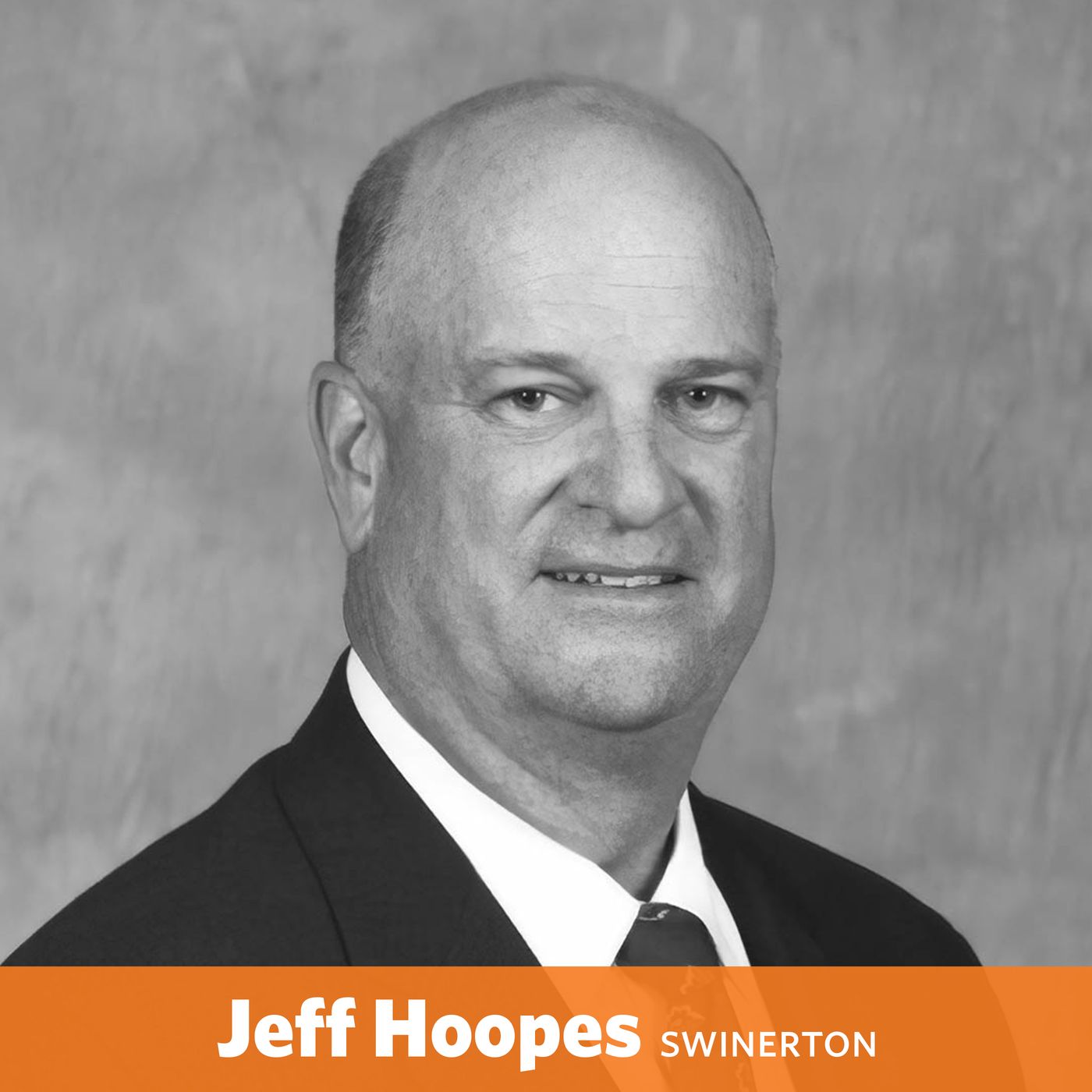
Conversations Around the CornerJeff Hoopes - CEO of SwinertonJeff Hoopes is the CEO of Swinerton Construction, a $5 billion construction firm. In 2018, Swinerton was ranked #19 on ENR's Top 400 Contractor's List.In our conversation today, we talk about what not to do when hunting Elk, the best way to waste an MBA, construction supply chain innovation, how to avoid boom and bust cycles as a general contractor, and the most important things to work on as young construction professionals.
2019-03-251h 28
The Modern ArchitectS03 Episode 27: Jeff Hoopes and Eric Foster - CEO and President and COO of SwinertonThis episode features Jeff Hoopes, who is the CEO, and Eric Foster, who is the President and COO of Swinerton.Swinerton provides commercial construction and construction management services throughout the United States and is a 100% employee-owned company.What started as a brick masonry and contracting company 130 years ago now boasts technical expertise in mass timber, seismic retrofits and prefabricated technology. It serves clients in aviation, healthcare, education and renewable energy.
2018-08-0759 min
Modern Architect Radio Show with Tom DioroS03 Episode 27: Jeff Hoopes and Eric FosterThis episode features Jeff Hoopes, who is the CEO, and Eric Foster, who is the President and COO of Swinerton.Swinerton provides commercial construction and construction management services throughout the United States and is a 100% employee-owned company.What started as a brick masonry and contracting company 130 years ago now boasts technical expertise in mass timber, seismic retrofits and prefabricated technology. It serves clients in aviation, healthcare, education and renewable energy.
2018-08-0759 min